
Loading, please wait...
LOT 1601
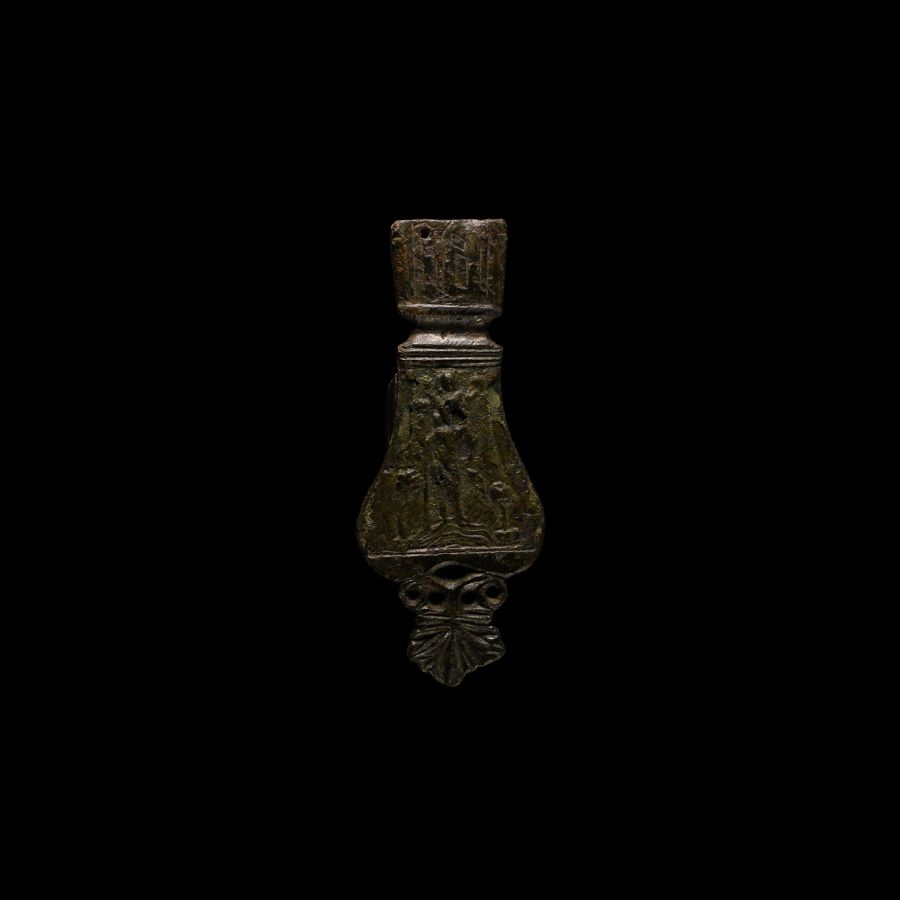
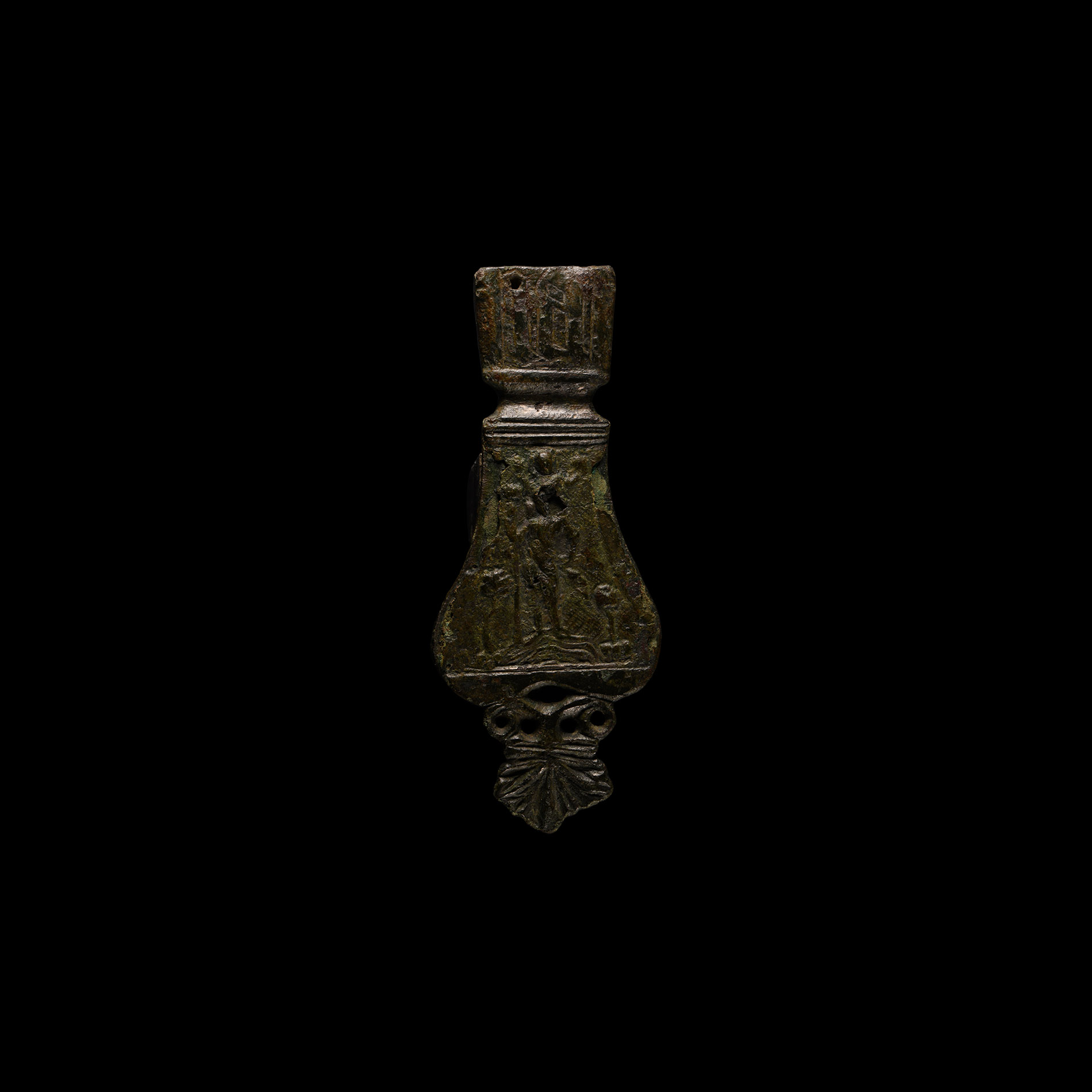
Large Medieval Bronze Strap End with St Christopher
14TH-15TH CENTURY A.D.
3 1/2 in. (45 grams, 90 mm).
Socket finial to one end, waisted stem, heart-shaped plaque, bar of four rivet holes and shell or leaf-shaped finial, the body displaying Saint Christopher standing on a mound with a young boy on his shoulder and holding a staff in relief, Gothic letters 'ID' to the socket.
ProvenanceAcquired early 1990s.
From an East Anglian private collection.
Cf. Hammond, A., Artefacts of England and the United Kingdom, Benet's fourth edition, p.692, M12-0111, for type.
CONDITIONTimeLine Auctions follows a vetting process to ensure the authenticity and legality of all items, reinforcing our commitment to integrity and responsible trading. Each antiquity, antique, and coin lot undergoes thorough examination by a vetting committee of at least ten external specialists, professional trade association members, scientists, and archaeologists: Our Vetting Process
AUCTIONS:
TimeLine is a leading auction house specialising in antiquities, ancient art, collectables, natural history, coins, medals, and books. Our auctions offer museums, collectors, historians, and enthusiasts the opportunity to acquire unique and historically significant pieces.
LOT 1601
Large Medieval Bronze Strap End with St Christopher
Estimate £250 - 350€290 - 410 (for guidance only)$340 - 470 (for guidance only)
-
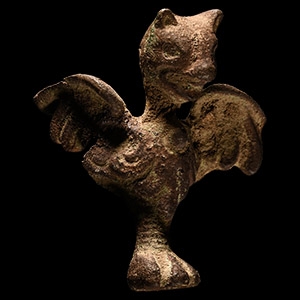
Medieval Bronze Hybrid Mythical Beast Casket Foot
13th-14th century A.D.Sold for (Inc. bp): £91
The creature with the head of a cat, breast and wings of a bird and lion's paw base; bracket to reverse. 18 grams, 36 mm
Found Nottinghamshire, UK. -
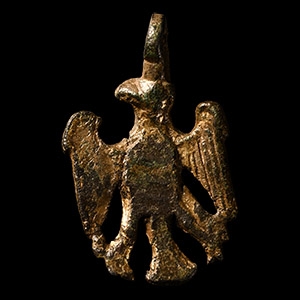
Medieval Knight's Gilt Bronze Heraldic Eagle Horse Harness Pendant
14th-15th century A.D.Sold for (Inc. bp): £312
The openwork eagle displayed with spread wings and feet, head turned left, remains of gilding; integral suspension loop. 5.2 grams, 34 mm
From the Sullivan family collection, UK; acquired since 2003. -
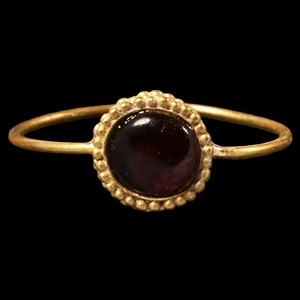
Medieval Gold Ring with Garnet
14th-16th century A.D.Sold for (Inc. bp): £208
With slender gold hoop, drum-shaped bezel with granulation to the outer face, inset garnet cabochon. 0.89 grams, 17.87 mm overall, 16.25 mm internal diameter (approximate size British I 1/2, USA 4 1/2, Europe 8.07, Japan 7)
From a late Japanese specialist collector, 1970-2000s.
