
Loading, please wait...
LOT 0339
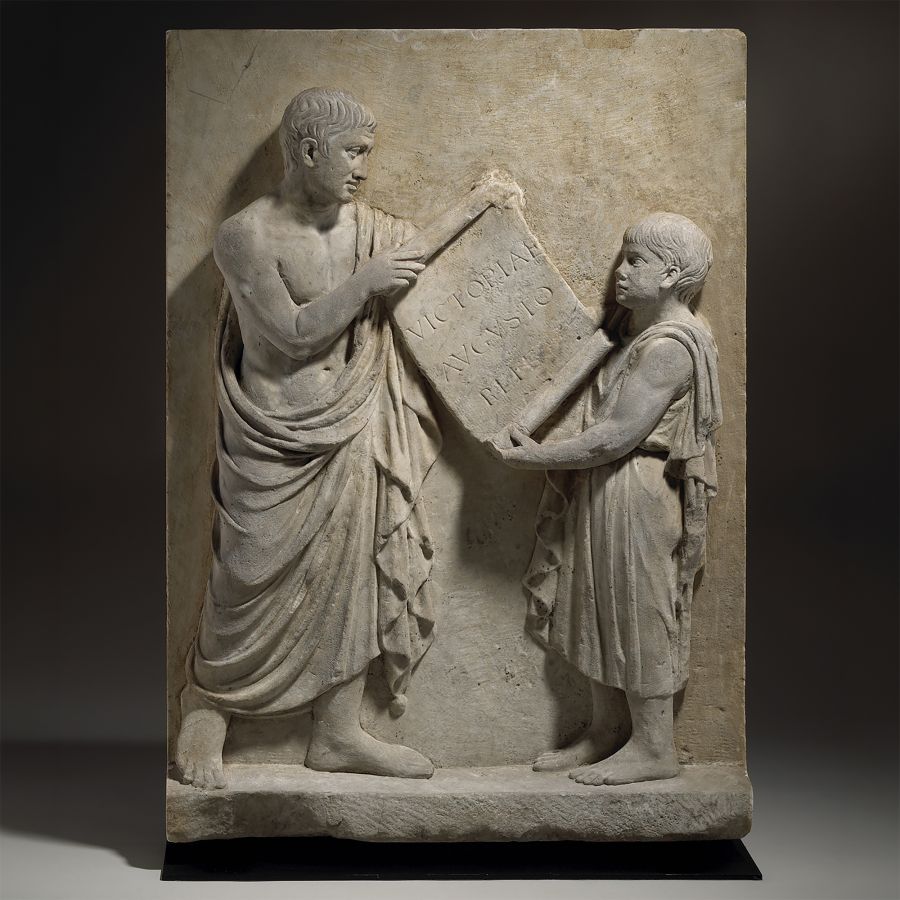
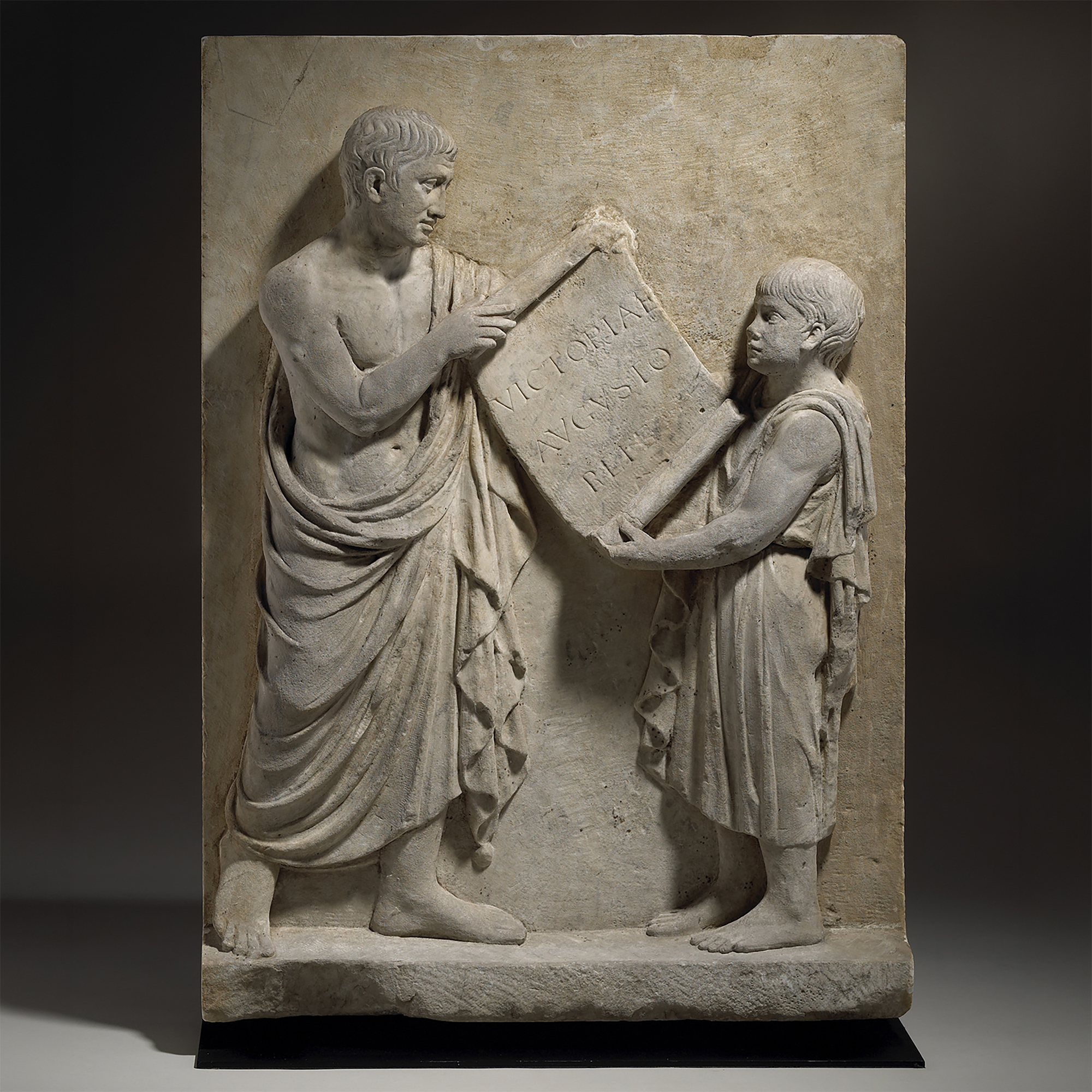
Large Marble Relief with Roman-Era Scene of a Boy Presenting a Scroll
18TH-19TH CENTURY A.D.
34 1/2 in. (127 kg total including stand, 87.5 cm high).
Rectangular scene with ledge to lower edge; high-relief carved scene depicting a standing male in loosely draped toga, holding the upper edge of a papyrus scroll; beside him, a small boy in similar attire holding the lower two corners of the document; legend in seriffed Roman capitals 'VICTORIAE / AVGVSTO / RE[...]' (to Victoria, to Augustus, ...).
ProvenancePrivate collection, UK.
This lot has been checked against the Interpol Database of stolen works of art and is accompanied by search certificate number no.13393-259011.
Cf. for an original image of a boy with a scroll, see the Walters Art Museum, accession no.71.54; a fresco of a Roman pupil reading a scroll, in Naples, Archaeological Museum, ID AKG300539.
FootnotesThe relief recalls the images of the Propaganda Augusti, diffused by Julius Caesar Octavian after his victory over Marcus Antonius and Cleopatra at Actium. The aged man and the boy represent the old and new Roman world meeting in the Principate created by Augustus.
CONDITIONTimeLine Auctions follows a vetting process to ensure the authenticity and legality of all items, reinforcing our commitment to integrity and responsible trading. Each antiquity, antique, and coin lot undergoes thorough examination by a vetting committee of at least ten external specialists, professional trade association members, scientists, and archaeologists: Our Vetting Process
AUCTIONS:
TimeLine is a leading auction house specialising in antiquities, ancient art, collectables, natural history, coins, medals, and books. Our auctions offer museums, collectors, historians, and enthusiasts the opportunity to acquire unique and historically significant pieces.
LOT 0339
Large Marble Relief with Roman-Era Scene of a Boy Presenting a Scroll
Sold for (Inc. bp): £6,500
-
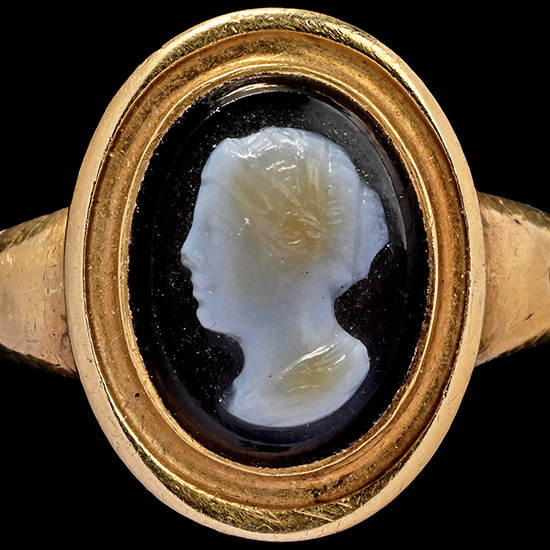
Post Medieval Banded Agate Cameo of a Woman in Gold Ring
18th century A.D.Estimate: £600 - 800 (+bp*)
Current Winning Bid: £30
Hollow-formed with pie-dish bezel and inset cameo. 3.17 grams, 21.26 mm overall, 17.72 mm internal diameter (approximate size British L, USA 5 3/4, Europe 11.24, Japan 10)
Private collection, Europe. Acquired on the English art market.
The cameo is Italian and carved in the classical style of the 2nd century AD, although it dates to the 18th century. Her hair is tied back, and she is wearing a double-banded diadem. The agate displays a deep umber hue, with the bust depicted in light bluish white with highlights of light caramel. In the late 18th century, interest in the classical world became exponentially high, and demand became great for objects from or relating to the ancient world. The high-carat gold ring dates to the late 18th century; there is a small dent to the shoulder of the band. -
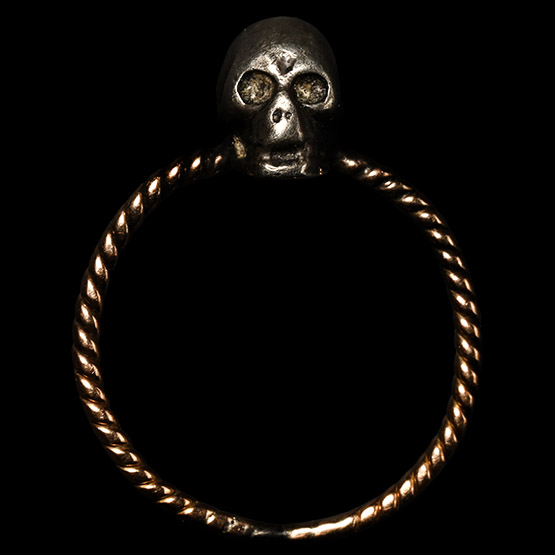
Georgian Gold Ring with Silver Skull
19th-20th century A.D.Sold for (Inc. bp): £585
Beaded wire hoop with applied silver skull motif; usage wear to inner face. 2.93 grams, 25.00 mm overall, 16.81 mm internal diameter (approximate size British M, USA 6, Europe 12.46, Japan 12)
Private collection, Europe. Acquired on the English art market. -
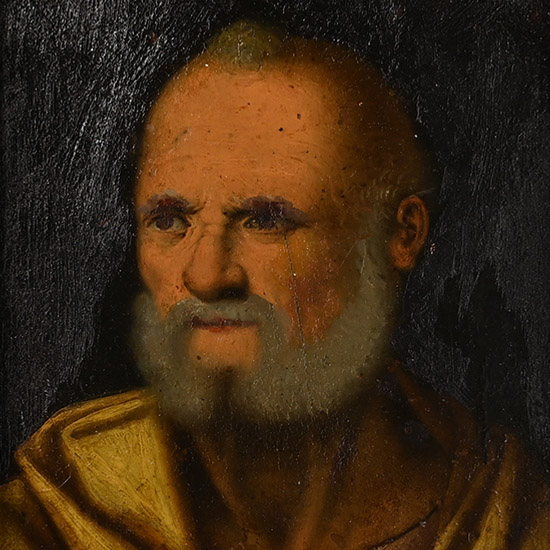
Painting of a Saint by a Follower of Giovanni Bellini
Italy, 1430-1516 A.D.Sold for (Inc. bp): £351
Depicting a bust of a bearded mature man, probably a saint, wearing a yellow cloak and a lighter undergarment, looking to the side with a pensive expression, with a small tuft of grey hair on top of his head; oil on copper panel and set in a moulded frame, an old label on the reverse 'Italian School: 'Study of a Man with a Grey Beard' oil on copper, 7 x 5ins.' 1.26 kg total, 32 x 27.5 cm
Private collection, London, UK.
