
Loading, please wait...
LOT 1416
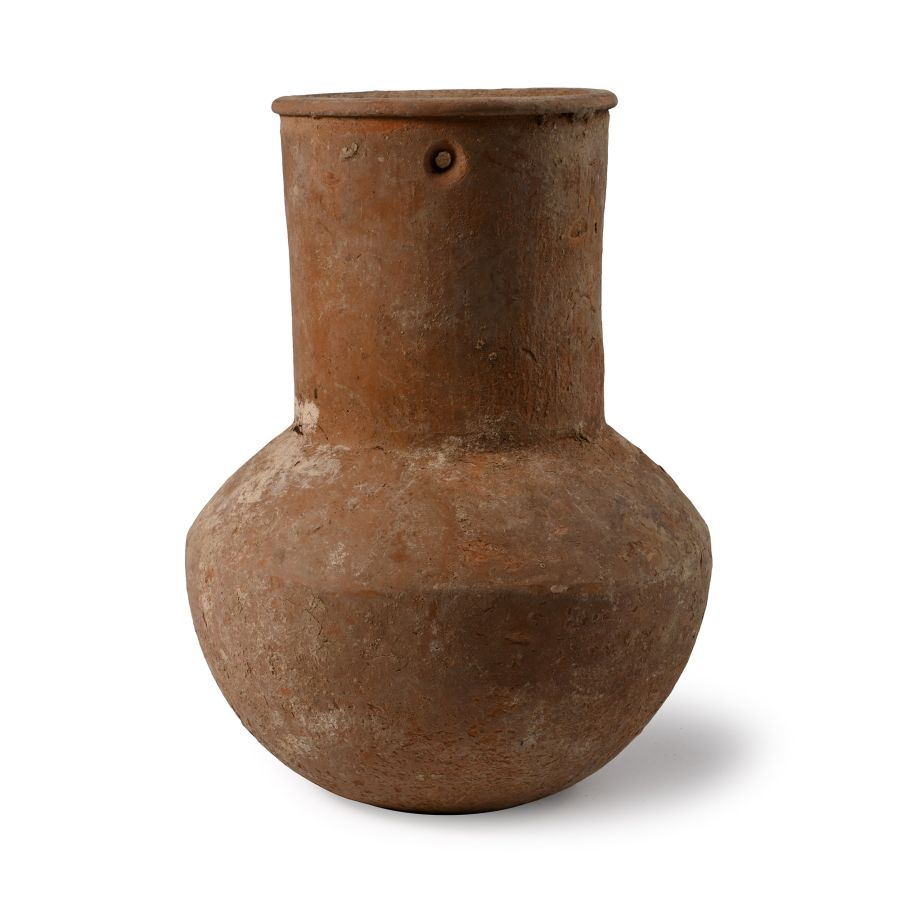
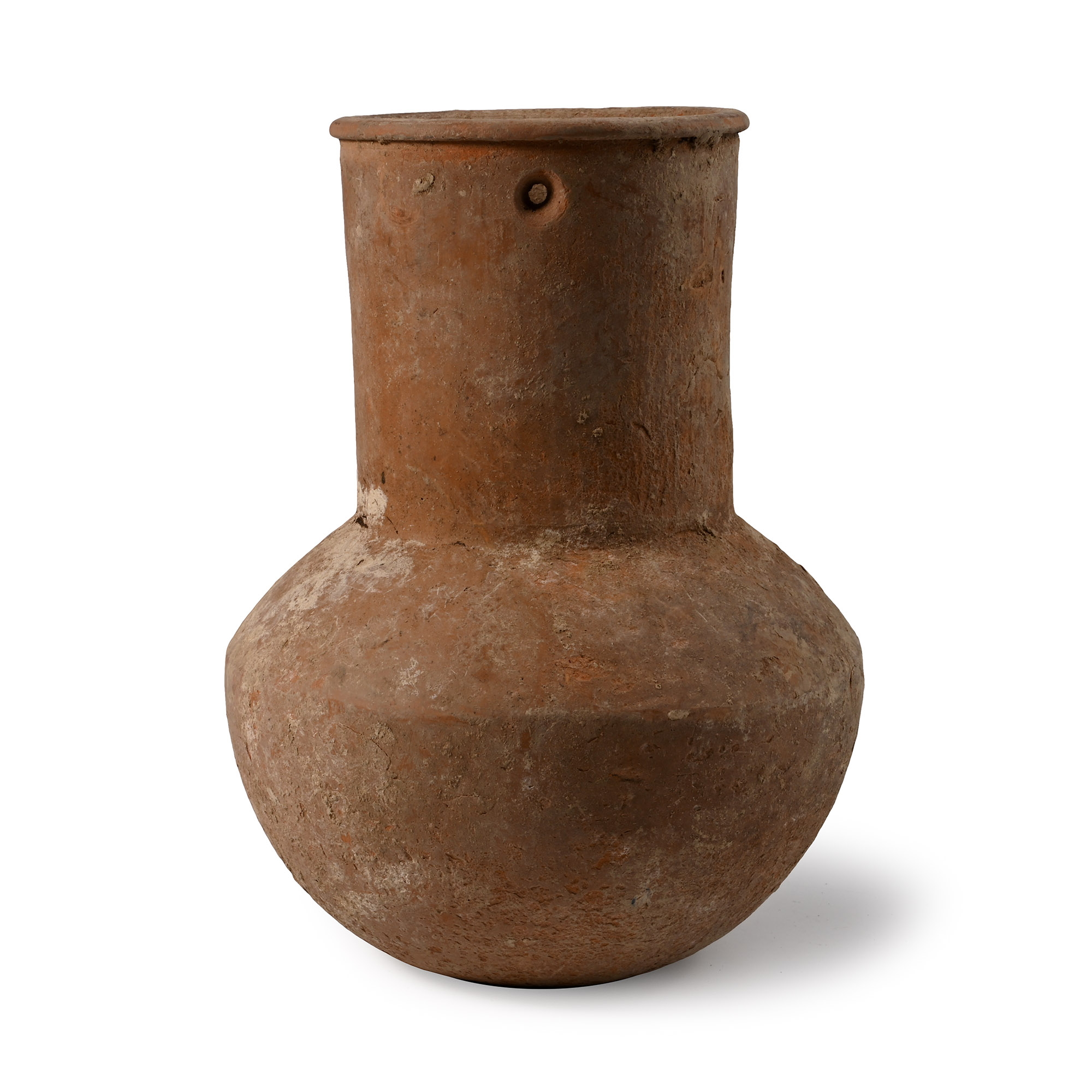
Large Luristan Terracotta Storage Vessel
1ST MILLENNIUM B.C.
8 1/2 in. (900 grams, 21.5 cm).
Squat body with funicular neck and rolled rim, the upper part of the neck with two piercings.
ProvenanceAcquired on the UK art market before 2000.
Property of an Essex, UK, gentleman.
TimeLine Auctions follows a vetting process to ensure the authenticity and legality of all items, reinforcing our commitment to integrity and responsible trading. Each antiquity, antique, and coin lot undergoes thorough examination by a vetting committee of at least ten external specialists, professional trade association members, scientists, and archaeologists: Our Vetting Process
AUCTIONS:
TimeLine is a leading auction house specialising in antiquities, ancient art, collectables, natural history, coins, medals, and books. Our auctions offer museums, collectors, historians, and enthusiasts the opportunity to acquire unique and historically significant pieces.
-
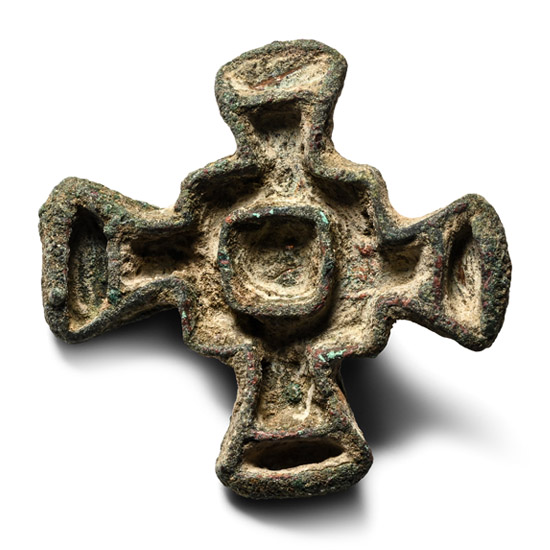
West Central Asian Bronze Quadrate Cross Seal Matrix
Circa 2300-2000 B.C.Sold for (Inc. bp): £39
Comprising a cross-shaped body with a small loop on the reverse, accompanied by an old scholarly note, typed and signed by W.G. Lambert, late Professor of Assyriology, University of Birmingham, 1970-1993, which states: 'Stamp Seal of Bronze, 39 x 38 x 12 mm. This bears the shape of the design, with flat compartmented face and flat back on which is mounted a loop handle for suspension. The design is a quadrate cross with small square in the middle, and to the end of each arm is added a rough oblong shape. This comes from west central Asia and dates to c. 2300-2000 B.C. It is generally in good condition, only the handle is worn and the outer edges are also a little worn in two places.' 17.1 grams, 39 mm
Acquired in the late 1980s-early 1990s. Ex property of a West London businessman. Academically researched and catalogued by the late Professor Lambert in the early 1990s. Accompanied by a copy of a scholarly report, numbered U-388, typed and signed by Professor Wilfrid George Lambert. -
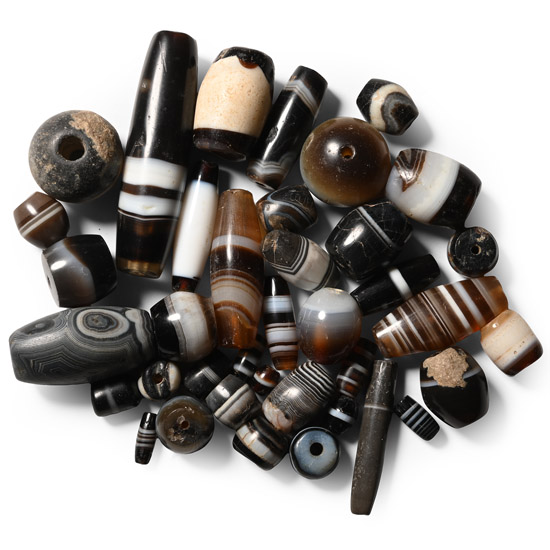
Western Asiatic Banded Agate Bead Collection
1st millennium B.C. and laterSold for (Inc. bp): £715
Comprising tubular, barrel-shaped, oblate and other types. 55 grams total, 4-38 mm
From the private collection of a European gentleman (1942-2024), formed since the 1970s. -
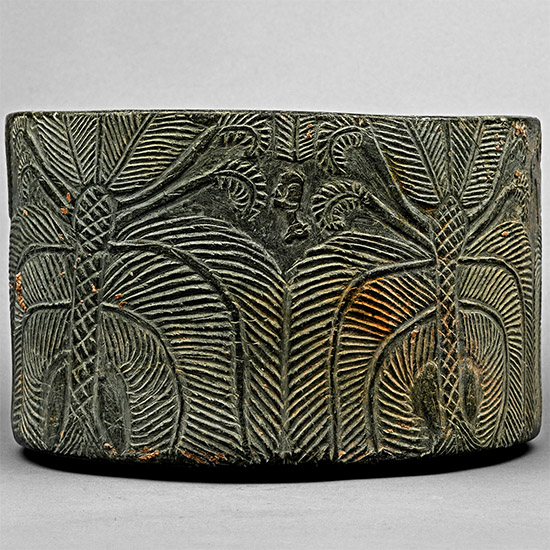
Mesopotamian Steatite Bowl with Animals and Palm Trees
3rd millennium B.C.Sold for (Inc. bp): £10,400
Drum-shaped steatite vessel with broad flat rim; low-relief frieze to the outer face: dense vegetation panels with hatched treetrunks and fronds, resting quadrupeds, each with the legs folded beneath the body. 5.3 kg, 24.5 cm wide
Acquired by a Swiss family in the mid-1980s to late 1990s, thence by descent. Private collection, Switzerland, since the late 1990s. Accompanied by an academic report by Dr Raffaele D’Amato. This lot has been checked against the Interpol Database of stolen works of art and is accompanied by search certificate number no.13026-246787.
In Mesopotamia ancient stone-carvers produced a variety of vessels from soft soapstone (steatite) and pale yellow alabaster, along with jewellery. They include cylindrical boxes, cups, high open-rim vases and a few globular jars. Among it the most prominent products were the cups with tall, slender stalks, apparently intended for religious purposes. The repertoire of motifs of the ‘Intercultural Style’ includes vegetal, architectural, and abstract or naturalistic representations of people and animals, depicted in a carved and inlaid technique.
