
Loading, please wait...
LOT 1518
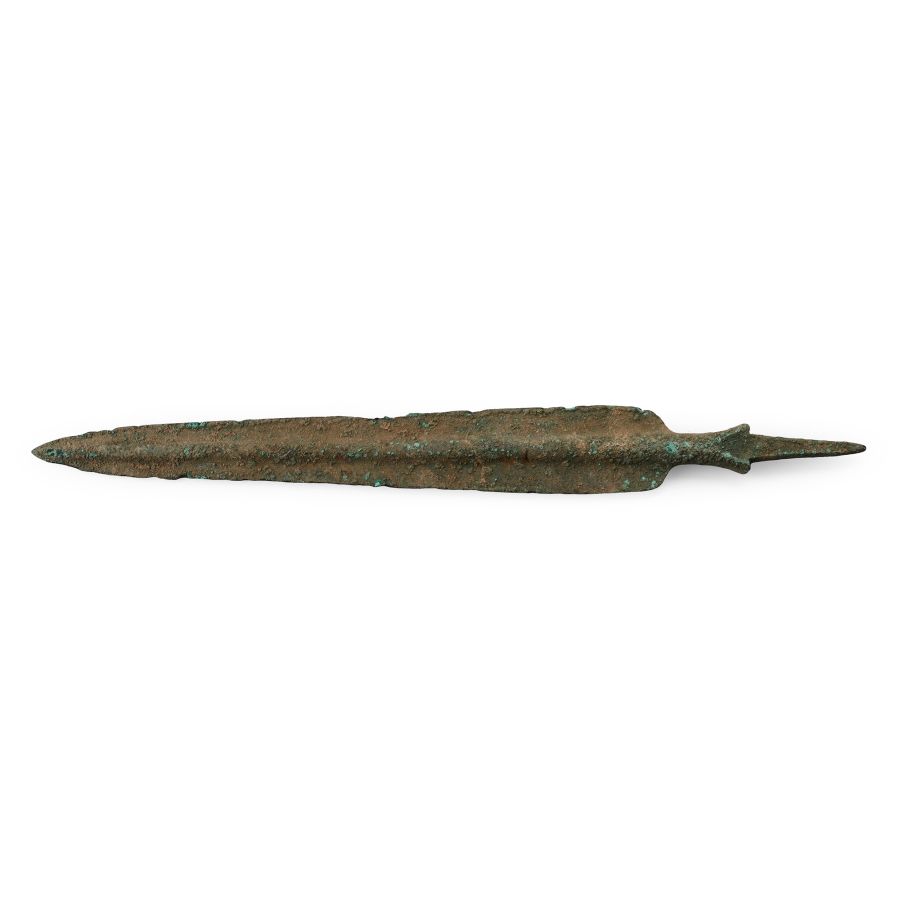
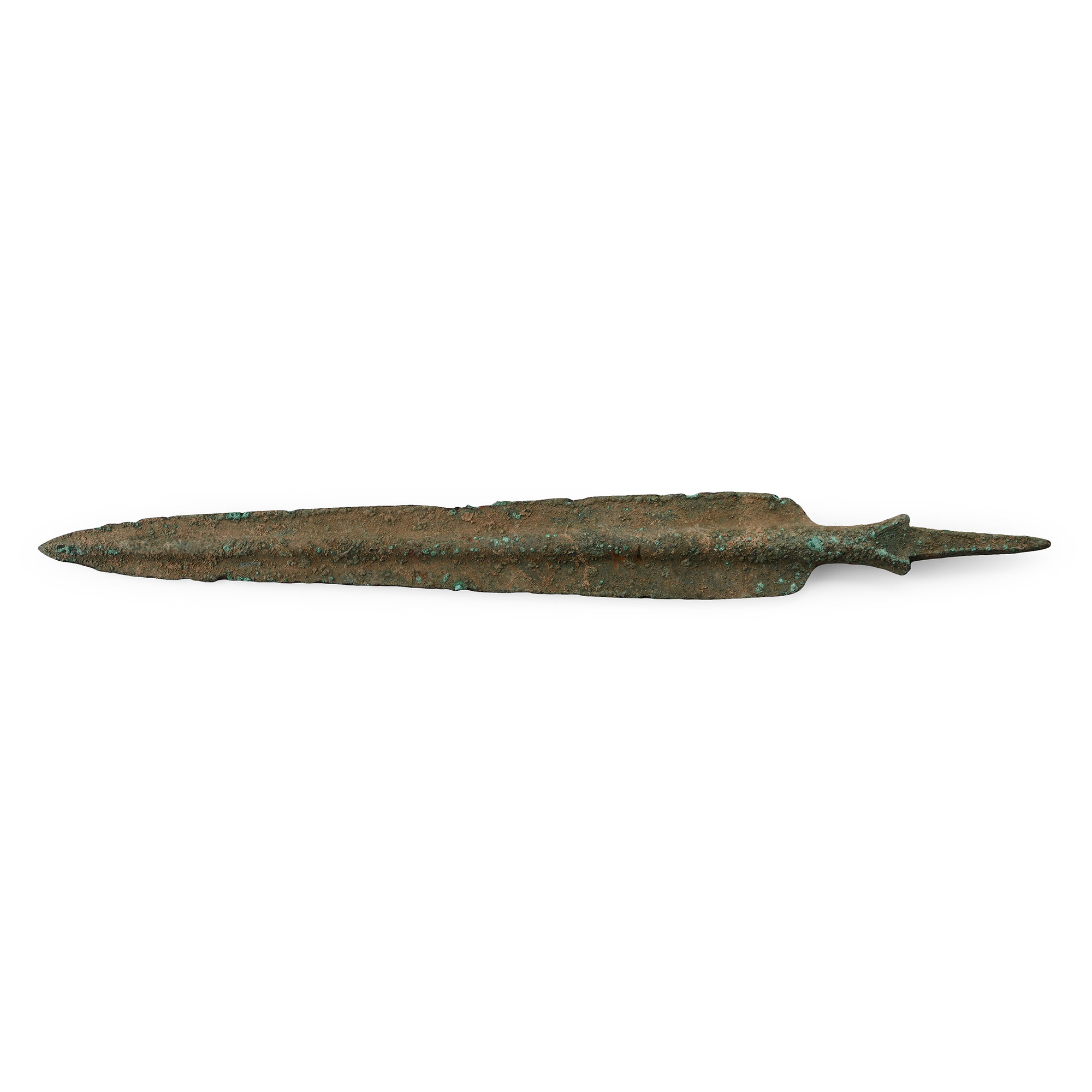
Large Luristan Bronze Spearhead
2ND-1ST MILLENNIUM B.C.
16 1/2 in. (464 grams, 42 cm).
Triangular in profile with rounded shoulders and square-section mid-rib running to the tip; short flared neck and square-section tang.
ProvenanceAcquired in the 1990s.
Ex Abelita family collection.
This lot is accompanied by an illustrated lot declaration signed by the Head of the Antiquities Department, Dr Raffaele D'Amato.
Cf. Khorasani, M.M., Arms and Armor from Iran: The Bronze Age to the End of the Qajar Period, Tübingen, 2006, p.628, no.275, for type.
CONDITIONTimeLine Auctions follows a vetting process to ensure the authenticity and legality of all items, reinforcing our commitment to integrity and responsible trading. Each antiquity, antique, and coin lot undergoes thorough examination by a vetting committee of at least ten external specialists, professional trade association members, scientists, and archaeologists: Our Vetting Process
AUCTIONS:
TimeLine is a leading auction house specialising in antiquities, ancient art, collectables, natural history, coins, medals, and books. Our auctions offer museums, collectors, historians, and enthusiasts the opportunity to acquire unique and historically significant pieces.
-
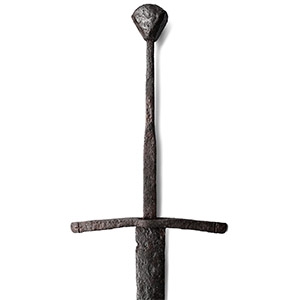
Massive Medieval Iron Two-Handed Knight's Sword with Crosses on Guard
Germany, circa 14th century A.D.Sold for (Inc. bp): £3,380
Tapering blade with a shallow fuller, long and narrow tang with a pear-shaped pommel and a curved cross-guard of Oakeshott Style 6 with incised crosses; professionally conserved. 1.94 kg, 1.42 m
From the private family collection of a lady, UK; acquired in Germany mid 20th century. Accompanied by an academic report by Dr Raffaele D’Amato. This lot has been checked against the Interpol Database of stolen works of art and is accompanied by search certificate number no.12788-240330. This lot has been cleared against the Art Loss Register database, and is accompanied by an illustrated lot declaration signed by the Head of the Antiquities Department, Dr Raffaele D'Amato.
The noteworthy element of this sword is its guard with the engraved crosses. The presence of the cross suggests that the sword once belonged to person belonging to a military order of chivalry. Considering that the Templars were already destroyed when the sword was made, the main candidates could be the Hospitallers or, most probably, the Teutonic Knights. -
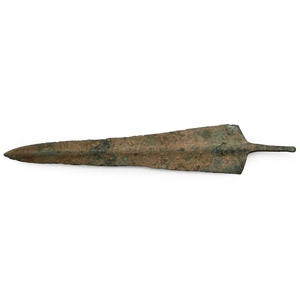
Luristan Bronze Leaf-Shaped Dagger
2nd-1st millennium B.C.Sold for (Inc. bp): £130
Triangular double-edged blade with flat midrib and short tang with flattened end. 211 grams, 32.5 cm
Acquired in the 1990s. Ex Abelita family collection. This lot is accompanied by an illustrated lot declaration signed by the Head of the Antiquities Department, Dr Raffaele D'Amato. -
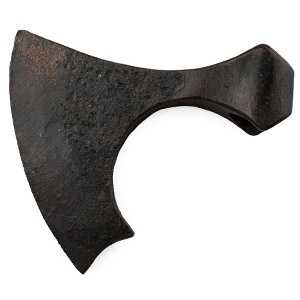
Viking Age Iron Bearded Axehead
9th-11th century A.D.Sold for (Inc. bp): £416
With curved blade and chin to the lower edge, round socket with lateral triangular flanges and flattened rear-edge. 252 grams, 11.2 cm
Fine condition.
Private collection, 1990s. Property of a Sussex, UK, teacher. This lot is accompanied by an illustrated lot declaration signed by the Head of the Antiquities Department, Dr Raffaele D'Amato.
This type of bearded axe seems to correspond to the E2 category of the Viking axe classification. Usually these bearded axeheads (skeggöks) had a longer edge, designed to split tree trunks into planks and beams. Some of the bearded axes were known as halfÞynna öx; the neck on such 'half thin axe' was thinly forged, to make it lighter. Bearded axes of this type appear also in the weaponry of people from the Baltic.
