
Loading, please wait...
LOT 1218
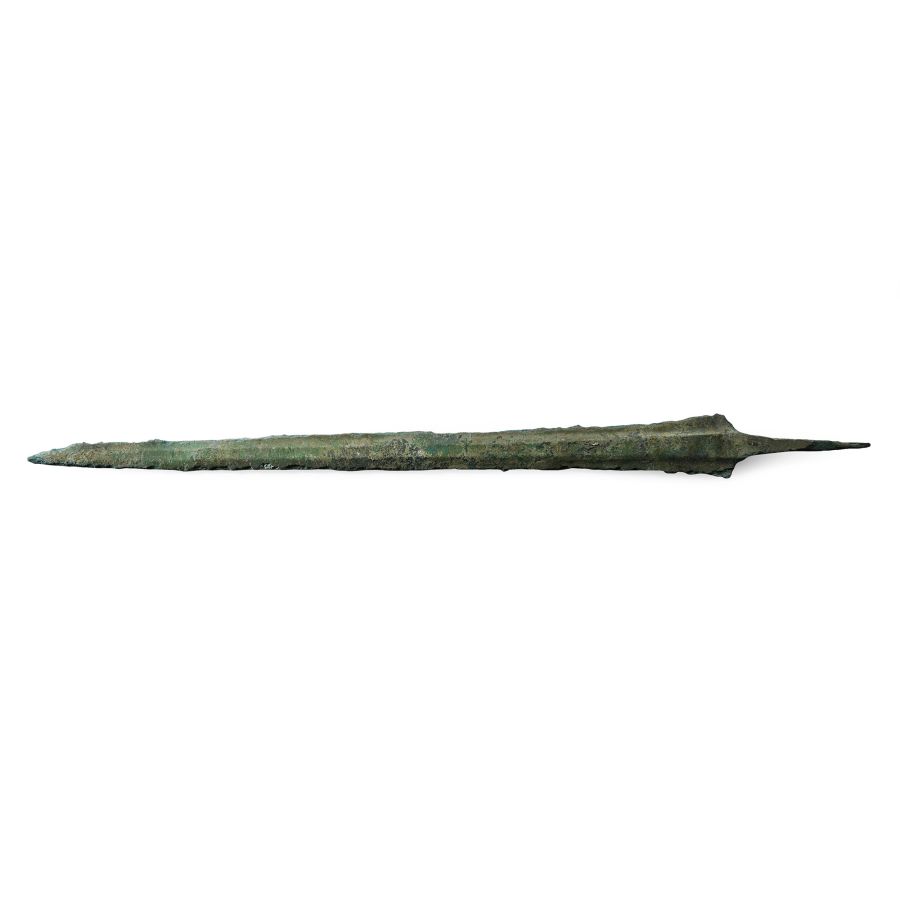
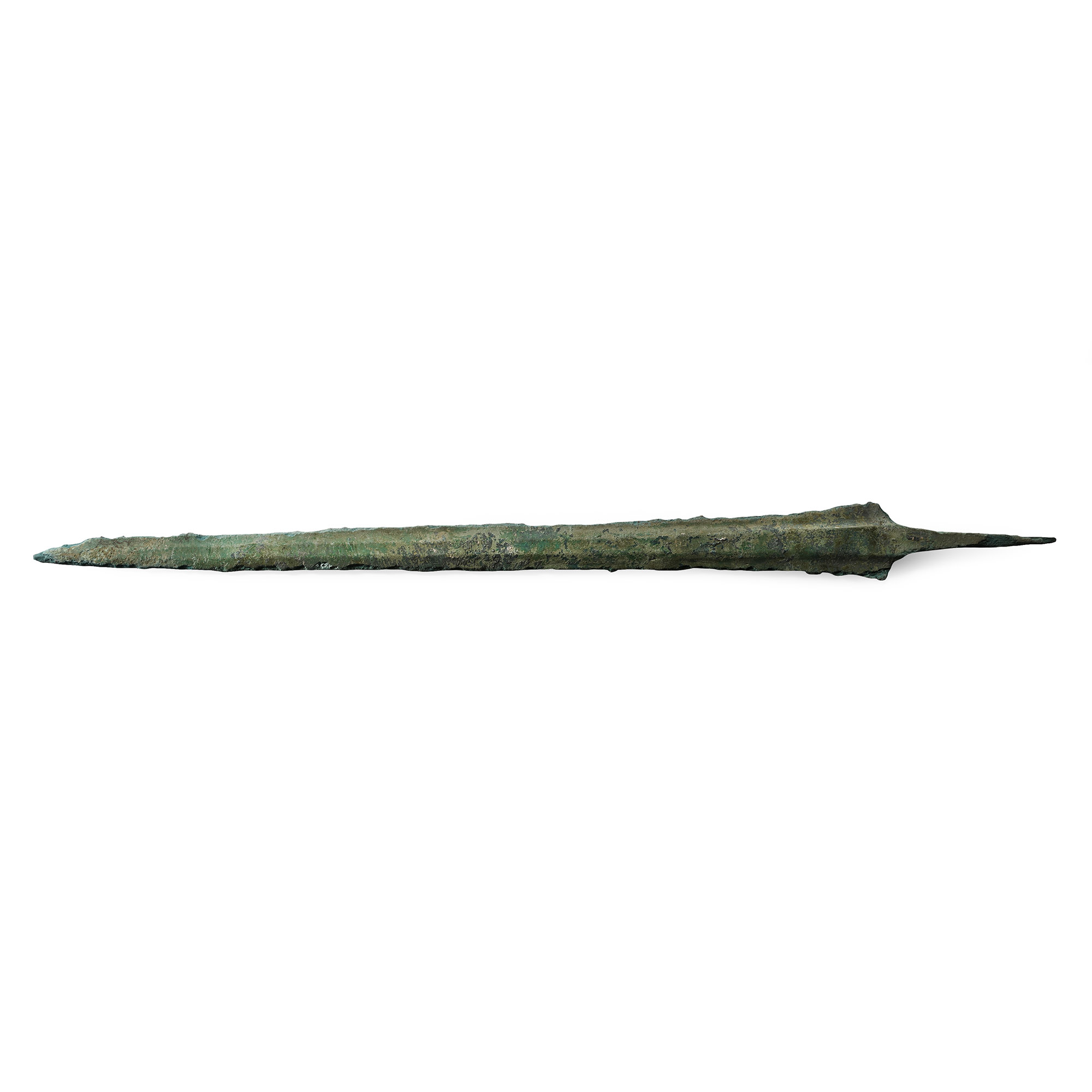
Large Luristan Bronze Spearhead
14TH-10TH CENTURY B.C.
16 7/8 in. (185 grams, 43 cm).
With rounded shoulders and square-section mid-rib running to the tip; short tang.
ProvenanceAcquired in the 1990s.
Ex Abelita family collection.
This lot has been cleared against the Art Loss Register database, and is accompanied by an illustrated lot declaration signed by the Head of the Antiquities Department, Dr Raffaele D'Amato.
Cf. Khorasani, M.M., Arms and Armor from Iran: The Bronze Age to the End of the Qajar Period, Tübingen, 2006, p.628, no.275, for type.
FootnotesThe spearhead belongs to the type VI spearhead of the Khorasani classification. It is characterised by a long blade and short tang, slightly rounded shoulders and pronounced midrib. Similar weapons were excavated by Prof. Negahban in the royal cemetery of Marlik.
CONDITIONTimeLine Auctions follows a vetting process to ensure the authenticity and legality of all items, reinforcing our commitment to integrity and responsible trading. Each antiquity, antique, and coin lot undergoes thorough examination by a vetting committee of at least ten external specialists, professional trade association members, scientists, and archaeologists: Our Vetting Process
AUCTIONS:
TimeLine is a leading auction house specialising in antiquities, ancient art, collectables, natural history, coins, medals, and books. Our auctions offer museums, collectors, historians, and enthusiasts the opportunity to acquire unique and historically significant pieces.
-
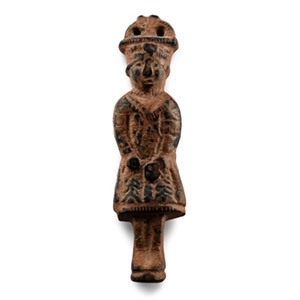
Western Asiatic Bronze Standing Figure Mount
16th-18th century A.D.Sold for (Inc. bp): £234
An appliqué of a female standing wearing a decorated knee-length robe, hands on her thighs holding a purse(?), elaborate pierced headdress; hollow to the reverse. 44 grams, 74 mm
Fine condition.
From a private Belgian collection; previously part of a private collection formed in Germany in the 1990s. From the private collection of John Meredith, acquired since the 1990s; thence by descent. This lot has been cleared against the Art Loss Register database, and is accompanied by an illustrated lot declaration signed by the Head of the Antiquities Department, Dr Raffaele D'Amato. -
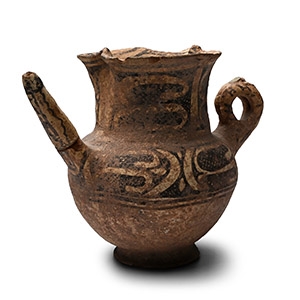
Western Asiatic Terracotta Spouted Vessel
8th-9th century A.D.Estimate: £400 - 600 (+bp*)
Opening Bid: £200
With bulbous body, looped handle and tapering spout, broad columnar neck with crimped detailing, bands of reserved tendrils on a hatched field. 523 grams, 18.5 cm wide
UK collection, 1990s. Acquired on the UK art market, before 2000. Private collection, Mr M.V., a London-based businessman. This lot has been cleared against the Art Loss Register database, and is accompanied by an illustrated lot declaration signed by the Head of the Antiquities Department, Dr Raffaele D'Amato. -
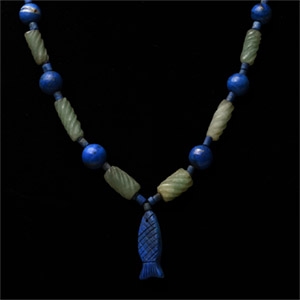
Western Asiatic Lapis Lazuli and Green Stone Bead Necklace String
20th century A.D.Sold for (Inc. bp): £26
Composed of large cylindrical beads with spiral-decoration, interspersed with large spherical and small tubular beads, central feature a fish-shaped pendant. 50 grams, 43 cm
From the London, UK, art market in the 1990s. This lot has been cleared against the Art Loss Register database, and is accompanied by an illustrated lot declaration signed by the Head of the Antiquities Department, Dr Raffaele D'Amato.
