
Loading, please wait...
LOT 1475
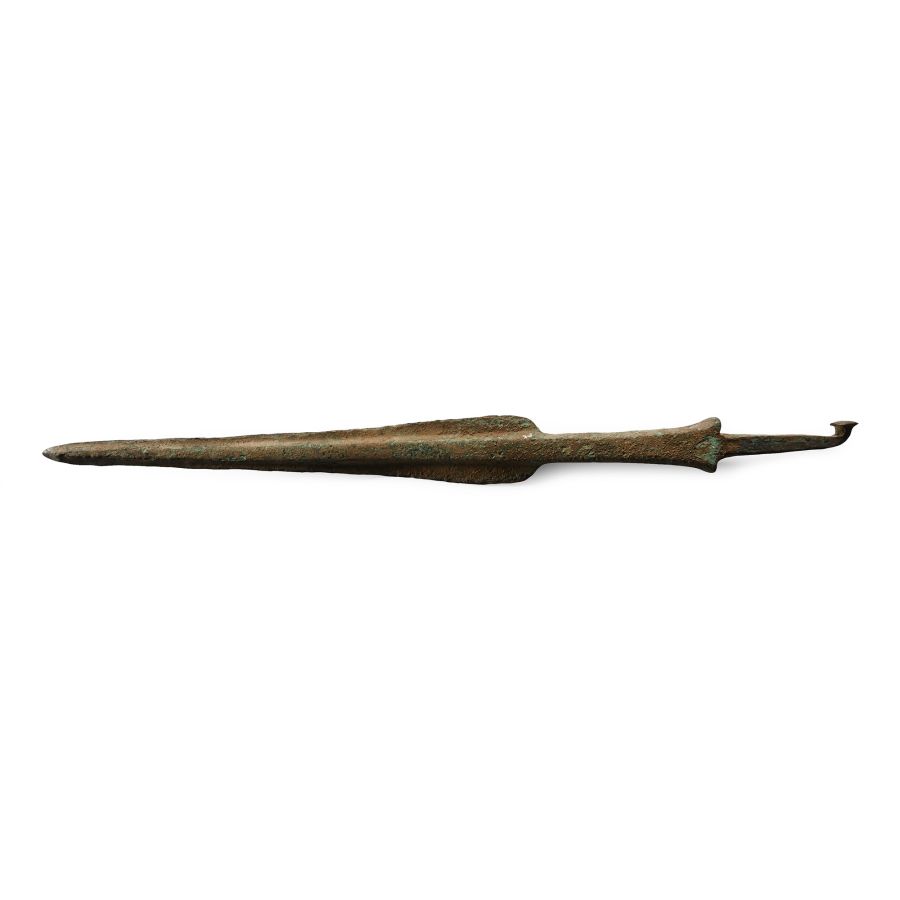
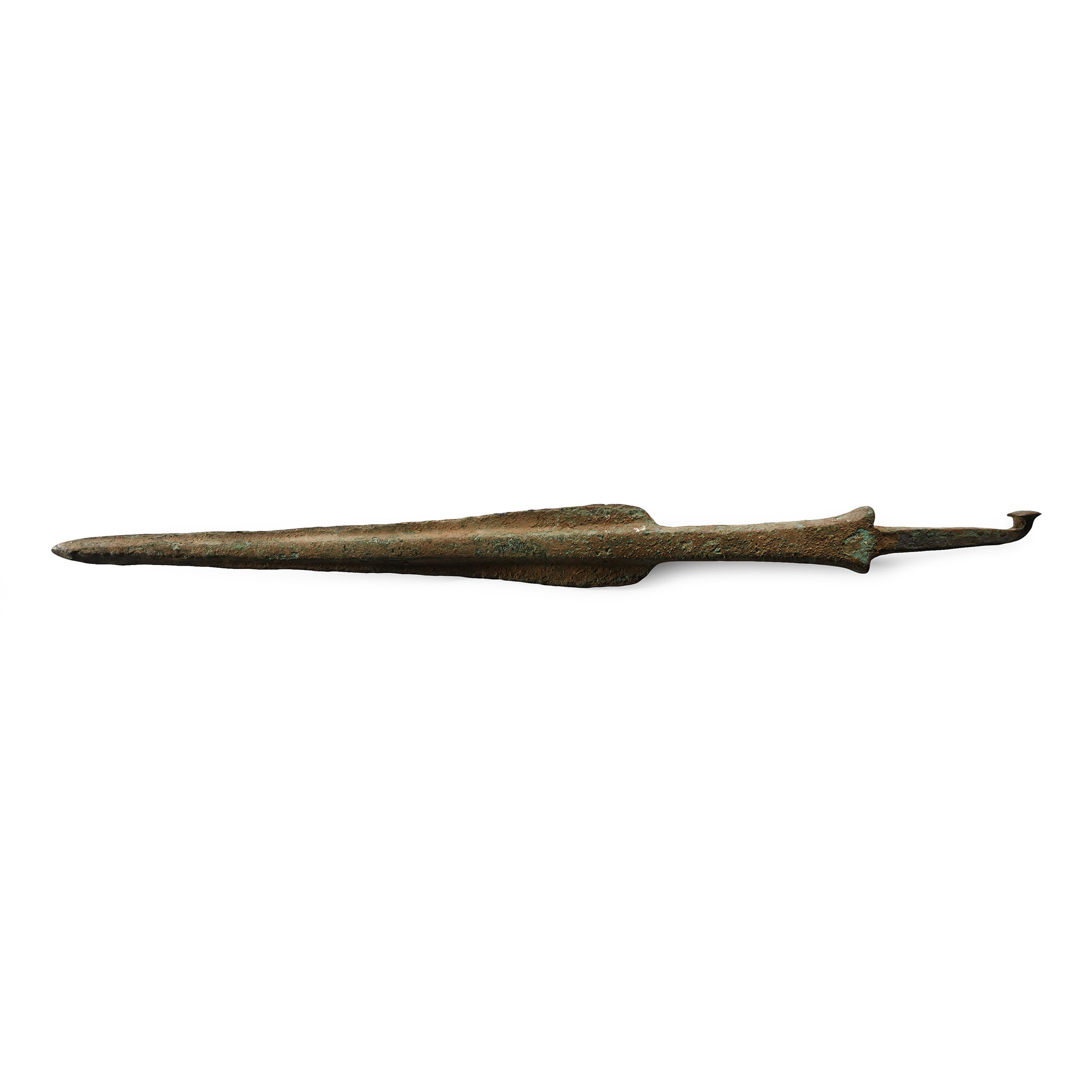
Large Luristan Bronze Spearhead
1200-1100 B.C.
16 3/4 in. (432 grams, 42.5 cm).
With ovate blade, central rib and curved shoulders, the lozenge-section long shaft tapering towards the end, rectangular tang with bent tip.
ProvenanceAcquired in the 1990s.
Ex Abelita family collection.
This lot is accompanied by an illustrated lot declaration signed by the Head of the Antiquities Department, Dr Raffaele D'Amato.
Cf. Khorasani, M.M., Arms and Armour from Iran. The Bronze Age to the End of the Qajar Period, Tübingen, 2006, item 291, p.636.
FootnotesThe spearhead represents a slender variant of type 1 of Khorasani classification. The type 1 was characterised by the bent tang. It was the evolution of a typology which began much earlier in Mesopotamia and the fertile crescent, the type 4 of the Stronach classification, with straight tang and square section, usually thickened at the base with a button tang.
CONDITIONTimeLine Auctions follows a vetting process to ensure the authenticity and legality of all items, reinforcing our commitment to integrity and responsible trading. Each antiquity, antique, and coin lot undergoes thorough examination by a vetting committee of at least ten external specialists, professional trade association members, scientists, and archaeologists: Our Vetting Process
AUCTIONS:
TimeLine is a leading auction house specialising in antiquities, ancient art, collectables, natural history, coins, medals, and books. Our auctions offer museums, collectors, historians, and enthusiasts the opportunity to acquire unique and historically significant pieces.
-
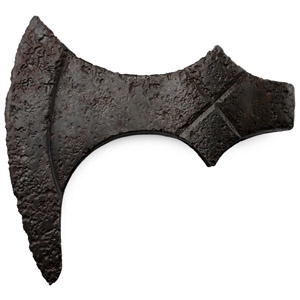
Viking Age Iron Hooked Axehead
Circa 9th-11th century A.D.Sold for (Inc. bp): £598
With long, deeply curved blade, narrow neck, socket with triangular flanges and incised crossed lines, rectangular extension to the rear. 378 grams, 13.5 cm
Ex North American private collection, 1970s. This lot is accompanied by an illustrated lot declaration signed by the Head of the Antiquities Department, Dr Raffaele D'Amato. -
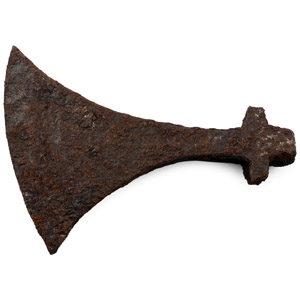
Viking Age Danish Iron Broad Axehead
Late 10th-early 11th century A.D.Sold for (Inc. bp): £572
With rectangular spurs above and below the curved socket, medium-broad flaring triangular-section blade extending to a curved edge, hammer extension to the rear. 245 grams, 13.6 cm
Fair condition.
Private collection, York, UK, 1990s. Property of a Sussex, UK, teacher. This lot is accompanied by an illustrated lot declaration signed by the Head of the Antiquities Department, Dr Raffaele D'Amato.
The first specialised battle-axes which appeared in the second half of the 10th century A.D. were light, narrow, usually thinly forged but with broad-edged blades, sometimes decorated with precious metals. -
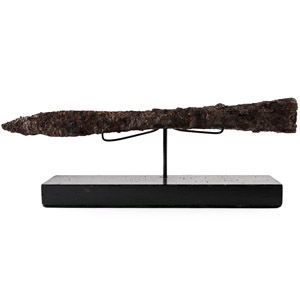
Viking Socketted Iron Spearhead
9th-11th century A.D.Sold for (Inc. bp): £98
Leaf-shaped blade and tapering, round-section socket, pierced for attachment to a shaft; accompanied by a custom-made display stand. 162 grams, 22 cm long (229 grams total including stand)
Fair condition.
UK gallery, acquired in the 2000s. Property of an English gentleman. This lot is accompanied by an illustrated lot declaration signed by the Head of the Antiquities Department, Dr Raffaele D'Amato.
