
Loading, please wait...
LOT 1402
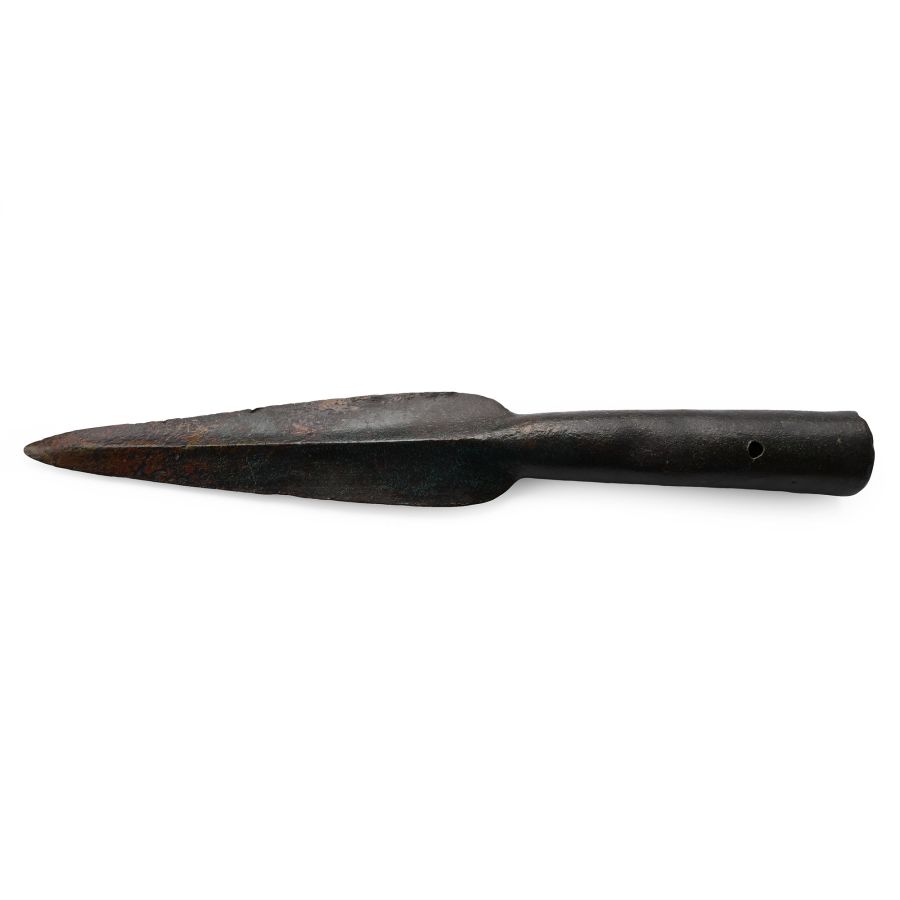
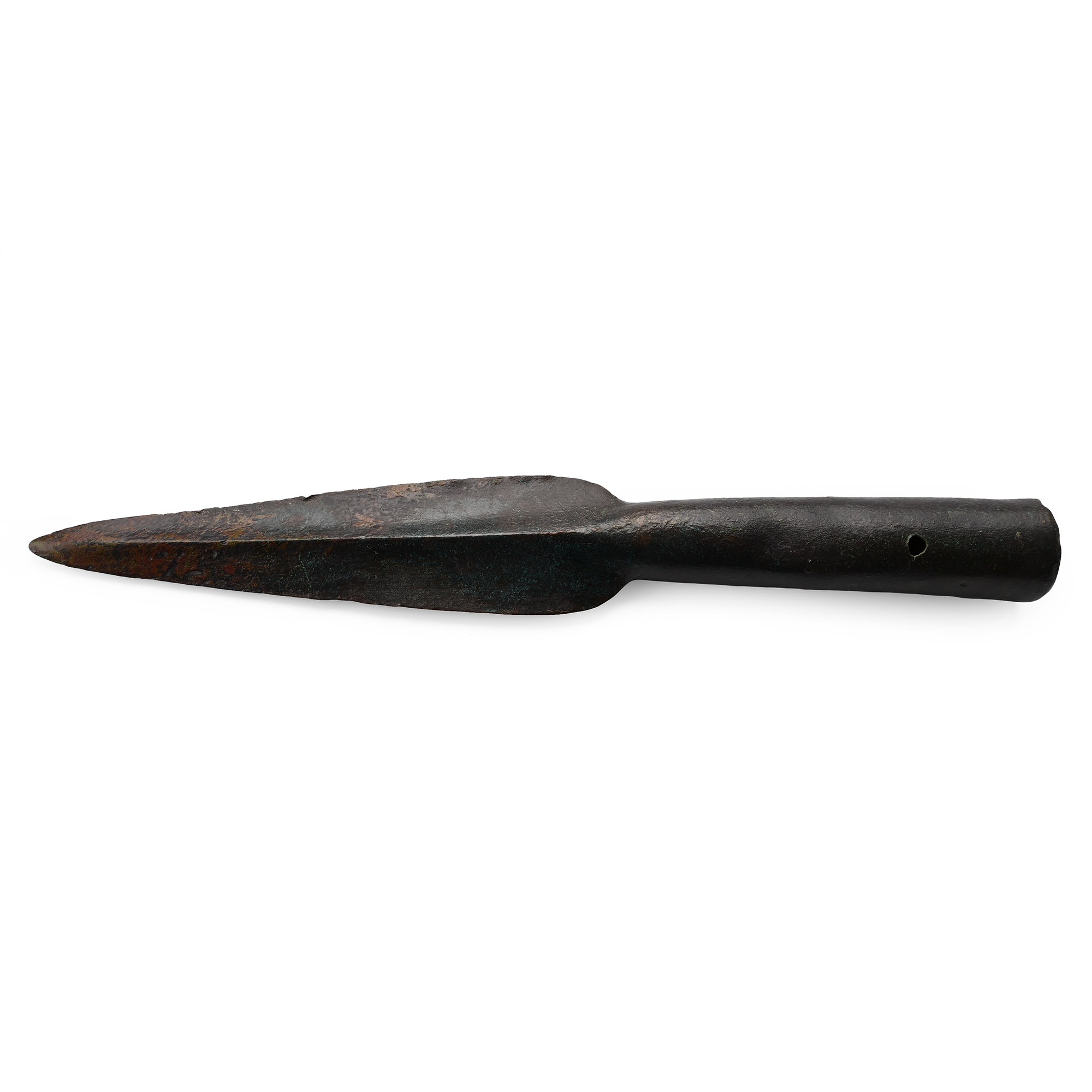
Large Luristan Bronze Socketted Spearhead
2ND-1ST MILLENNIUM B.C.
11 in. (375 grams, 28 cm).
With broad leaf-shaped blade, heavy midrib and tapering tubular socket pierced for attachment in two directions.
ProvenanceAcquired in the 1990s.
Ex Abelita family collection.
This lot is accompanied by an illustrated lot declaration signed by the Head of the Antiquities Department, Dr Raffaele D'Amato.
TimeLine Auctions follows a vetting process to ensure the authenticity and legality of all items, reinforcing our commitment to integrity and responsible trading. Each antiquity, antique, and coin lot undergoes thorough examination by a vetting committee of at least ten external specialists, professional trade association members, scientists, and archaeologists: Our Vetting Process
AUCTIONS:
TimeLine is a leading auction house specialising in antiquities, ancient art, collectables, natural history, coins, medals, and books. Our auctions offer museums, collectors, historians, and enthusiasts the opportunity to acquire unique and historically significant pieces.
LOT 1402
Large Luristan Bronze Socketted Spearhead
Estimate £250 - 350€290 - 410 (for guidance only)$340 - 470 (for guidance only)
-
.jpg)
Greek Pontic Tinned Bronze Chalcidian Helmet
5th-3rd century B.C.Sold for (Inc. bp): £16,250
The bowl forged from a single piece and fitted with removable cheek-pieces; the dome divided into two halves by a carinated ridge, the peaked crown separated from the lower helmet wall by an indented ridge; cut-outs for ears and eyes with raised edges; short, angular neck-guard and short nose-guard extending to the eyebrows; the cheek-pieces with contoured front edge, holes for a chin-strap; remains of textile on the left side of the bowl; accompanied by a display stand. 2.15 kg total, 43 cm high including stand
From the collection of T.K., Germany, 1970s. Acquired in 1992 by Mr R.K. Acquired by the present owner on the UK art market. Accompanied by an academic report by Dr Raffaele D'Amato. This lot has been checked against the Interpol Database of stolen works of art and is accompanied by search certificate number no.12782-240166. This lot has been cleared against the Art Loss Register database, and is accompanied by an illustrated lot declaration signed by the Head of the Antiquities Department, Dr Raffaele D'Amato.
Hinged cheek-pieces, like in our specimen, appeared in Thracia during the 4th century, but prototypes from the Pontic area and wider Greece show them already in use in the 5th century B.C. The traces of textile on the left part of our helmet show that it was stored inside a protective item -perhaps a case or bag – guarding it against atmospheric agents or possible damage when not in use. -
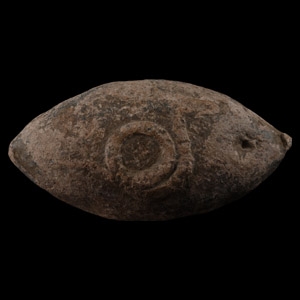
Greek Slingshot with Snake
4th-1st century B.C.Estimate: £300 - 400 (‡+bp*)
Opening Bid: £150
Lentoid in form with raised figure of a coiled snake to one face, possible legend to reverse. 31.2 grams, 31 mm
Private collection, Austria. Private collection, Europe. This lot is accompanied by an illustrated lot declaration signed by the Head of the Antiquities Department, Dr Raffaele D'Amato. -
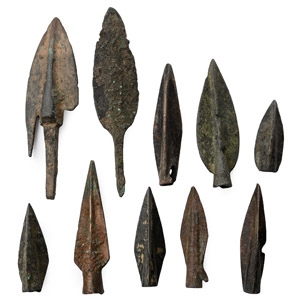
Greek Period High Quality Bronze Arrowhead Collection
5th-3rd century B.C.Sold for (Inc. bp): £130
Mainly triangular-section and socketted leaf types. 51 grams total, 24-66 mm
From an English collection formed before 2000. This lot is accompanied by an illustrated lot declaration signed by the Head of the Antiquities Department, Dr Raffaele D'Amato.
