
Loading, please wait...
LOT 1770
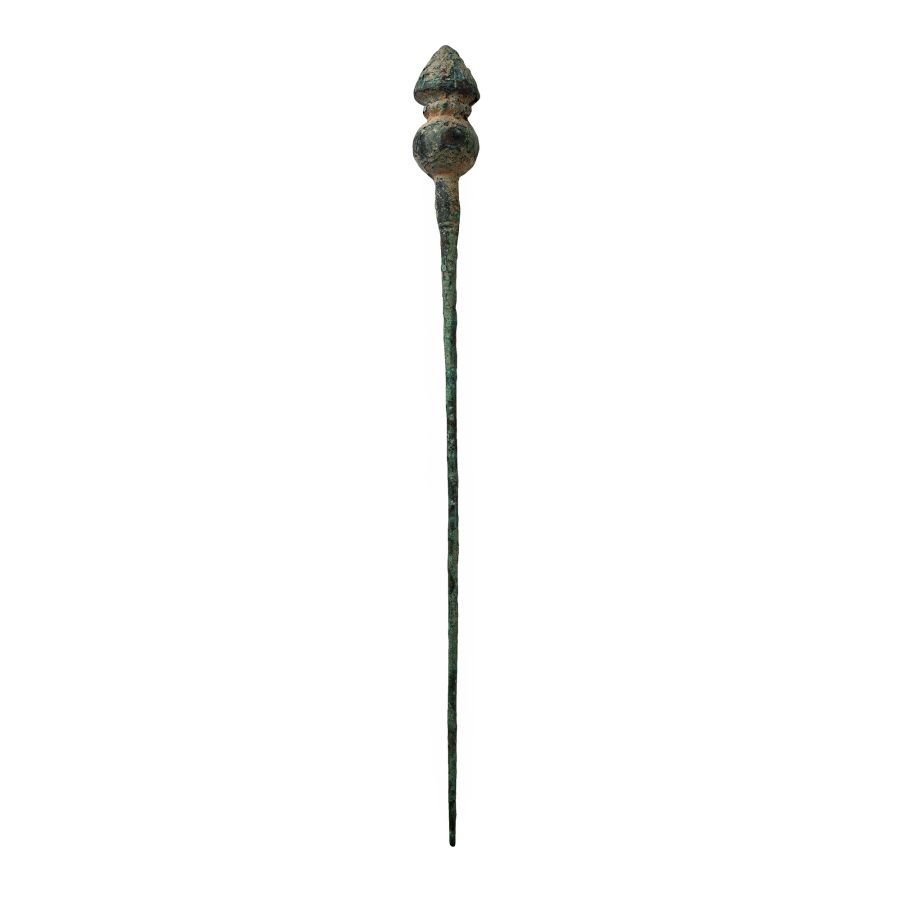
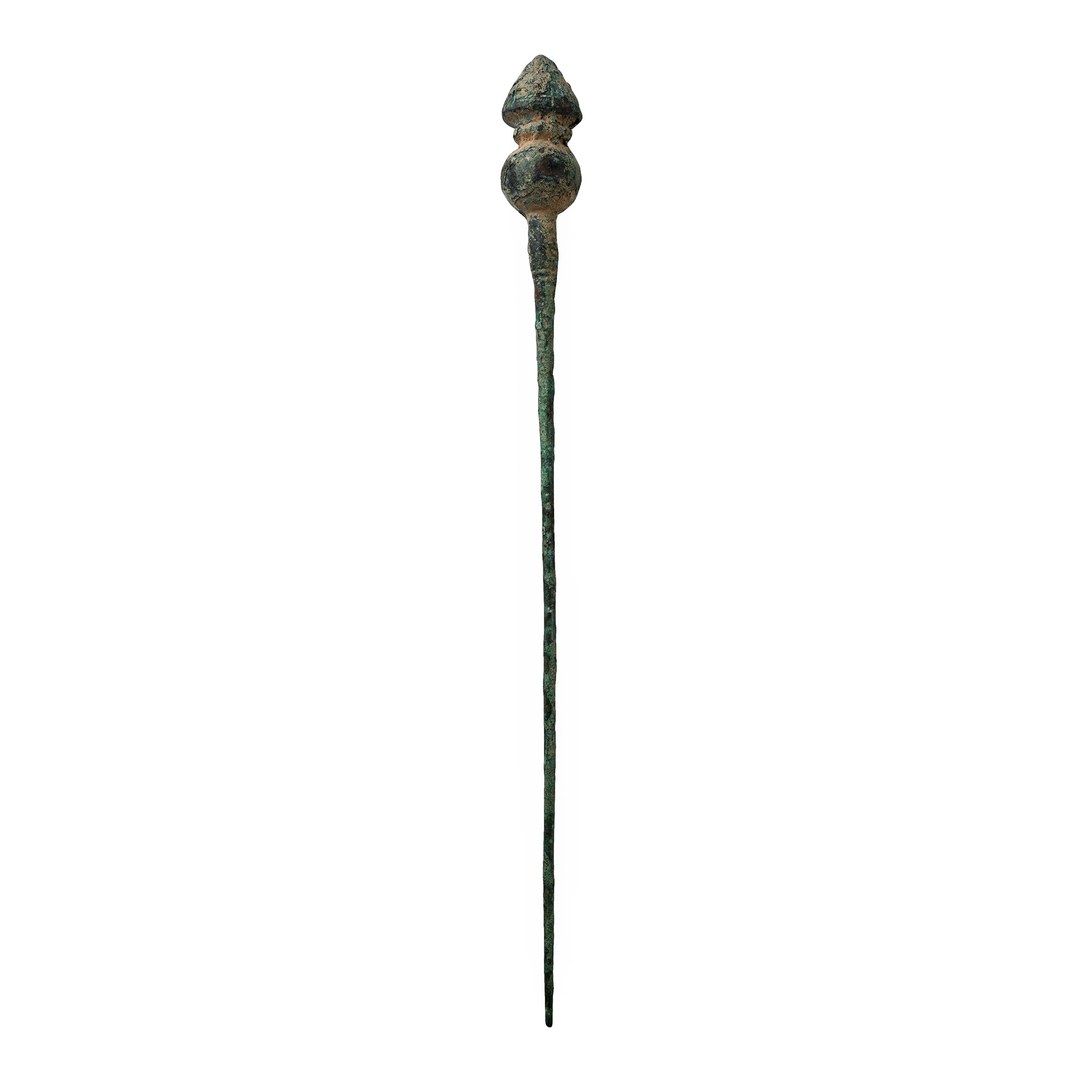
Large Luristan Bronze Poppy-Headed Cloak Pin
8TH-7TH CENTURY B.C.
12 in. (145 grams, 30.3 cm).
Comprising a substantial round-sectioned pin with a bulbous poppy-shaped conical head. [No Reserve]
ProvenanceAcquired on the UK art market since the 1960s.
From the private collection of Mr J.P.H., a Woolwich, UK, collector, his collection formed since the 1960s.
Cf. The Metropolitan Museum, accession number 43.102.24, for a similar pin; cf. also Various, The Museum Journal, Volume supplement, Catalogue, 1934, plate IV, fig.23, for a Luristan pin with the same head.
CONDITIONTimeLine Auctions follows a vetting process to ensure the authenticity and legality of all items, reinforcing our commitment to integrity and responsible trading. Each antiquity, antique, and coin lot undergoes thorough examination by a vetting committee of at least ten external specialists, professional trade association members, scientists, and archaeologists: Our Vetting Process
AUCTIONS:
TimeLine is a leading auction house specialising in antiquities, ancient art, collectables, natural history, coins, medals, and books. Our auctions offer museums, collectors, historians, and enthusiasts the opportunity to acquire unique and historically significant pieces.
LOT 1770
Large Luristan Bronze Poppy-Headed Cloak Pin
Estimate £60 - 80€70 - 93 (for guidance only)$81 - 108 (for guidance only)
Opening Bid
£5 (EUR 6; USD 7) +BP*
-
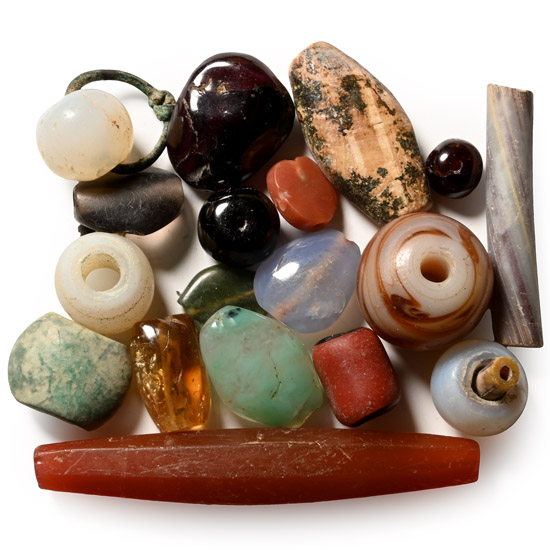
Western Asiatic Mixed Stone and Glass Bead Collection
Circa 1st millennium A.D. and laterEstimate: £40 - 60 (+bp*)
Opening Bid: £5
Group of beads in various shapes, including oblate, tubular, biconical, spherical, and others. 35 grams total, 7-50 mm
From the private collection of a European gentleman (1942-2024), formed since the 1970s. -
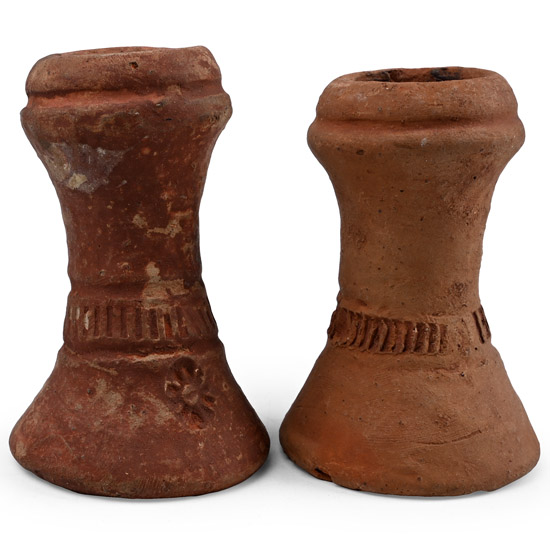
Western Asiatic Terracotta Candlestick Pair
Circa late 19th-early 20th century A.D.Estimate: £30 - 40 (+bp*)
Opening Bid: £5
Each with a broad flared base, waist with band of roulette detailing, and a stepped socket. 106 grams total, 62-66 mm
From a old Cheshire, UK, oriental collection, acquired 1960s-1970s. Acquired on the UK art market since the 1990s. From the property of a late Lincolnshire, UK, gentleman; thence by descent. -
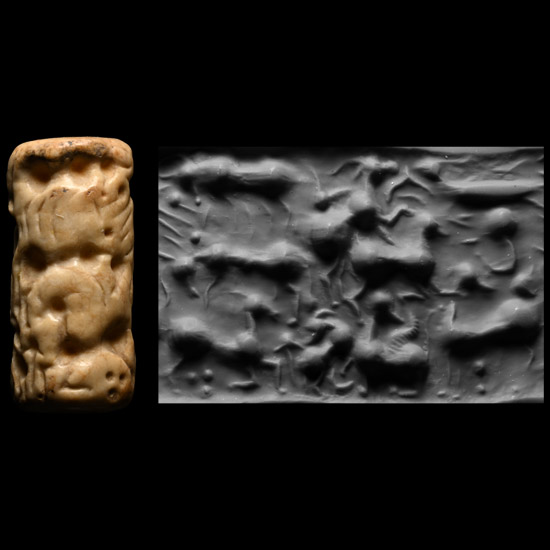
Large Cypriot or Levantine White Marble Cylinder Seal with Nine Quadrupeds and a Scorpion
2nd millennium B.C.Estimate: £1,800 - 2,400 (+bp*)
Opening Bid: £900
Cylinder with animals, restrung red stone bead to each end; accompanied by a copy of an old scholarly note, typed and signed by W.G. Lambert, late Professor of Assyriology, University of Birmingham, 1970-1993, which states: 'Cylinder Seal of White Marble, 37 x 12 mm. The glyptic shows a total of nine quadrupeds in various poses, one scorpion (?), and a few minor unidentified items. The Style of cutting shows much use of the drill, with linear representation of e.g. the animals' legs. all the various items are arranged to fill the space available very completely. This seal is not a well known type, but has similarities to seals found in Cyprus and the Levant, dating to the second half of the second millenium B.C. There was a great variety of local styles in this area and period, and the specimen being described here belongs to this category'; supplied with a museum-quality impression. 16 grams total, seal: 36.9 mm
Ex Mr K. Kobayashi, Galerie Archaique Ltd, Osaka, Japan, prior to 1988. Accompanied by a copy of an old scholarly note, typed and signed by W.G. Lambert, late Professor of Assyriology, University of Birmingham, 1991. This lot has been checked against the Interpol Database of stolen works of art and is accompanied by search certificate no.13466-262419.
This cylinder seal features a worship scene adapted from Mesopotamian tradition, which typically shows a goddess leading a worshipper toward an enthroned god. However, the Levantine artist has modified this traditional theme by replacing the goddess with a male figure. In keeping with ancient art conventions, the worshipper stands before the god with hands raised in prayer.
