
Loading, please wait...
LOT 1066
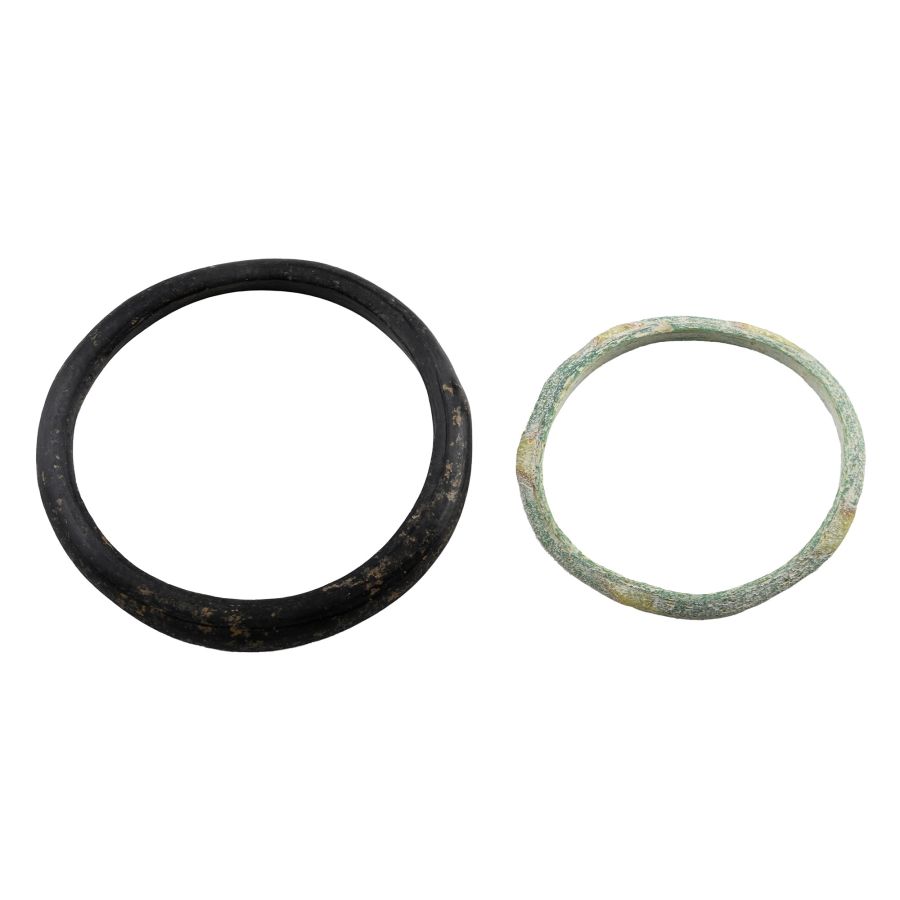
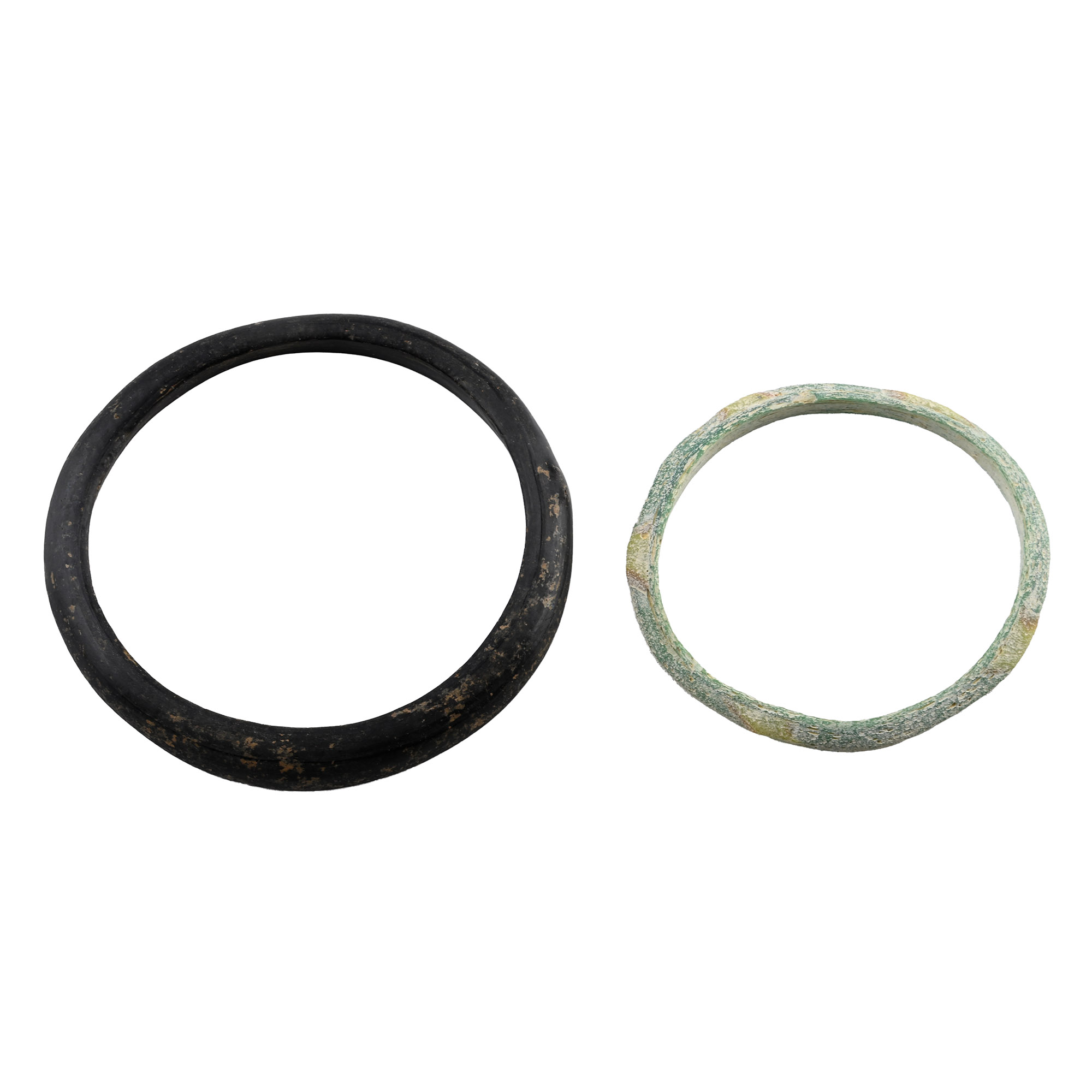
Large Late Roman Glass Bracelet Group
CIRCA 4TH-6TH CENTURY A.D.
2 5/8 - 3 1/4 in. (39 grams total, 68-84 mm).
Each D-shaped in section. [2, No Reserve]
ProvenanceAcquired on the UK art market since the 1990s.
From the property of a late Lincolnshire, UK, gentleman; thence by descent.
TimeLine Auctions follows a vetting process to ensure the authenticity and legality of all items, reinforcing our commitment to integrity and responsible trading. Each antiquity, antique, and coin lot undergoes thorough examination by a vetting committee of at least ten external specialists, professional trade association members, scientists, and archaeologists: Our Vetting Process
AUCTIONS:
TimeLine is a leading auction house specialising in antiquities, ancient art, collectables, natural history, coins, medals, and books. Our auctions offer museums, collectors, historians, and enthusiasts the opportunity to acquire unique and historically significant pieces.
LOT 1066
Large Late Roman Glass Bracelet Group
Estimate £50 - 70€58 - 81 (for guidance only)$68 - 95 (for guidance only)
Opening Bid
£5 (EUR 6; USD 7) +BP*
-
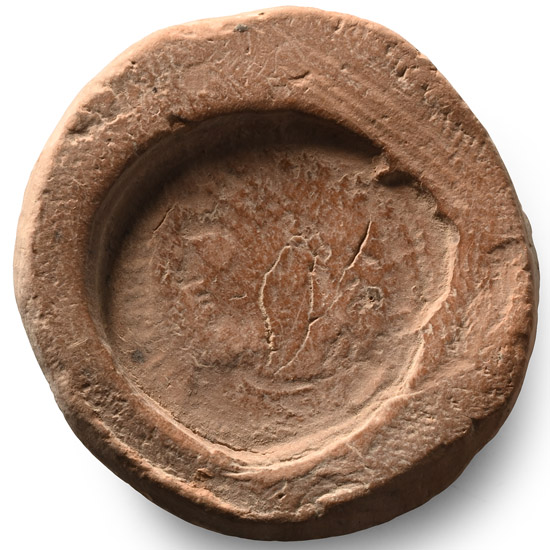
Roman Terracotta Forger's Mould for a Constantine Coin
Circa 3rd-4th century A.D.Estimate: £50 - 70 (+bp*)
Opening Bid: £5
Discoid clay mould with an impressed design of a coin on each face 4.04 grams, 26 mm
London gentleman's collection, 1970-1990s, by descent. -
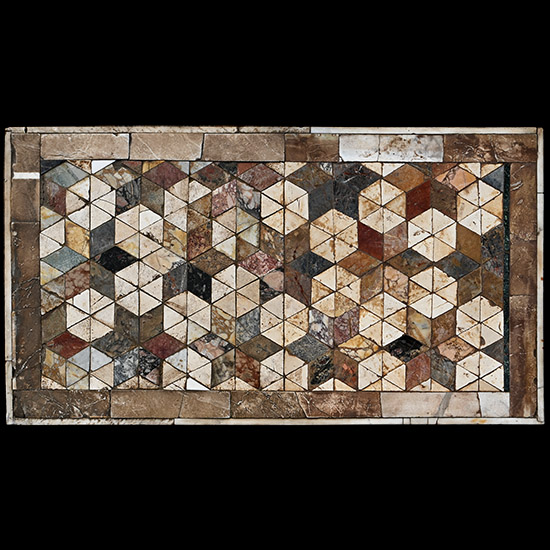
Large Roman Coloured Marble Table Top Formed from a Section of Tessellated Pavement
3rd century A.D.Estimate: £6,000 - 8,000 (+bp*)
Opening Bid: £3,000
A section of opus sectile pavement, composed of an array of various fine ancient Roman marble specimens in the shape of rhombi and hexagons, creating a three-dimensional effect, set in a marble frame, and accompanied by an iron table frame. approx. 300 kg, 235 x 129 x 8.8 cm
UK private collection (Robin Symes), assembled 1970s-90s, and thence to the liquidated estate of above. Accompanied by letters from the relevant Greek and Italian authorities renouncing any current or future claim over this piece.
These 3D patterns were widely popular across the Roman Empire from the 1st century BC to the 4th century AD. Famous original examples of this exact pattern survive intact at the House of the Faun in Pompeii and the National Roman Museum. There is an insert of green serpentine, indicating the piece was reset and repaired in more recent times. -
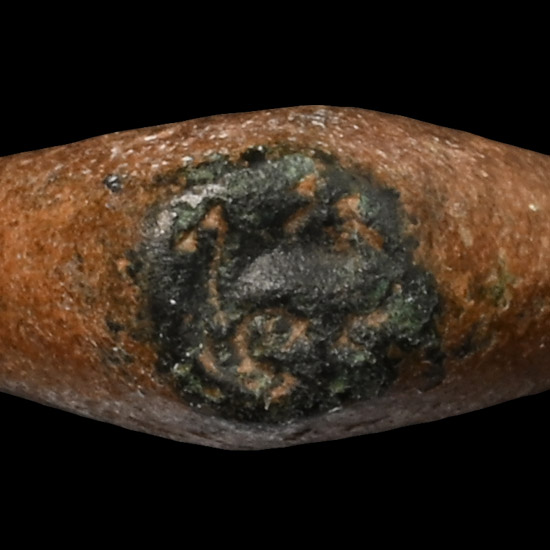
Roman Bronze Ring with Animal
Circa 3rd century A.D.Estimate: £40 - 60 (+bp*)
Opening Bid: £5
Flattened conical bezel with incuse motif to the apex, lion standing with raised tail and head turned towards the rear. 4.22 grams, 23.66 mm overall, 16.12 mm internal diameter (approximate size British J 1/2, USA 5, Europe 9.32, Japan 9)
From the private collection of a European gentleman (1942-2024), formed since the 1970s.
