
Loading, please wait...
LOT 1851
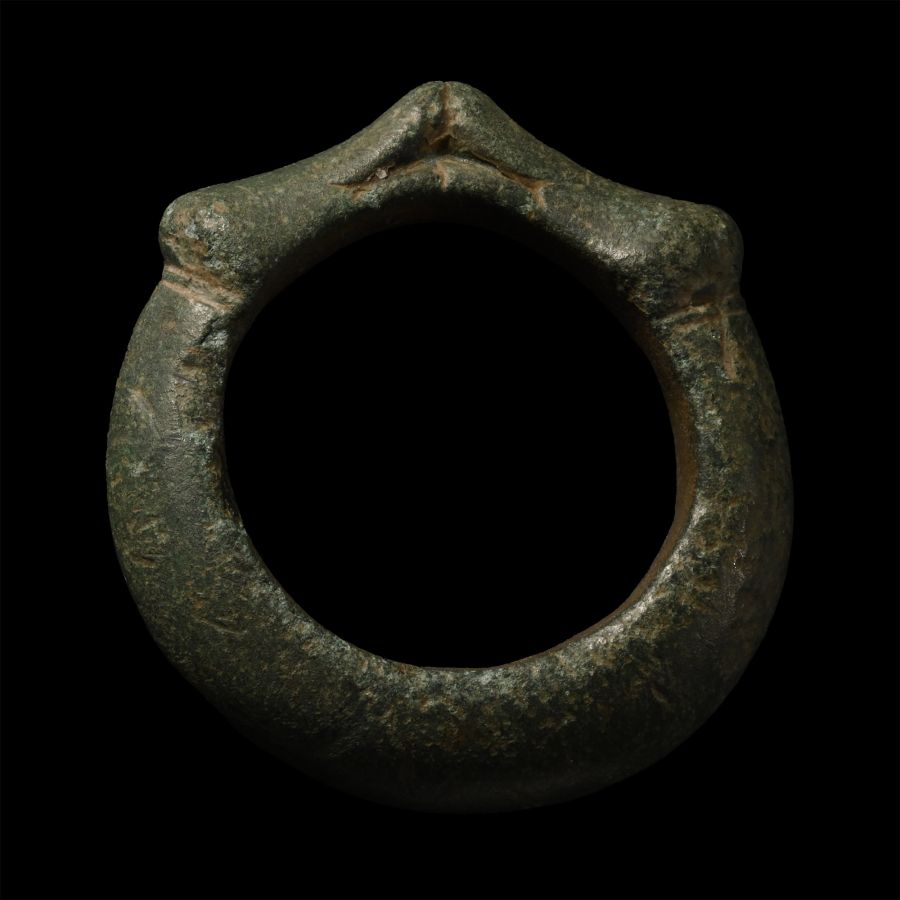
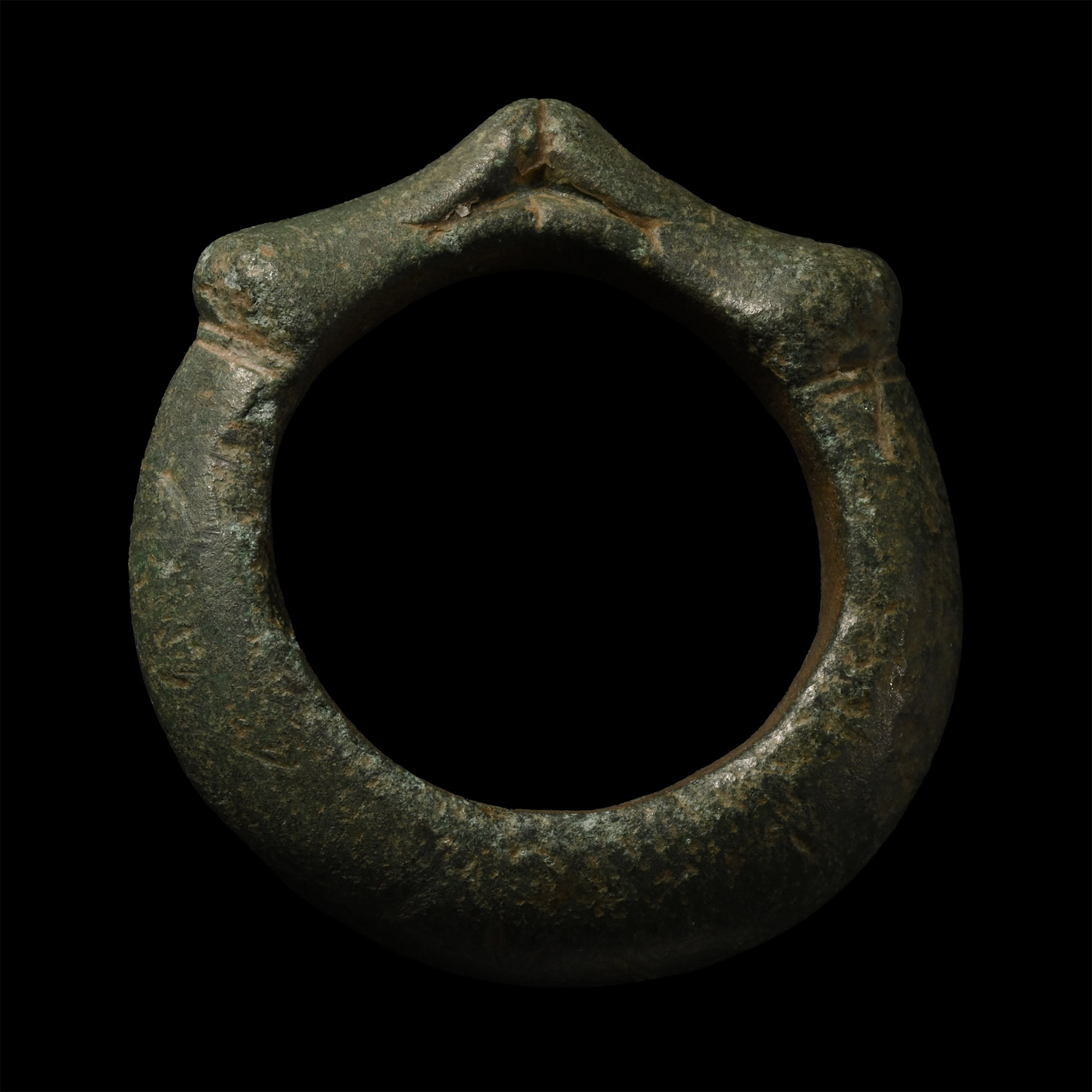
Large Iron Age Celtic Bronze Ring
1ST CENTURY B.C.-1ST CENTURY A.D.
1 3/8 in. (23.16 grams, 35.70 mm overall, 22.09 mm internal diameter (approximate size British Y, USA 12, Europe 27.51, Japan 26)).
Comprising a D-section shank and three low spurs forming a pair of opposed animal-heads. [No Reserve]
ProvenanceFound Essex, UK.
This lot is accompanied by an illustrated lot declaration signed by the Head of the Antiquities Department, Dr Raffaele D’Amato.
TimeLine Auctions follows a vetting process to ensure the authenticity and legality of all items, reinforcing our commitment to integrity and responsible trading. Each antiquity, antique, and coin lot undergoes thorough examination by a vetting committee of at least ten external specialists, professional trade association members, scientists, and archaeologists: Our Vetting Process
AUCTIONS:
TimeLine is a leading auction house specialising in antiquities, ancient art, collectables, natural history, coins, medals, and books. Our auctions offer museums, collectors, historians, and enthusiasts the opportunity to acquire unique and historically significant pieces.
-
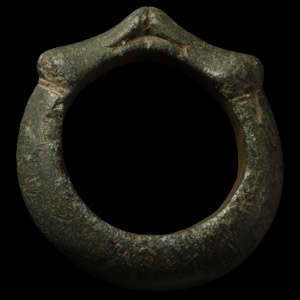
Large Iron Age Celtic Bronze Ring
1st century B.C.-1st century A.D.Sold for (Inc. bp): £338
Comprising a D-section shank and three low spurs forming a pair of opposed animal-heads. 23.16 grams, 35.70 mm overall, 22.09 mm internal diameter (approximate size British Y, USA 12, Europe 27.51, Japan 26)
Found Essex, UK. This lot is accompanied by an illustrated lot declaration signed by the Head of the Antiquities Department, Dr Raffaele D’Amato. -
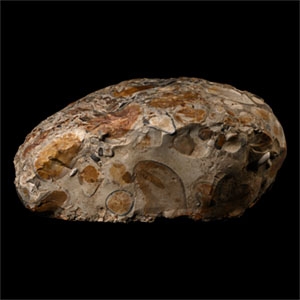
'The Great Horkesley' Late Iron Age Celtic to Early Roman Puddingstone Quern
Britain, 10-160 A.D.Sold for (Inc. bp): £98
Large fragment from a quern with ground conical hollow to the upper face; puddingstone matrix with many inclusions. 4.6 kg, 23.5 cm
Found Great Horkesley, Essex, UK, on Monday 1st April 2024. Accompanied by a copy of the British Museum's Portable Antiquities Scheme (PAS) report no.SF-4DB848. This lot is accompanied by an illustrated lot declaration signed by the Head of the Antiquities Department, Dr Raffaele D’Amato. -
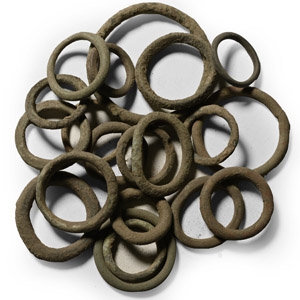
Iron Age Celtic Bronze Large Proto-Ring Money Collection
Circa 3rd-1st century B.C.Sold for (Inc. bp): £59
A 'proto-money' or harness ring group comprising round-section hoops. 147 grams total, 22-50 mm
From an English collection formed before 2000. This lot is accompanied by an illustrated lot declaration signed by the Head of the Antiquities Department, Dr Raffaele D’Amato.
