
Loading, please wait...
_900x900.jpg "Large Iridescent Placenticeras Ammonite from Alberta")
_200x200.jpg "Large Iridescent Placenticeras Ammonite from Alberta")
_900x900.jpg "Large Iridescent Placenticeras Ammonite from Alberta")
_200x200.jpg "Large Iridescent Placenticeras Ammonite from Alberta")
.jpg "Large Iridescent Placenticeras Ammonite from Alberta")
.jpg "Large Iridescent Placenticeras Ammonite from Alberta")
LOT 0403
Large Iridescent Placenticeras Ammonite from Alberta
BEAR PAW FORMATION, UPPER CRETACEOUS PERIOD, CIRCA 76-73 MILLION YEARS B.P.
10 1/4 in. (952 grams, 26 cm).
Placenticeras costatum with gem quality fossilised shell with some visible suture lines, conserved and stabilised with natural polish and acrylic lacquer, with excellent iridescence showing red, green, orange and gold colours.
ProvenanceFound St Mary River Valley, Lethbridge Mining District, Alberta, Canada.
Property of a Bristol, UK, gentleman collector.
Accompanied by a certificate of authenticity, exportable under Moveable Cultural Property Permit no.7021-25-12-22-0102.
The striking iridescence of these ammonites from Alberta, Canada, termed 'ammolite', was given the status of a gemstone by CIBJO in 1981. An iridescent opal-like play of colour is shown in fine specimens, and is caused by the microstructure of aragonite, the same mineral contained in pearls and nacre. The thicker the structural layers, the more reds and greens are produced; the thinner the layers, the more blues and violets predominate. The ammonites are a group of molluscs that lived in the seas from the mid-Devonian (approximately 400 million years ago) to the end of the Cretaceous (65 million years ago). The sequence of events that famously killed off the dinosaurs also drove the ammonites to extinction.
CONDITIONTimeLine Auctions follows a vetting process to ensure the authenticity and legality of all items, reinforcing our commitment to integrity and responsible trading. Each antiquity, antique, and coin lot undergoes thorough examination by a vetting committee of at least ten external specialists, professional trade association members, scientists, and archaeologists: Our Vetting Process
AUCTIONS:
TimeLine is a leading auction house specialising in antiquities, ancient art, collectables, natural history, coins, medals, and books. Our auctions offer museums, collectors, historians, and enthusiasts the opportunity to acquire unique and historically significant pieces.
-
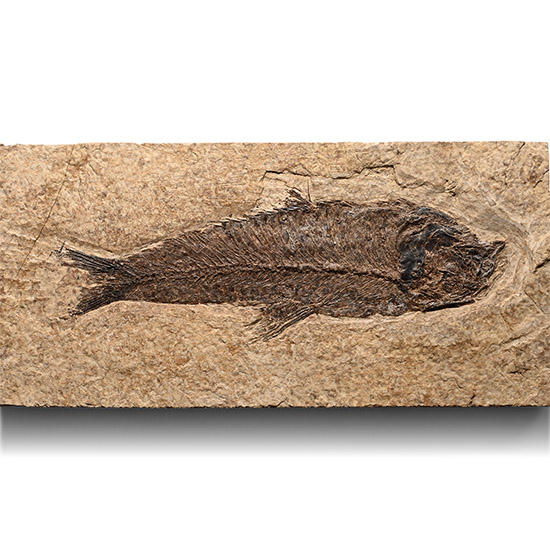
Fossil Fish in Matrix
Eocene Period, circa 58-36 million years B.P.Sold for (Inc. bp): £117
On a rectangular matrix, possibly Diplomystus. 335 grams, 16.5 cm
From Green River formation, Wyoming, USA. From the private collection of Kenneth Machin (1936-2020), Buckinghamshire, UK; his collection of antiquities and natural history was formed since 1948; thence by descent. -
.jpg)
Woolly Rhinoceros Large Upper Jaw Tooth
Devensian Period, circa 110,000-12,000 years B.P.Sold for (Inc. bp): £143
Large size tooth with partial root and dark brown enamel. 210 grams, 96 mm
Perma frost of Siberia. From a Netherlands collector in the 2020s. From a private collection. -
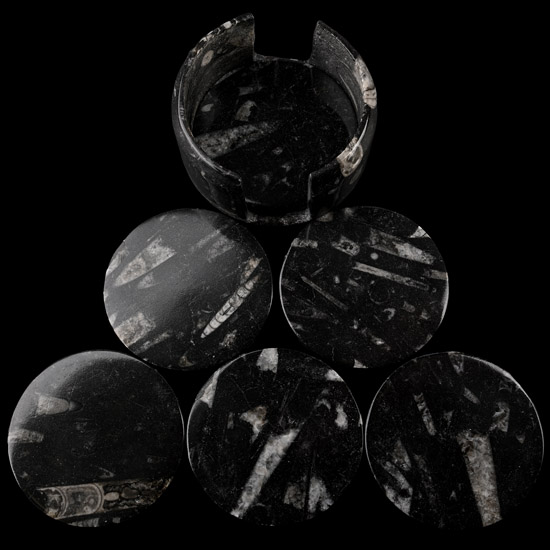
Polished Fossil Orthoceras Coaster Set
Devonian Period, circa 417-354 million years B.P.Sold for (Inc. bp): £52
Comprising six circular coasters, the Orthoceras have been polished through the shell to reveal the calcite preserved inside and showing the dividing gas chambers known as suture patterns. 682 grams, 91 mm wide
From a Cambridgeshire, UK, collection.
