
Loading, please wait...
LOT 2680
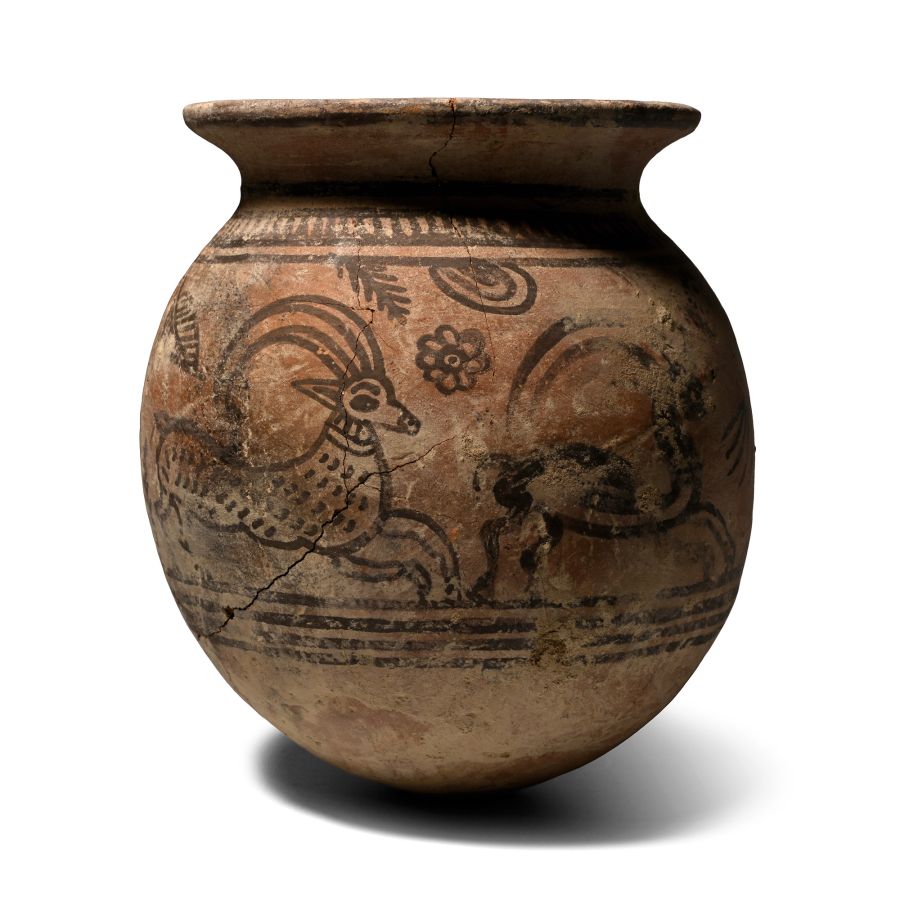
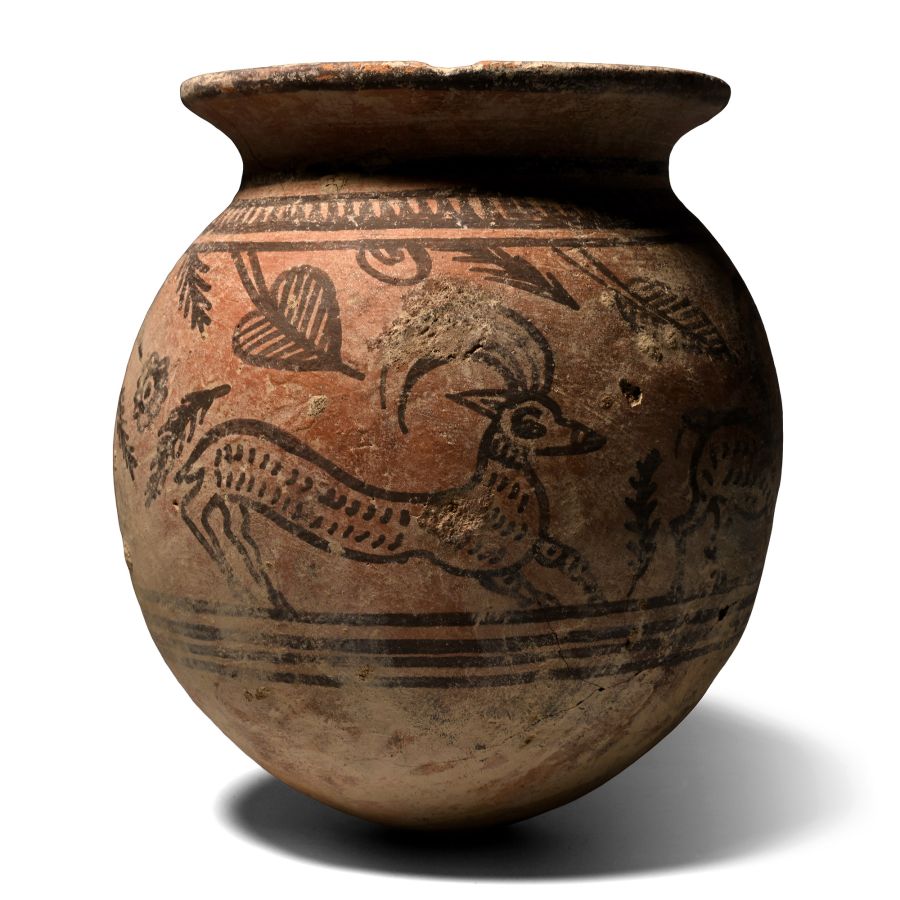
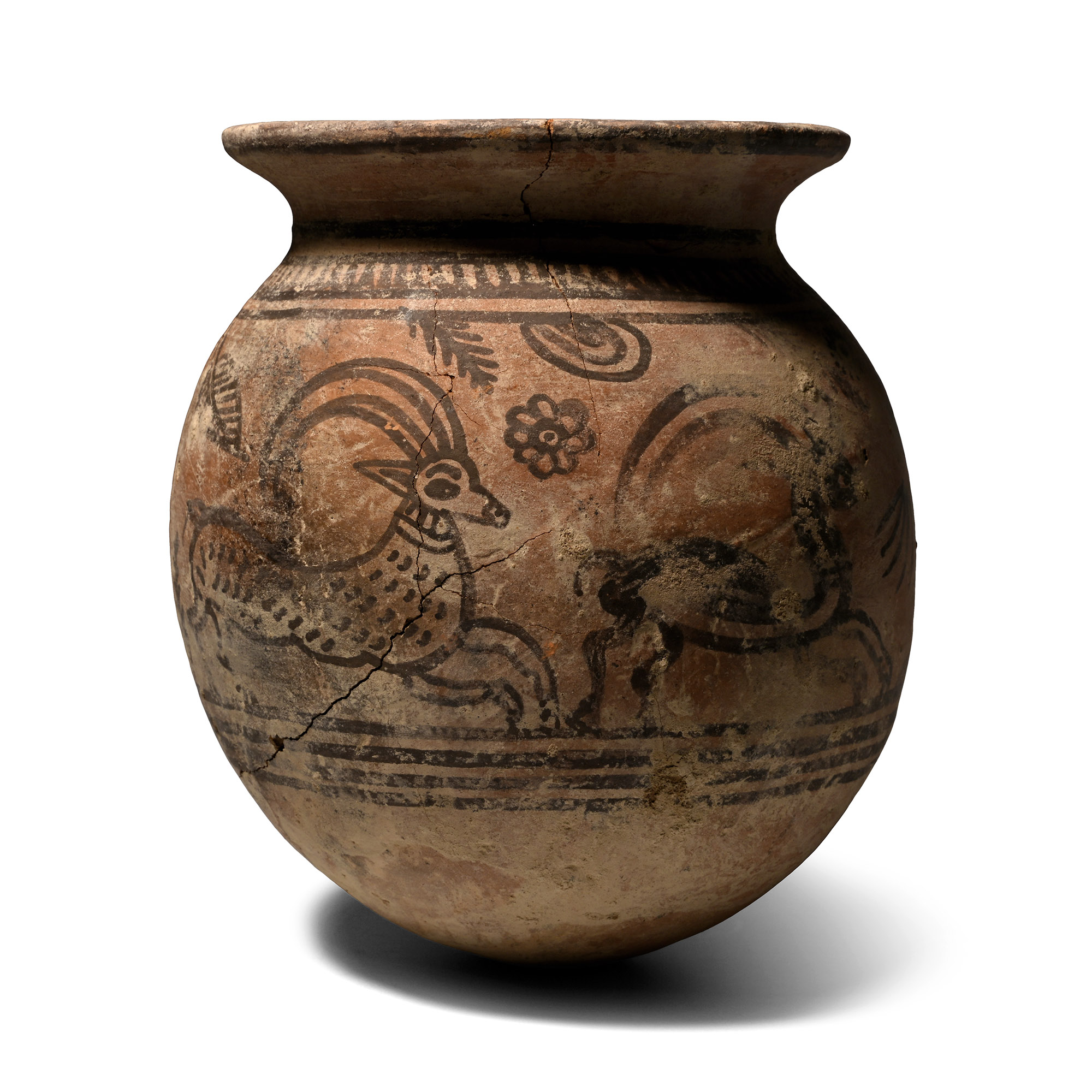
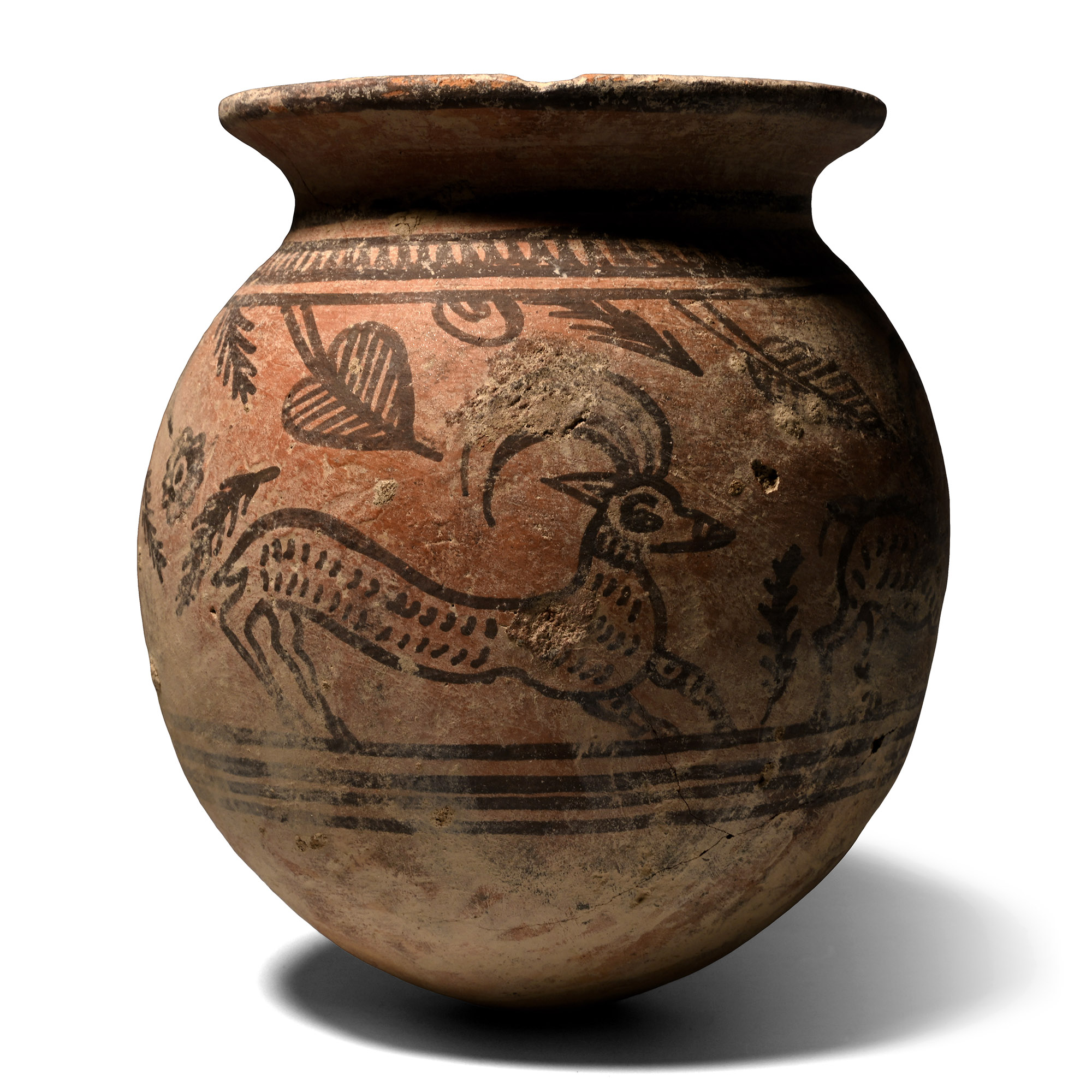
Large Indus Valley Terracotta Vessel with Animals
3RD-2ND MILLENNIUM B.C.
7 1/2 in. (1.16 kg, 19 cm).
A biconvex jar with chamfered and everted rim, painted frieze of advancing ibexes and plants to the shoulder. [No Reserve]
ProvenanceFrom the private collection of the late David Gold, 1990s.
David Gold was one of the co founders of the Iconic Lord John brand in Carnaby Street that sparked a style revolution in the swinging sixties dressing The Rolling Stones, The Beatles and The Kinks and were at the heart of 'all things cool'.
See Satyawadi, S., Proto-Historic Pottery of Indus Valley Civilisation: Study of Painted Motifs, Perspectives in Indian Art and Archaeology vol.2, New Delhi, 1994, for discussion.
CONDITIONTimeLine Auctions follows a vetting process to ensure the authenticity and legality of all items, reinforcing our commitment to integrity and responsible trading. Each antiquity, antique, and coin lot undergoes thorough examination by a vetting committee of at least ten external specialists, professional trade association members, scientists, and archaeologists: Our Vetting Process
AUCTIONS:
TimeLine is a leading auction house specialising in antiquities, ancient art, collectables, natural history, coins, medals, and books. Our auctions offer museums, collectors, historians, and enthusiasts the opportunity to acquire unique and historically significant pieces.
-

Kashmir Terracotta Head of a Bodhisattva
Hund Region, 6th-7th century A.D.Estimate: £8,000 - 10,000 (+bp*)
Opening Bid: £4,000
Modelled in the round with heavily-lidded eyes, aquiline nose, thin-lipped mouth; band of conch shells to the brow hanging from a brow-band with segmented bulb above supporting a radiating plaque and sphere, flanked by two rosette collars each supporting a skull; mounted on a custom-made stand. 5.76 kg total, 42.5 cm high including stand
American collection, probably from the 1990s. Private collection, London. Accompanied by a thermoluminescence analysis report by Oxford Authentication. This lot has been checked against the Interpol Database of stolen works of art and is accompanied by search certificate number no.13252-253040.
Many terracotta fingers, toes and hair curls from such statues have been found at sites in Kashmir, like Harwana. Such terracotta objects depict the influences of Gandharan art in the Kashmir valley. The terracotta objects found at the sites depict the strong influences of the Gandhara school of art in the Kashmir valley. The bodily limbs of Lord Buddha and bodhisattva in terracotta and their art, besides the isolated plague represent the replica of the miniature stupa. -

Indian Sacred Copper-alloy Plaque with Hindu God
Late 19th-early 20th century A.D.Estimate: £180 - 240 (+bp*)
Opening Bid: £100
Figure of Hanuman advancing in a roundel, modelled in the half-round. 372 grams, 15.8 cm
From the Jeffrey Romer important collection of Hindu art, 1990s. Ex central London gallery. -

Chandraketugarh Terracotta Plaque with the Goddess Sri Lakshmi
West Bengal, Shunga Period, 1st century B.C. or laterSold for (Inc. bp): £234
D-shaped plaque fragment with Lakshmi modelled in the half-round. 160 grams, 12.5 cm
Acquired at a London antiques fair in the 1990s. From the private collection of a Devon, UK, lady.
