
Loading, please wait...
LOT 2032
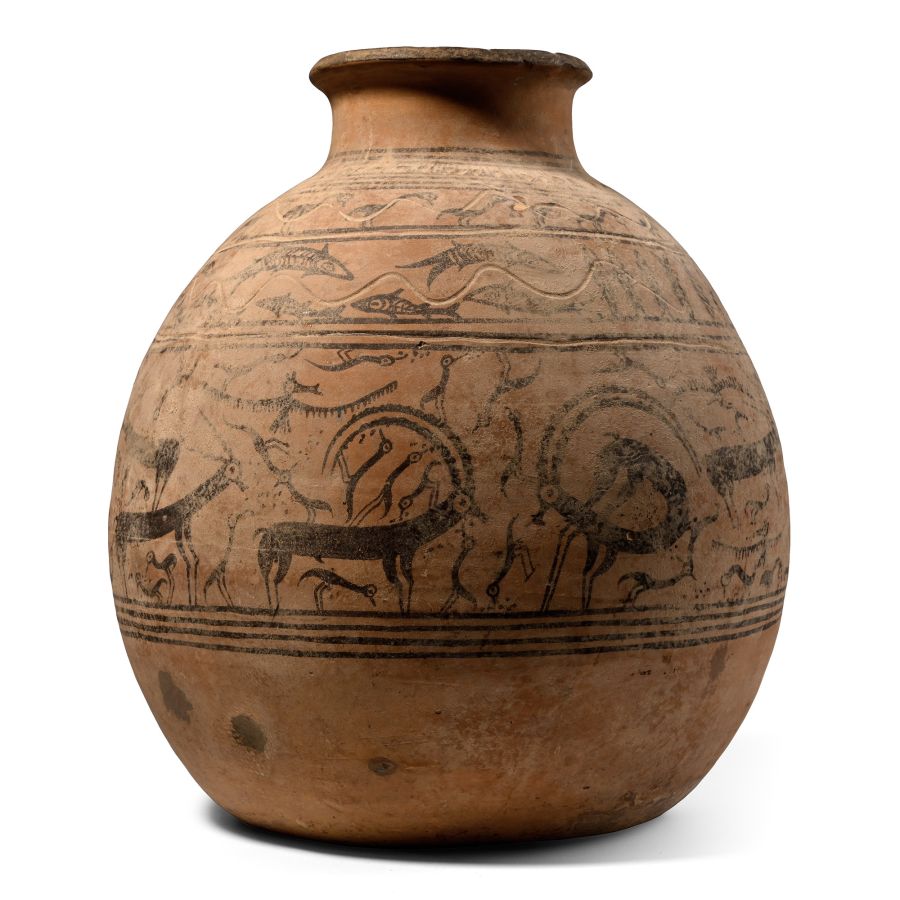
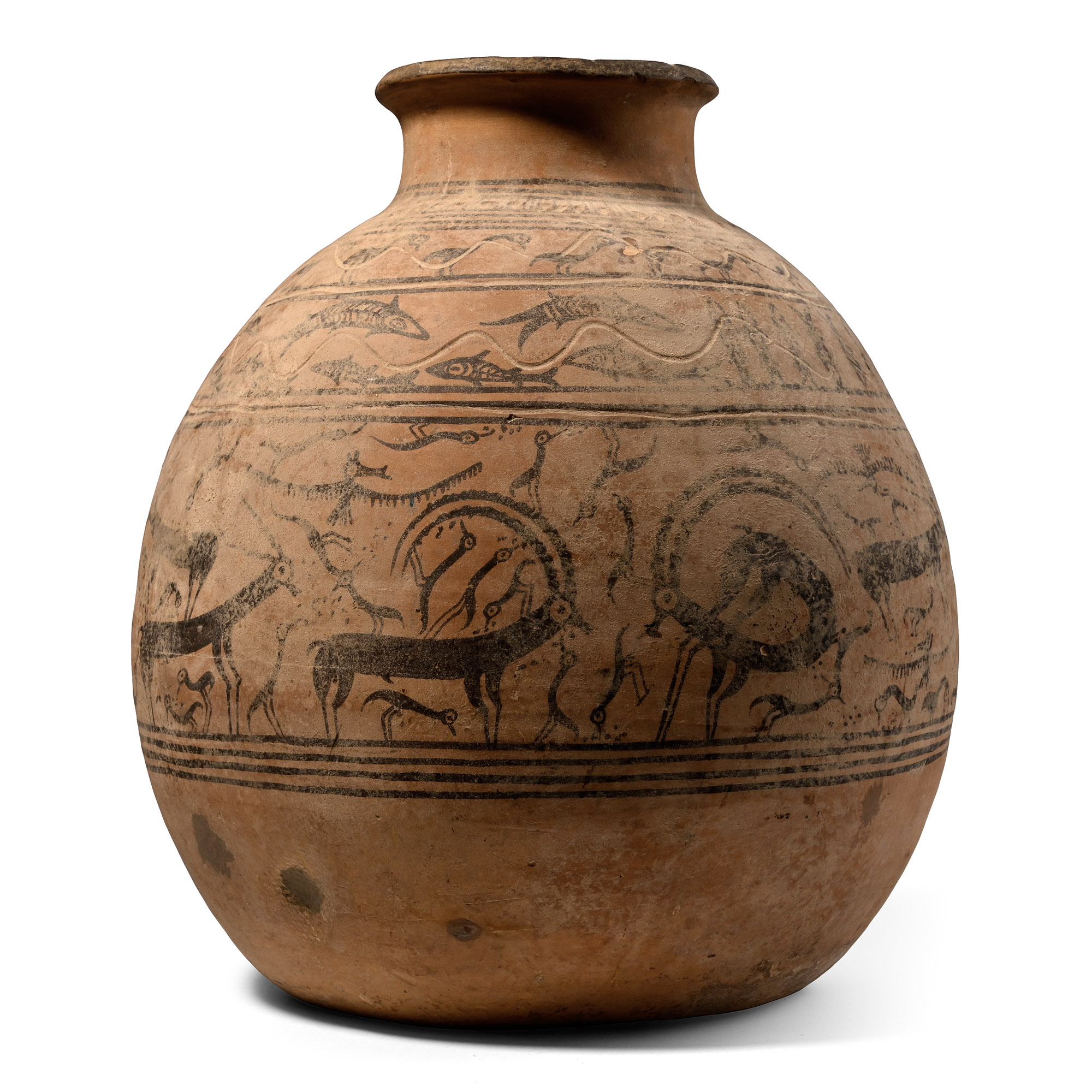
Large Indus Valley Style Terracotta Vessel
20TH CENTURY A.D.
11 1/4 in. (5.2 kg, 28.5 cm).
With everted chamfered rim, tiered bands of painted decoration including horses, fish, birds, ibexes and other creatures. [No Reserve]
ProvenanceProperty of a London gentleman; acquired before 2000.
From the private collection of John Meredith, acquired since the 1990s; thence by descent.
TimeLine Auctions follows a vetting process to ensure the authenticity and legality of all items, reinforcing our commitment to integrity and responsible trading. Each antiquity, antique, and coin lot undergoes thorough examination by a vetting committee of at least ten external specialists, professional trade association members, scientists, and archaeologists: Our Vetting Process
AUCTIONS:
TimeLine is a leading auction house specialising in antiquities, ancient art, collectables, natural history, coins, medals, and books. Our auctions offer museums, collectors, historians, and enthusiasts the opportunity to acquire unique and historically significant pieces.
-
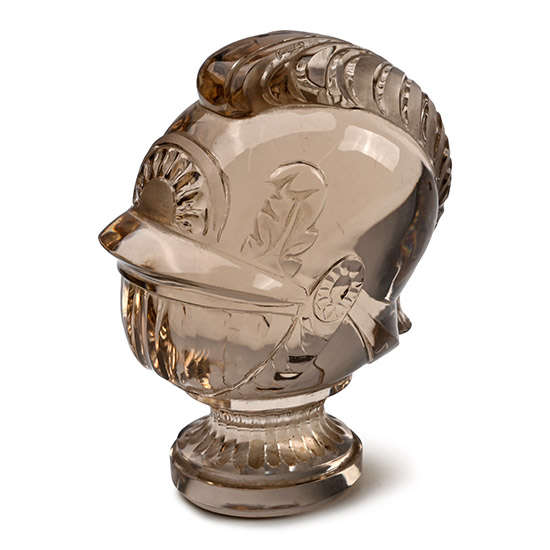
Smoky Quartz Desk Seal in the form of a Plumed Helmet
French, 19th century A.D.Sold for (Inc. bp): £715
Modelled in the round as a plumed helmet with a barred visor and a chin strap, resting on a low pedestal. 182 grams, 71 mm
Private collection, Europe. Acquired on the English art market. -
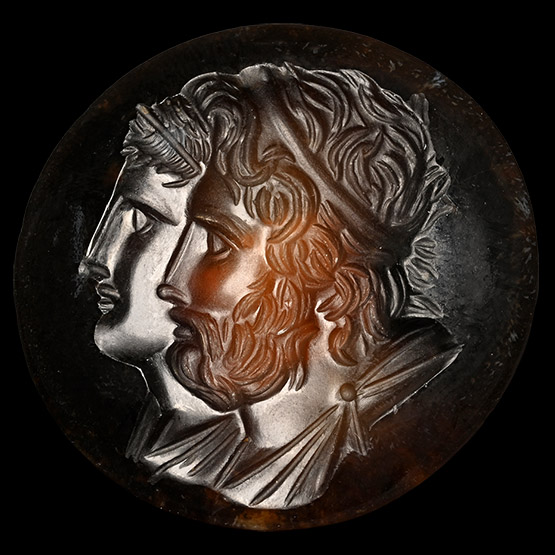
Large Post-Classical Agate Gemstone Depicting a Double Portrait of Hellenistic Rulers
19th century A.D. or earlierEstimate: £500 - 700 (+bp*)
Opening Bid: £250
Intaglio jugate busts of a bearded male with browband in the foreground and female bust to the rear with diadem; supplied with a museum-quality impression. 7.37 grams, 31 mm
with Hotel des Ventes de Monte-Carlo, 2022. Private collection, England.
The image portrays human rulers as Zeus and Hera/Jupiter and Juno. -
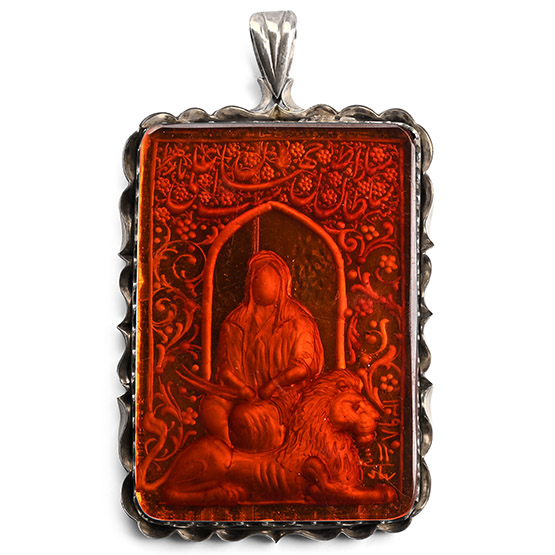
Western Asiatic Large Silver-Coloured Metal Pendant with Laquer Imam
Late 20th century A.D.Sold for (Inc. bp): £234
Rectangular in plan with openwork ornament underside, suspension bale, inset glass panel with seated robed figure beside a lion, arch to the rear with calligraphic text above. 90 grams, 10.1 cm
Private collection, UK.
