
Loading, please wait...
LOT 0272
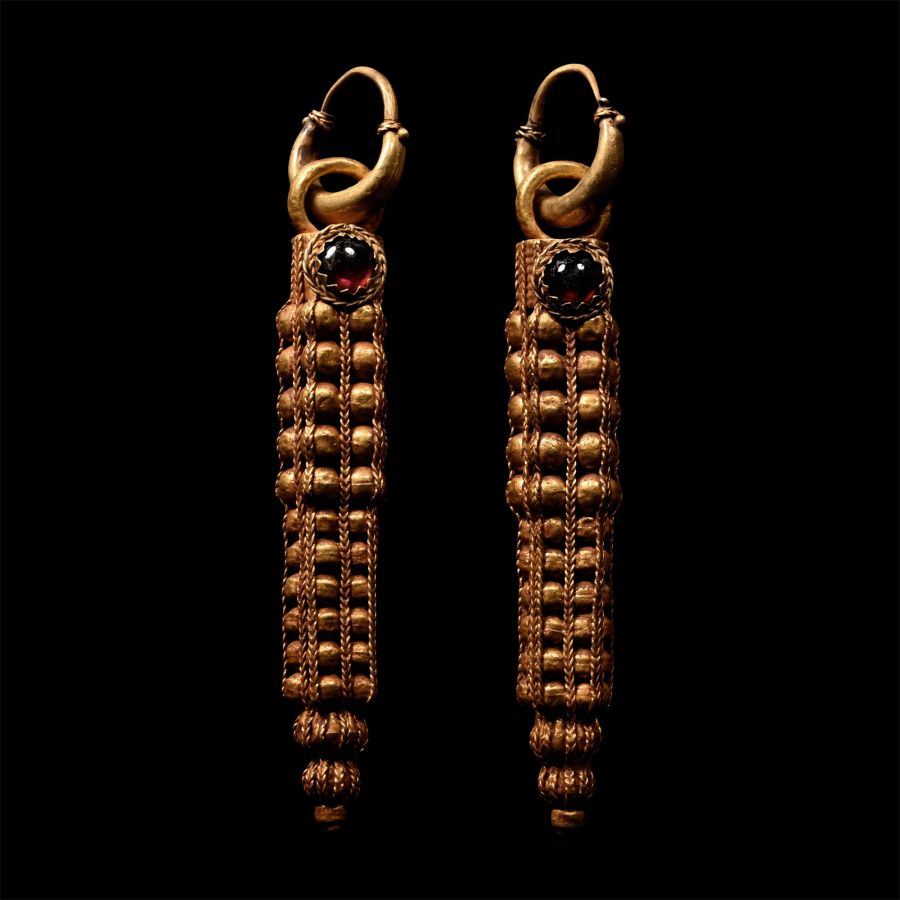
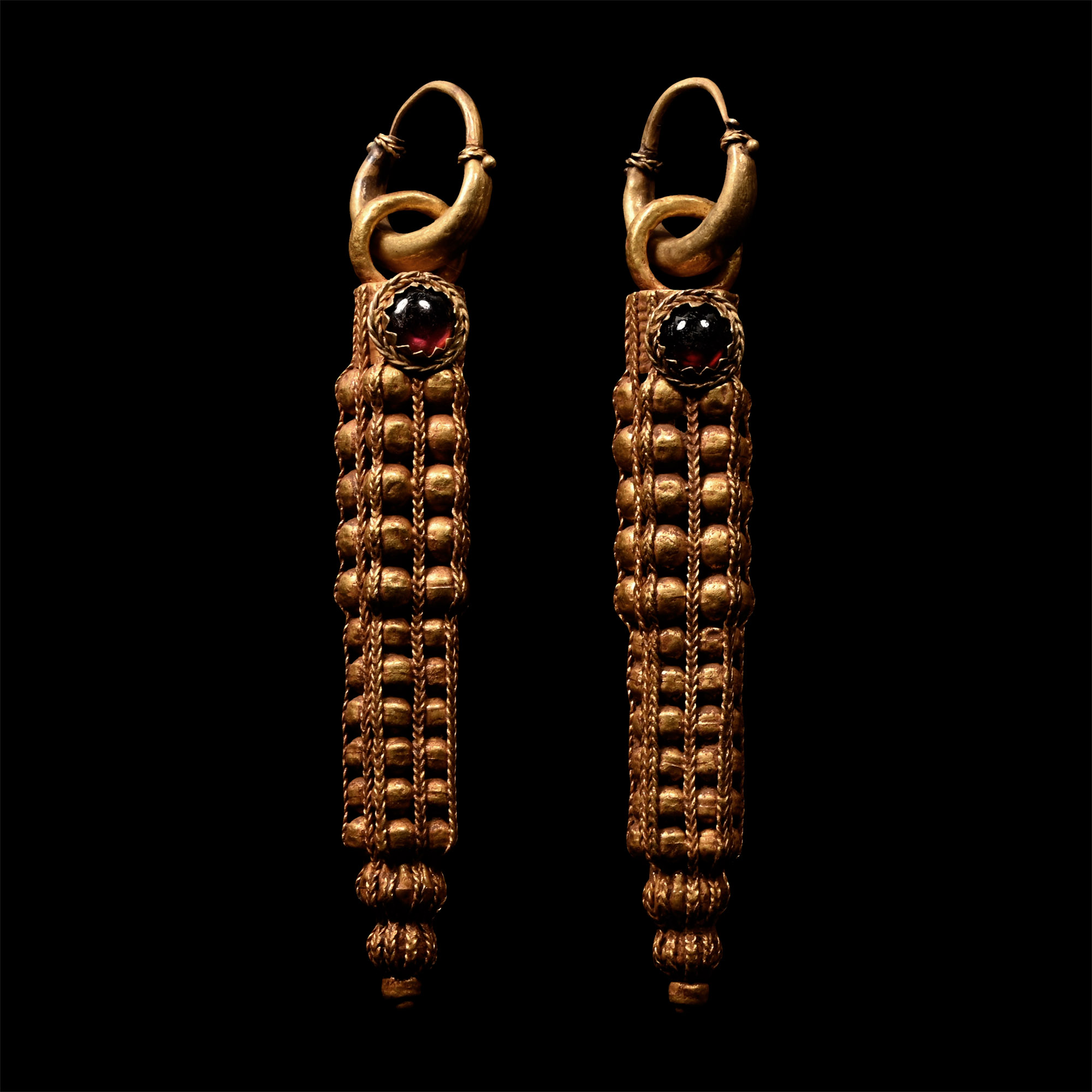
Large Holy Land Gold and Garnet Drop Earrings
1ST MILLENNIUM B.C.
3 1/2 in. (34.90 grams total, 91 mm each).
Each a crescent hoop with lateral collars and granule, long columnar drop formed as six columns of stacked granules with filigree braided bands to the outer face, graduated bulb finial; discoid cell above with inset replicant garnet cabochon and the hoops added later.
ProvenanceFrom a North American gentleman's collection, 1980-1990s.
This lot has been checked against the Interpol Database of stolen works of art and is accompanied by a search certificate number no.12708-235755.
This lot has been cleared against the Art Loss Register database, and is accompanied by an illustrated lot declaration signed by the Head of the Antiquities Department, Dr Raffaele D'Amato.
TimeLine Auctions follows a vetting process to ensure the authenticity and legality of all items, reinforcing our commitment to integrity and responsible trading. Each antiquity, antique, and coin lot undergoes thorough examination by a vetting committee of at least ten external specialists, professional trade association members, scientists, and archaeologists: Our Vetting Process
AUCTIONS:
TimeLine is a leading auction house specialising in antiquities, ancient art, collectables, natural history, coins, medals, and books. Our auctions offer museums, collectors, historians, and enthusiasts the opportunity to acquire unique and historically significant pieces.
LOT 0272
Large Holy Land Gold and Garnet Drop Earrings
Estimate £3,500 - 4,500€4,060 - 5,220 (for guidance only)$4,730 - 6,080 (for guidance only)
-
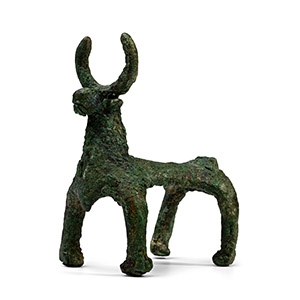
Western Asiatic Bronze Figure of a Bull
Circa 1000-600 B.C.Sold for (Inc. bp): £293
Modelled in a powerful stance with its legs spread, erect head with large curving horns. 151 grams, 88 mm
Nicolas Koutoulakis (1910-1996), thence by descent. Ex Galerie Khnoum, Geneva, Switzerland. Private collection of Mr K.A. This lot has been cleared against the Art Loss Register database, and is accompanied by an illustrated lot declaration signed by the Head of the Antiquities Department, Dr Raffaele D'Amato. -
.jpg)
Bactrian Style Lapis Lazuli Bead Necklace String
20th century A.D.Sold for (Inc. bp): £78
Composed of alternating oblate and grooved cylindrical beads with ring-and-dot decoration, central feature and large triangular bead with ring-and-dot motifs to the lower edge; restrung. 38.8 grams, 46 cm
Ex London art market. Property of a North London, UK, gentleman. This lot has been cleared against the Art Loss Register database, and is accompanied by an illustrated lot declaration signed by the Head of the Antiquities Department, Dr Raffaele D'Amato. -
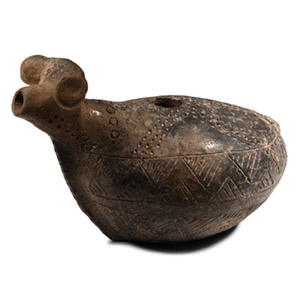
Anatolian Terracotta Ram Rhyton
19th-18th century B.C.Estimate: £2,500 - 3,500 (‡+bp*)
Opening Bid: £1,389
Ovoid in plan with ram-head finial and spout, filling-hole to the centre back and stub tail forming a handle; hatched panels to the sidewall with reserved running zigzag, radiating bands of impressed point ornament, head with forward-facing curled horns. 578 grams, 20.5 cm
with Artemis gallery, Münich. Acquired by the present owner from the above in 1992. This lot has been checked against the Interpol Database of stolen works of art and is accompanied by a search certificate number no.12260-222201. This lot has been cleared against the Art Loss Register database, and is accompanied by an illustrated lot declaration signed by the Head of the Antiquities Department, Dr Raffaele D'Amato.
