
Loading, please wait...
LOT 1710
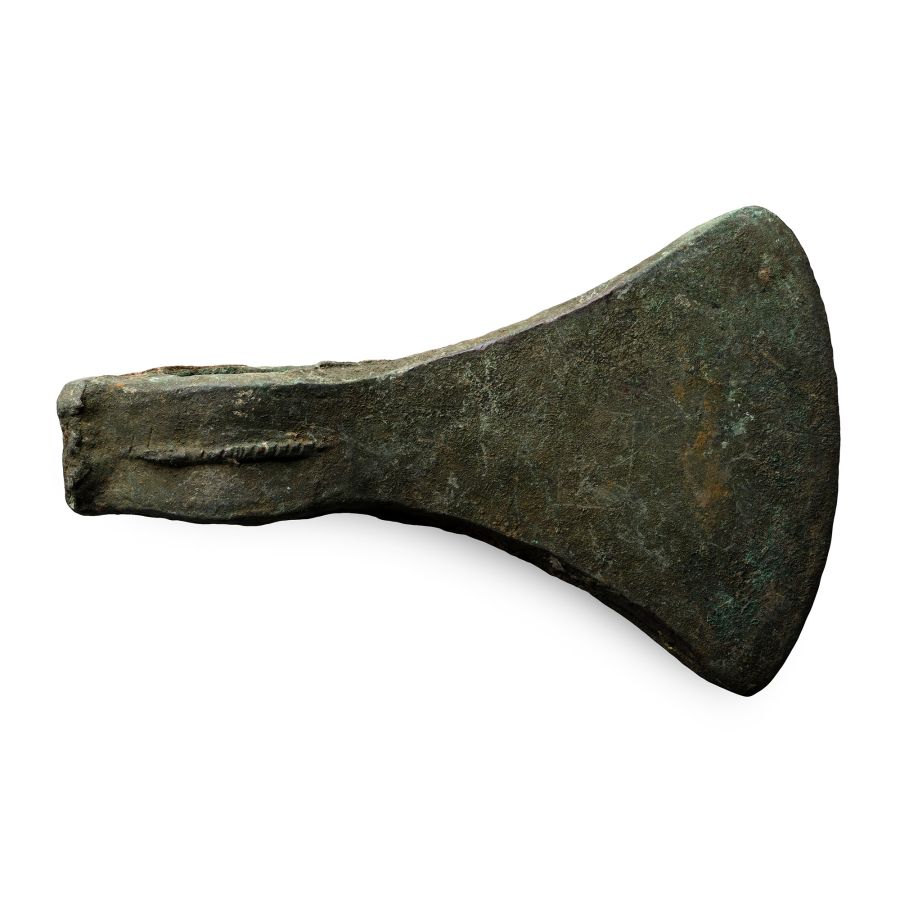
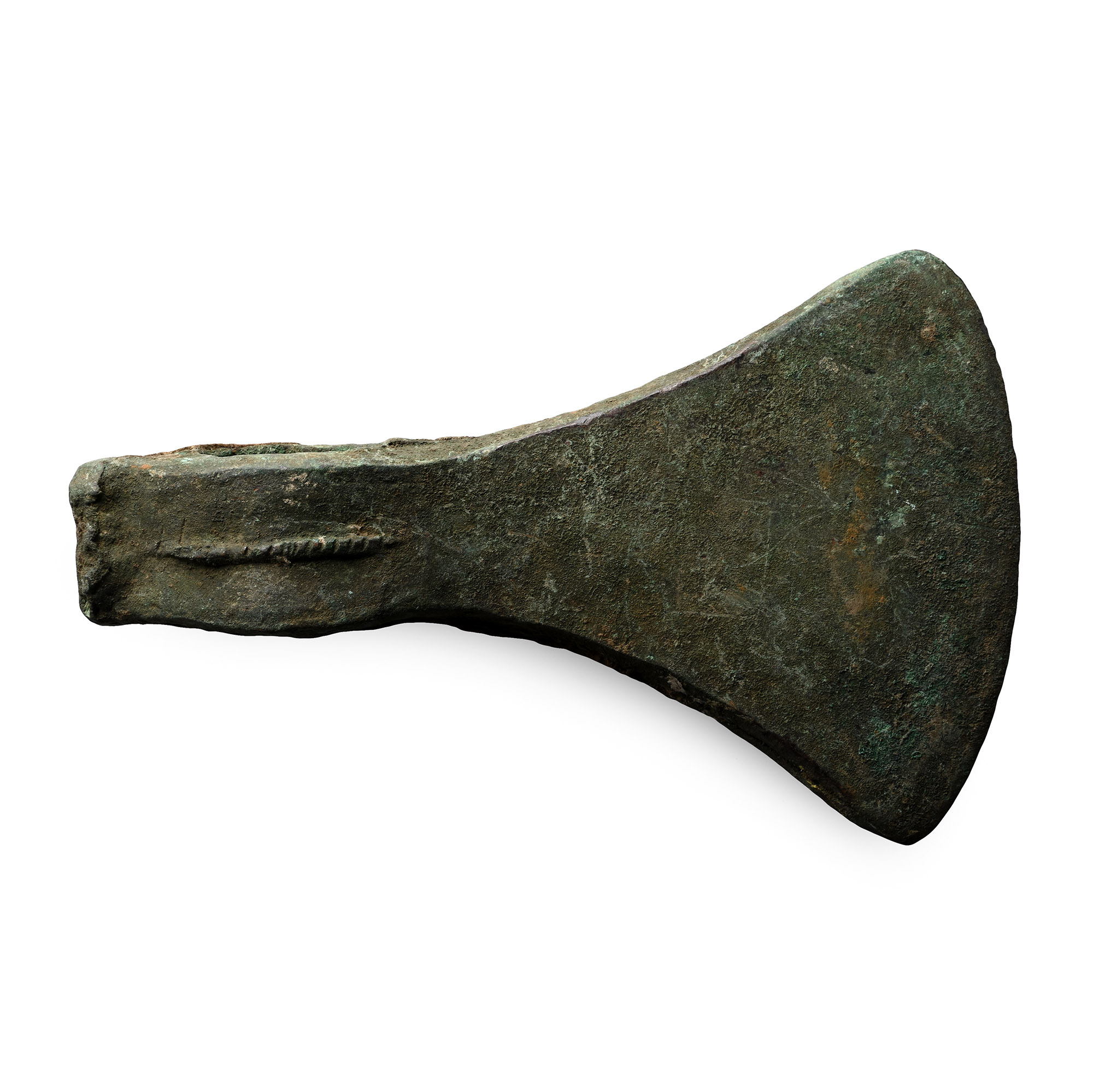
Large Heavy Luristan Bronze Axehead
8TH CENTURY B.C.
8 in. (1.38 kg, 20 cm).
Comprising a triangular blade with curved edge, lentoid socket, square butt with striking face.
ProvenanceAcquired in the 1990s.
Ex Abelita family collection.
This lot has been cleared against the Art Loss Register database, and is accompanied by an illustrated lot declaration signed by the Head of the Antiquities Department, Dr Raffaele D'Amato.
Cf. Gorelik, M., Weapons of Ancient East, IV millennium BC-IV century BC, Saint Petersburg, 2003, pl.XXIV, no.27 (from Luristan), for type.
CONDITIONTimeLine Auctions follows a vetting process to ensure the authenticity and legality of all items, reinforcing our commitment to integrity and responsible trading. Each antiquity, antique, and coin lot undergoes thorough examination by a vetting committee of at least ten external specialists, professional trade association members, scientists, and archaeologists: Our Vetting Process
AUCTIONS:
TimeLine is a leading auction house specialising in antiquities, ancient art, collectables, natural history, coins, medals, and books. Our auctions offer museums, collectors, historians, and enthusiasts the opportunity to acquire unique and historically significant pieces.
LOT 1710
Large Heavy Luristan Bronze Axehead
Estimate £100 - 140€120 - 160 (for guidance only)$140 - 190 (for guidance only)
Opening Bid
£50 (EUR 58; USD 68) +BP*
-
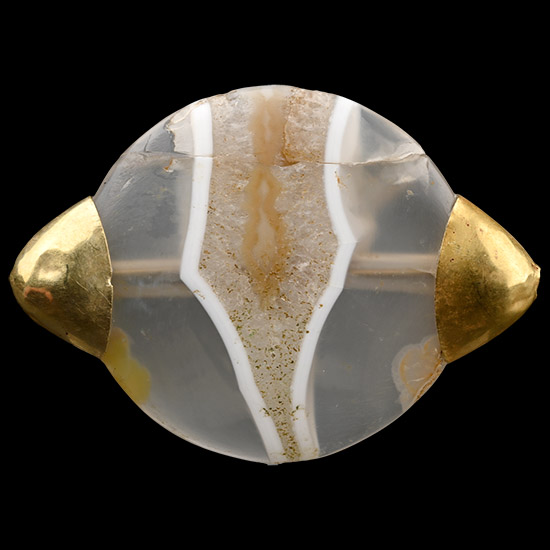
Exceptional Western Asiatic Banded Agate Bead with Gold Caps
2nd-1st millennium B.C.Estimate: £1,800 - 2,400 (‡+bp*)
Opening Bid: £1,000
Discoid in plan and pierced transversely with D-shaped gold caps at each end; mounted on a custom-made stand. 88 grams total, 84 mm wide including stand
Private collection, acquired on the UK art market, 2000. Private collection, Switzerland. This lot has been checked against the Interpol Database of stolen works of art and is accompanied by a search certificate number no.12877-241681.
The Sumerians used agate for beads and even for making ceremonial axe-heads. The engraving of agate, especially to produce cameos and intaglios, is an art which was principally cultivated by the Greeks and the Romans. In addition to the artistic excellence of the engravings, many of the early works show great skill in using the different colourings of the agate for decorating the figures. -
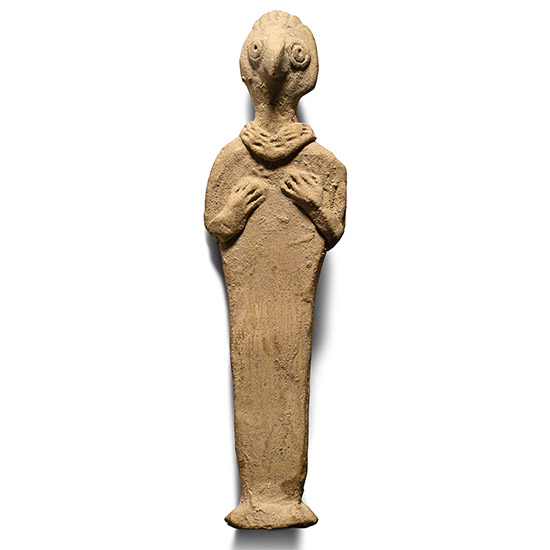
Syro-Hittite Terracotta Figure
2nd millennium B.C.Estimate: £100 - 140 (+bp*)
Opening Bid: £5
Standing figure with applied eyes and beaked nose, hatched collar, arms bent with hands flat on the chest; heavily restored. 62.7 grams, 15.5 cm
From a private St. Albans, UK, collection, formed 1960s-1990s. -
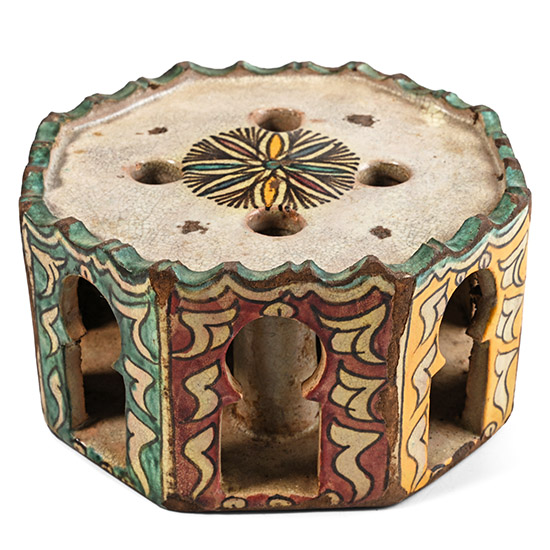
Kutahya Glazed Terracotta Vessel Stand
Turkiye, circa 18th century A.D.Estimate: £80 - 100 (+bp*)
Opening Bid: £5
Of octagonal form, the white ground painted in cobalt-blue, green, red, black and yellow, a central stylised flower motif at the top flanked by four holes leading to tubular supports, the outer face with eight keyhole archways surrounded by painted decoration. 791 grams, 15 cm wide
From an old Bath, UK, collection. Acquired on the UK art market since the 1990s. From the property of a late Lincolnshire, UK, gentleman; thence by descent. Accompanied by a previous catalogue information slip.
