
Loading, please wait...
LOT 1361
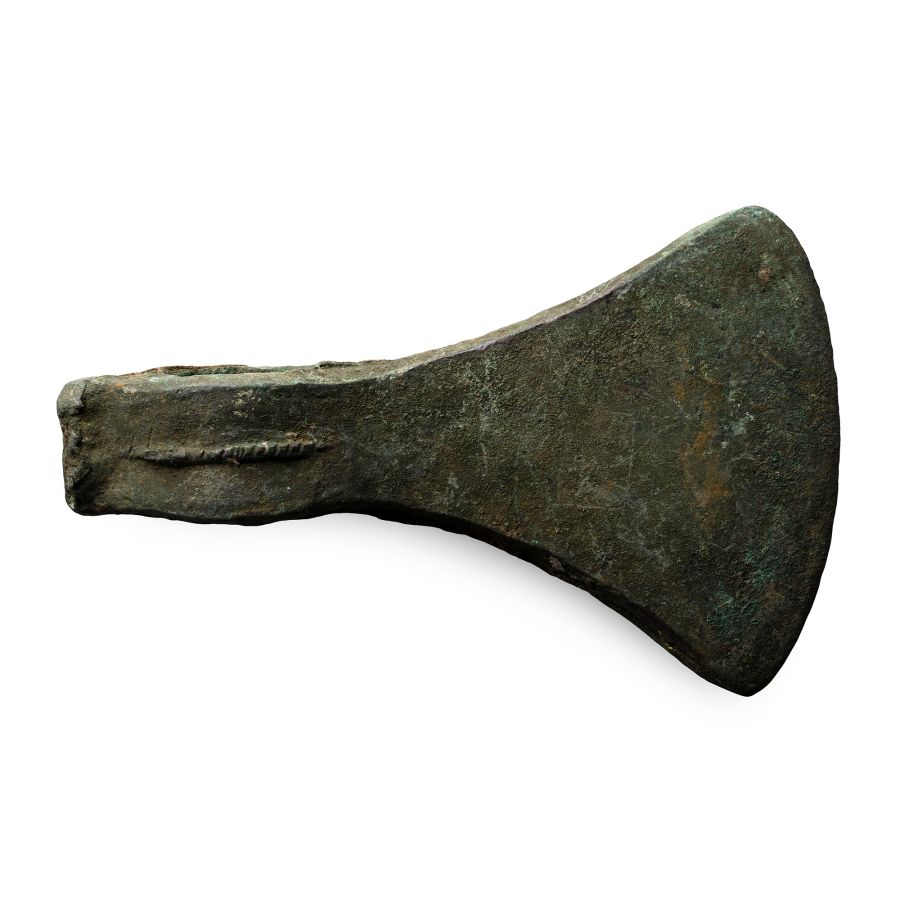
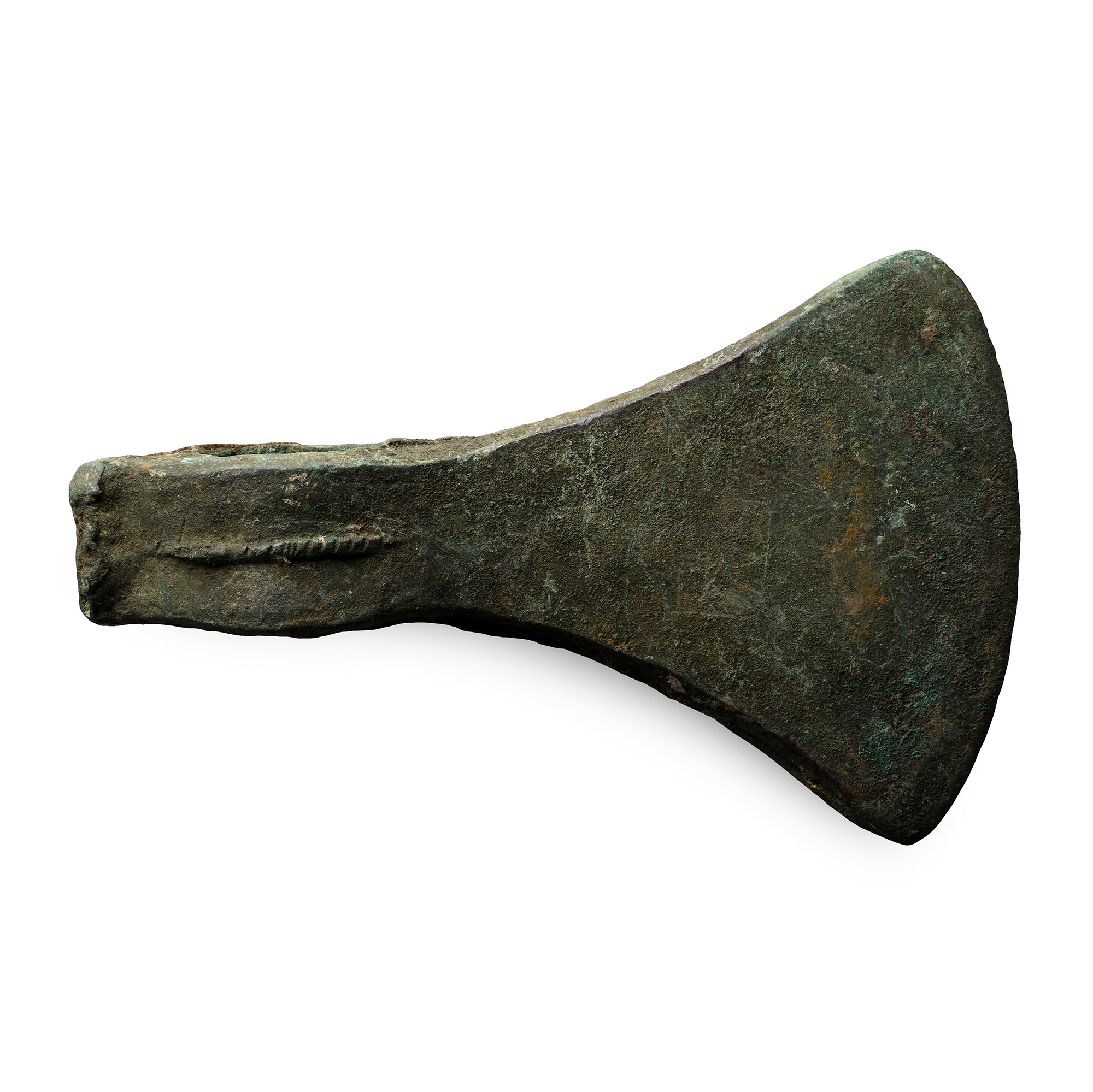
Large Heavy Luristan Bronze Axehead
2ND-1ST MILLENNIUM B.C.
8 in. (1.38 kg, 20 cm).
Comprising a triangular blade with curved edge, lentoid socket, square butt with striking face.
ProvenanceAcquired in the 1990s.
Ex Abelita family collection.
This lot has been cleared against the Art Loss Register database, and is accompanied by an illustrated lot declaration signed by the Head of the Antiquities Department, Dr Raffaele D'Amato.
TimeLine Auctions follows a vetting process to ensure the authenticity and legality of all items, reinforcing our commitment to integrity and responsible trading. Each antiquity, antique, and coin lot undergoes thorough examination by a vetting committee of at least ten external specialists, professional trade association members, scientists, and archaeologists: Our Vetting Process
AUCTIONS:
TimeLine is a leading auction house specialising in antiquities, ancient art, collectables, natural history, coins, medals, and books. Our auctions offer museums, collectors, historians, and enthusiasts the opportunity to acquire unique and historically significant pieces.
-
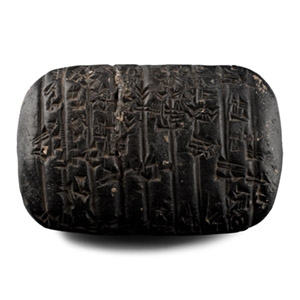
Western Asiatic Terracotta Cuneiform Tablet
2nd millennium B.C.Estimate: £2,000 - 3,000 (‡+bp*)
Opening Bid: £1,000
Pillow-shaped with columnar ribbing to the broad faces, dense cuneiform text in the columns. 57.2 grams, 63 mm
Private collection of Mr K., Maryland, USA. Private collection, Switzerland, acquired in 2000. This lot has been checked against the Interpol Database of stolen works of art and is accompanied by a search certificate number no.12893-241757. This lot has been cleared against the Art Loss Register database, and is accompanied by an illustrated lot declaration signed by the Head of the Antiquities Department, Dr Raffaele D'Amato. -
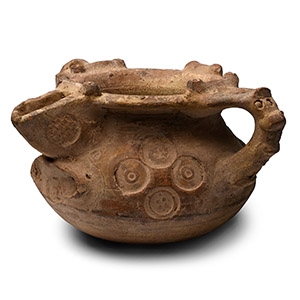
Western Asiatic Decorated Terracotta Vessel
1st millennium B.C.Sold for (Inc. bp): £91
A squat pitcher with rounded base, carinated shoulder and groups of applied disc and other stamps, everted rim with three ribbed strap handles, short spout. 875 grams, 20.5 cm
Fine condition.
From an important central London collection formed since the mid 1960s; thence by descent. From the private collection of John Meredith, acquired since the 1990s; thence by descent. This lot has been cleared against the Art Loss Register database, and is accompanied by an illustrated lot declaration signed by the Head of the Antiquities Department, Dr Raffaele D'Amato. -
.jpg)
Neo-Babylonian Red Stone Cylinder Seal
900-600 B.C. or laterSold for (Inc. bp): £1,235
Frieze in three registers: two crouching gryphons facing each other on a hatched base; below, advancing ox; court scene with a profile figure seated on a dais holding a vessel and facing two advancing figures in robes with open front, one leg exposed; sapling scene-divider; supplied with a museum-quality impression. 3.41 grams, 19 mm
From the 'S' collection, acquired 1970-1990s. The collection was seen and studied by W.G. Lambert, late Professor of Assyriology at the University of Birmingham, 1970-1993. This lot has been cleared against the Art Loss Register database, and is accompanied by an illustrated lot declaration signed by the Head of the Antiquities Department, Dr Raffaele D'Amato.
