
Loading, please wait...
LOT 0263
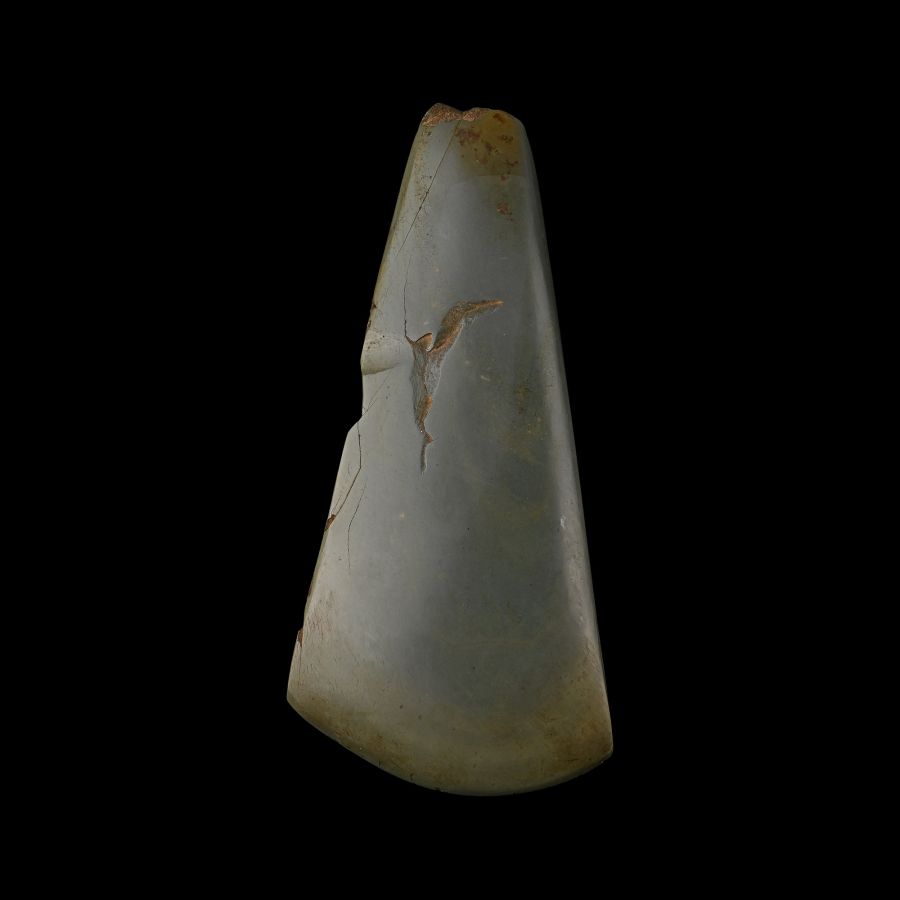
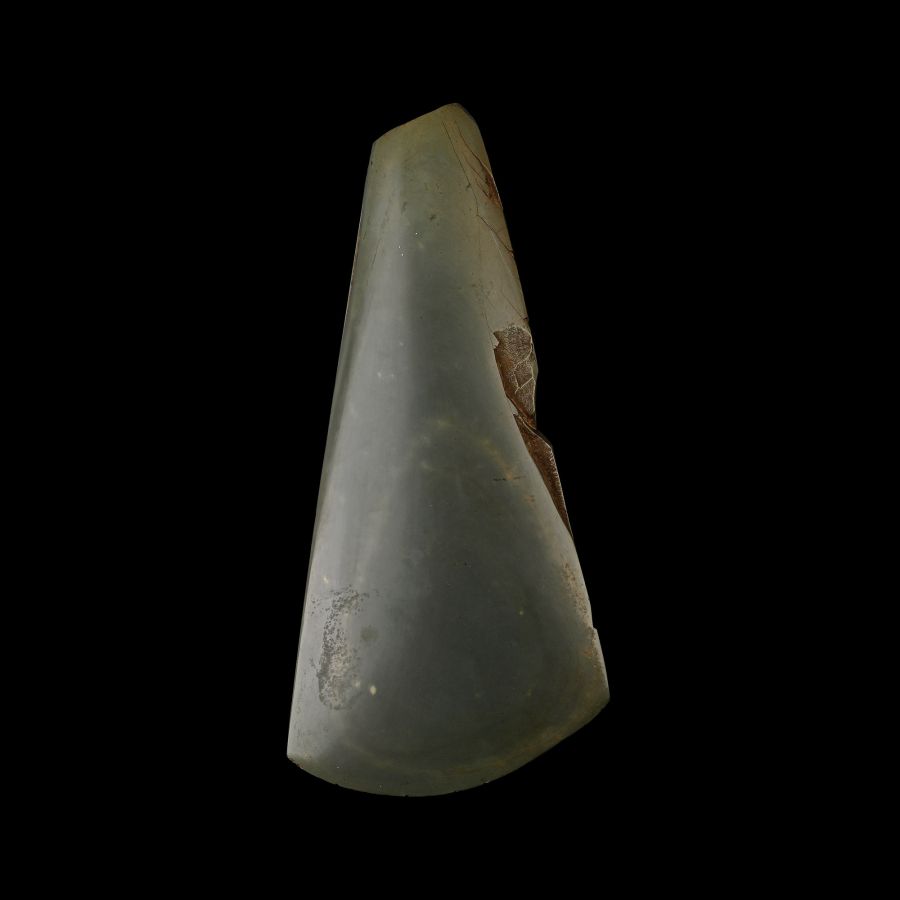
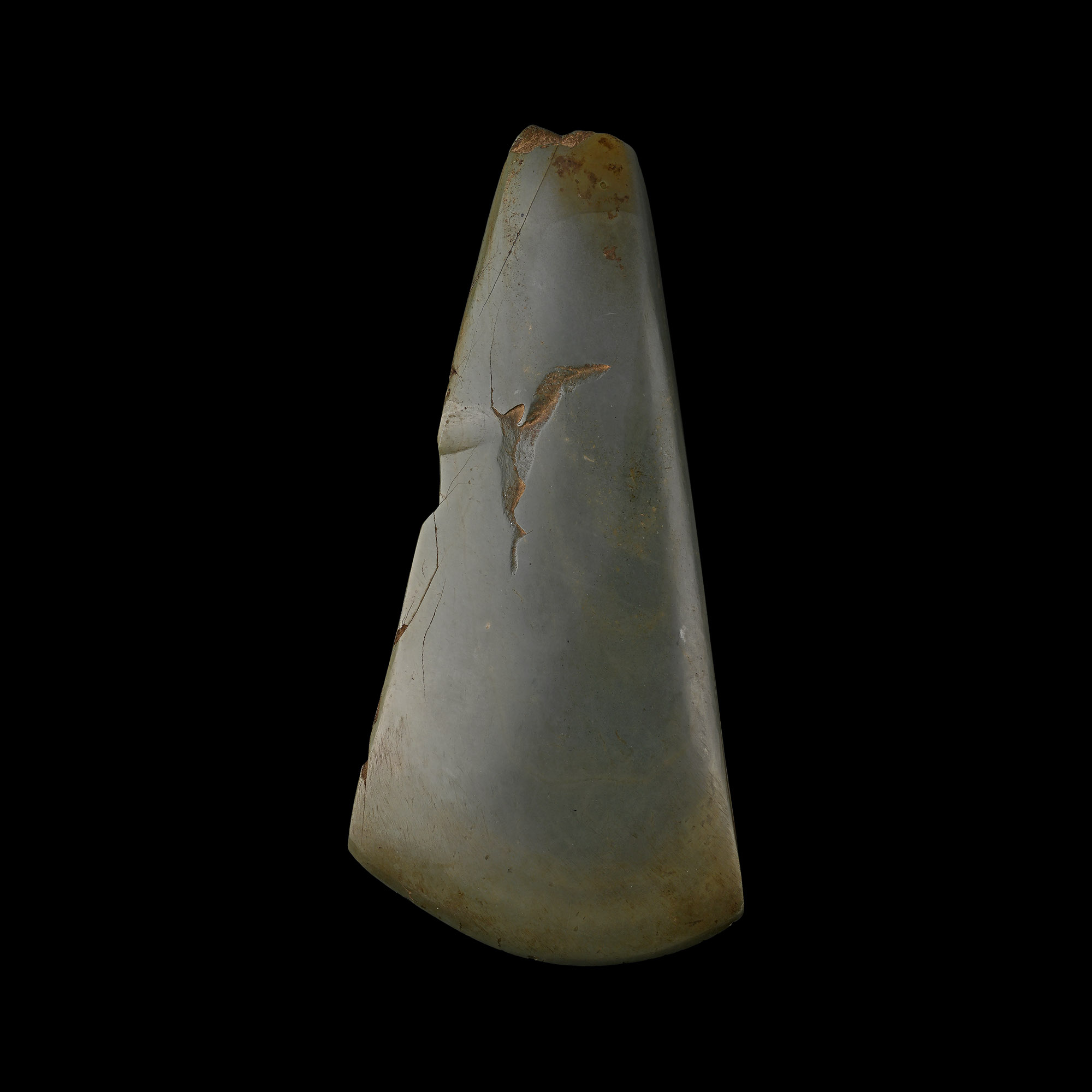
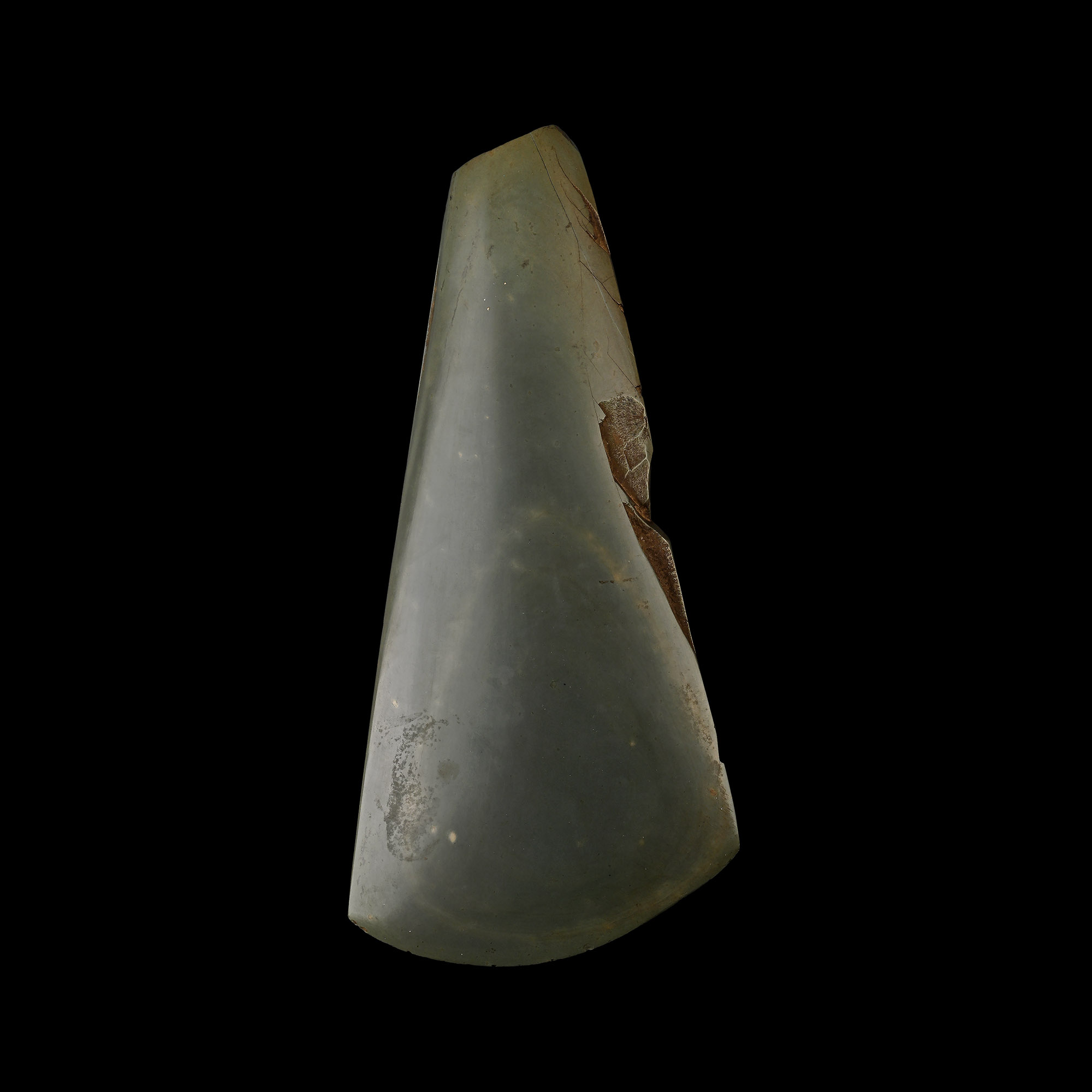
Large Greenstone Polished Axehead
NEOLITHIC PERIOD, CIRCA 6TH MILLENNIUM B.P.
11 1/2 in. (1.8 kg, 29.2 cm).
Trapezoidal in form with thick butt and curved cutting edge; cracked.
ProvenancePrivate collection, United Kingdom; reportedly found whilst fieldwalking, 1980s.
Thence by descent.
TimeLine Auctions follows a vetting process to ensure the authenticity and legality of all items, reinforcing our commitment to integrity and responsible trading. Each antiquity, antique, and coin lot undergoes thorough examination by a vetting committee of at least ten external specialists, professional trade association members, scientists, and archaeologists: Our Vetting Process
AUCTIONS:
TimeLine is a leading auction house specialising in antiquities, ancient art, collectables, natural history, coins, medals, and books. Our auctions offer museums, collectors, historians, and enthusiasts the opportunity to acquire unique and historically significant pieces.
-
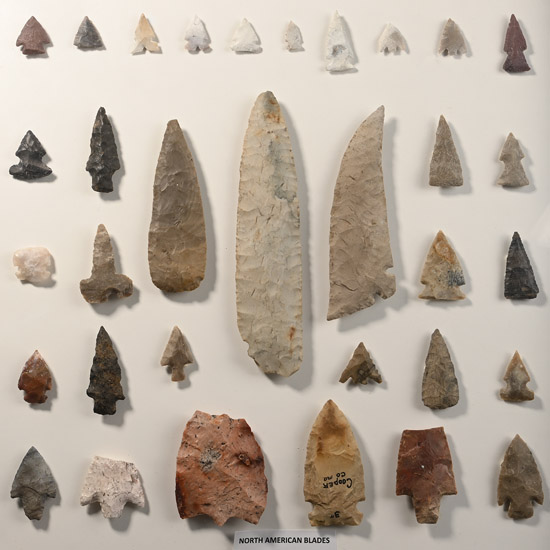
Framed North American Stone Age Knapped Arrowhead and Tool Collection
Woodland Period, circa 2,500 B.P. and laterSold for (Inc. bp): £286
Mixed group of various types, including barbed, tanged, a curved dagger, and others; set in a glazed box frame. 2.09 kg total, 44.7 x 44.7 cm includimg frame
From the collection of Martin Doyle, Leverstock, UK, 1980s-2000s. -
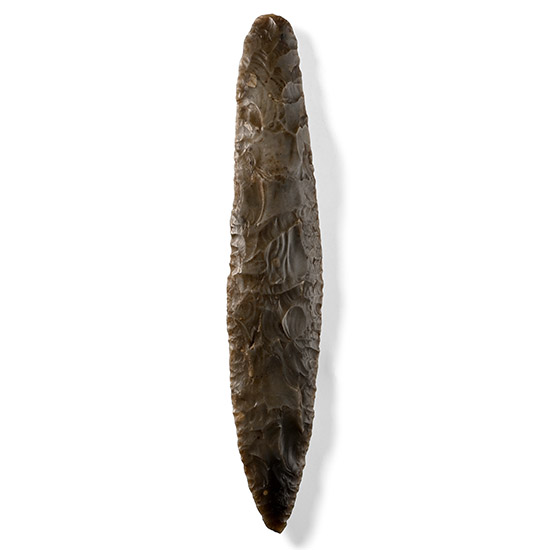
Danish 'Type-1B' Knapped Flint Dagger
Neolithic Early Dagger Period, circa 4400-3800 B.P.Sold for (Inc. bp): £910
A finely made and complete early fine Senonian or Danian flint dagger belonging to the Danish Single Grave Culture (Dolktid), a slender lanceolate outline with near-parallel sides, a discreetly indicated hafting zone, and the maximum width placed at or just ahead of the midsection. 66 grams, 18.3 cm
Found Ordrup, Sjaelland Island, Denmark, 1970. From the private collection of amateur archaeologist Jorgen Faxholm, UK. Accompanied by a copy of a previous catalogue sheet with reference.
This dagger shows the characteristic manufacturing traits of the earliest dagger horizon. There is no polishing or parallel-struck flaking of the later, more elaborate types. The maker relied on careful, even marginal retouch to create a sharp and functional cutting edge. The dagger appears to retain its original proportions with no evidence of later reworking or reduction. By the time Lomborg formalised the typology, approximately 540 examples of Type 1B were recorded from graves or intentional depositions, with a further circa 150 from unprovenanced contexts. This example sits squarely within that early corpus and represents the form at its best. -
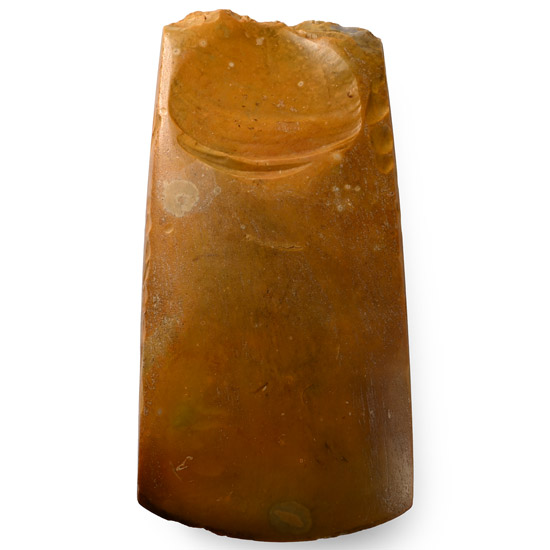
Danish Neolithic Polished Axe
Neolithic Period, circa 3500-3000 B.P.Sold for (Inc. bp): £117
Rectangular in section, with squared butt and slightly curved edge; polished on all four faces with superb orange patina. 560 grams, 14.7 cm
From the estate of artist Holger Karlsson, Trollhatte, Sweden. Acquired in Stockholm, Sweden. Accompanied by a copy of a Swedish National Heritage Board export permit.
