
Loading, please wait...
LOT 0623
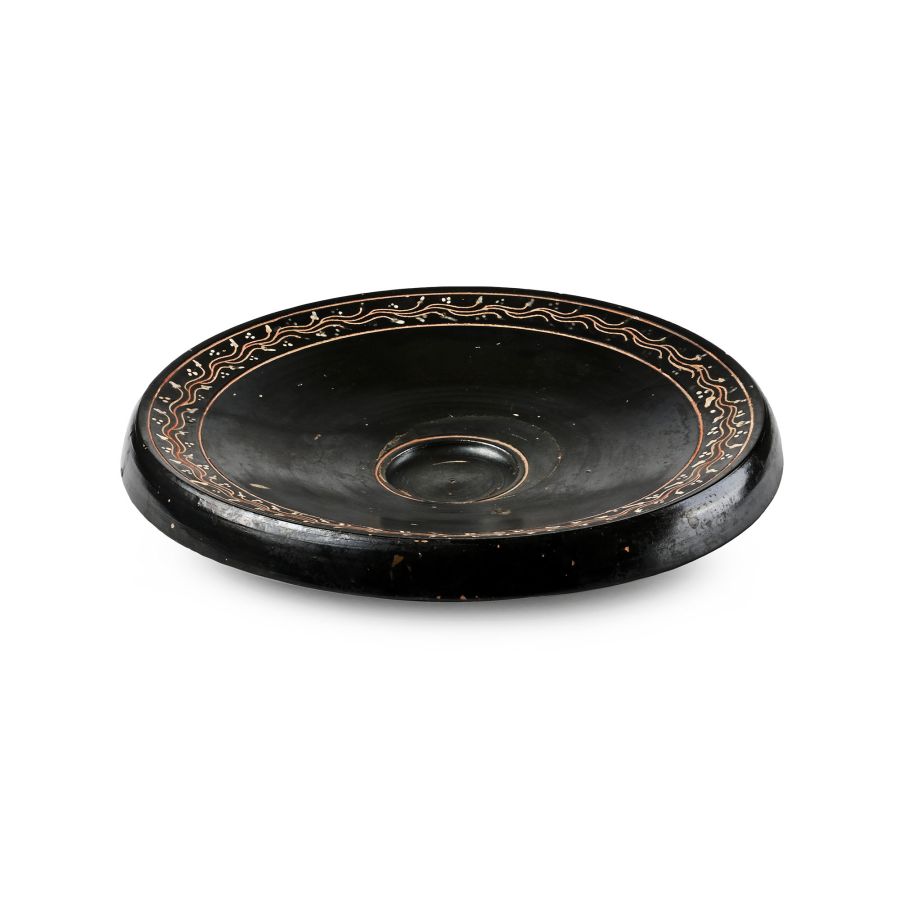
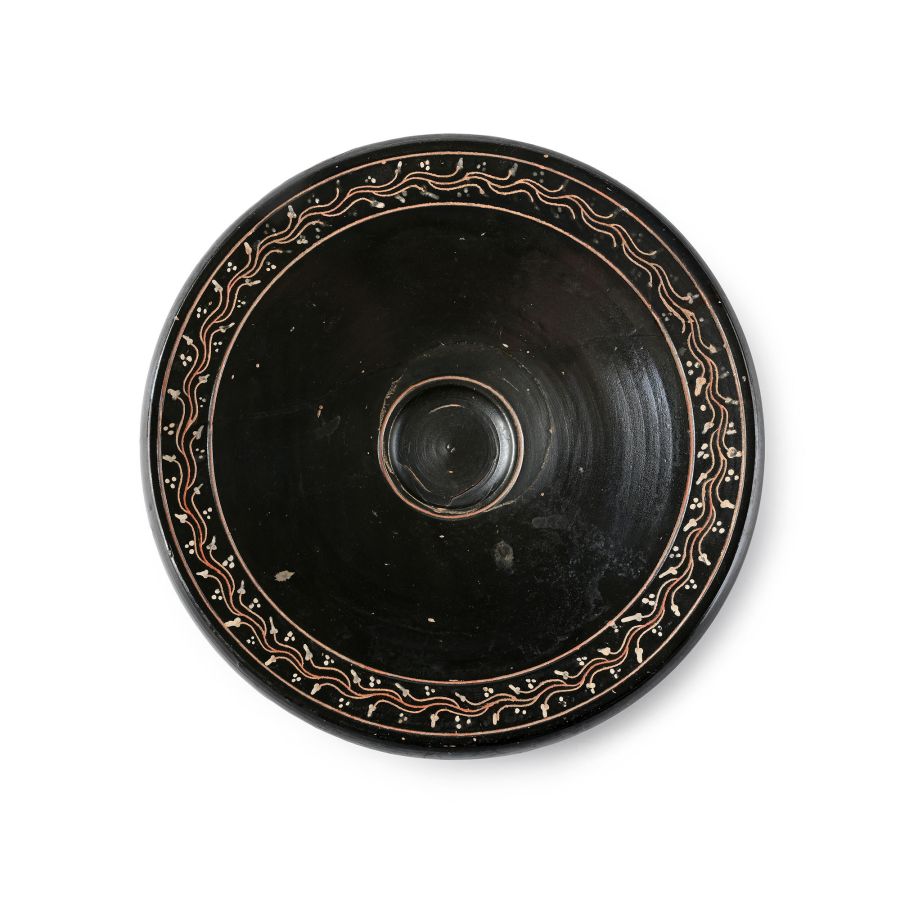
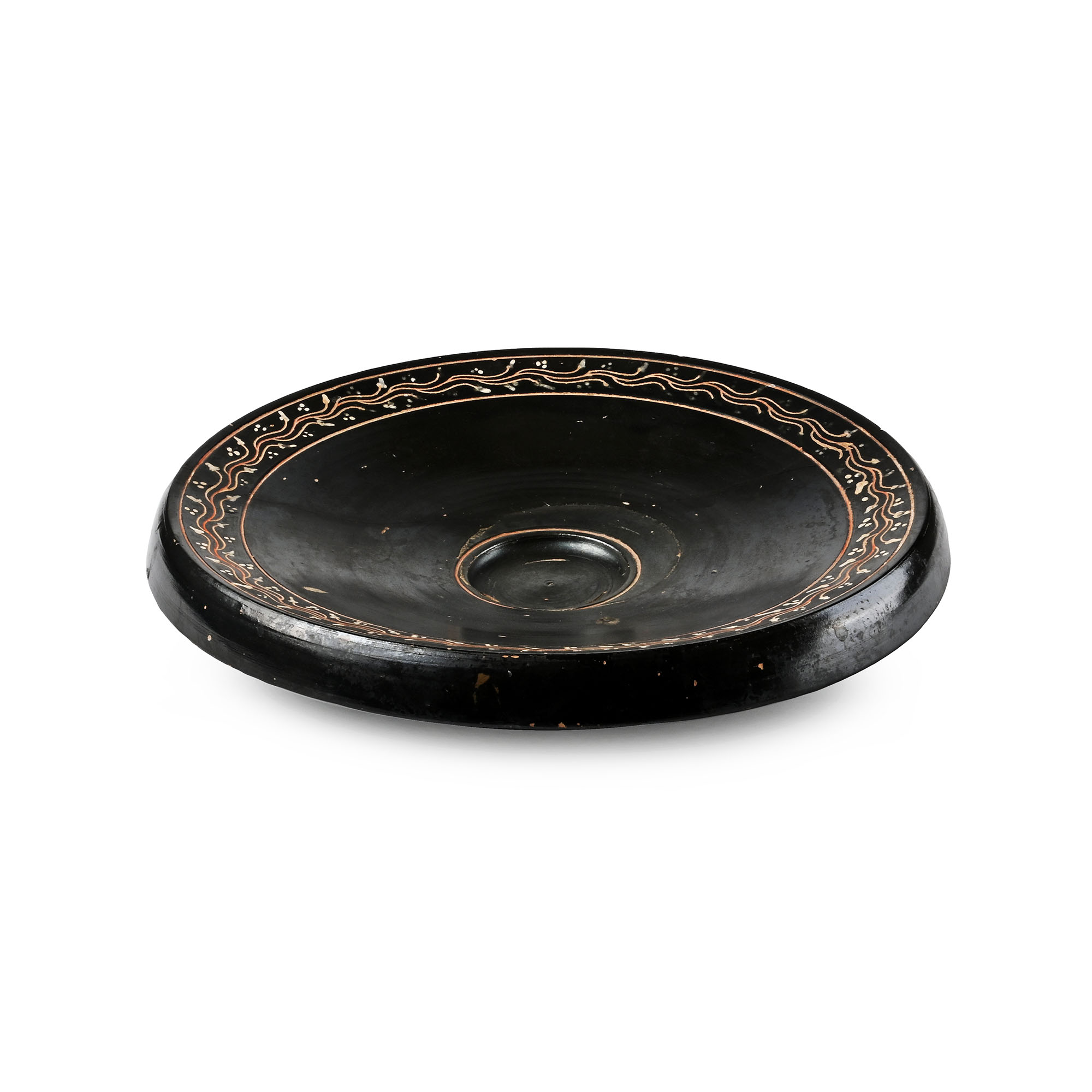
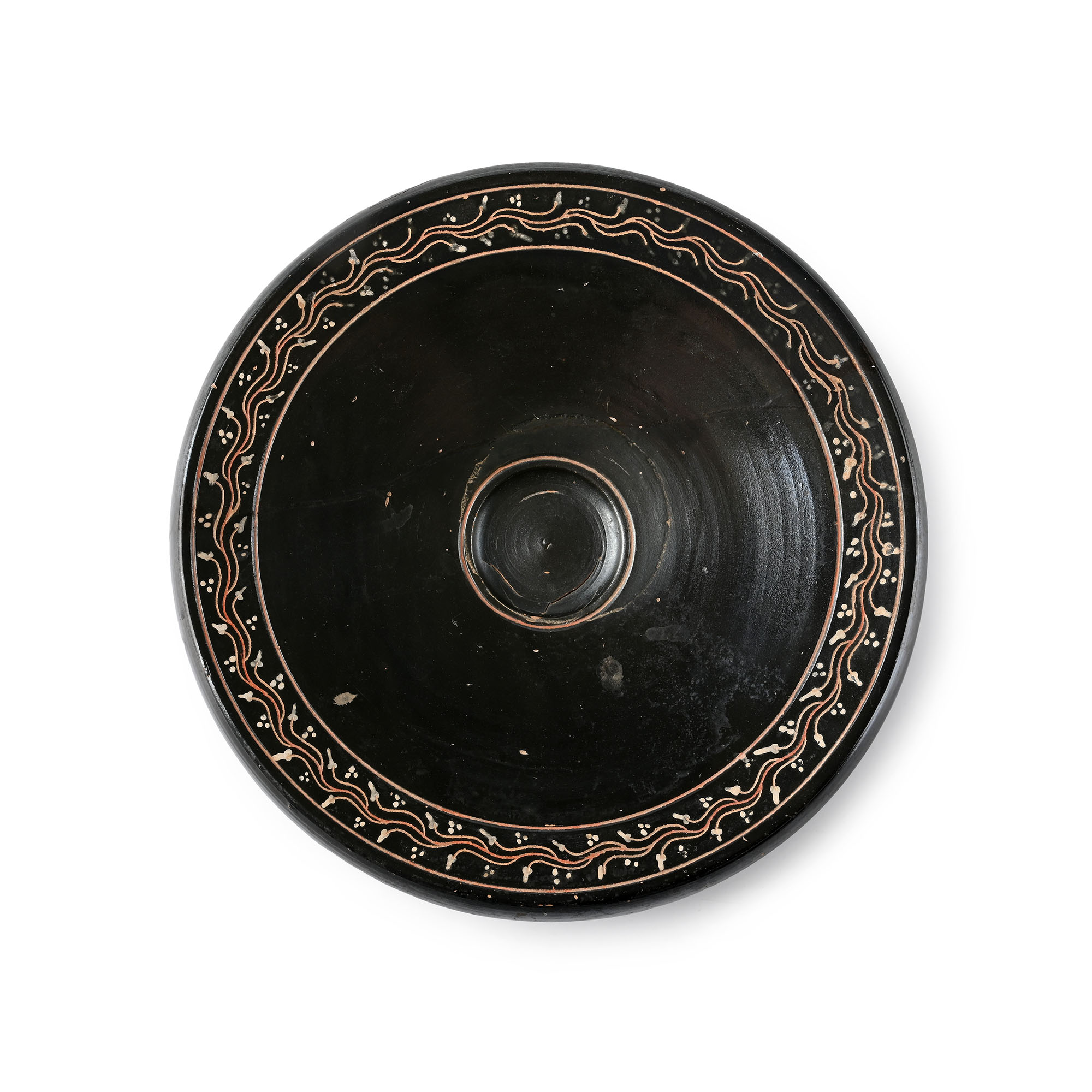
Large Greek Teano-Ware Fish Plate
HELLENISTIC, EARLY 3RD CENTURY B.C.
10 1/2 in. (834 grams, 26.5 cm).
Broad face with incised rings outlining the painted border of running vinescroll in red and white; with a shallow central socket outlined in red, broad carinated rim and low foot.
ProvenanceAcquired at auction, London, UK, 1990s, no.233.
Private collection, Suffolk, UK.
Accompanied by a copy of the relevant catalogue page.
'Teano ware' is a type of ceramic produced from the late 4th century to the early 3rd century BC. Its modern name derives from Teanum Sidicinum, in northern Campania, the main centre of production. White and red pigment was used for the painted decoration on the black surface. It was probably used for votive or funerary purposes.
CONDITIONTimeLine Auctions follows a vetting process to ensure the authenticity and legality of all items, reinforcing our commitment to integrity and responsible trading. Each antiquity, antique, and coin lot undergoes thorough examination by a vetting committee of at least ten external specialists, professional trade association members, scientists, and archaeologists: Our Vetting Process
AUCTIONS:
TimeLine is a leading auction house specialising in antiquities, ancient art, collectables, natural history, coins, medals, and books. Our auctions offer museums, collectors, historians, and enthusiasts the opportunity to acquire unique and historically significant pieces.
-
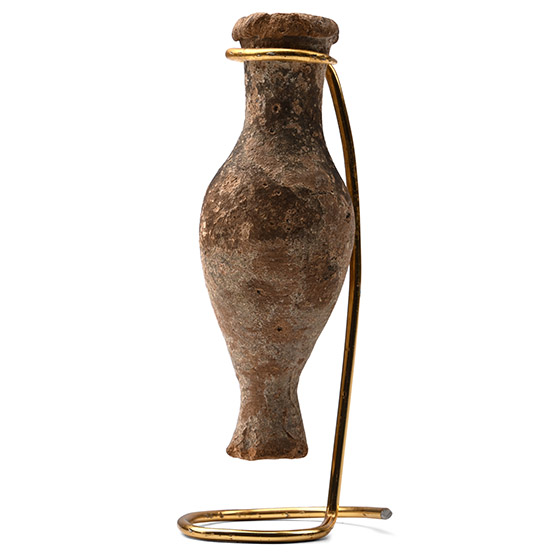
Greek Terracotta Spindle Flask
Hellenistic, late 2nd-1st century B.C.Sold for (Inc. bp): £78
With a narrow neck and carinated mouth, developing to a biconical body and flared foot; mounted on a custom-made stand. 24 grams total, 80 mm high, 93 mm including stand
From a Scottish gentleman’s collection, Glasgow, formed from the early 2000s. -
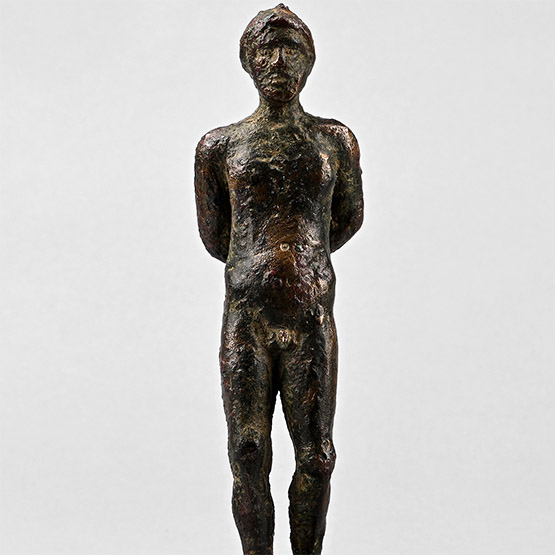
Greek Bronze Figure of a Bound Captive
Hellenistic, 2nd century B.C.Estimate: £3,000 - 4,000 (‡+bp*)
Opening Bid: £1,667
Modelled in the round nude male standing with hands bound behind his back; with short cropped hair and slender figure; left foot absent; mounted on a custom-made stand. 491 grams, 17 cm including stand
Ex S.K. collection. Acquired on the German art market, July 1995. Accompanied by an academic report by Dr Raffaele D'Amato. This lot has been checked against the Interpol Database of stolen works of art and is accompanied by a search certificate number no.12518-232076.
The character's hairstyle of the statuette is simple, and his hair is short, not treated with chalk like that of the famous ‘dying Galatian’ from Pergamon. The gaze is fixed in the distance, while the bony, beardless and long-limbed figure expresses the prisoner's energy. The nose here takes on a strong characteristic together with the broad jaw, which is also recognizable in later statuettes of Roman age. These characteristics, combined with those of nudity, allow us to recognize the figure of the prisoner as a Celtic warrior. warrior. -
.jpg)
Italic Carnelian Scarab with Satyr Mounted in a Gold Swivel Ring
4th-3rd century B.C.Sold for (Inc. bp): £1,404
Carved scarab with detailed carapace, legs and mouth; underside with intaglio standing figure holding an amphora; set into a later gold swivel ring. 5.30 grams, 23.85 mm overall, 14.56 x 17.70 mm internal diameter (approximate size British J 1/2, USA 5, Europe 9.32, Japan 9)
Private collection, Europe. Acquired on the English art market.
It is clear that the sculptor devoted more care and attention to carving the scarab itself rather than its intaglio.
