
Loading, please wait...
LOT 1521
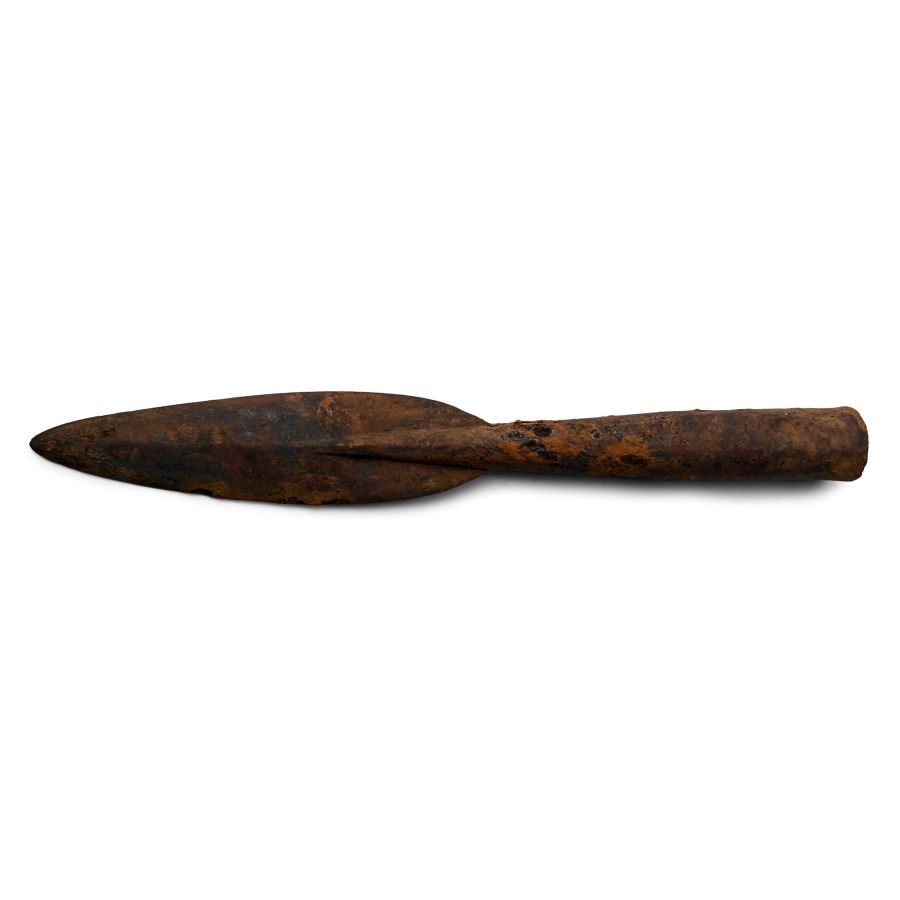
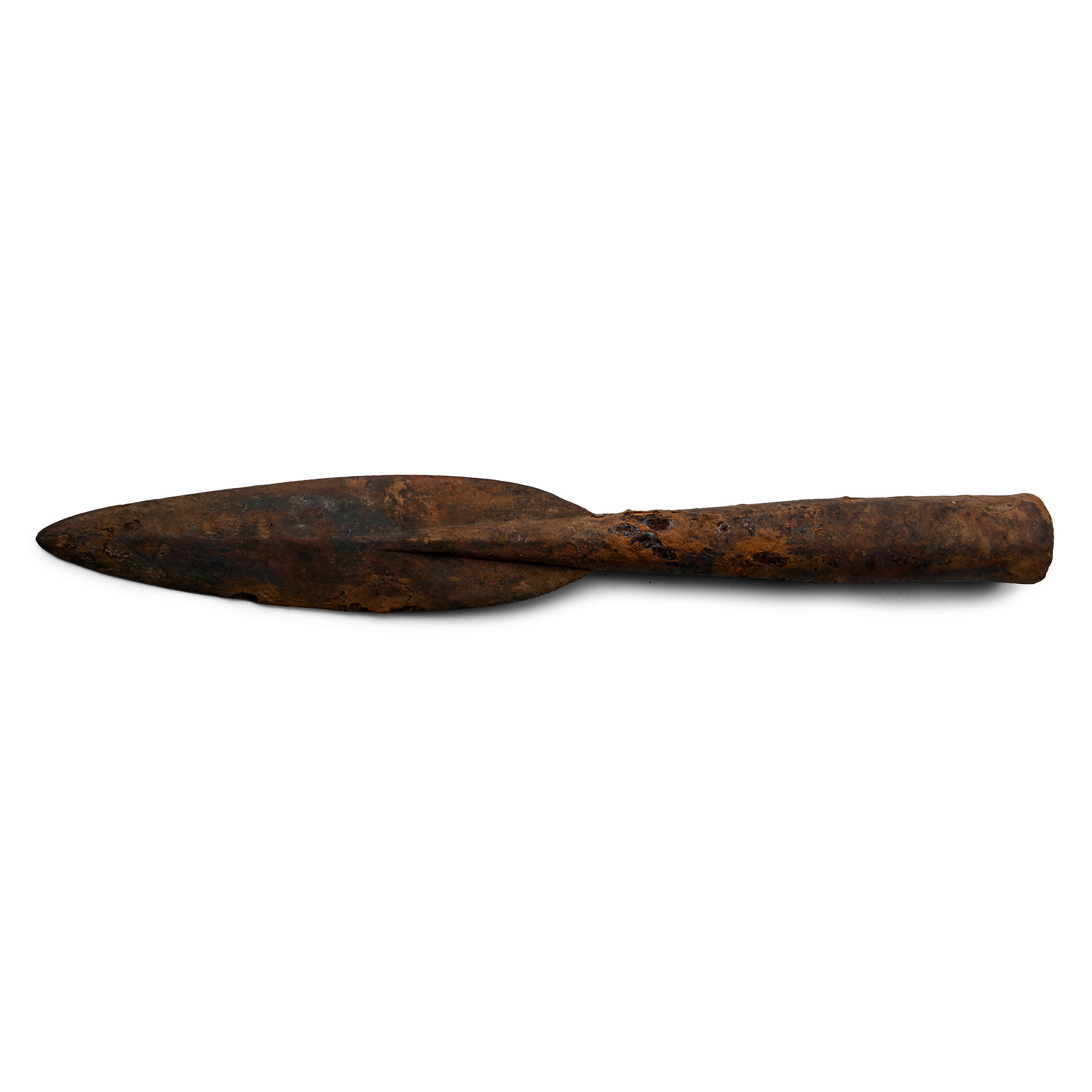
Large Greek Socketted Iron Spearhead
SARISSA, CIRCA 3RD-2ND CENTURY B.C.
15 1/8 in. (826 grams, 38.5 cm).
Comprising a leaf-shaped lentoid-section blade and long tubular socket.
ProvenanceEx Hermann Historica, 7 October 2009, no.207 (Part).
Private collection, Germany.
Kept in the UK from 2016.
Cf. Sekunda, N., Macedonian Armies after Alexander 323-168 BC, Oxford, 2012, p.14, for similar spearhead.
CONDITIONTimeLine Auctions follows a vetting process to ensure the authenticity and legality of all items, reinforcing our commitment to integrity and responsible trading. Each antiquity, antique, and coin lot undergoes thorough examination by a vetting committee of at least ten external specialists, professional trade association members, scientists, and archaeologists: Our Vetting Process
AUCTIONS:
TimeLine is a leading auction house specialising in antiquities, ancient art, collectables, natural history, coins, medals, and books. Our auctions offer museums, collectors, historians, and enthusiasts the opportunity to acquire unique and historically significant pieces.
-
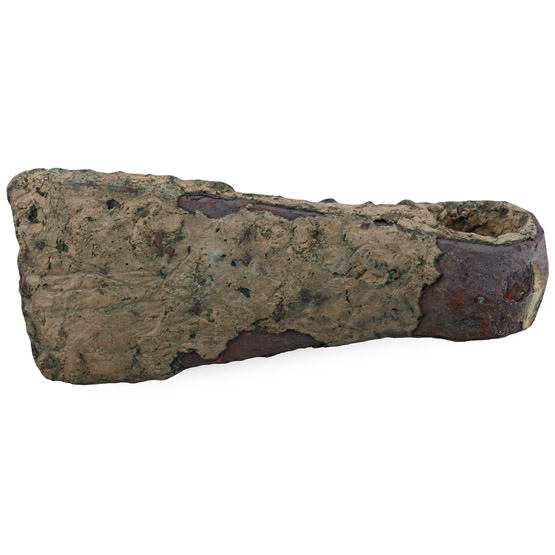
Luristan Bronze Socketted Axehead
2nd-1st millennium B.C.Estimate: £100 - 140 (+bp*)
Opening Bid: £50
With triangular tappering blade and flat cutting edge, oval socket. 997 grams, 17 cm
Ex Abelita family collection, 1980s-2000s. -
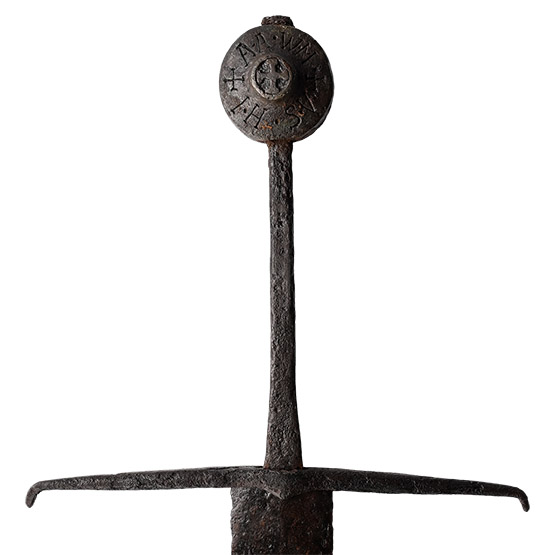
Medieval Knight's Iron Hand-and-a-Half Sword with Inscribed Bronze Pommel
Germany, 14th century A.D.Sold for (Inc. bp): £14,300
Longsword of Oakeshott's Type XVa, cross style 8, bronze pommel style J (recessed); strongly tapering, pointed blade of ‘flattened diamond’ section, cross style tapering gradually outward to sharply downturned tips; long grip with slight taper, disc pommel with chamfered edges and a potent cross in the centre surrounded by an inscription (on both sides) '+ IH SU + AAWM'. 1.25 kg, 113 cm
From the private family collection of a lady, UK; acquired in Germany mid 20th century. Accompanied by an academic report by Dr Raffaele D’Amato. This lot has been checked against the Interpol Database of stolen works of art and is accompanied by search certificate number no.13034-24799.
Some wheel pommels of this date have engraved, or inset roundels with armorial or devotional emblems, and a number of sword blades of this date bear religious inscriptions in the form of a prayer. The inscription on the pommel between the two potent crosses is intriguing. The letters 'IH SU' are a clear reference to the name of the Saviour, and can be translated as Ihesu-Jesus, or also Ihesu Merci (Jesus have mercy), a simple prayer for the person carrying the sword. The letters 'A.A. W.M.' could refer to the name of the owner of the sword (WM = Wilhelm) or the maker of the weapon. It is difficult to consider the letters as an abbreviation of the prayer ‘Ave Maria’, usually shortened in the German medieval inscriptions as A.M. -
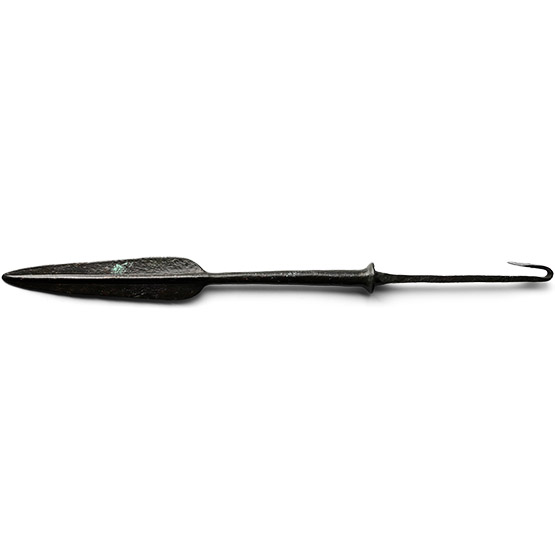
Mesopotamian Bronze Javelin Head
3rd-2nd millennium B.C.Sold for (Inc. bp): £176
With a foliate blade, rhomboidal in section, raised mid-rib, medium-length stem widening at its base and forming a small stop, rectangular-section tang with bent terminal. 204 grams, 38.5 cm
Ex Abelita family collection, 1980s-2000s.
The specimen belongs to the category of tripartite spears with a long, pointed biconvex blade and a single bevelled tang. They seem to be a Mesopotamian and Susian (Elamite) variant, and this type also includes decorated blades, like the spear from Tello with the inscription 'King of Kish'.
