
Loading, please wait...
LOT 0061
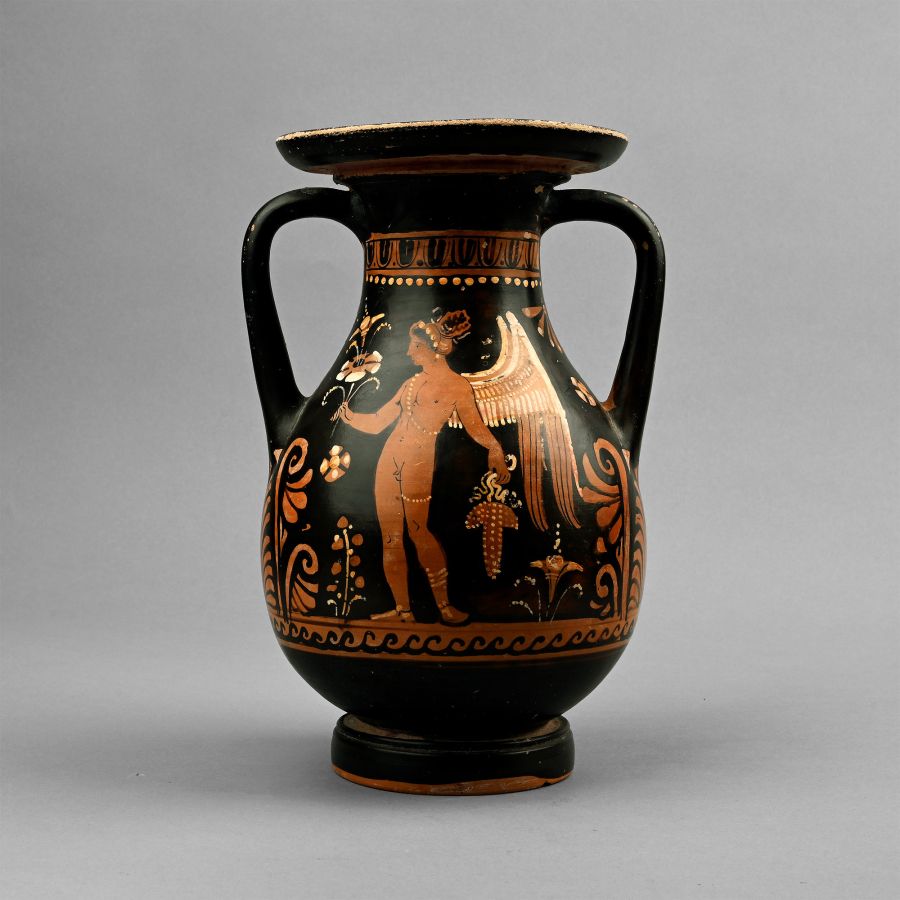
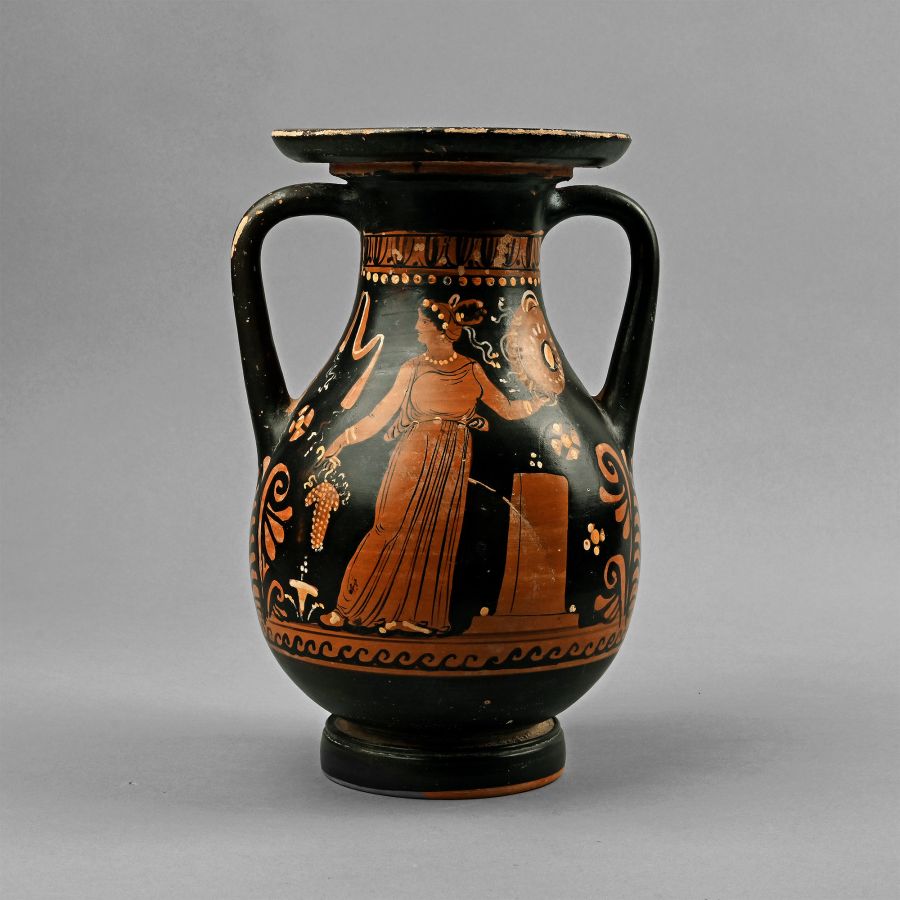
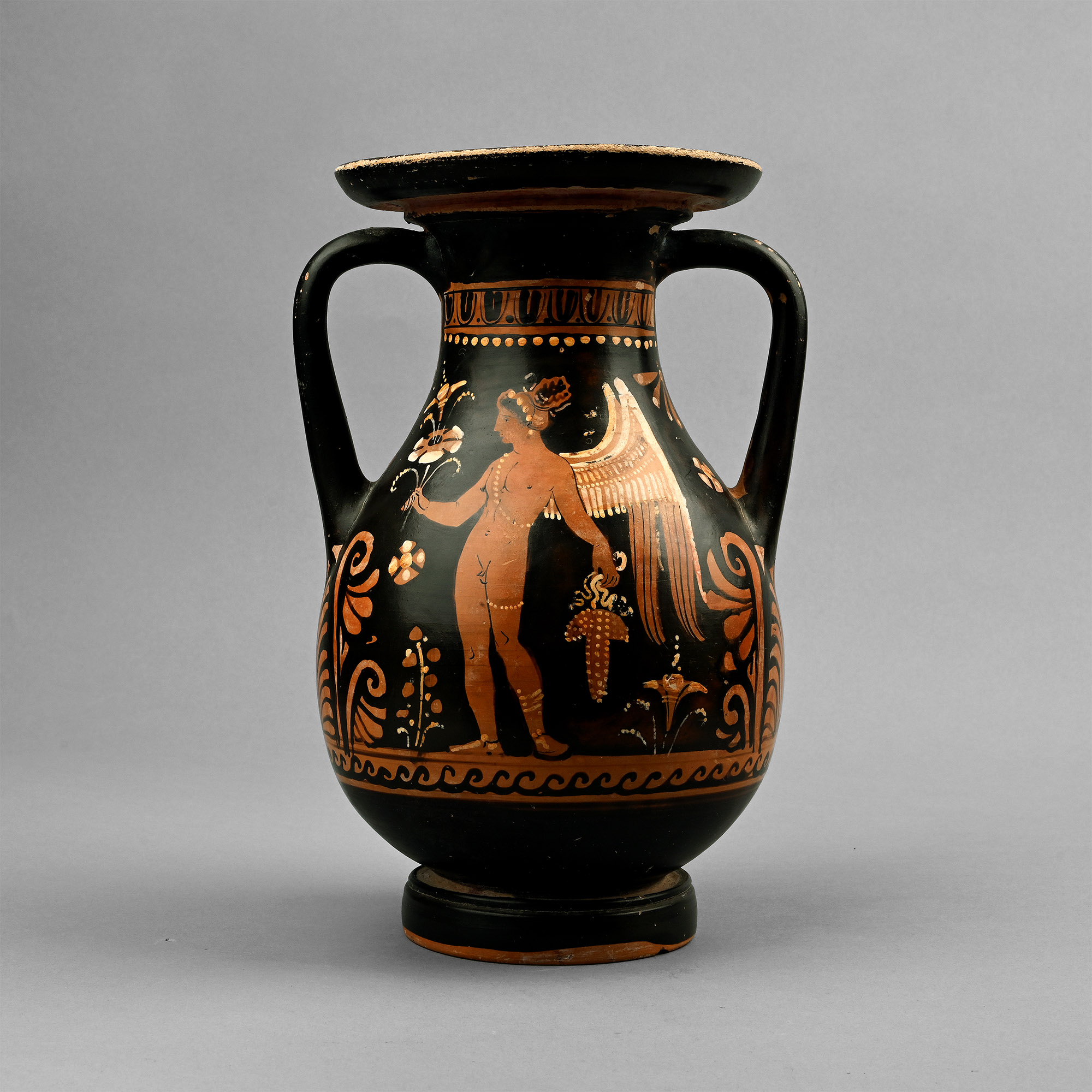
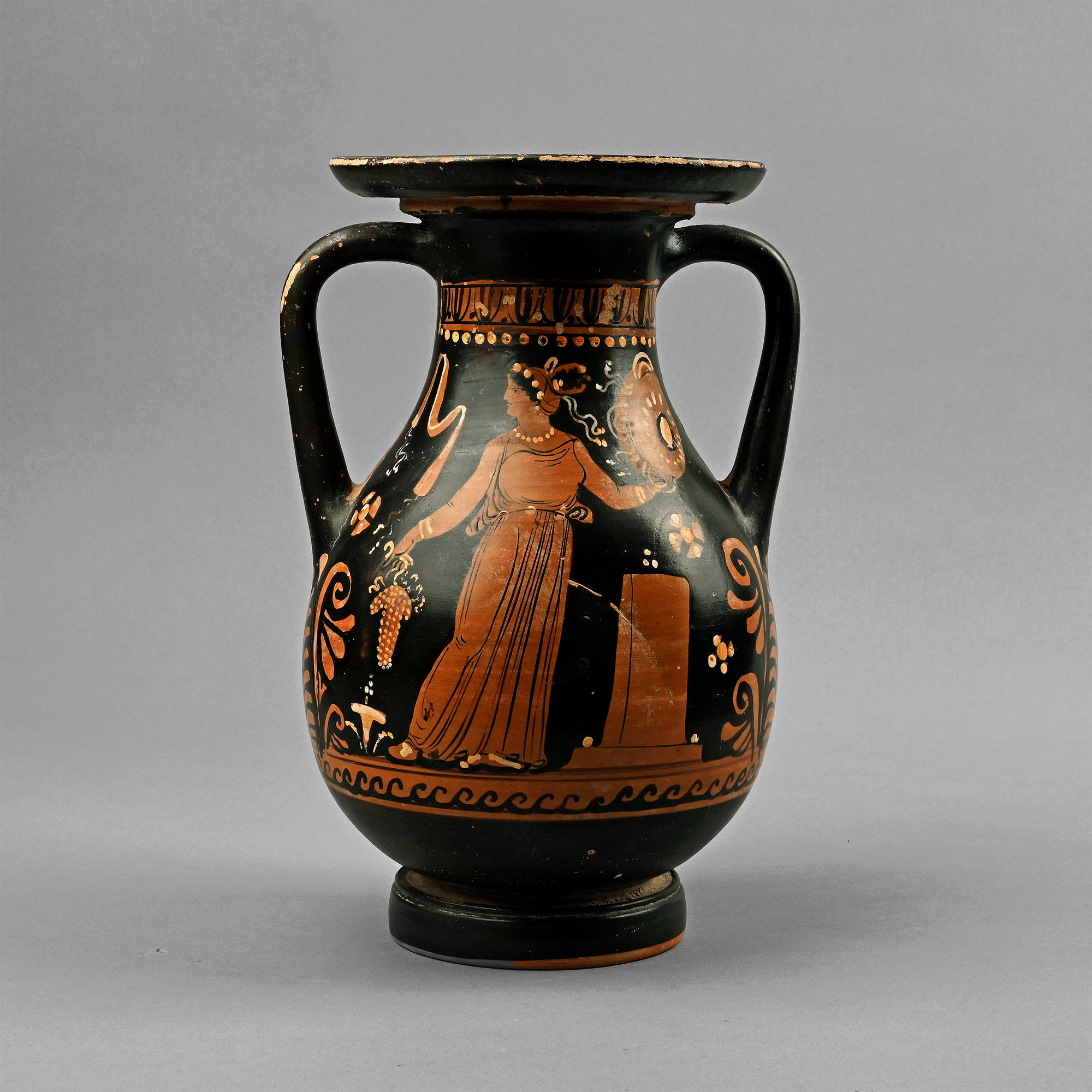
Large Greek Red-Figure Pelike with Nike
APULIAN, 3RD-2ND CENTURY B.C.
10 1/4 in. (1.19 kg, 26 cm high).
Comprising a pedestal base, mastoid body, lateral strap handles and funicular neck, broad mouth with stepped rim; the neck decorated with a band of egg-and-dart; palmette below each handle, flanked by tendrils and flowers; Side A: naked Eros (Cupid), hair in a bun and tied with a cloth, right arm outstretched and holding a flower by the stem, left hand holding leaves and tendrils; Side B: Nike standing in himation and stephane, holding up a drum-shaped object and supporting leaves and tendril, flower patterns to the background.
ProvenanceAcquired on the art market between the late 1990s and mid-2000s.
Estate of the late Barry Paul Buxton (1944–2024), Oakham, Rutland.
Acquired on the UK art market, 2025.
Accompanied by a thermoluminescence analysis report no.N126a15 from Oxford Authentication.
Accompanied by an academic report by Dr Raffaele D'Amato.
This lot has been checked against the Interpol Database of stolen works of art and is accompanied by search certificate number no.13089-248952.
Cf. for a Pelike in similar style the BM inv.no.1867,0508.1278 in In Trendall, A.D., Cambitoglou, A., The red-figured vases of Apulia, Oxford, 1978, no.20 p.144.
FootnotesThe Greek term pelike (pl. pelikai) was used for a number of shapes, and it is not certain what this one-piece vessel with a distinctive sagging belly was called in antiquity. It seems to have been invented after the introduction of the red-figure technique, although there are examples in black-figure. It continued to be produced into the 4th century and in the Roman period. It is shown in use as a container for liquids, especially wine, and in this context was linked with Bacchus, Pan, and Silenus.
CONDITIONTimeLine Auctions follows a vetting process to ensure the authenticity and legality of all items, reinforcing our commitment to integrity and responsible trading. Each antiquity, antique, and coin lot undergoes thorough examination by a vetting committee of at least ten external specialists, professional trade association members, scientists, and archaeologists: Our Vetting Process
AUCTIONS:
TimeLine is a leading auction house specialising in antiquities, ancient art, collectables, natural history, coins, medals, and books. Our auctions offer museums, collectors, historians, and enthusiasts the opportunity to acquire unique and historically significant pieces.
-
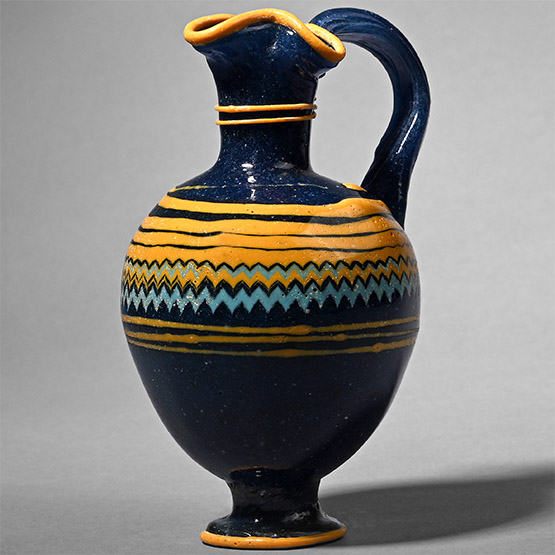
'The Cyrus Collection' Greek Core-Formed Glass Oinochoe
5th century B.C.Estimate: £15,000 - 20,000 (+bp*)
Opening Bid: £7,500
Ovoid blue body with narrow flared foot, pinched mouth and applied strap handle; marvered trail decoration in yellow to the shoulder, applied trails to the neck, marvered and dragged trails to the equator; cleaned and repolished; supplied with a custom-made stand. 197 grams total, 13.5 cm high including stand
Ex Antike Kunst Palladion, Basel. The Cyrus collection, 1970s. with Sotheby’s, New York, 9 December 2003, no.88. Accompanied by a copy of the relevant Sotheby's catalogue pages. This lot has been checked against the Interpol Database of stolen works of art and is accompanied by search certificate number no.13097-248080.
During the 5th century B.C., the colours of Mediterranean Group I vessels expanded from blue or opaque white to include dark green, golden brown, and opaque brick red. -
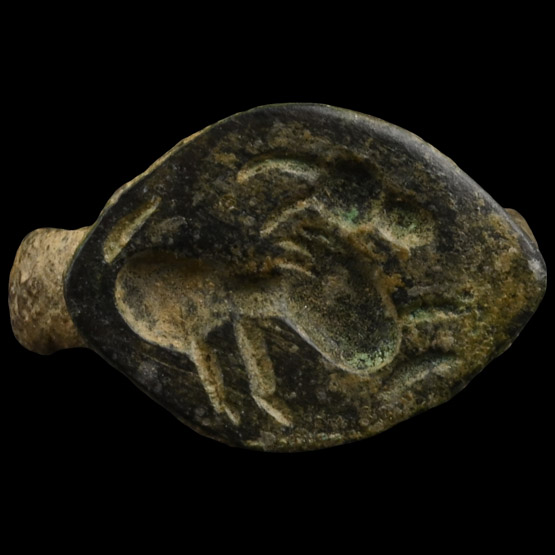
Greek Bronze Ring with Standing Antelope
3rd-2nd century B.C.Sold for (Inc. bp): £72
An interphalangial ring with a lentoid bezel with a stylised antelope facing right. 2.72 grams, 18.41 mm overall, 14.62 mm internal diameter (approximate size British G 1/2, USA 3 1/2, Europe 5.55, Japan 5)
Acquired on the UK and EU art market before 2000. From the private collection of a Surrey, UK, gentleman.
This category of rings shows a narrow band-like hoop and a slightly convex exterior surface, undecorated, retaining its width all around. The large bezel is in the form of a pointed oval. -
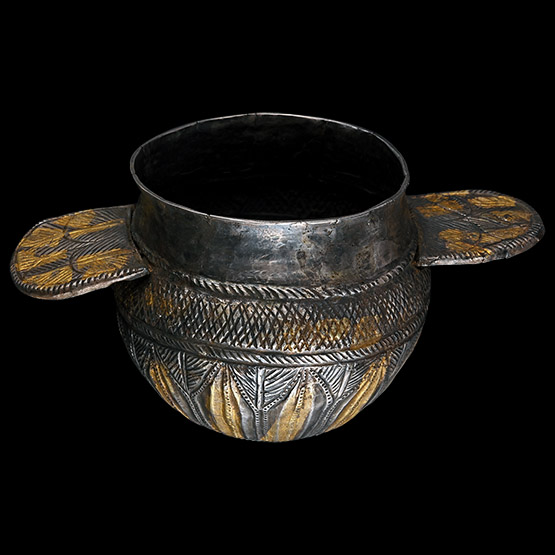
Greek Silver-Gilt Wine Cup with Handles
Hellenistic, 2nd-1st century B.C.Sold for (Inc. bp): £6,240
Comprising a globular body with a rounded underside, a repoussé rosette with ropework border, segmented band with leaf detailing, hatched shoulder framed by ropework bands, scooped neck with chamfered rim; two D-shaped ledge handles with recessed rim, ropework border, hatched panels; accompanied by a custom-made display case. 179 grams, 15.5 cm wide
Acquired on the US art market, early 1990s. Private collection, North America. Ex private collection, USA. TimeLine Auctions, 23 February 2023, no.48. Private collection, London. Accompanied by an academic report by Dr Raffaele D'Amato. This lot has been checked against the Interpol Database of stolen works of art and is accompanied by a search certificate number no.13037-247507.
