
Loading, please wait...
LOT 0057
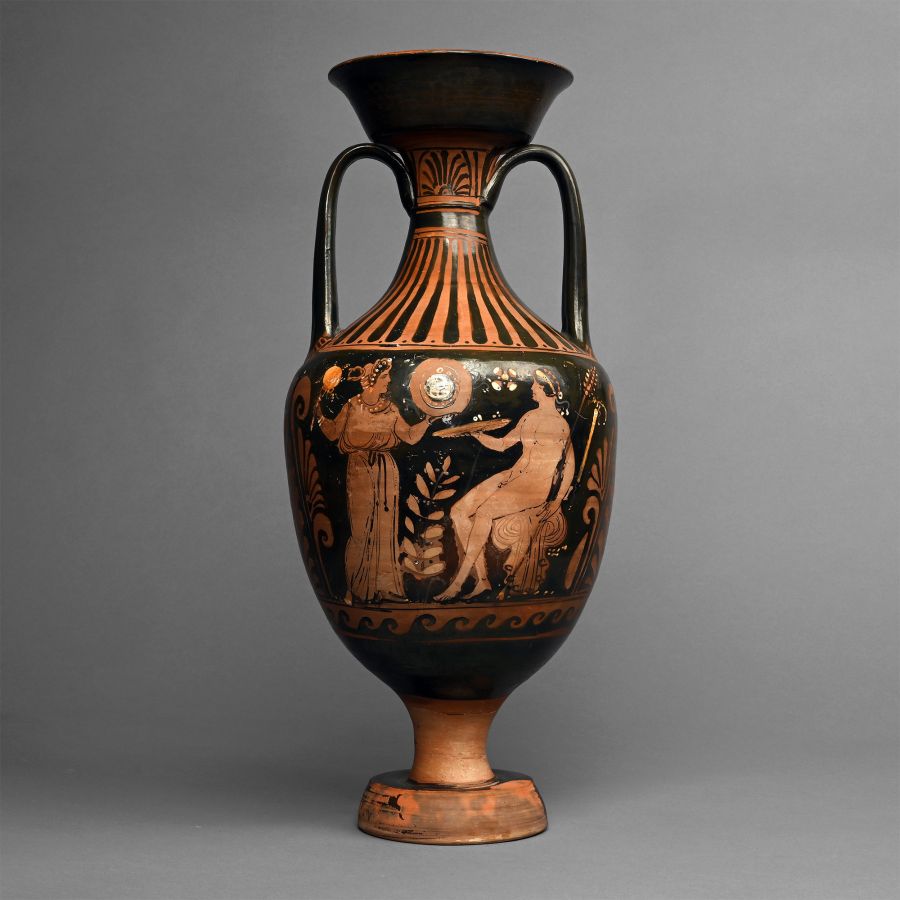
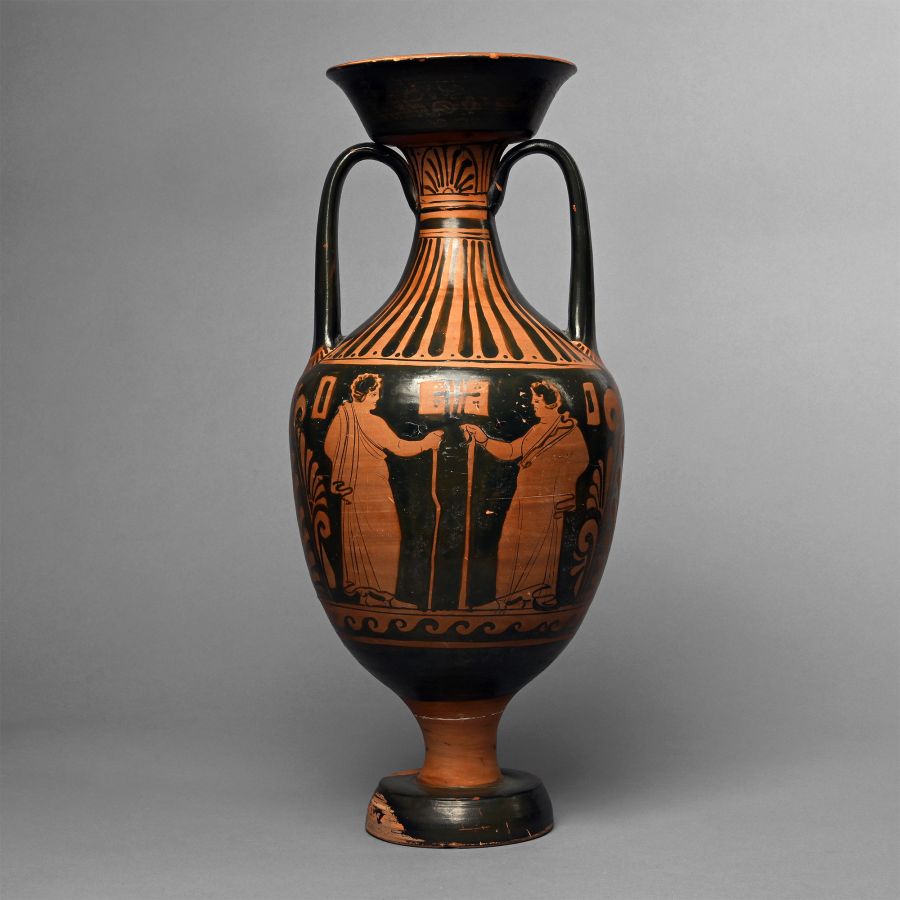
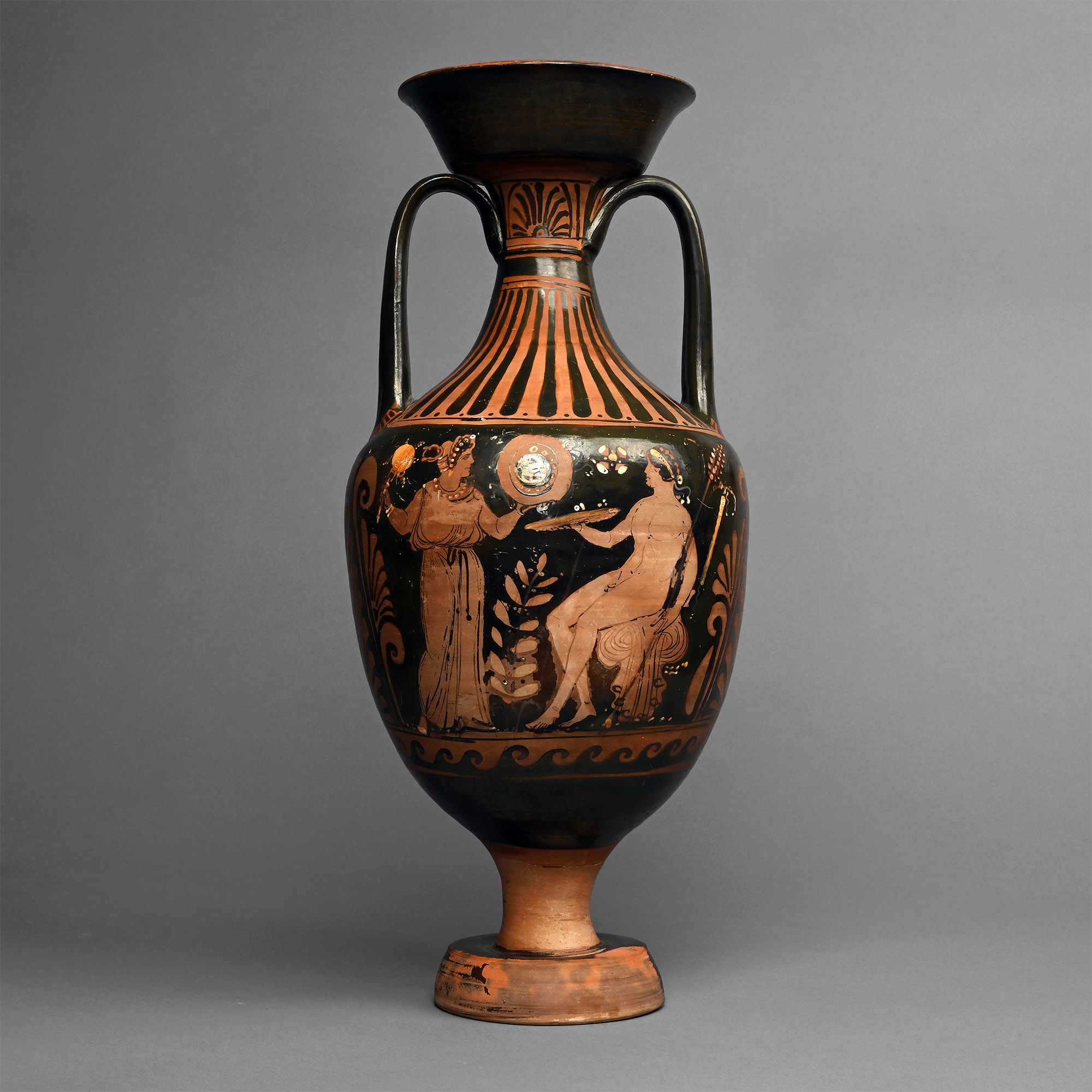
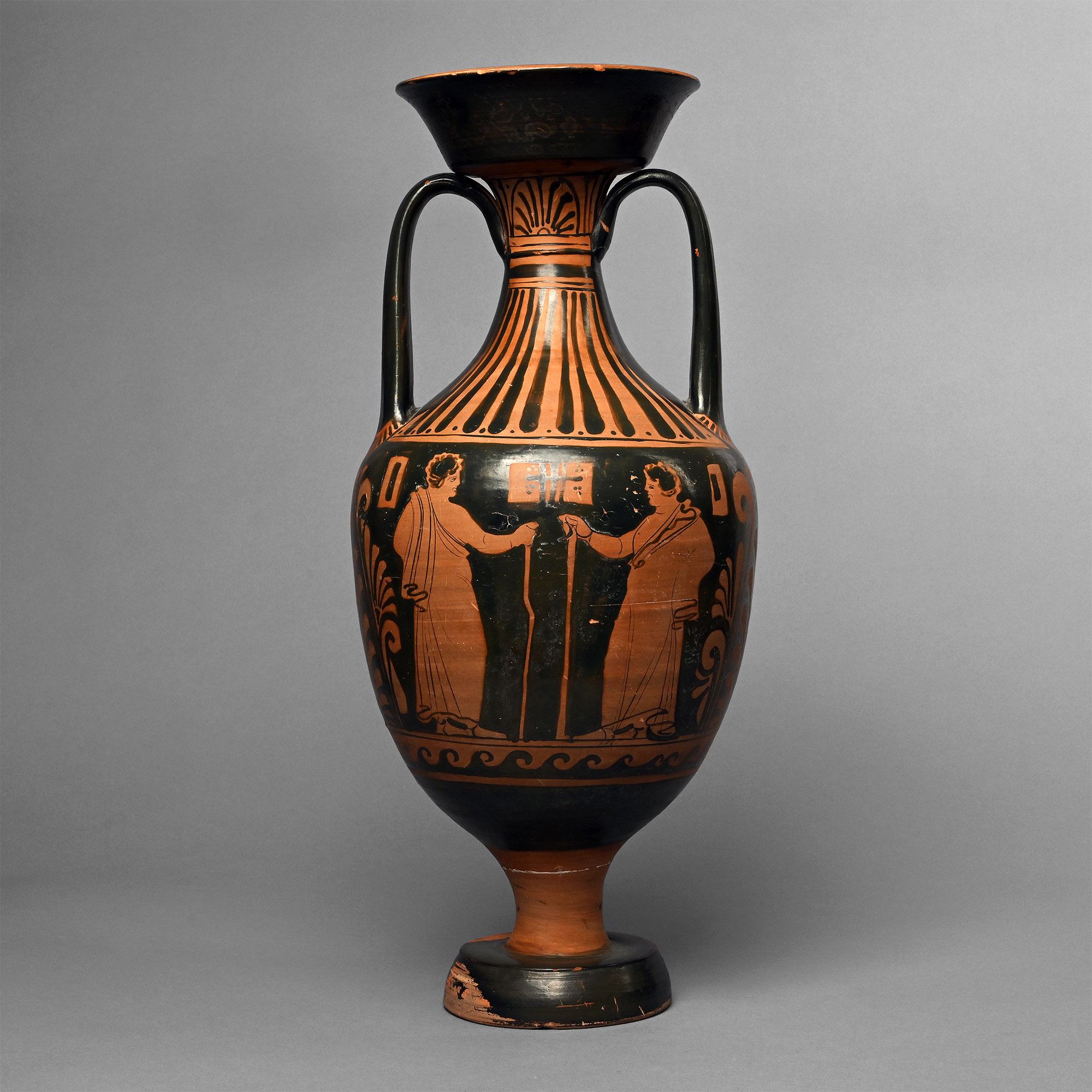
Large Greek Red-Figure Amphora with Dionysian Scenery
APULIAN, 3RD-2ND CENTURY B.C.
17 in. (1.88 kg, 43 cm).
The piriform body with broad, stepped rim and two lentoid-section handles; painted palemete beneath each handle and on the neck below the mouth; Side A: red-figure frieze depicting a standing woman wearing a himation and stephane, her hands raised supporting objects, a laurel frond before her and a seated nude male with thyrsus and other items; Side B: two opposed figures standing supported by staves, each wearing a loosely draped floor-length garment; objects in the field.
ProvenanceAcquired on the art market between the late 1990s and mid-2000s.
Estate of the late Barry Paul Buxton (1944-2024), Oakham, Rutland.
Acquired on the UK art market, 2025.
Accompanied by a thermoluminescence analysis report no.N126a18 from Oxford Authentication.
This lot has been checked against the Interpol Database of stolen works of art and is accompanied by search certificate no.13075-248951.
See Trendall, A.D., The red-figured vases of Lucania, Campania and Sicily, second supplement, University of London, Institute of Classical Studies Bulletin no.31, 1973.
FootnotesThe subject is standard, often representing the draped youths completely enveloped in their himatia.
CONDITIONTimeLine Auctions follows a vetting process to ensure the authenticity and legality of all items, reinforcing our commitment to integrity and responsible trading. Each antiquity, antique, and coin lot undergoes thorough examination by a vetting committee of at least ten external specialists, professional trade association members, scientists, and archaeologists: Our Vetting Process
AUCTIONS:
TimeLine is a leading auction house specialising in antiquities, ancient art, collectables, natural history, coins, medals, and books. Our auctions offer museums, collectors, historians, and enthusiasts the opportunity to acquire unique and historically significant pieces.
LOT 0057
Large Greek Red-Figure Amphora with Dionysian Scenery
Sold for (Inc. bp): £3,640
-
Large Greek Red-Figure Skyphos with Owl
South Italian, 5th-4th century B.C.Estimate: £2,500 - 3,500 (‡+bp*)
Opening Bid: £1,350
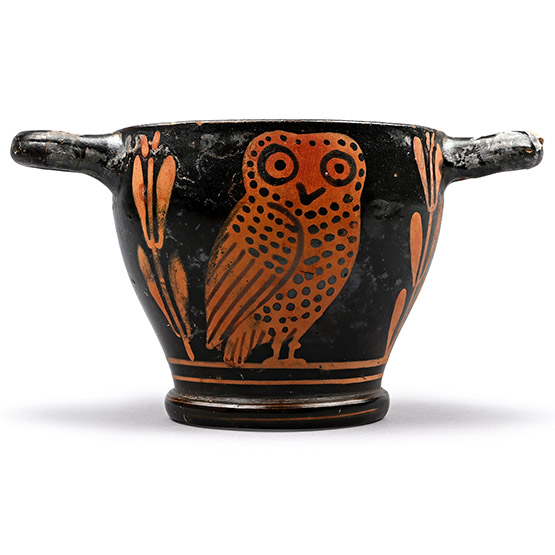
With mammiform body, pedestal base and two loop handles; each side with a facing image of an owl between laurel fronds. 239 grams, 17.5 cm
Swiss private collection, assembled in the 1960s-1970s. Private collection, acquired in 2013. Accompanied by a thermoluminescence analysis report no.N126a14 from Oxford Authentication. This lot has been checked against the Interpol Database of stolen works of art and is accompanied by a search certificate number no.12854-241751.
Bubo was the holy beloved magical owl of the goddess Athena, and it was a common subject from the Greek ceramists. The owl-skyphos, originally produced in 5th century Athens, was extremely popular and was exported from Athens to other parts of the Greek world, including southern Italy and Etruria. Local imitations have been excavated at Corinth, and during the fourth century, or perhaps even slightly earlier, skyphoi similar to those from Athens were produced in Apulia and Etruria. -
Greek Silver Earring Pair with Nike
3rd-2nd century B.C.Estimate: £600 - 800 (+bp*)
Opening Bid: £300
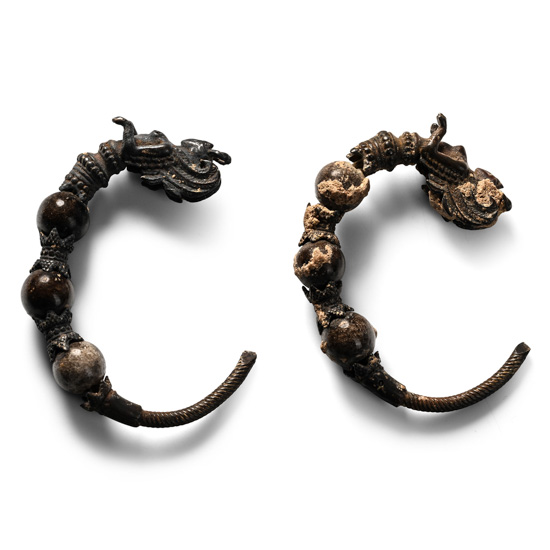
Each with a hook and spherical beads, applied collars and a winged figure of Nike with arms extended. 9.66 grams total, 34-37 mm
Acquired before 1983. Ex London gallery, 1990s. Private collection, London, UK. -
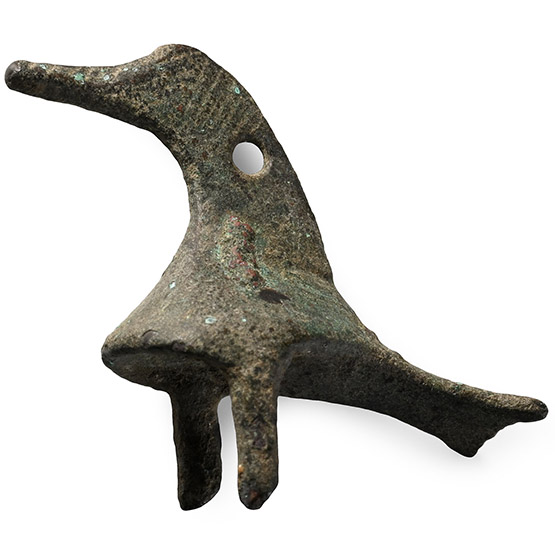
Greek Bronze Animal
Geometric, 8th-6th century B.C.Sold for (Inc. bp): £234
Modelled with a conical body and two stub legs, carinated back and neck, pierced for suspension. 11.5 grams, 43 mm
Ex collection Mr K.H., Germany. Private collection, acquired in 2012.
