
Loading, please wait...
LOT 0536
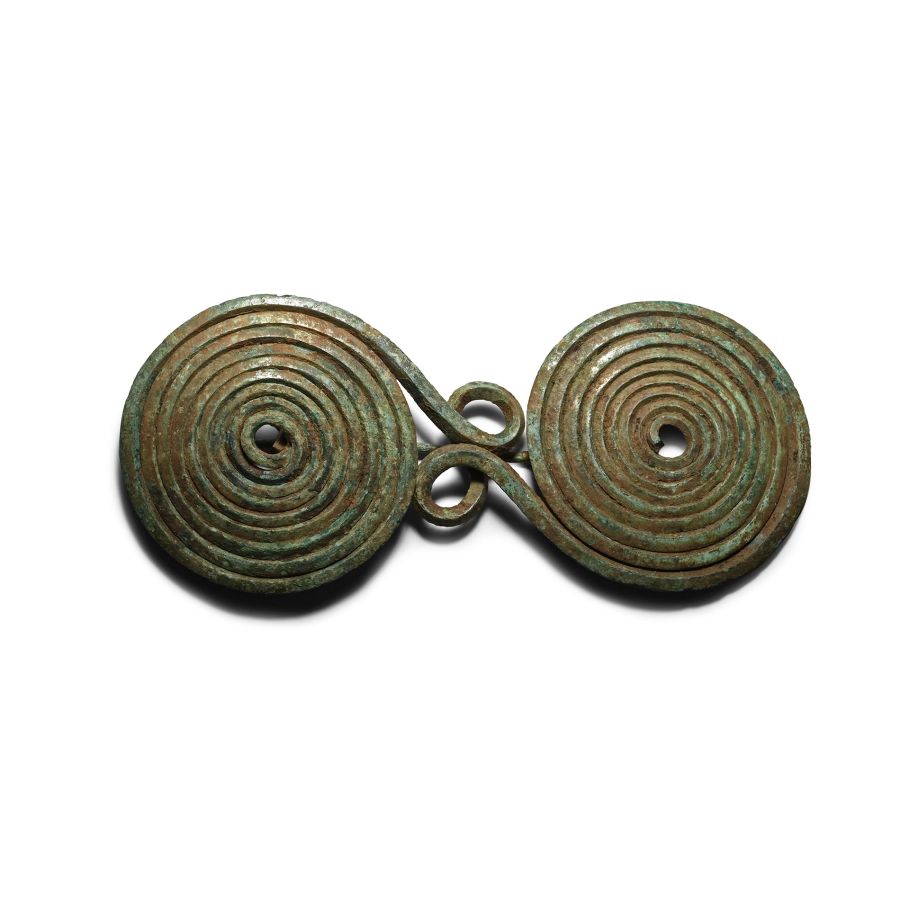
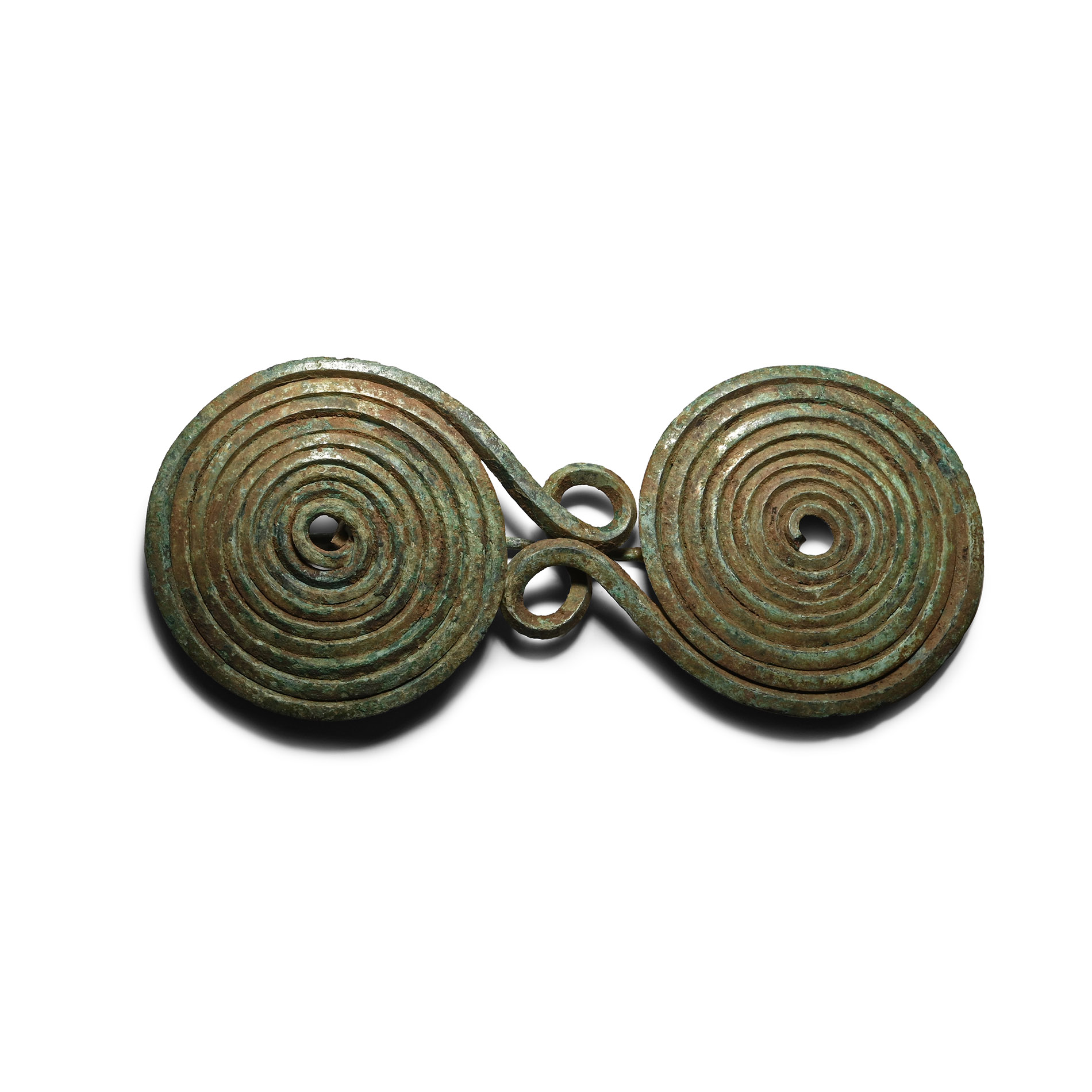
Large Greek Geometric Bronze Spiral Fibula
7TH-6TH CENTURY B.C.
6 1/2 in. (159 grams, 16.5 cm).
Formed from a single filament rolled into two 'spectacle' discs; one of the spirals terminating in a long pin, the other in a hook serving as the catchplate; openwork figure-of-eight at the centre; pin present but detached.
ProvenanceAcquired in the mid 1980s-1990s.
Private collection, Switzerland, thence by descent.
Private collection, since the late 1990s.
This lot is accompanied by an illustrated lot declaration signed by the Head of the Antiquities Department, Dr Raffaele D’Amato.
Cf. Cassani, S., Art of the Italic People from 3000-300 B.C., Naples, 1993, p. 295, no.188, for similar.
CONDITIONTimeLine Auctions follows a vetting process to ensure the authenticity and legality of all items, reinforcing our commitment to integrity and responsible trading. Each antiquity, antique, and coin lot undergoes thorough examination by a vetting committee of at least ten external specialists, professional trade association members, scientists, and archaeologists: Our Vetting Process
AUCTIONS:
TimeLine is a leading auction house specialising in antiquities, ancient art, collectables, natural history, coins, medals, and books. Our auctions offer museums, collectors, historians, and enthusiasts the opportunity to acquire unique and historically significant pieces.
LOT 0536
Large Greek Geometric Bronze Spiral Fibula
Estimate £500 - 700€580 - 810 (for guidance only)$680 - 950 (for guidance only)
-
Greek Bronze Alabastron Kohl Pot
Circa 650-550 B.C.Sold for (Inc. bp): £111
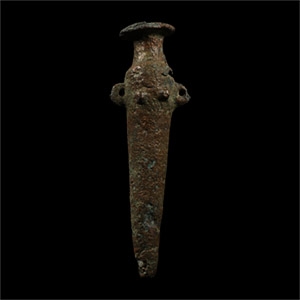
With hollow-formed tapering body, rounded tip, carination at the shoulder, low neck and broad flared rim to the mouth, two lateral loop handles. 109 grams, 12.1 cm
UK private collection before 2000. Acquired on the UK art market. Property of a London gentleman. This lot is accompanied by an illustrated lot declaration signed by the Head of the Antiquities Department, Dr Raffaele D’Amato. -
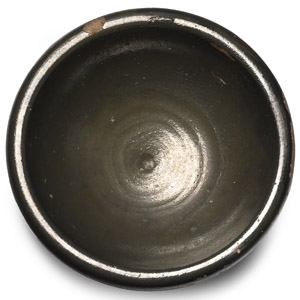
Greek Miniature Black Glazed Terracotta Dish
Circa 2nd century B.C.Sold for (Inc. bp): £52
Squat in profile with rounded rim and flared foot. 16.3 grams, 50 mm
Believed to have been part of the Duke of Northumberland collection. From an early 20th century collection. From a Hampshire, UK, private collection. This lot is accompanied by an illustrated lot declaration signed by the Head of the Antiquities Department, Dr Raffaele D’Amato. -
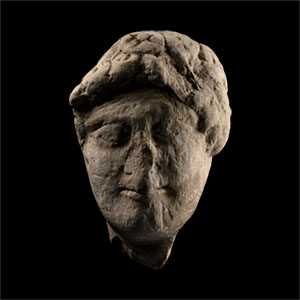
Cypriot Head of a Youth with a Floral Crown
Late Archaic, late 6th-early 5th century B.C.Estimate: £800 - 1,000 (‡+bp*)
Opening Bid: £360
Modelled in three-quarter view, limestone face of a youth with almond-shaped eyes with broad upper lids under a flat brow; eyeballs contoured by a fine outer groove and lips with the 'archaic' smile; rosette wreath over spiral-shaped, voluminous curls framing the forehead; the surface abraded and some curls lost; reverse trimmed and smoothed at an angle; mounted on a custom-made display stand. 958 grams total, 24.6 cm including stand
Jean-Louis Debauve (1926-2016). with Jean Renaud Geoffroy & Yves Becquet Auction, Paris, 16 November 2018, no.225. This lot is accompanied by an illustrated lot declaration signed by the Head of the Antiquities Department, Dr Raffaele D’Amato.
The head probably originally belonged to one of the votive statuettes, mostly hewn from limestone, which are frequently documented for the Cypriot region at this period.
