
Loading, please wait...


LOT 0608
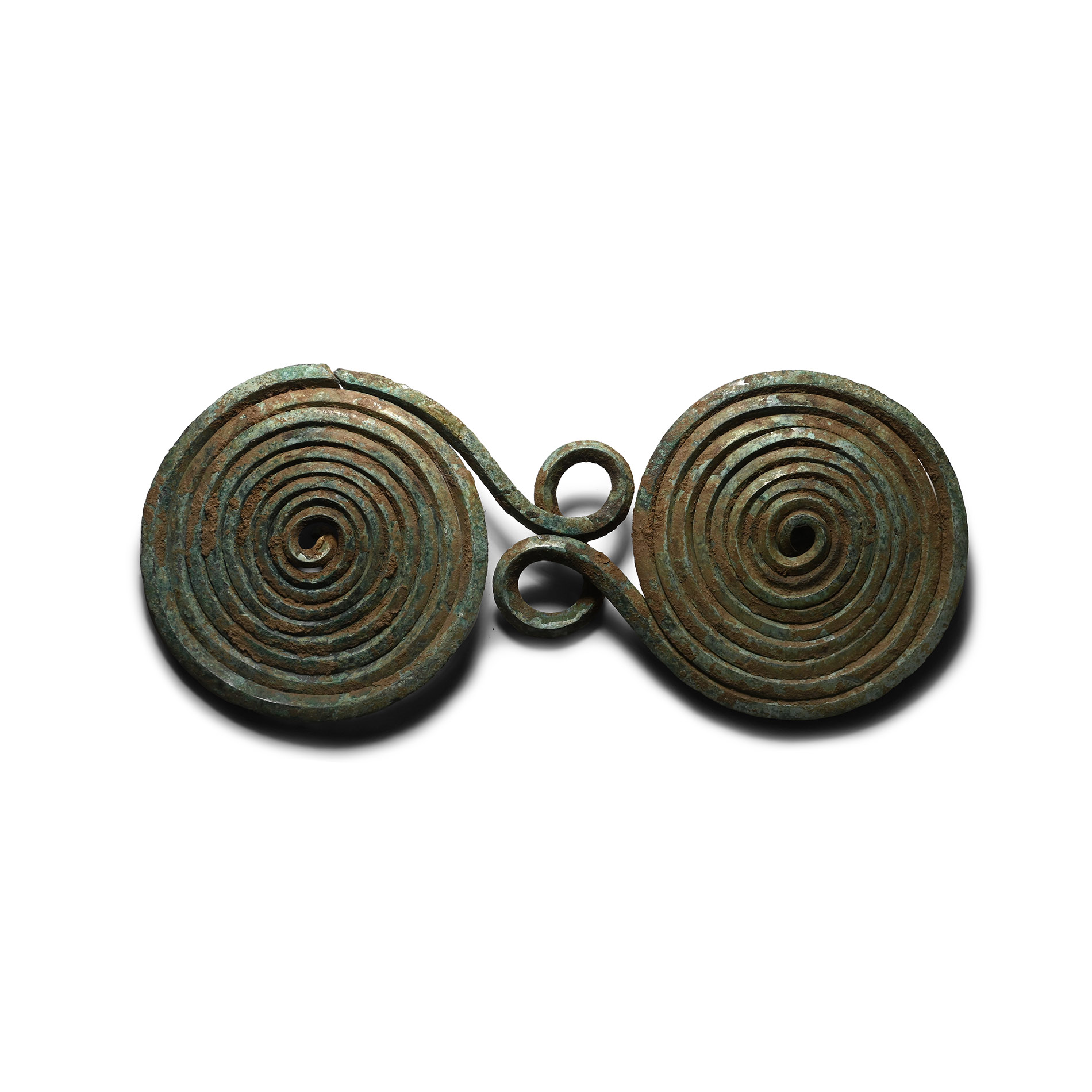
Large Greek Bronze Spiral Fibula
GEOMETRIC, 7TH-6TH CENTURY B.C.
6 5/8 in. (159 grams, 17 cm).
Formed from a single square-section filament rolled into two 'spectacle' discs; one of the spirals terminating in a long pin, the other in a hook serving as the catchplate; openwork figure-of-eight at the centre; pin broken, coils separated.
ProvenanceAcquired in the mid 1980s-1990s.
Private collection, Switzerland, thence by descent.
Private collection, since the late 1990s.
Cf. Cassani, S., Art of the Italic People from 3000-300 B.C., Naples, 1993, p.295, no.188, for similar.
CONDITIONTimeLine Auctions follows a vetting process to ensure the authenticity and legality of all items, reinforcing our commitment to integrity and responsible trading. Each antiquity, antique, and coin lot undergoes thorough examination by a vetting committee of at least ten external specialists, professional trade association members, scientists, and archaeologists: Our Vetting Process
AUCTIONS:
TimeLine is a leading auction house specialising in antiquities, ancient art, collectables, natural history, coins, medals, and books. Our auctions offer museums, collectors, historians, and enthusiasts the opportunity to acquire unique and historically significant pieces.
LOT 0608
Large Greek Bronze Spiral Fibula
Estimate £400 - 600€460 - 700 (for guidance only)$540 - 810 (for guidance only)
-
.jpg)
Greek Attic Red-Figure Kylix Fragment Depicting a Lyre Player
Early 5th century B.C.Sold for (Inc. bp): £234
Irregular fragment depicting a draped figure playing a lyre, possibly Apollo; meander line to the reverse. 7.25 grams, 42 mm
From the stock of a former UK antiquarian, acquired at trade fairs and from private collection formed in the 1980s-1990s. Private collection, Europe. -
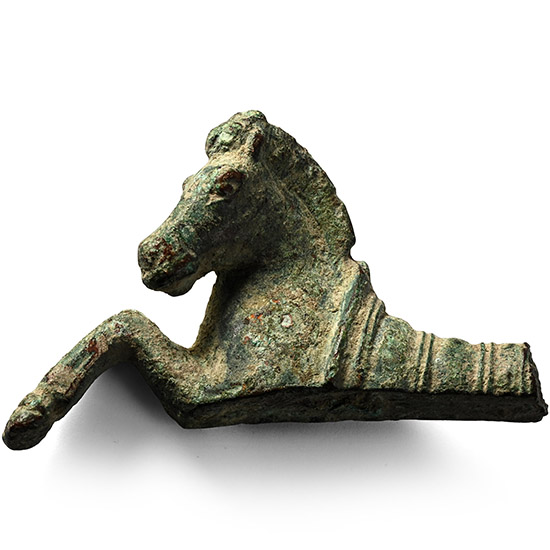
Greek Bronze Laconian Horse
5th-1st century B.C.Sold for (Inc. bp): £338
Protome formed as the upper body of a horse with forelegs bent and head turned; ribbed saddlecloth to the back; remains of attachment peg to underside. 27.8 grams, 49 mm
Acquired by a Swiss family in the mid-1980s to late 1990s, thence by descent. Private collection, Switzerland, since the late 1990s. -
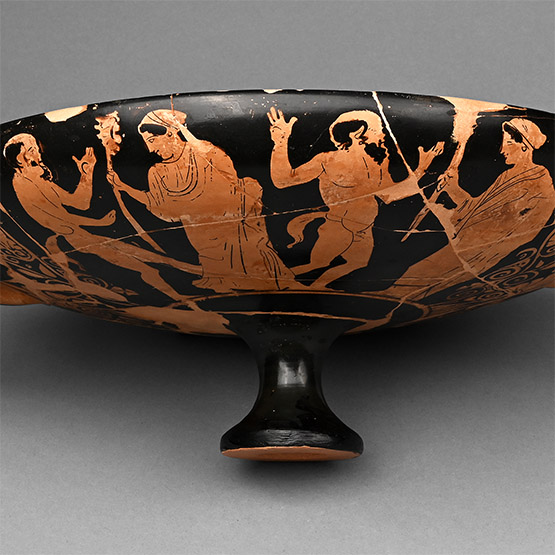
Greek Red-Figure Kylix with Dancing Nymphs and Satyrs
Attic, 5th century B.C.Sold for (Inc. bp): £2,080
With short stem and broad bowl with carination at the shoulder; two strap handles with an ivy-leaf with tendrils and volutes underneath; the underside of the bowl with a frieze of four satyrs and four maenads performing a dance, the maenads dressed in fancy Ionian dress, long peplos and himation, and a kekrykephalos (hair net) on their heads, and holding a thyrsus in their right hands; the centre of the cup showing dancing Silenus and a nymph, dressed in a similar manner and holding a thyrsus, border of meanders and chequered squares surrounding; restored. 875 grams, 37 cm wide
Ex Dr Gonik and the late Mr Wirth, 1960-1970s. Private collection, Switzerland. Accompanied by an academic report by Dr Raffaele D’Amato. This lot has been checked against the Interpol Database of stolen works of art and is accompanied by a search certificate number no.12573-232109.
Silenus, the only individualised satyr, was a companion and tutor to the wine god Dionysus, and he is represented here in the place of honour. He is typically older than the satyrs of the Dionysian retinue (thiasos) and his representation on the tondo symbolises respect towards his senior position.
