
Loading, please wait...
LOT 0597
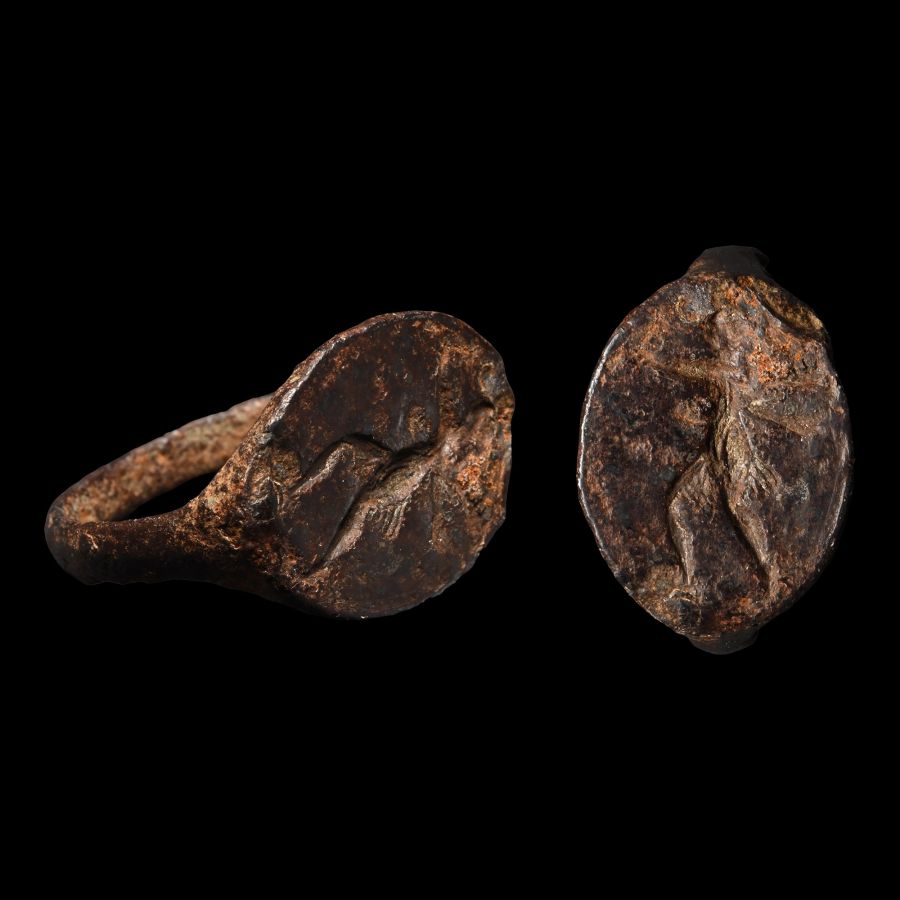
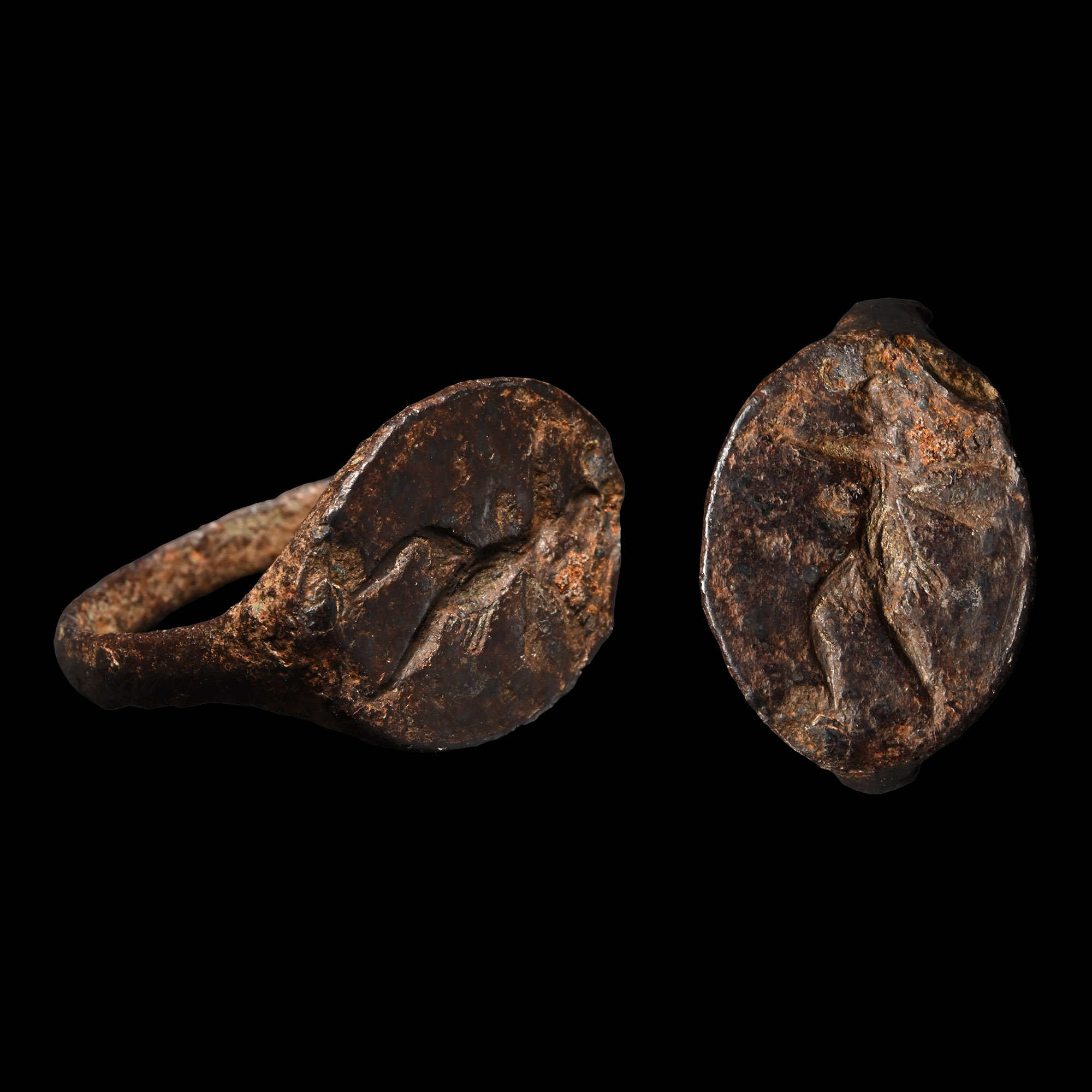
Large Greek Bronze Ring with Nike
CIRCA 4TH-2ND CENTURY B.C.
1 in. (6.74 grams, 25.43 mm overall, 21.81 mm internal diameter (approximate size British U 1/2, USA 10 1/4, Europe 23.15, Japan 22)).
Featuring a substantial D-section hoop and a lentoid bezel with goddess Nike in a dynamic pose with her arms outstretched. [No Reserve]
ProvenanceFrom the private collection of a European gentleman (1942-2024), formed since the 1970s.
CONDITIONTimeLine Auctions follows a vetting process to ensure the authenticity and legality of all items, reinforcing our commitment to integrity and responsible trading. Each antiquity, antique, and coin lot undergoes thorough examination by a vetting committee of at least ten external specialists, professional trade association members, scientists, and archaeologists: Our Vetting Process
AUCTIONS:
TimeLine is a leading auction house specialising in antiquities, ancient art, collectables, natural history, coins, medals, and books. Our auctions offer museums, collectors, historians, and enthusiasts the opportunity to acquire unique and historically significant pieces.
-

Greek Terracotta Gnathian-Ware Alabastron
Apulian, circa 3rd century B.C.Sold for (Inc. bp): £1,235
Piriform in profile with a carinated rim to the mouth, a low basal ring; horizontal bands and a hatched panel, concentric rings. 255 grams, 14.5 cm
Louis-Gabriel Bellon (1819-1899) collection, France. European private collection, 2009.
Among the shapes of pottery that are also mostly represented in the Gnathian style are lekanides, bombilyoi and alabastra. They were containers for ointments and perfumes, used in funerary contexts during the first phase of the ritual, when the body needed to be treated and prepared for the burial. -
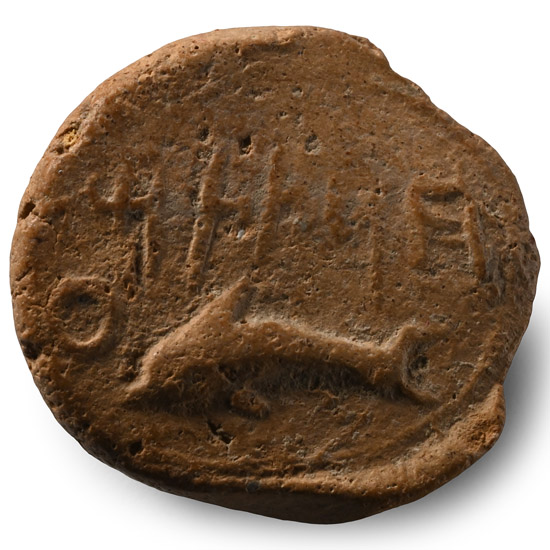
Phoenician Terracotta Bulla with a Dolphin
5th century B.C.Estimate: £120 - 170 (‡+bp*)
Opening Bid: £67
Plano-convex in profile with impressed dolphin and legend. 1.05 grams, 17.71 mm
Acquired in 1994. Private collection, Switzerland, thence by descent. Private collection, since the late 1990s.
This Phoenician terracotta bulla, decorated with a dolphin, reflects the strong maritime identity of the Phoenician world. Bullae were typically used to seal documents or goods, serving both a practical and symbolic function in trade and administration. The dolphin, a creature closely associated with the sea, would have held particular meaning for the Phoenicians, whose culture and prosperity were deeply tied to seafaring and commerce across the Mediterranean. Often seen as a symbol of protection, guidance, and safe passage, the dolphin adds an additional layer of meaning to the object, suggesting not only its use in everyday transactions but also a connection to the wider beliefs and environment of the ancient coastal world. -
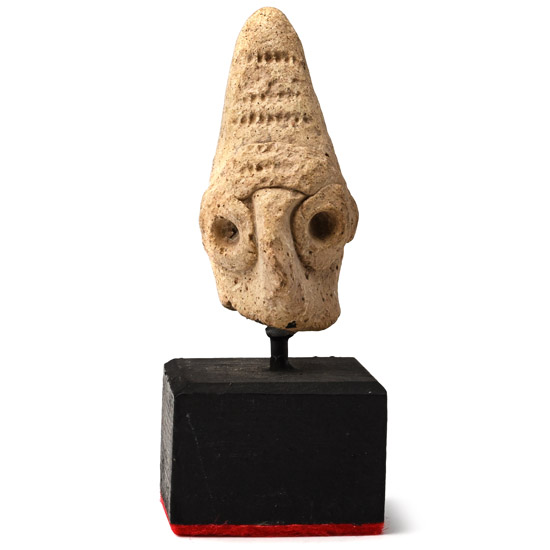
Greek Terracotta Idol Head
Mediterranean, circa 700 B.C.Sold for (Inc. bp): £85
Stylised head with large annular eyes and pinched nose, conical headdress with horizontal striations. 17 grams total, 38 mm (60 mm including stand)
Acquired from Ancient Art, London, UK. From the collection of a Nottingham, UK, collector, established from the early 2000s.
