
Loading, please wait...
LOT 0486
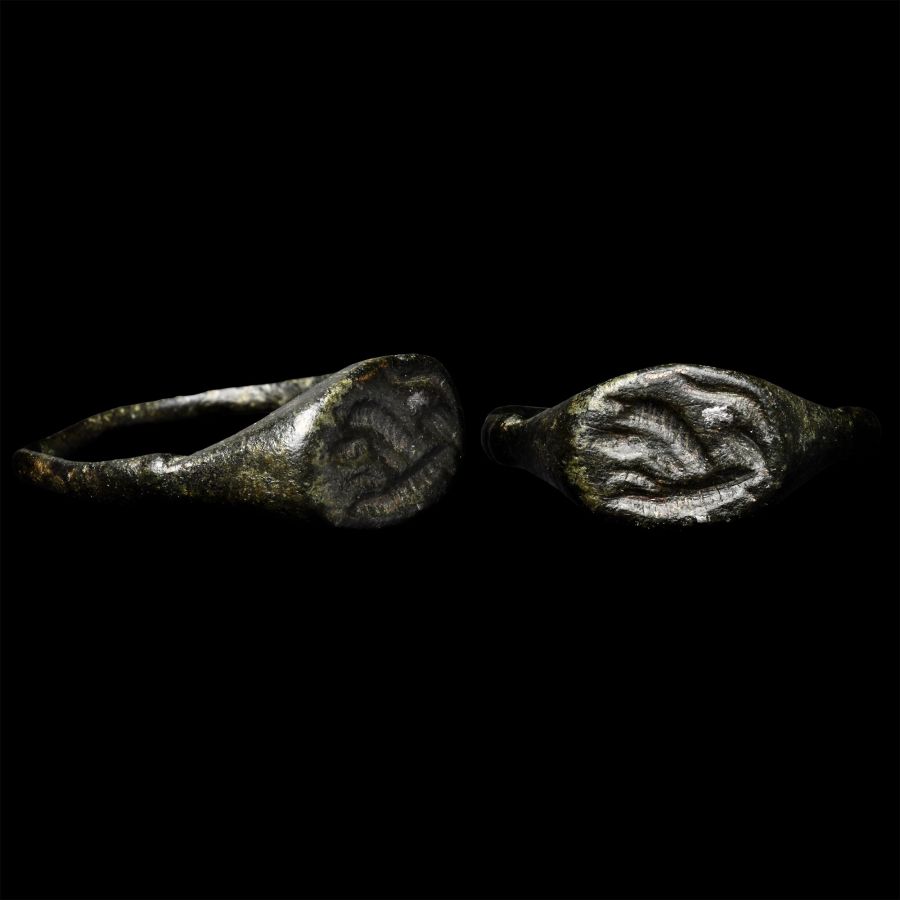
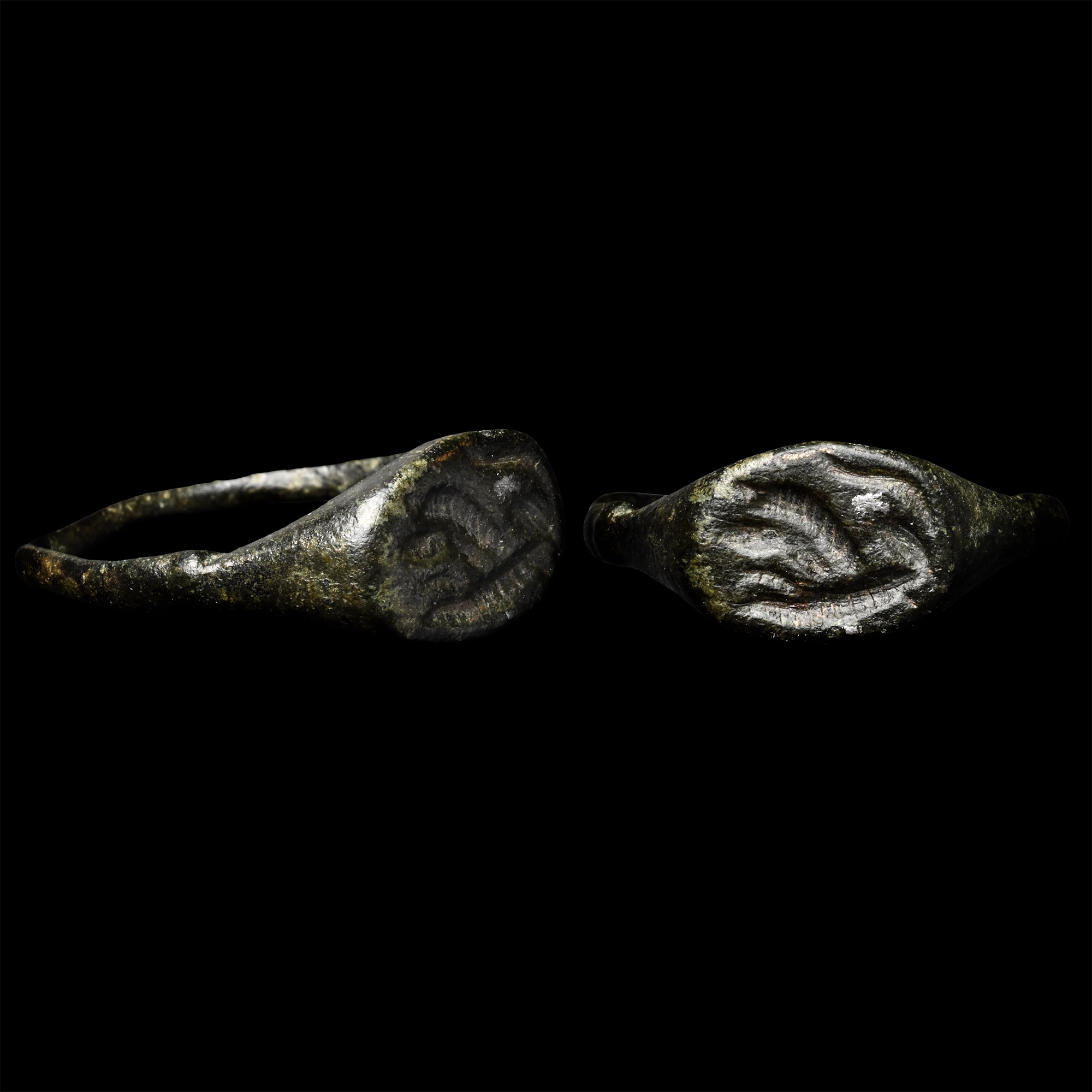
Large Greek Bronze Ring with Leaping Lion
HELLENISTIC, CIRCA 2ND-1ST CENTURY B.C.
1 in. (5.50 grams, 26.35 mm overall, 20.90 mm internal diameter (approximate size British V 1/2, USA 10 3/4, Europe 24.4, Japan 23)).
Comprising a slender hoop and a thick oval bezel with a stylised lion motif. [No Reserve]
ProvenanceFrom a UK collection formed in the 1980s.
Property of an Essex, UK, gentleman.
TimeLine Auctions follows a vetting process to ensure the authenticity and legality of all items, reinforcing our commitment to integrity and responsible trading. Each antiquity, antique, and coin lot undergoes thorough examination by a vetting committee of at least ten external specialists, professional trade association members, scientists, and archaeologists: Our Vetting Process
AUCTIONS:
TimeLine is a leading auction house specialising in antiquities, ancient art, collectables, natural history, coins, medals, and books. Our auctions offer museums, collectors, historians, and enthusiasts the opportunity to acquire unique and historically significant pieces.
-
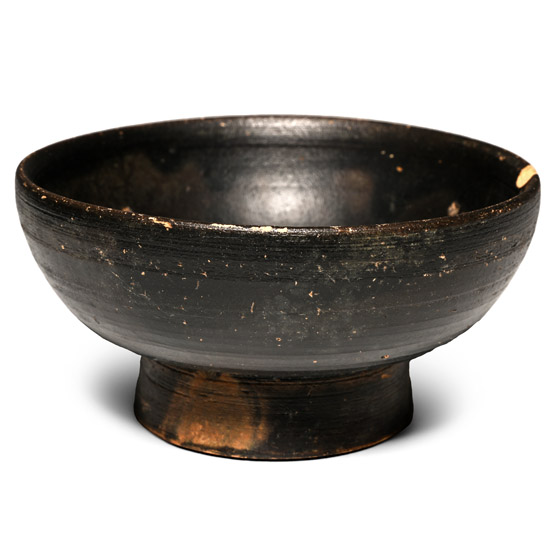
Greek Black Ware Footed Cup with Concentric Circles
South Italian, circa 4th century B.C.Sold for (Inc. bp): £286
With broad bowl and rounded rim, flared foot; old collector's label to the underside 'Z17.91'. 147 grams, 10.4 cm wide
From the collection of the late Bernard C. Pickard, Hampshire, UK, the owner of Bernard C. Pickard Antiquities, which closed in 1987, he had been collecting since the mid 1950s.
Bernard Pickard was a close friend of Richard Hattatt, the renowned author of several books on ancient brooches. Hattatt acknowledges in his first book, Ancient & Romano-British Brooches, published in 1982, that Mr Pickard first aroused his interest in brooches and inspired him in writing his books during his retirement. Mr Pickard also wrote the foreword to the section on Roman animal brooches, op. cit. p.158-160. -
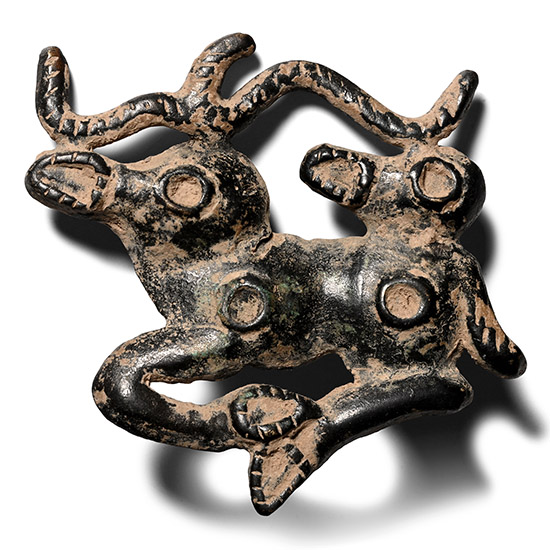
Scythian Bronze Galloping Stag Strap Decoration
Circa 5th-3rd century B.C.Estimate: £200 - 300 (+bp*)
Current Winning Bid: £100
Modelled as a stylised quadruped with its legs folded beneath the body, long curving horns and circular cells on the body and eye, two lugs on the reverse. 24.3 grams, 51 mm
Ex Abelita collection, 1990s. -
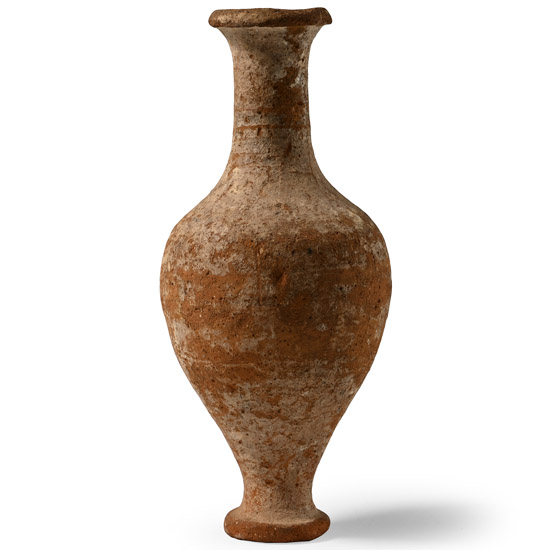
Greek Terracotta Spindle Flask
Hellenistic, late 2nd-1st century B.C.Sold for (Inc. bp): £117
With long narrow neck developing to a fusiform body and flared foot. 72 grams, 12 cm
From the collection of a Cambridge, UK, gentleman, by direct descent from his father, who acquired the items in London in circa 1960.
