
Loading, please wait...

LOT 0816
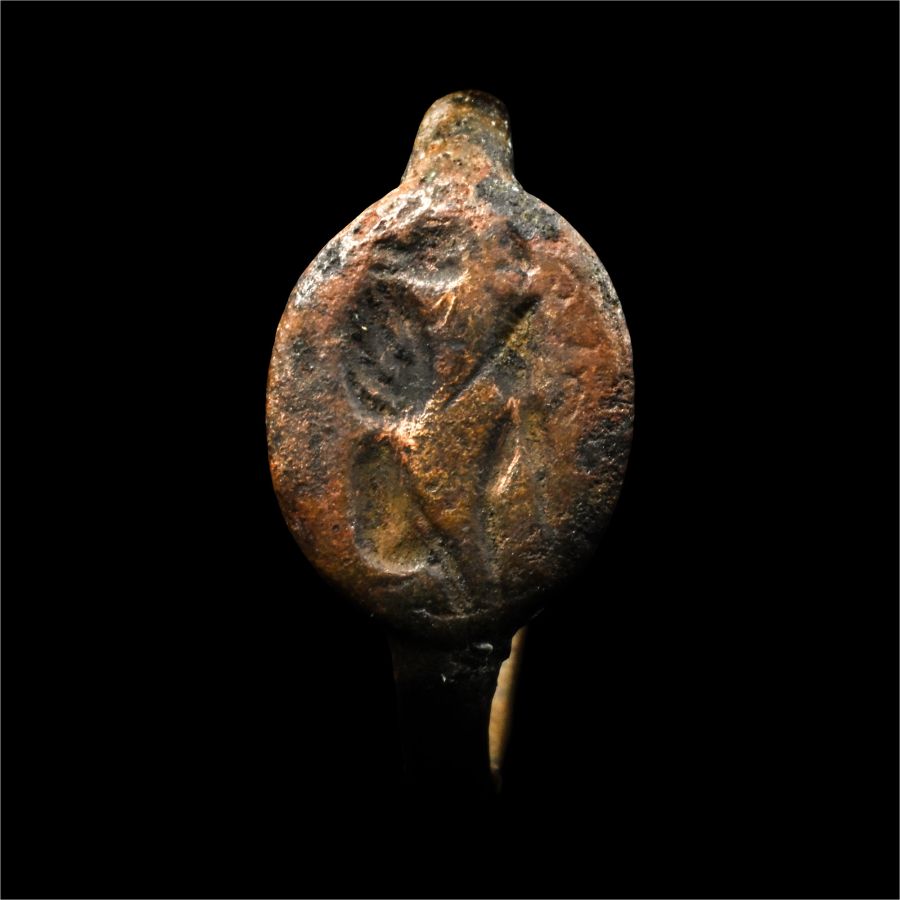
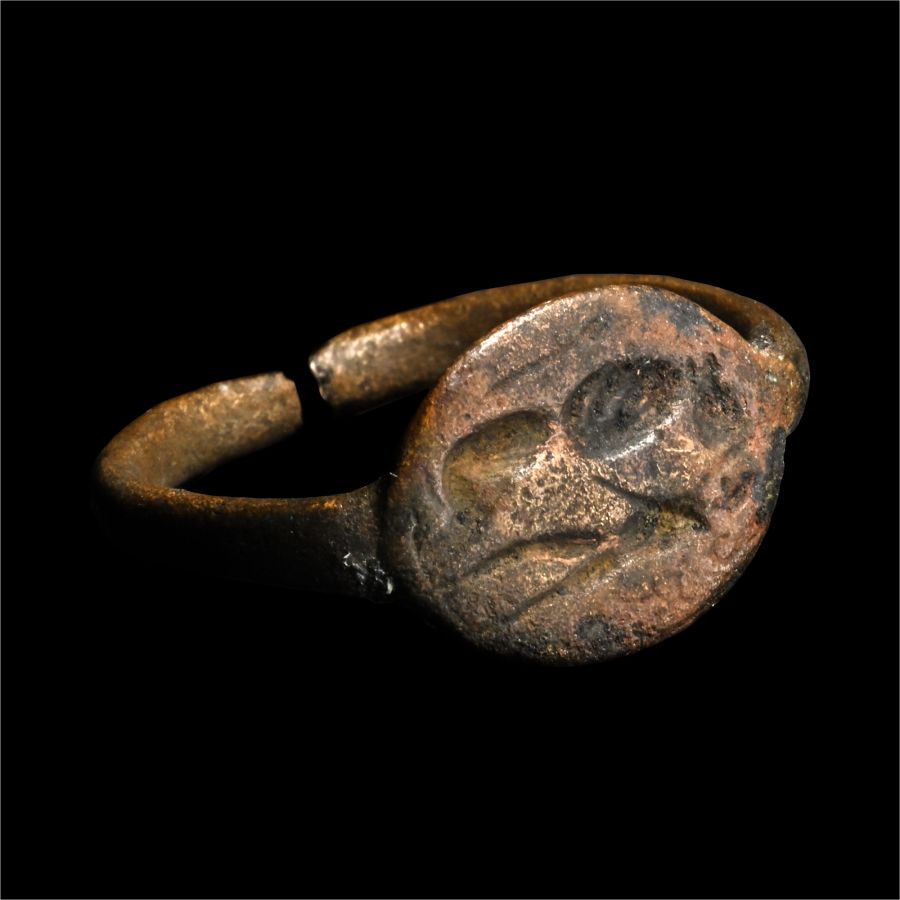
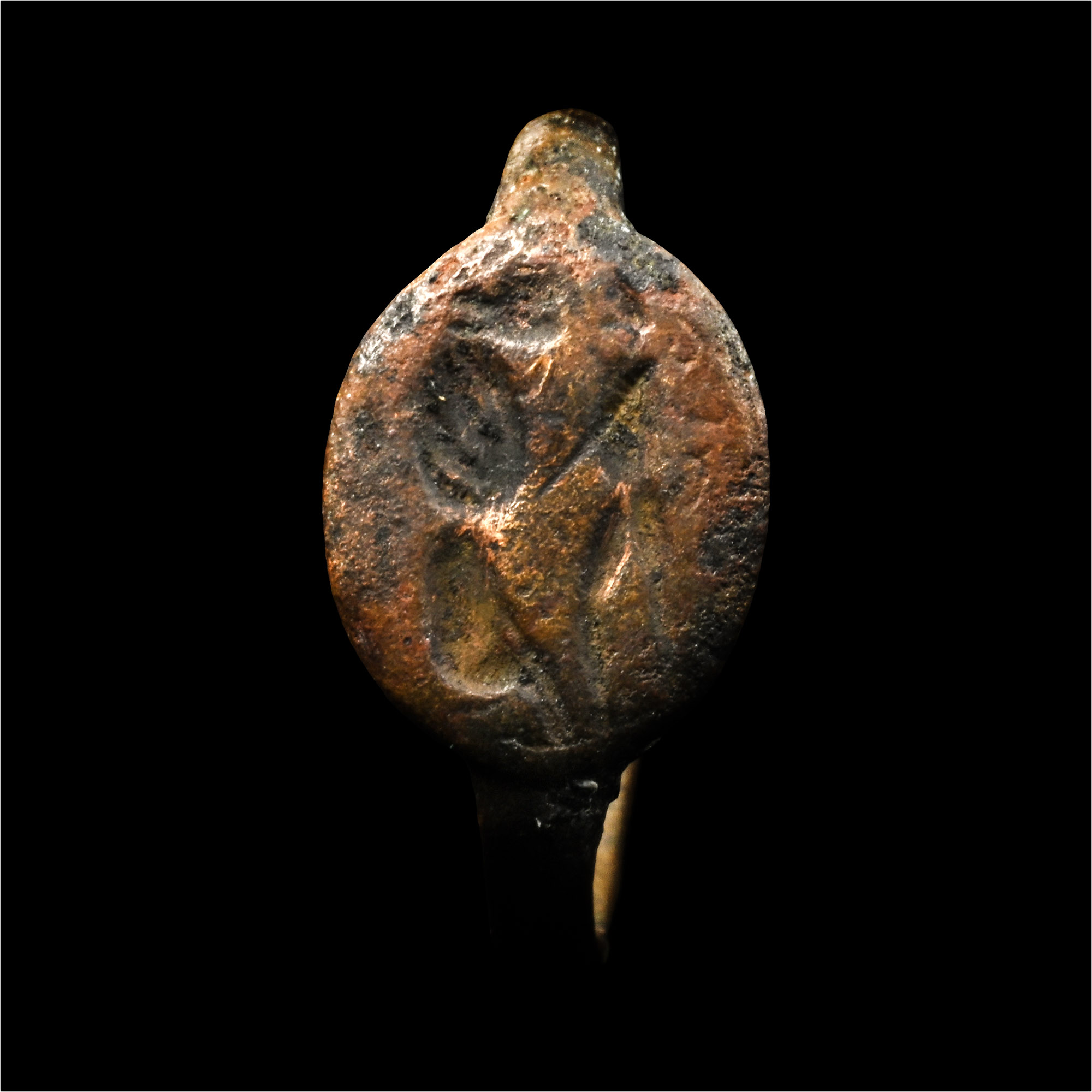
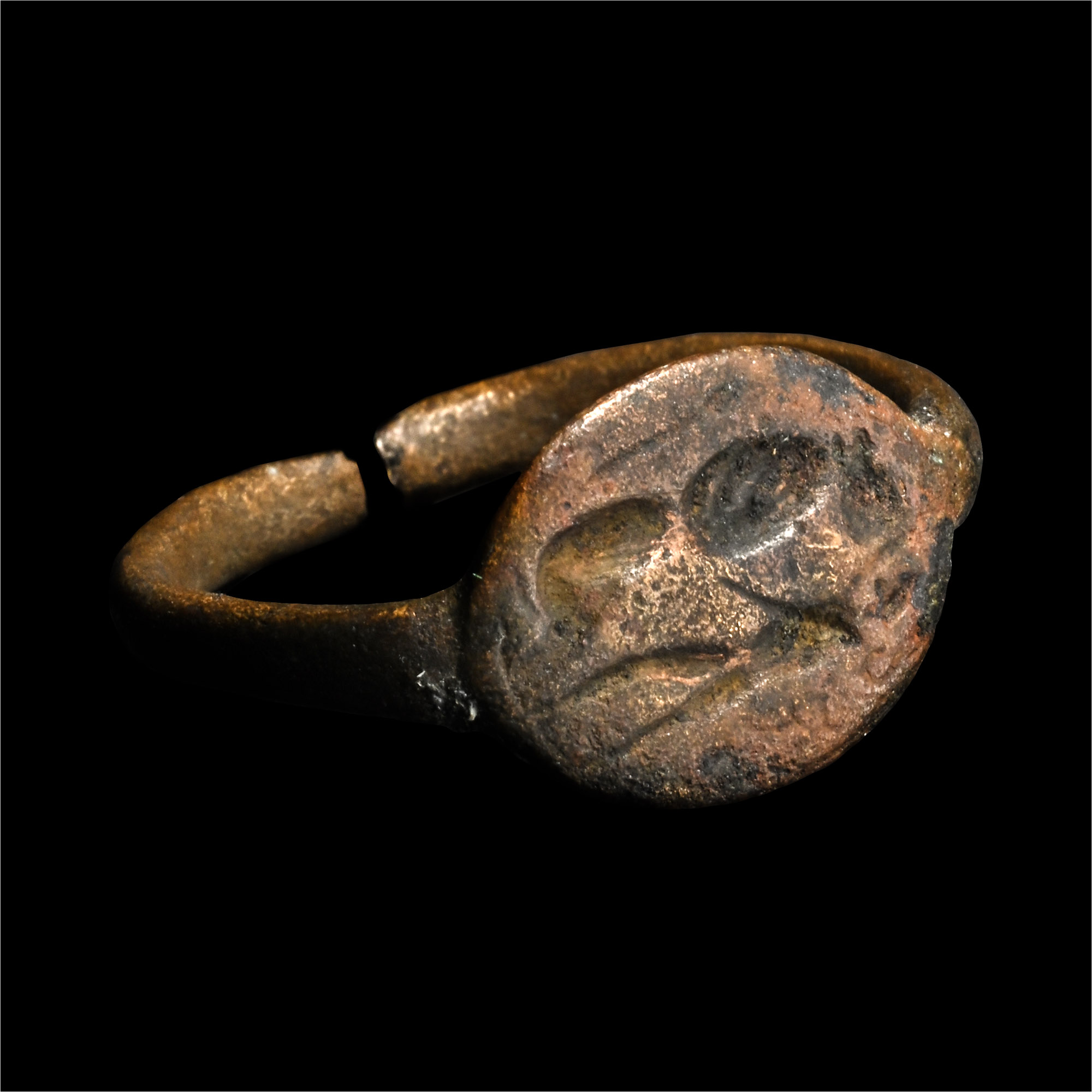
Large Greek Bronze Ring with Combat Scene
4TH CENTURY B.C.
1 in. (3.67 grams, 24.45 mm overall, 20.41 mm internal diameter (approximate size British V 1/2, USA 10 3/4, Europe 24.4, Japan 23)).
Ellipsoid bezel with incuse scene of a leaping lion attacking a standing figure grappling it, perhaps Herakles and the Nemaean lion. [No Reserve]
ProvenanceFrom the private collection of a European gentleman (1942-2024), formed since the 1970s.
LiteratureFor a similar ring cf. Spier, J., Ancient gems and finger rings, Catalogue of the Collections. The J. Paul Getty Museum, Malibu, 1992, p.87 no.45.
CONDITIONTimeLine Auctions follows a vetting process to ensure the authenticity and legality of all items, reinforcing our commitment to integrity and responsible trading. Each antiquity, antique, and coin lot undergoes thorough examination by a vetting committee of at least ten external specialists, professional trade association members, scientists, and archaeologists: Our Vetting Process
AUCTIONS:
TimeLine is a leading auction house specialising in antiquities, ancient art, collectables, natural history, coins, medals, and books. Our auctions offer museums, collectors, historians, and enthusiasts the opportunity to acquire unique and historically significant pieces.
LOT 0816
Large Greek Bronze Ring with Combat Scene
Estimate £40 - 60€46 - 70 (for guidance only)$54 - 81 (for guidance only)
Opening Bid
£5 (EUR 6; USD 7) +BP*
-
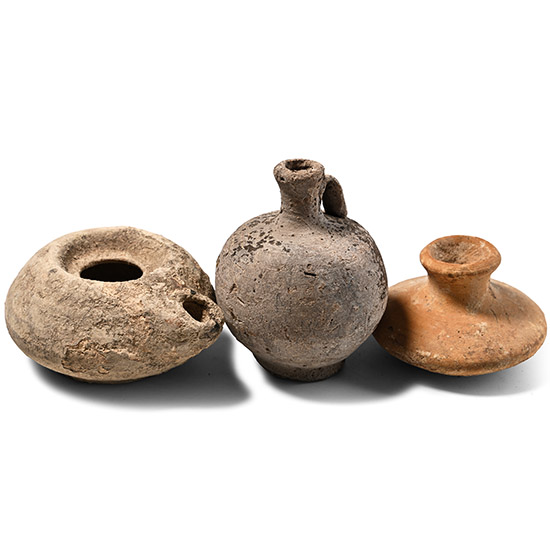
Greek Terracotta Vessel and Oil Lamp Group
Hellenistic, circa 3rd-2nd century B.C.Estimate: £60 - 80 (+bp*)
Opening Bid: £5
Comprising: a juglet with a bulbous body and a narrow neck, small strap handle to the rear; a squat vessel with flared neck; a round oil lamp with a short nozzle. 197 grams total, 59-78 mm
Acquired on the UK art market since the 1990s. From the property of a late Lincolnshire, UK, gentleman; thence by descent. The juglet accompanied by a previous catalogue information slip. -
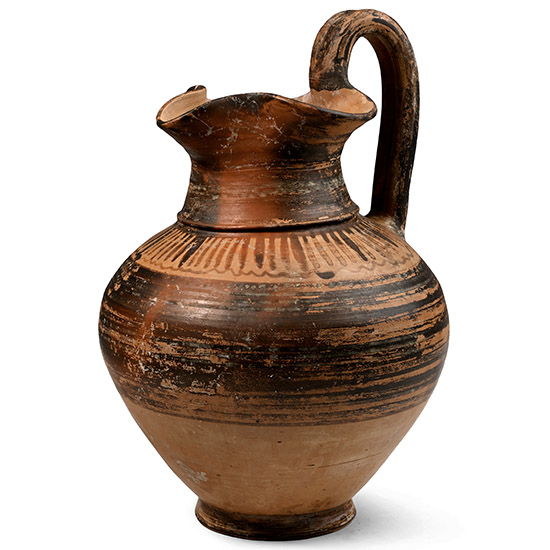
Etruscan Oinochoe with Tongue Frieze
7th-6th century B.C.Estimate: £1,800 - 2,400 (‡+bp*)
Opening Bid: £825
Bulbous in profile with a high, double-ribbed handle from the trefoil mouth to the shoulder; carinated collar above frieze of radiating tongues in glaze on the shoulder; two wavy bands on the neck, lines on the belly in opaque white. 1.04 kg, 28 cm
Ex Prof. A., Basel, Switzerland; thence by descent. This lot has been checked against the Interpol Database of stolen works of art and is accompanied by search certificate no.13535-263127.
Greek influence in the Etruscan world emerged during the Orientalizing period with the introduction of wine, likely an Eastern variety, following the tradition of spiced Syro-Phoenician wines that had been significant in the preceding era. This involved not merely the importation of the product itself, but also the introduction and subsequent local production of the associated ceramic vessels used for its consumption, such as this oinochoe. This is significant, given that the banquet custom and the ritual of the symposium,in which participants reclined while dining, would not emerge in Etruria until later. -
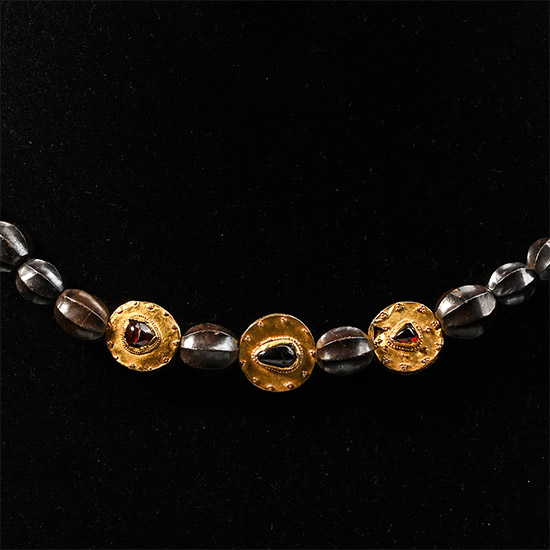
Graeco-Roman Necklace with Gold Beads
1st century B.C. and laterEstimate: £2,500 - 3,500 (‡+bp*)
Opening Bid: £1,250
Restrung group of fluted melon and other beads with three later hollow-formed gold drum-shaped panels, each with an inset cabochon garnet to the upper face, and granule clusters. 46.45 grams, 34 cm
Private collection, Jerusalem, assembled in the 1960s. with Holy Land Antiquities, Jerusalem. European private collection, acquired 2001. This lot has been checked against the Interpol Database of stolen works of art and is accompanied by search certificate number no.13141-246774.
In the Hellenistic and Roman periods there was a strong formal and chromatic diversity of glass beads used for necklaces and bracelets. The most common beads in forms were small biconical (lenticular), barrel-shaped, spherical and annular; the most common colours were dark blue, followed by green and yellow, and red. The succession of glass beads often imitates jewellery made of costly materials (gold, silver, semi-precious and precious stones).
