Loading, please wait...

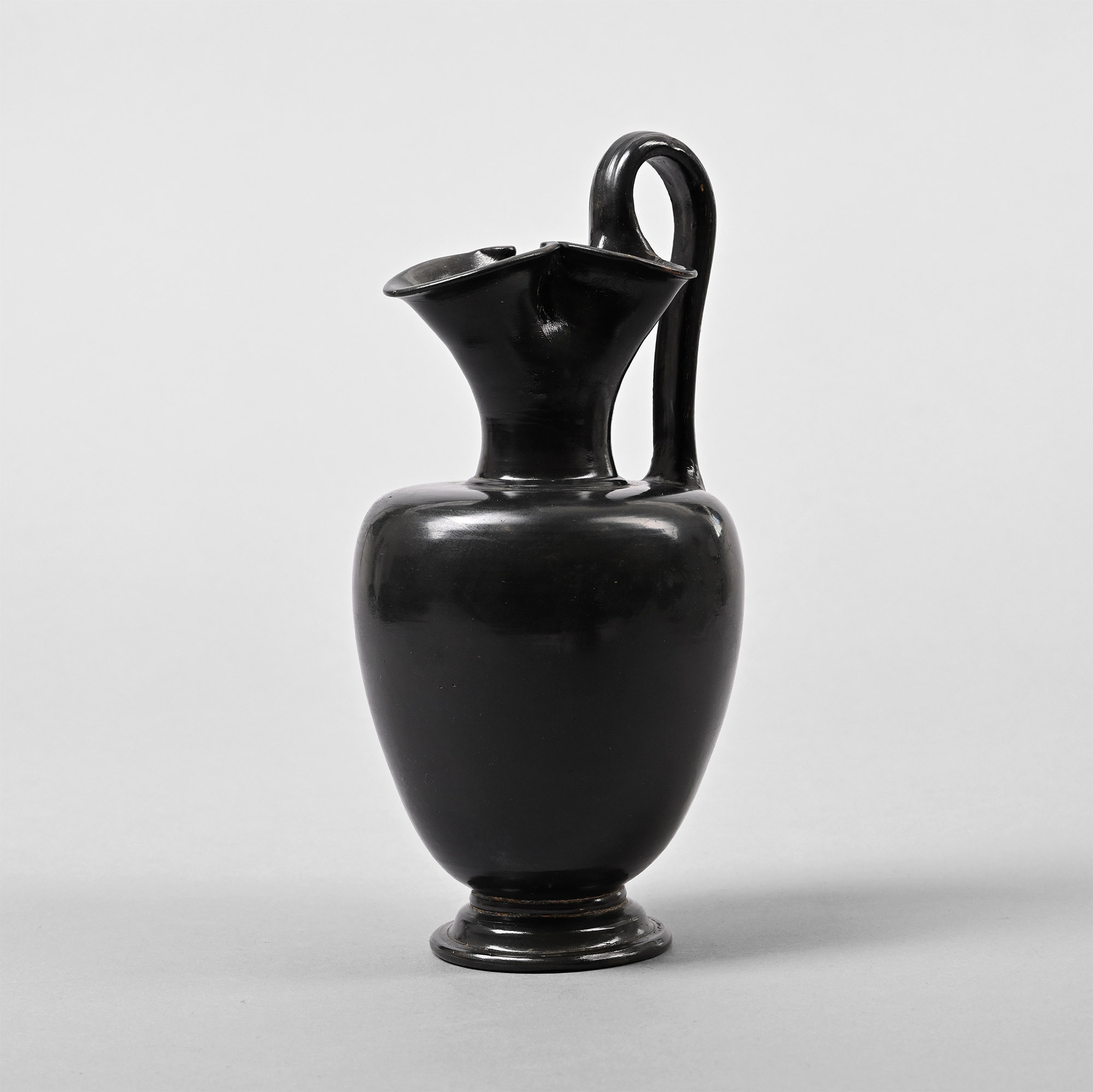
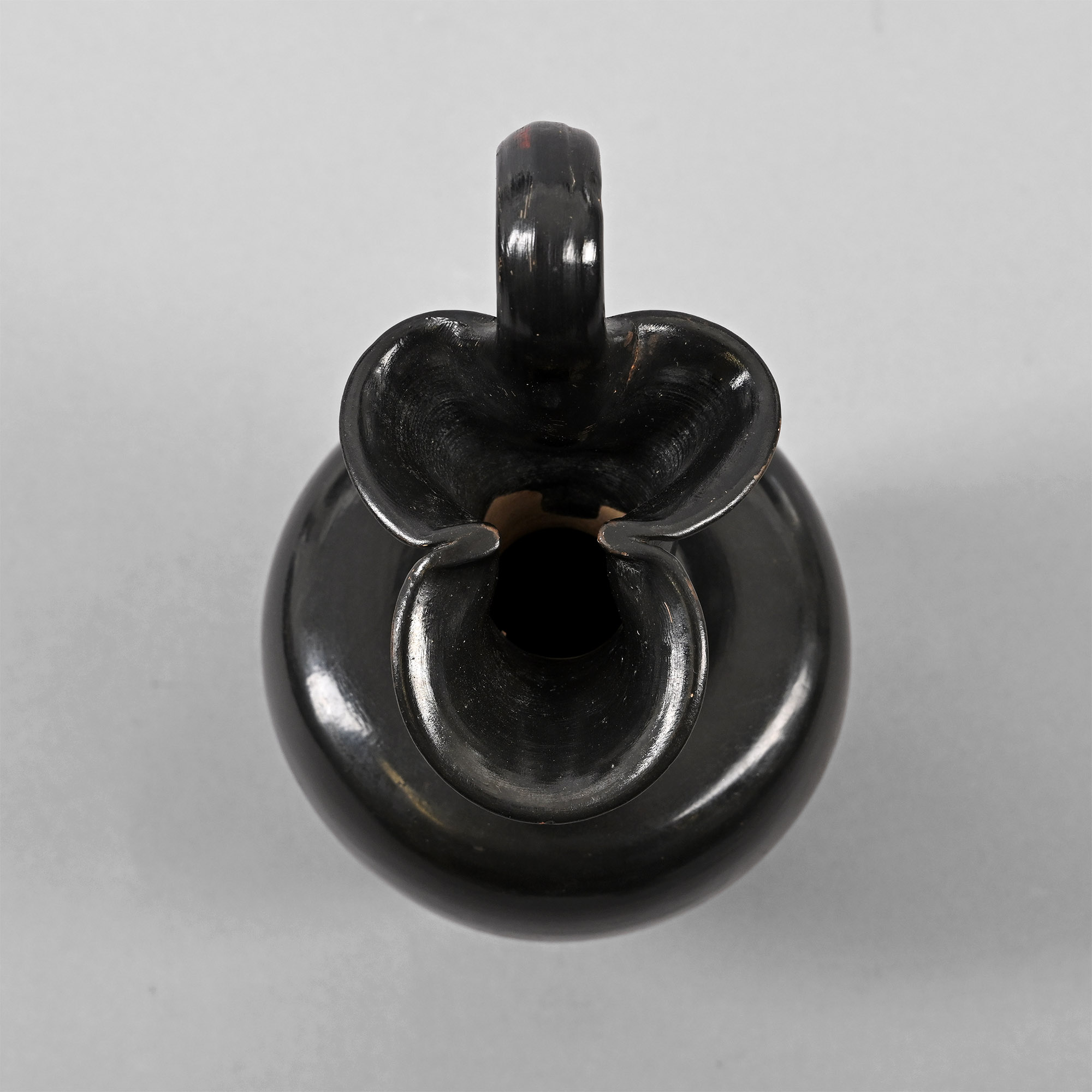
Large Greek Black-Glazed Trefoil-Lipped Oinochoe Large Greek Black-Glazed Trefoil-Lipped Oinochoe Large Greek Black-Glazed Trefoil-Lipped Oinochoe Large Greek Black-Glazed Trefoil-Lipped Oinochoe Large Greek Black-Glazed Trefoil-Lipped Oinochoe Large Greek Black-Glazed Trefoil-Lipped Oinochoe
Use mousewheel to zoom in and out, click to enlarge
Details

LOT 0039

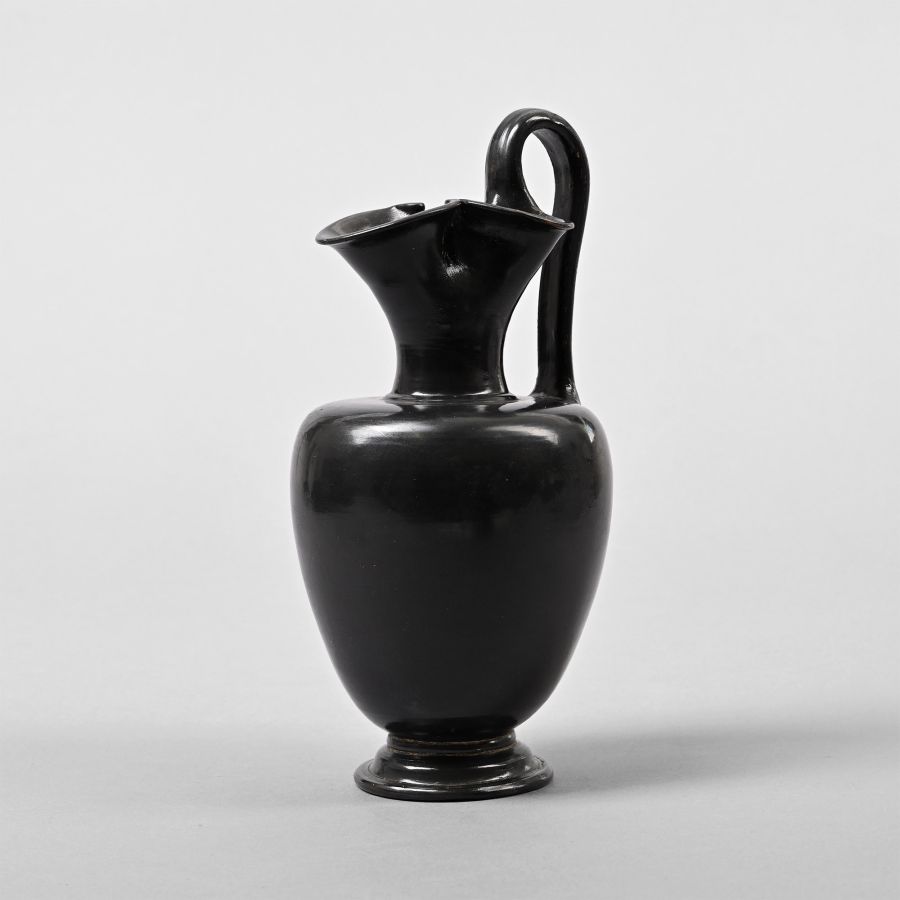
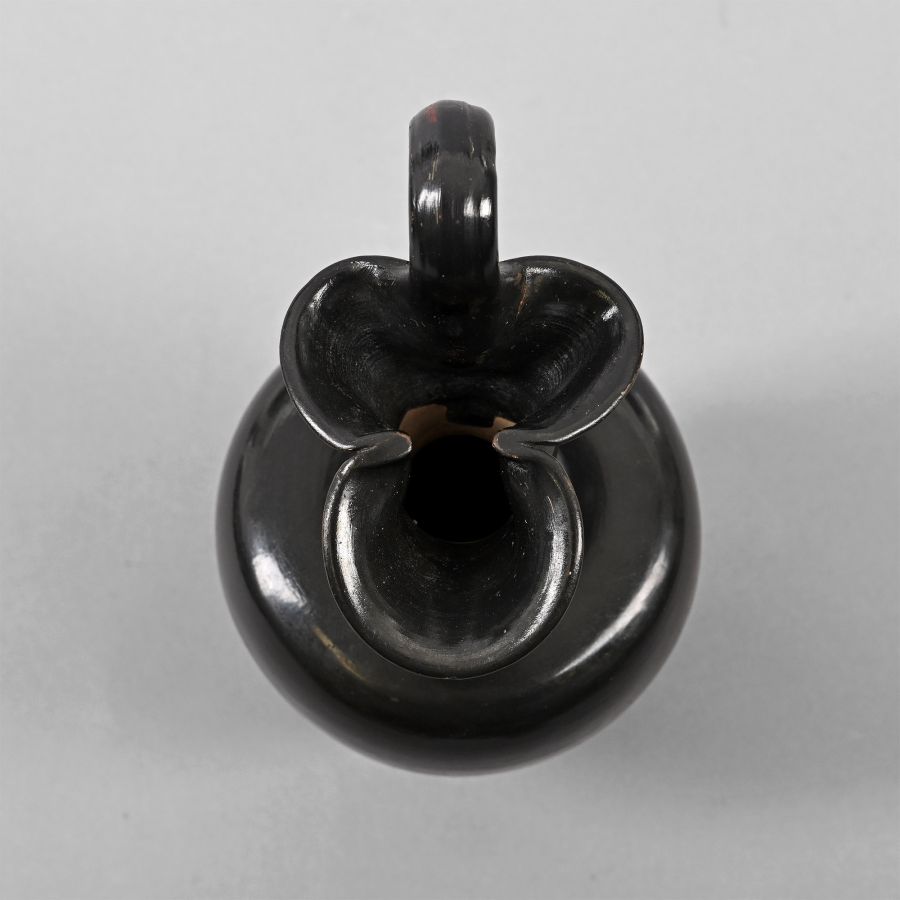
Large Greek Black-Glazed Trefoil-Lipped Oinochoe

APULIA, 5TH CENTURY B.C.

8 3/4 in. (405 grams, 22.1 cm).

With a trefoil mouth, an applied D-section handle and a tiered foot.

Provenance

Property from a private collection.
with Sotheby's, New York, 9 December 2003, no.9.

Accompanied by copies of the relevant Sotheby's catalogue pages.

Literature

Cf. The Metropolitan Museum, accession numbers 81.10.337 and 17.194.743, for similar in glass; Beazley, J.D., Corpus Vasorum Antiquorum, Oxford, Ashmolean, Oxford, 1931, no.1.1, 34, pl.134, 42.6

CONDITION
VETTING:

TimeLine Auctions follows a vetting process to ensure the authenticity and legality of all items, reinforcing our commitment to integrity and responsible trading. Each antiquity, antique, and coin lot undergoes thorough examination by a vetting committee of at least ten external specialists, professional trade association members, scientists, and archaeologists: Our Vetting Process


AUCTIONS:

TimeLine is a leading auction house specialising in antiquities, ancient art, collectables, natural history, coins, medals, and books. Our auctions offer museums, collectors, historians, and enthusiasts the opportunity to acquire unique and historically significant pieces.

Ex Sotheby's, New York, 2003

LOT 0039

Large Greek Black-Glazed Trefoil-Lipped Oinochoe

Estimate £4,000 - 6,000€4,640 - 6,960 (for guidance only)$5,400 - 8,100 (for guidance only)

Current bid: £2,000 +BP*
(1 Bid, Reserve not met)

Sign in to Bid

Please enter a e-mail
Please enter a password
Or Create Account here.
Please confirm to accept TC and Privacy policy

(1 Bid, Reserve not met)   |   Current bid: £2,000
RELATED LOTS
  • Greek Silver Belt Hanger with Decorated Terminals
    Greek Silver Belt Hanger with Decorated Terminals
    5th-3rd century B.C.

    Estimate: £60 - 80 (+bp*)

    Opening Bid: £5

    U-shaped body with hooked terminals with filigree decoration. 17 grams, 50 mm


    Acquired on UK art market. Property of a Middlesex gentleman.

    Lot Details

  • Greek Carnelian Bead with Gold End Caps
    Greek Carnelian Bead with Gold End Caps
    Hellenistic, 1st century B.C.-1st century A.D.

    Estimate: £600 - 800 (‡+bp*)

    Opening Bid: £333

    Columnar bead with sheet-gold cap to each end, each with beaded circlets and applied granule clusters, domed end with loop; possibly assembled. 17.44 grams, 60 mm


    Acquired in the mid 1980s-1990s. Private collection, Switzerland, thence by descent. Private collection, since the late 1990s.

    The very elaborate versions of earrings with large domes and pendants composed of clusters of hollow spheres and granulation are most typically Romano-Syrian, but they begin to be produced in the Late Hellenistic Age. They were diffused in the Levant, Egypt and on the frontier area between the Roman and the Arsacid Empire.

    Lot Details

  • Etruscan Bronze Statue of a Satyr
    Ex Iris Love Collection, Exhibited and Published, Duke University, 1965
    Etruscan Bronze Statue of a Satyr
    Circa 6th century B.C.

    Estimate: £3,500 - 4,500 (‡+bp*)

    Opening Bid: £1,800

    Modelled in the round in energetic pose with left hand resting on the hip and right arm raised, head tilted slightly upwards, tail curled gracefully over the rump; on a square base with papyrus stalk detailing; on a later gilt-metal stand mounted on a polished stone cube. 679 grams total, 20.4 cm including stand


    Iris Cornelia Love (1933–2020), New York, collection primarily formed in the 1950s-1970s. This lot has been checked against the Interpol Database of stolen works of art and is accompanied by search certificate number no.13335-258241.

    Many of the scenes show satyrs in Etruscan art transgressing the limits of accepted behaviour. As symbol of inversion of order, the satyr reflects the rules of the life and culture of the Etruscans and their values. Satyrs in comic, surprising situations indicate the Etruscans' sense of humour. They got their inspiration from Greek art when illustrating myths and narratives, often with a light-hearted approach of their own. The Etruscans were known to be devoted to religious rites and satyrs appear in such scenes too. Satyrs, connected with the Dionysian cortege, appear also on vases in sacrifice scenes and it is suggested here that satyrs dancing and gambolling around a wine vessel are performing a cultic dance in honour of Dionysos.

    Lot Details