
Loading, please wait...
LOT 0542
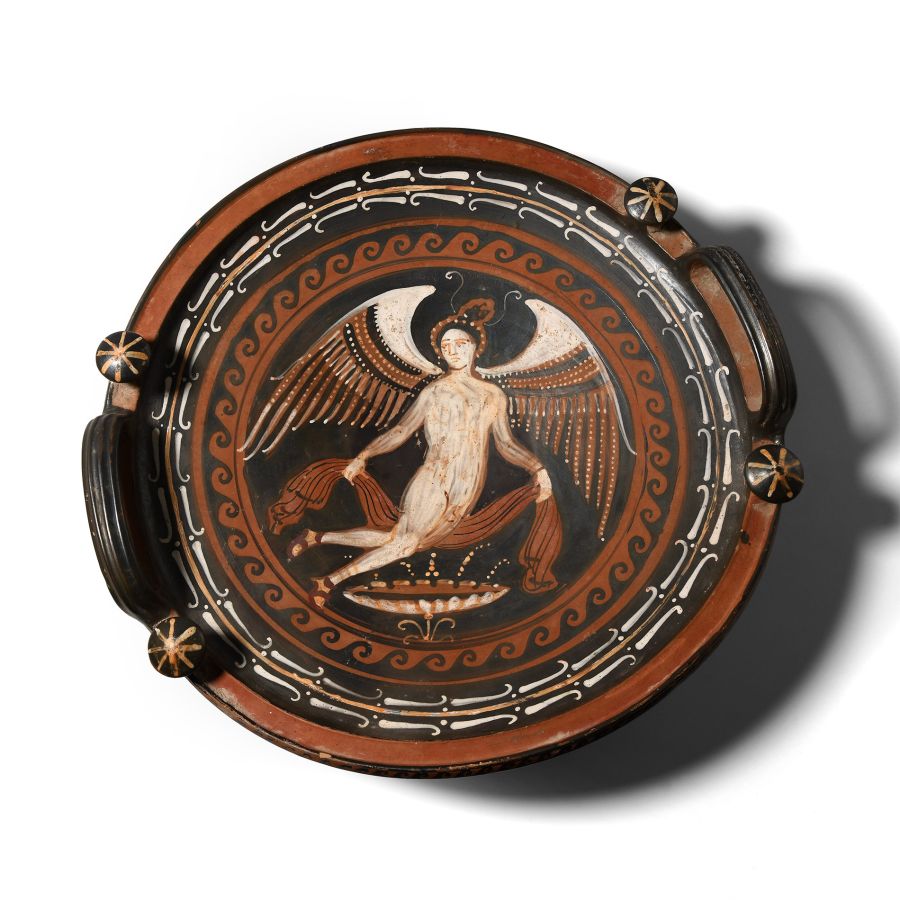
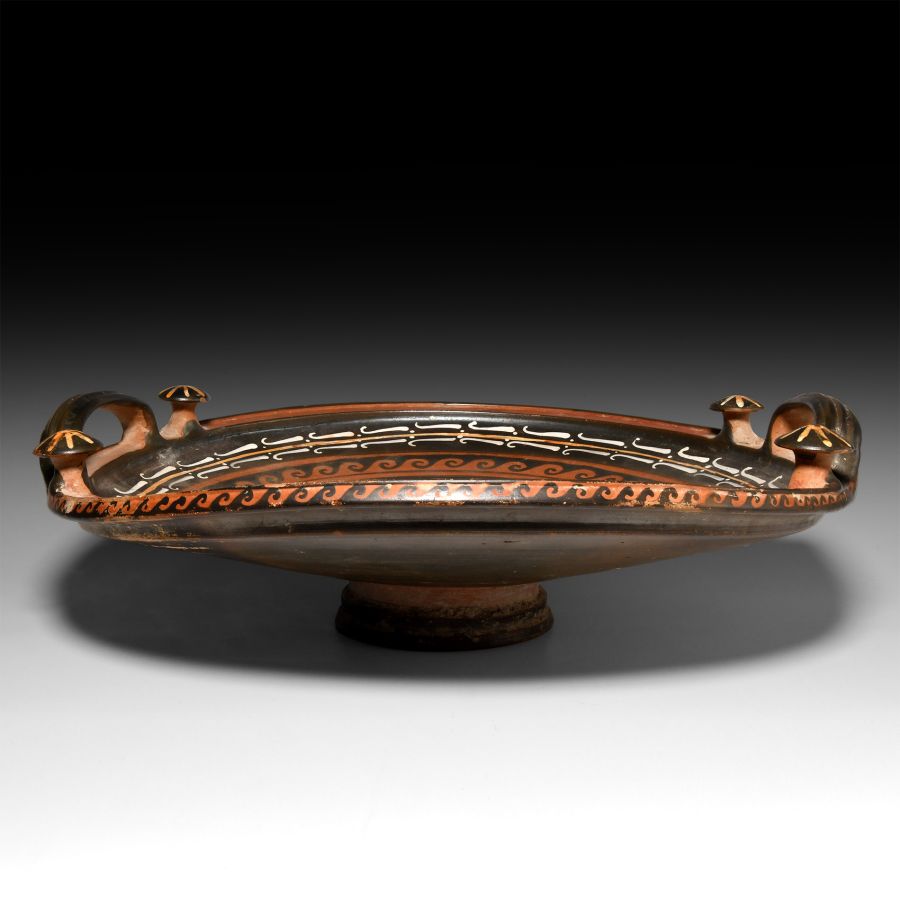
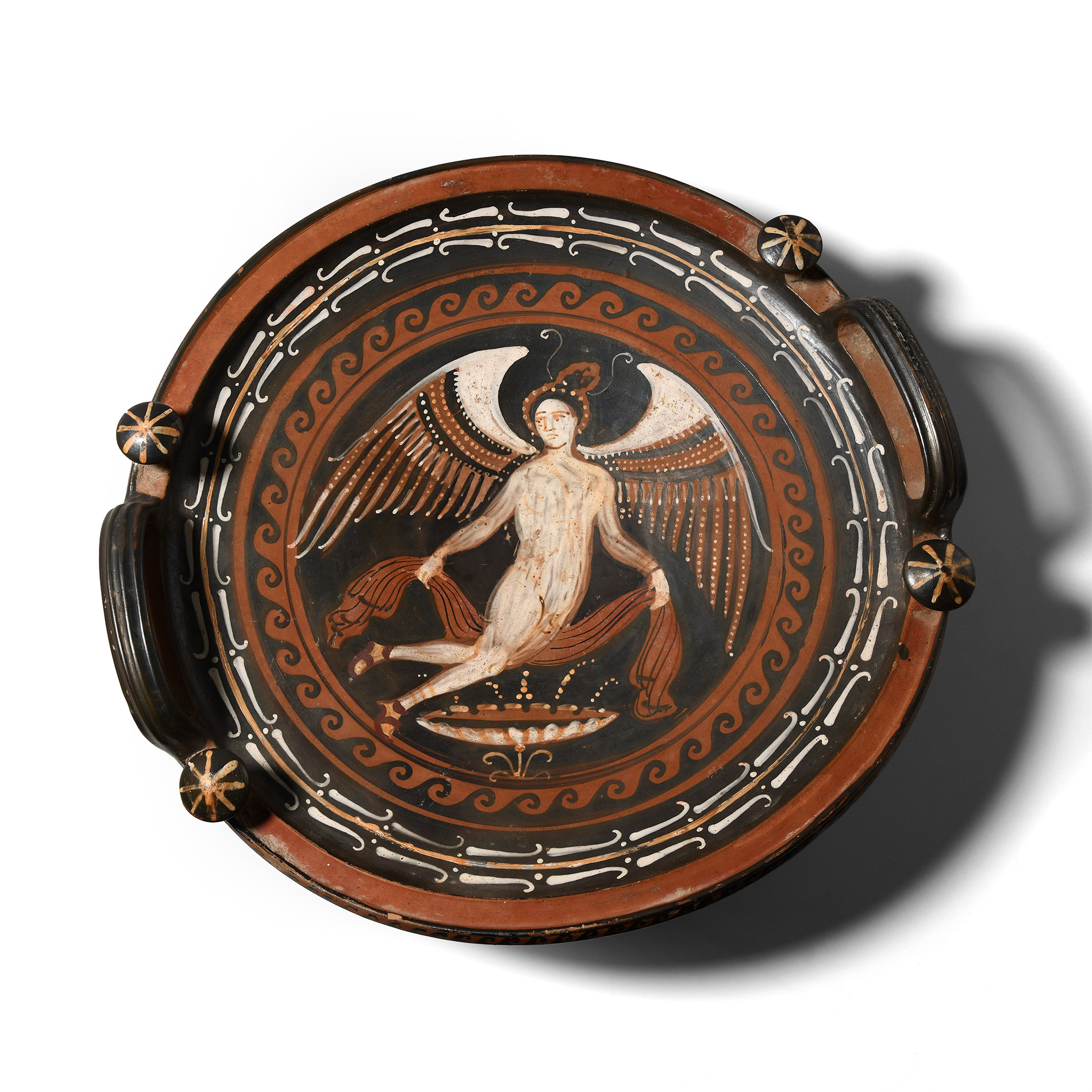
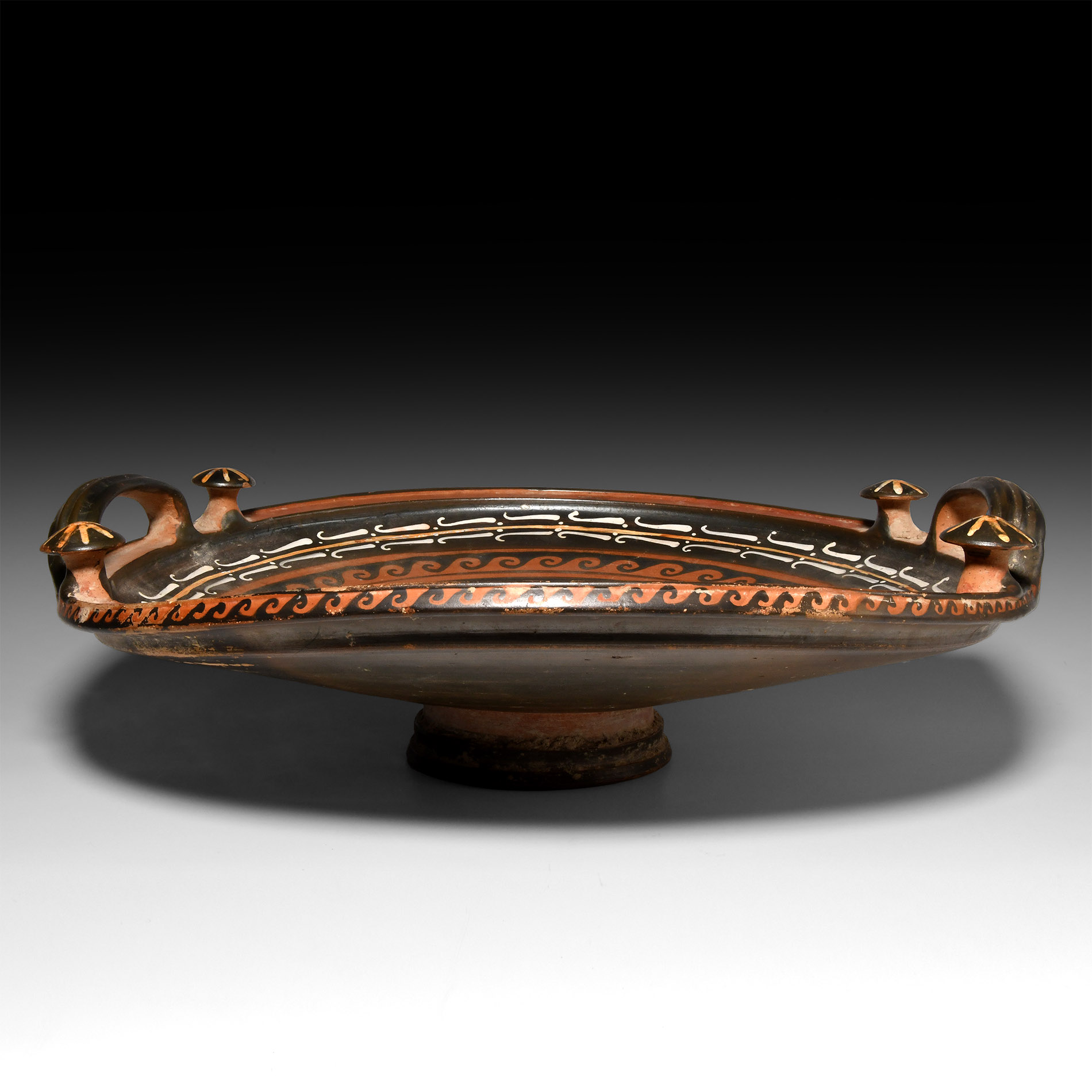
Large Greek Apulian Red-Figured Knob-Handled Patera with Eros
CIRCA 350-320 B.C.
16 1/8 in. (2.76 kg, 41 cm wide).
With raised rim and stepped foot, two strap handles to the rim each flanked by two domed studs; rim with reserved wave pattern band, studs with starburst motif; painted central scene with outer foliate bands and reserved wave pattern framing the tondo displaying Eros in flight with wings spread, holding a red cloth over an inverted shield; some repainting.
ProvenanceFrench collection, 1990s-early 2000s.
Formerly in Patrick Declerck Auction, Douai, France, 2014, lot 72.
From an important Paris gallery, France.
Ex private Parisian collection.
Accompanied by an original thermoluminescence analysis report no.N122j42 from Oxford Authentication.
This lot has been checked against the Interpol Database of stolen works of art and is accompanied by search certificate no.11616-196567.
Cf. Trendall, A.D. & Cambitoglou, A., The Red-Figured Vases of Apulia, vol.1, Oxford, 1978, p.354, no.171.
CONDITIONTimeLine Auctions follows a vetting process to ensure the authenticity and legality of all items, reinforcing our commitment to integrity and responsible trading. Each antiquity, antique, and coin lot undergoes thorough examination by a vetting committee of at least ten external specialists, professional trade association members, scientists, and archaeologists: Our Vetting Process
AUCTIONS:
TimeLine is a leading auction house specialising in antiquities, ancient art, collectables, natural history, coins, medals, and books. Our auctions offer museums, collectors, historians, and enthusiasts the opportunity to acquire unique and historically significant pieces.
LOT 0542
Large Greek Apulian Red-Figured Knob-Handled Patera with Eros
Estimate £5,000 - 7,000€5,800 - 8,120 (for guidance only)$6,750 - 9,450 (for guidance only)
-

Greek Bronze Bow Fibula
8th-7th century B.C.Sold for (Inc. bp): £124
The keeled bow with a central bulb, integral pin and large catch-plate. 29 grams, 89 mm
From the family collection of a Surrey gentleman since before 1960.
The function of the catch-plate fibulae was utilitarian and decorative, they were used for woollen clothing (Herodotus V, 87) and they have been found in houses, tombs and as votive offerings in sanctuaries. Our fibula is an early type, very often found in the graves of the Greek colonies of Southern Italy and widespread in the Magna Graecia. This typology was introduced there by the Greeks. Like all female fibulae, it functioned as a clothing fastener, usually worn as a pair on each shoulder. -
Scythian Bronze Eagle's Head Pendant
Circa 6th century B.C.Sold for (Inc. bp): £59
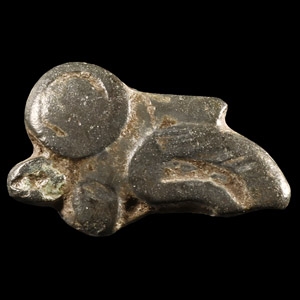
Formed with stylised features including a hooked beak and large circular eye; suspension loop to reverse. 3.24 grams, 21 mm
Acquired in the 1960s. Private collection, Wein, Austria. Ex private Merseyside, UK, collection, since 2014. Accompanied by an old identification ticket. -
South Italian Gnathian Ware Pottery Oinochoe
Circa 4th century B.C.Estimate: £1,000 - 1,400 (‡+bp*)
Opening Bid: £500
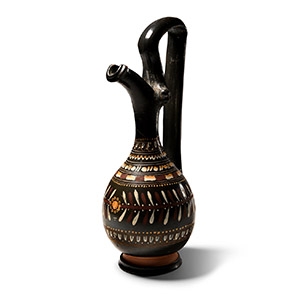
Piriform bodied with u-shaped spout and high handle, polychrome painted egg, zig-zag, bar, dot and laurel pattern with flower arranged in rows to the front face. 193 grams, 20.2 cm high
Acquired in Europe before 2001. European collection.
