
Loading, please wait...
LOT 0150
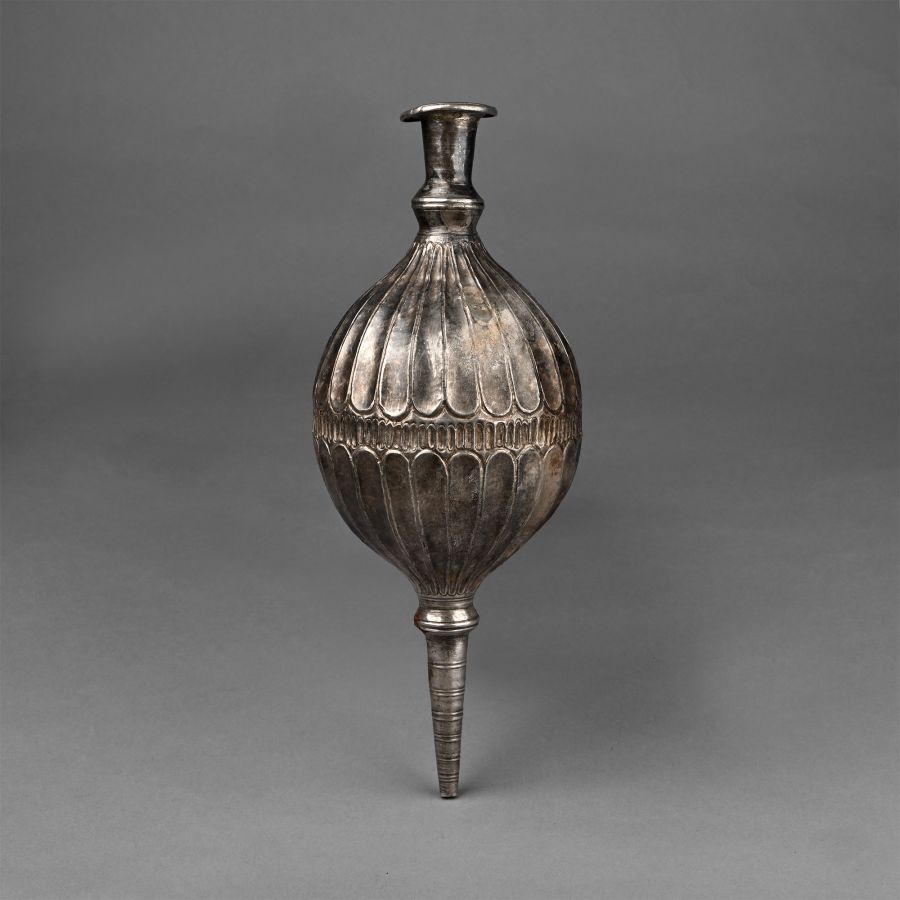
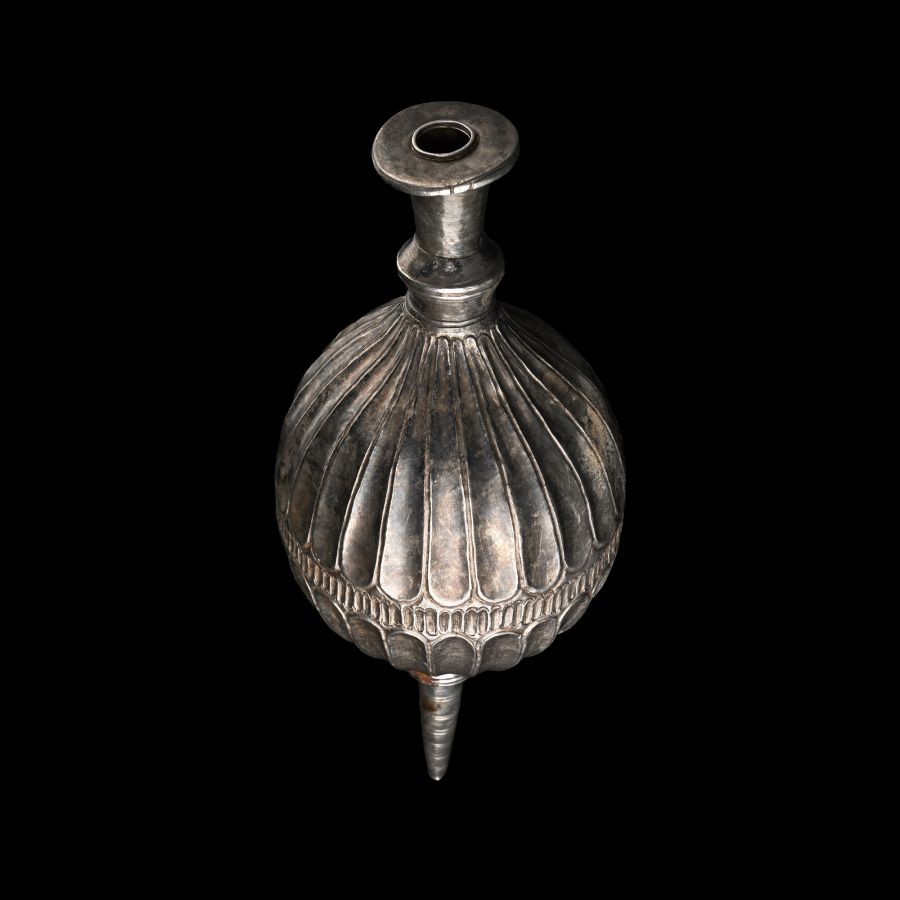
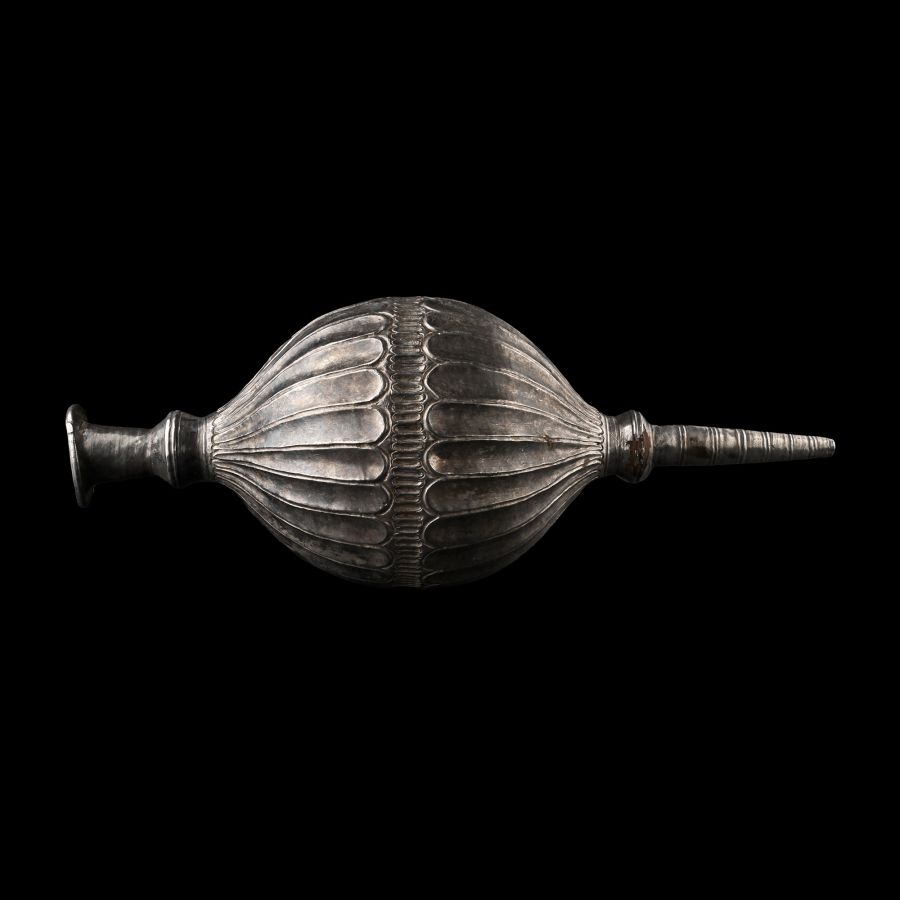
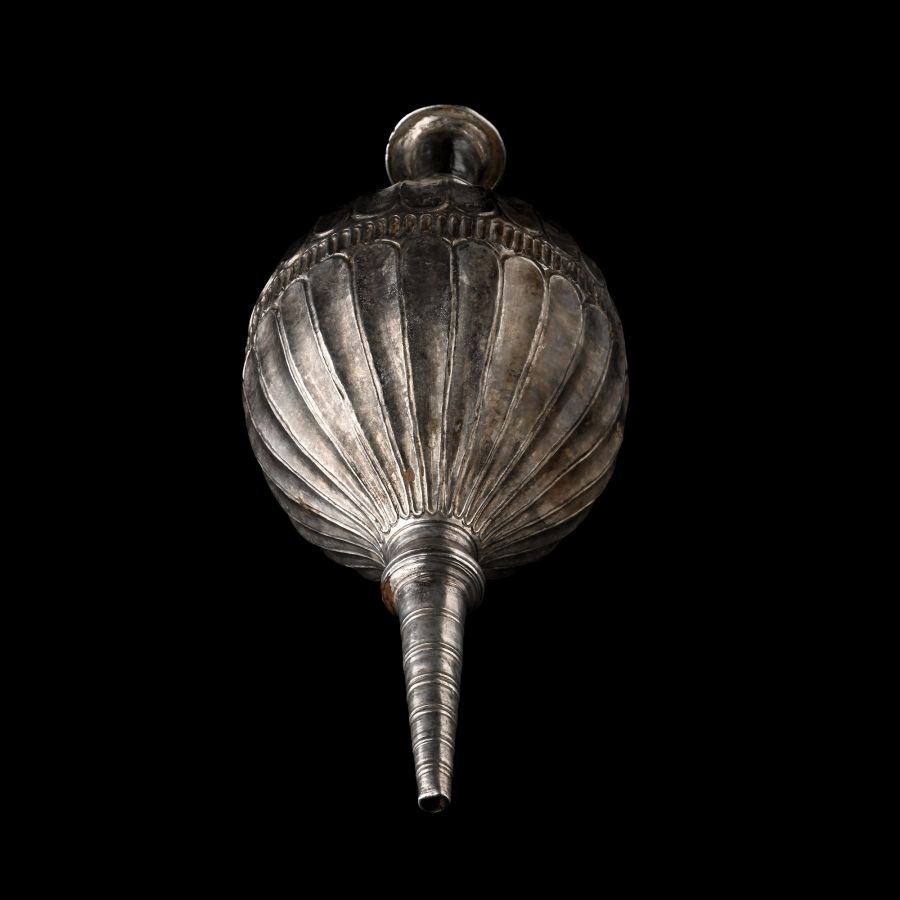
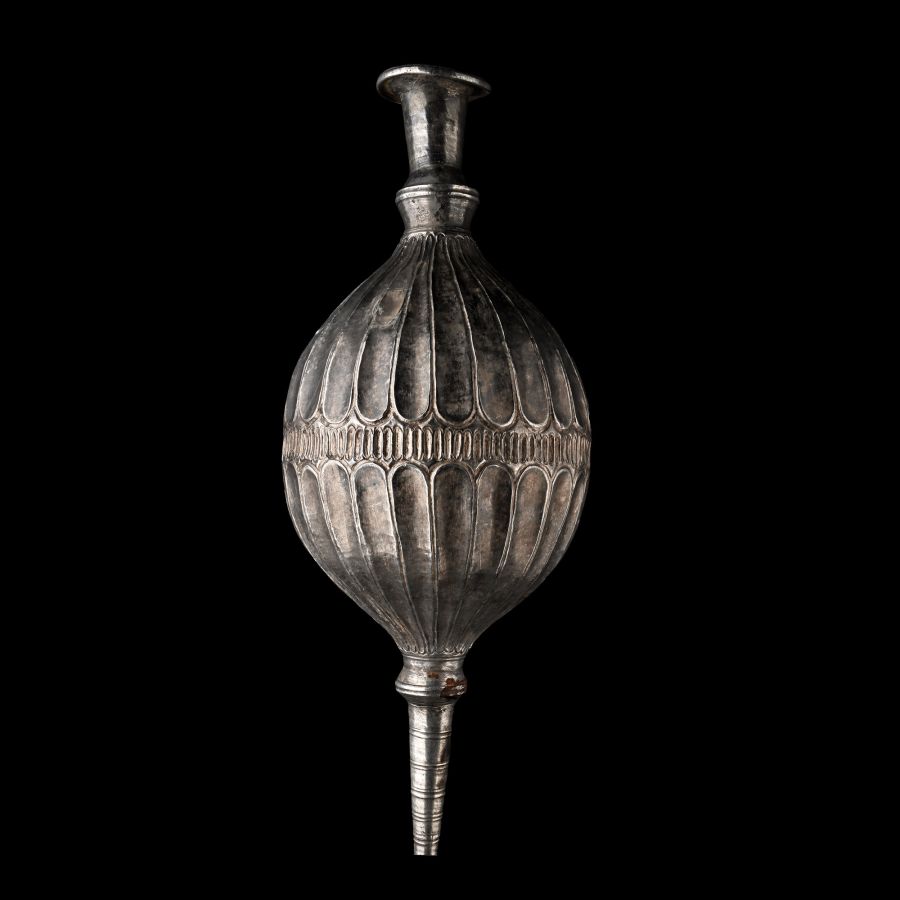
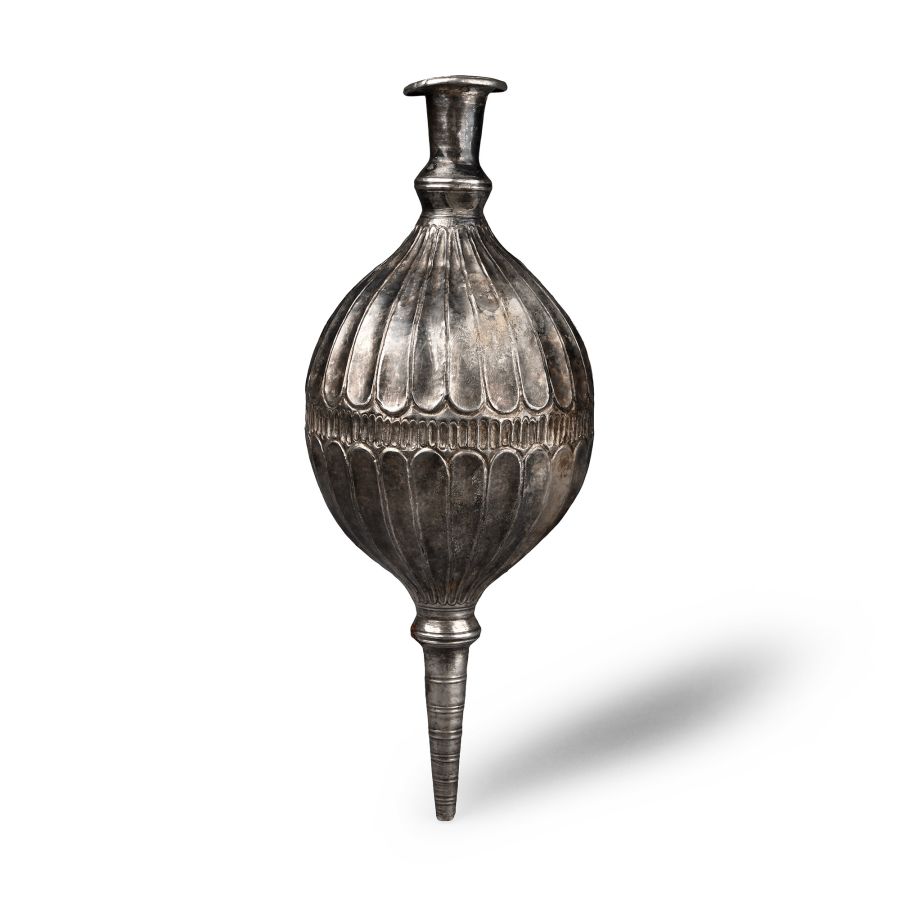
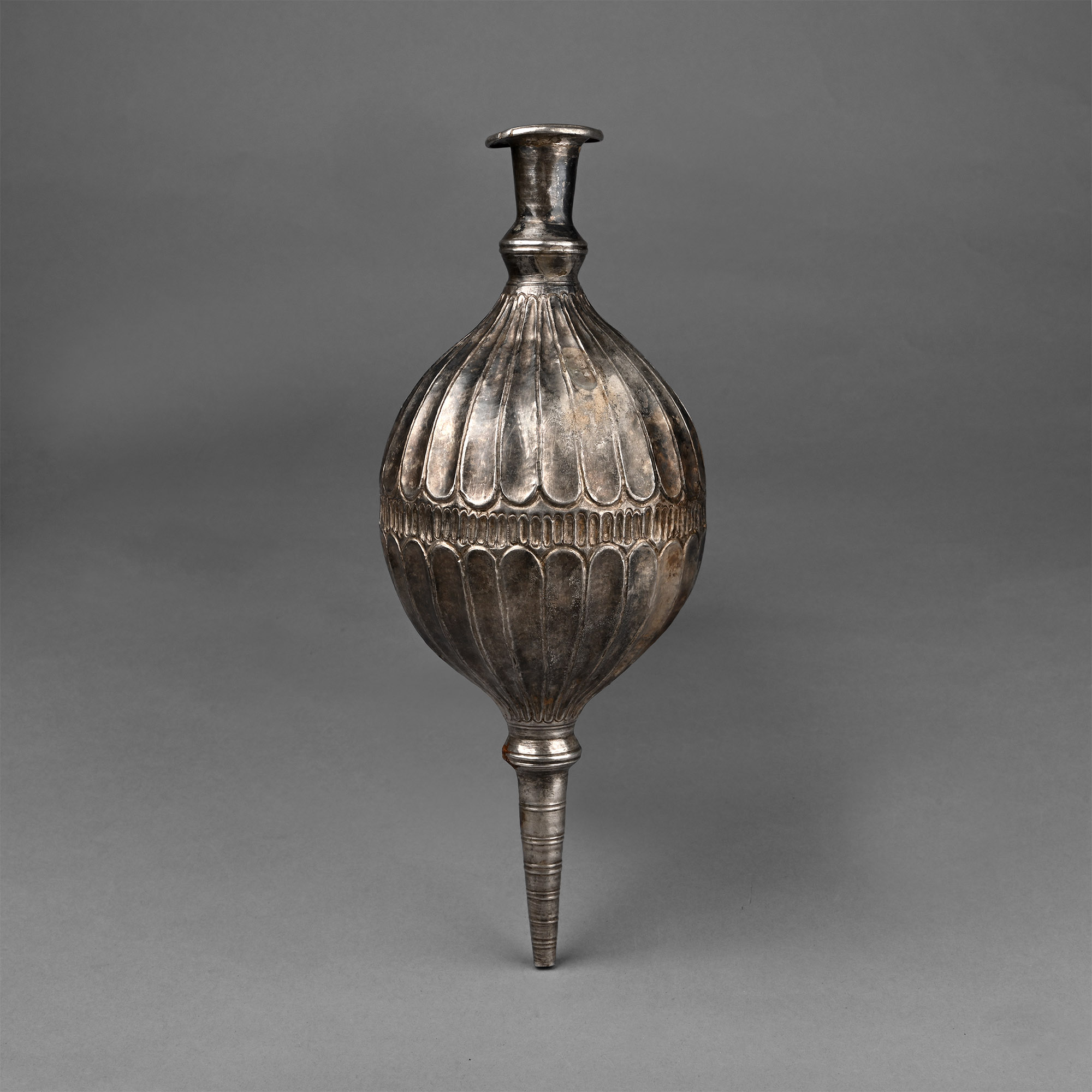
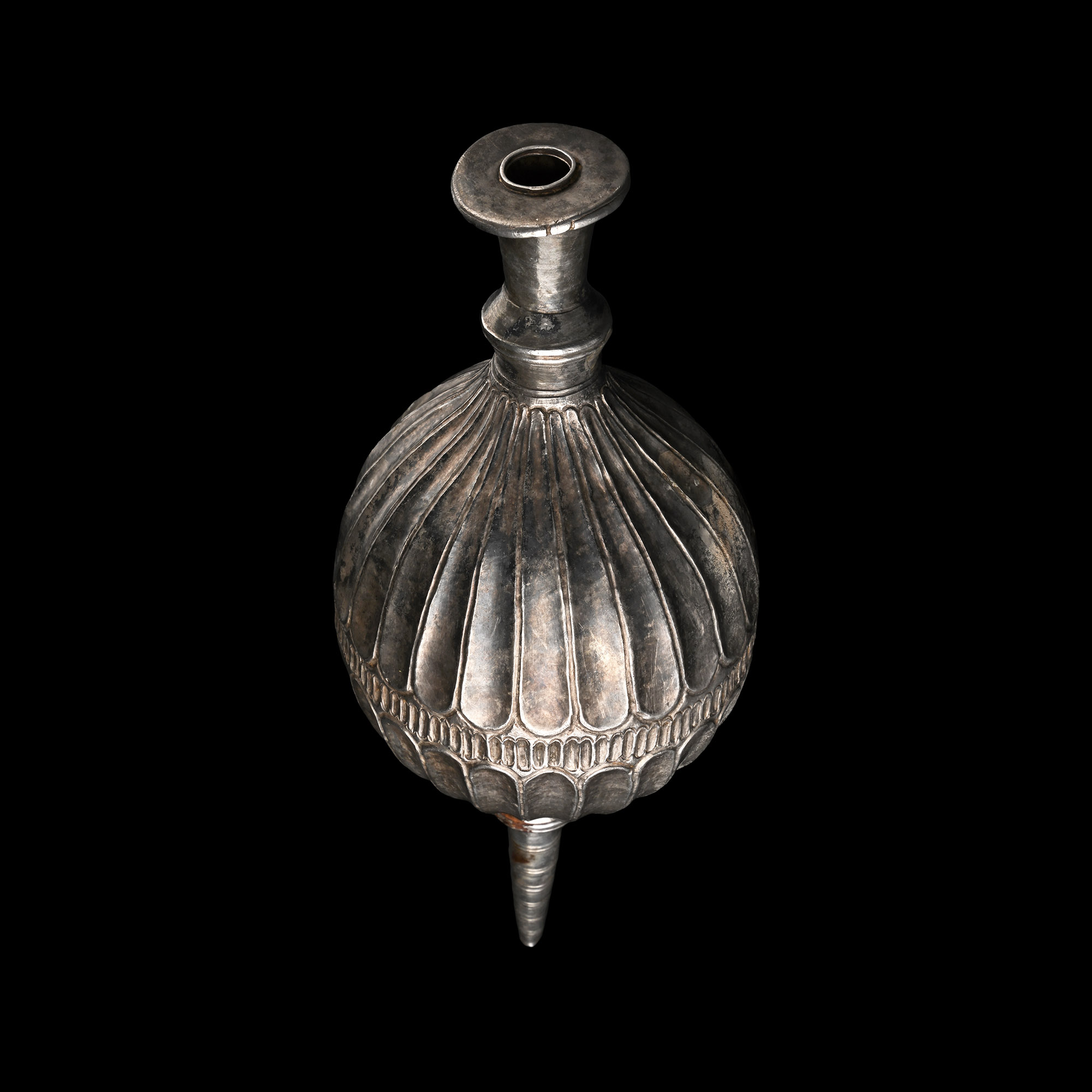
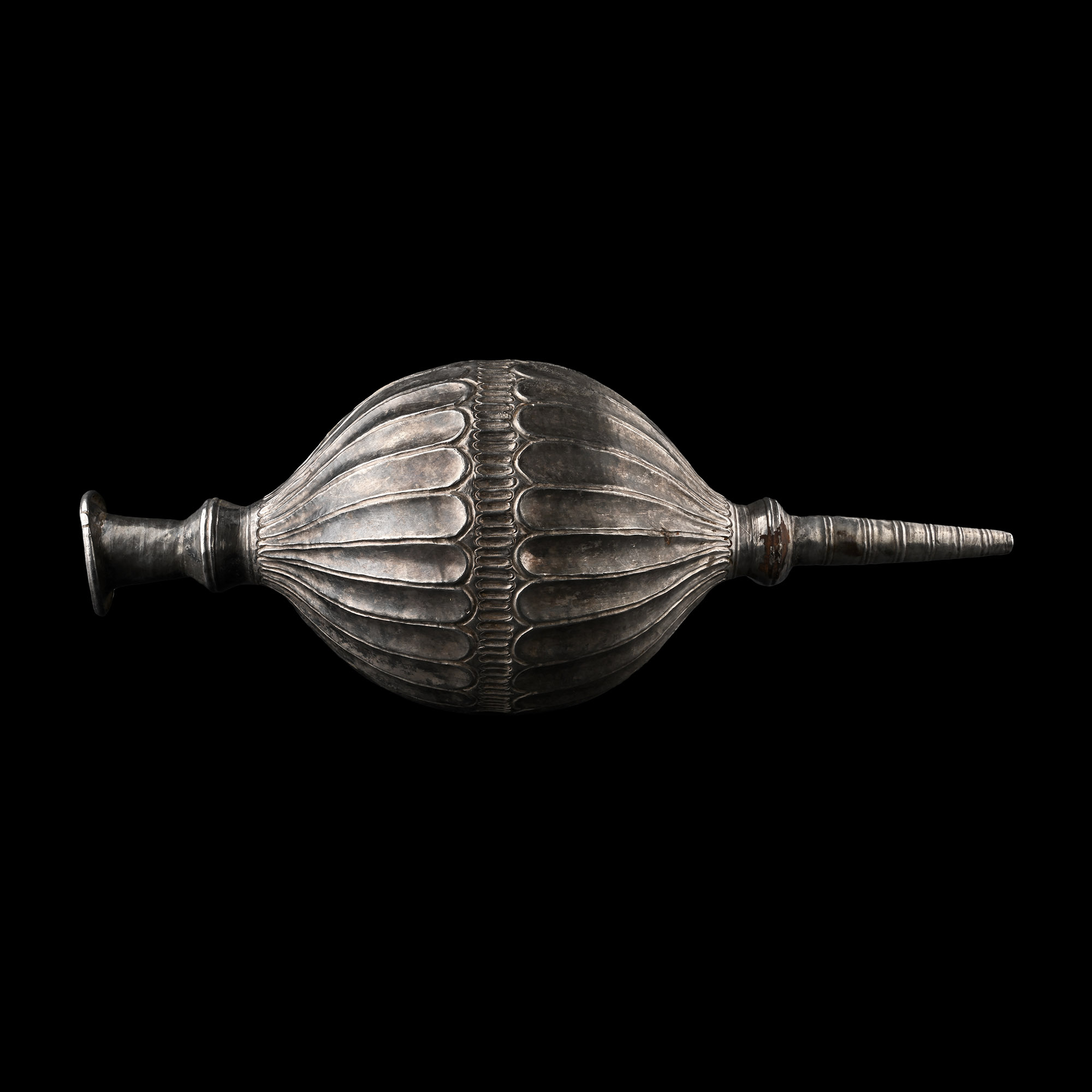
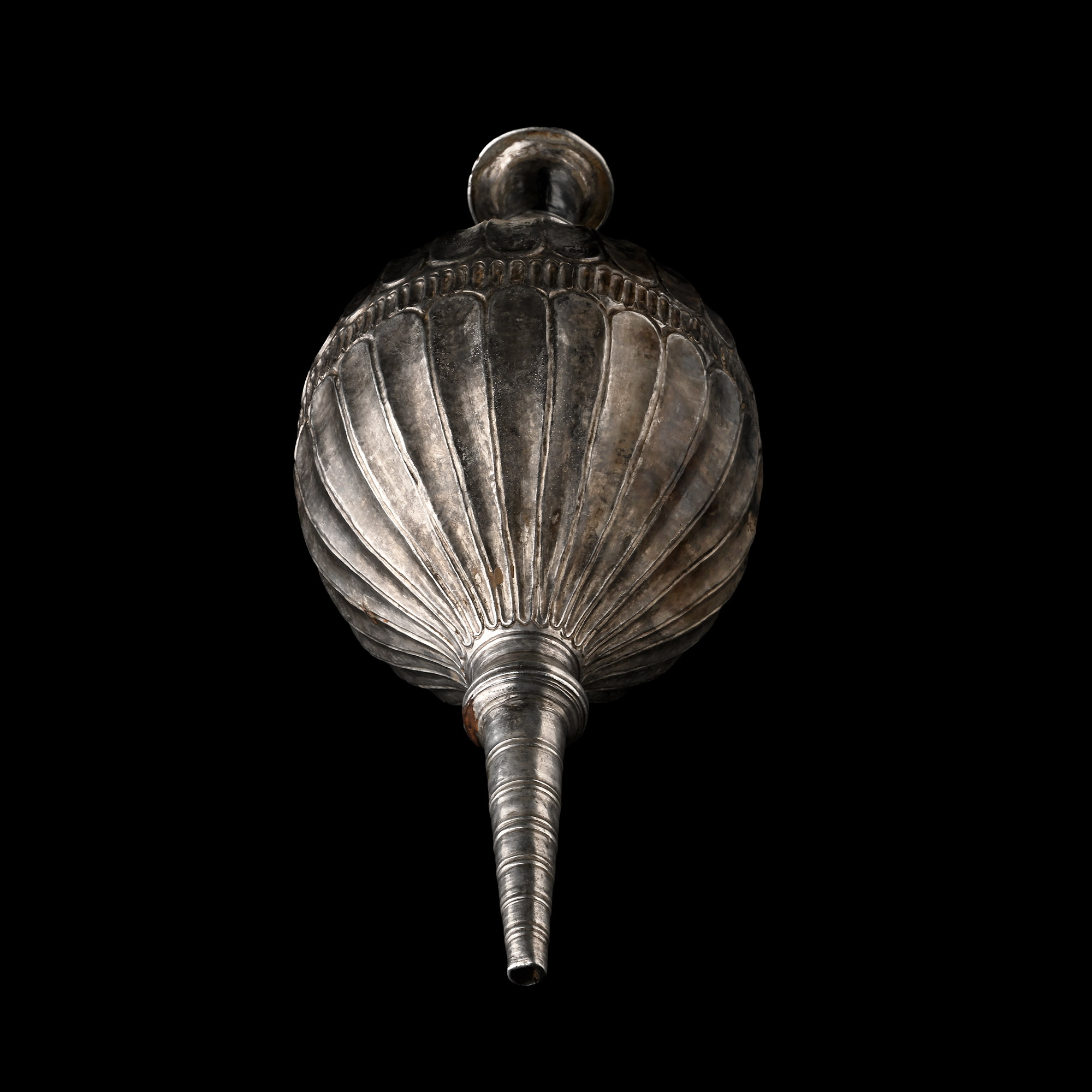
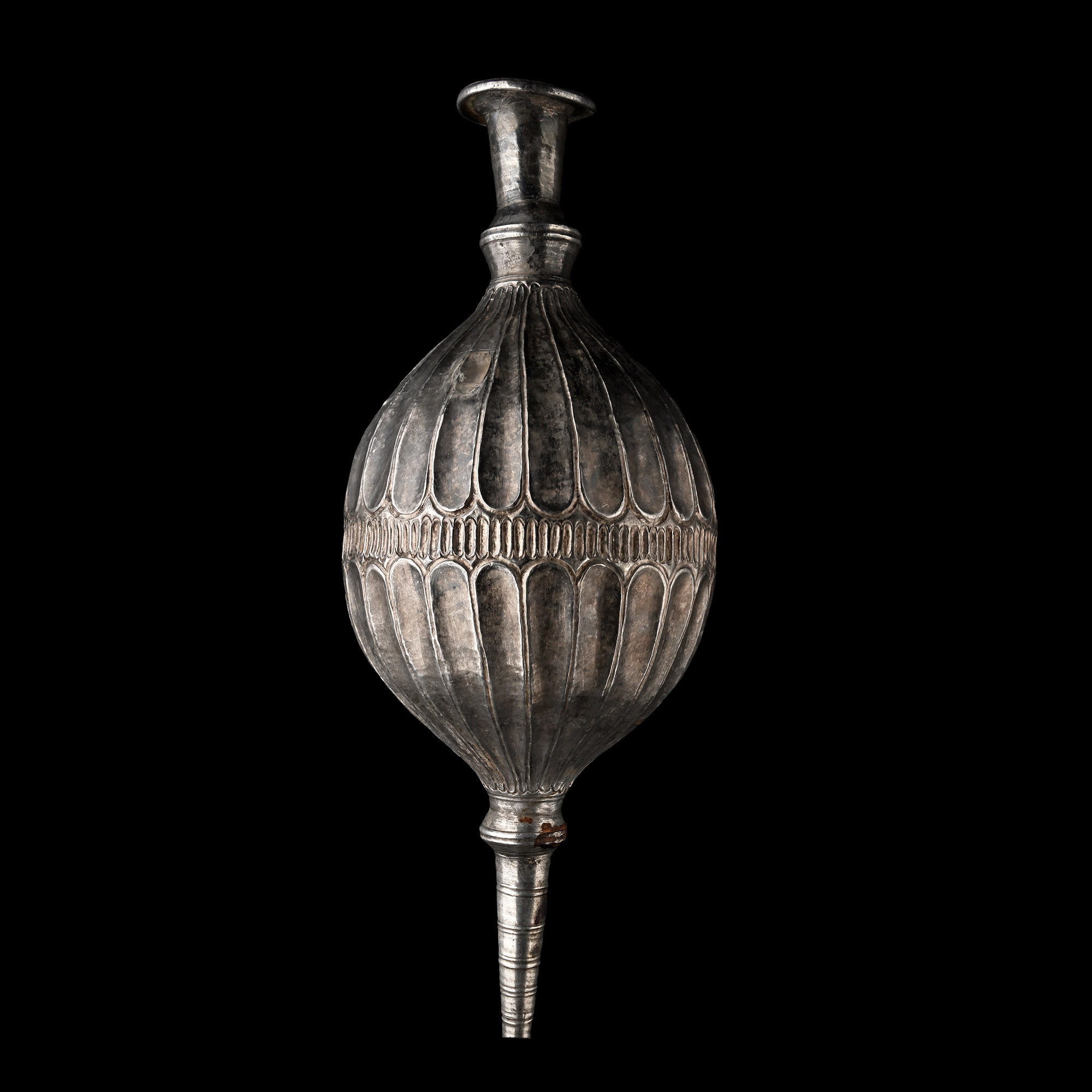
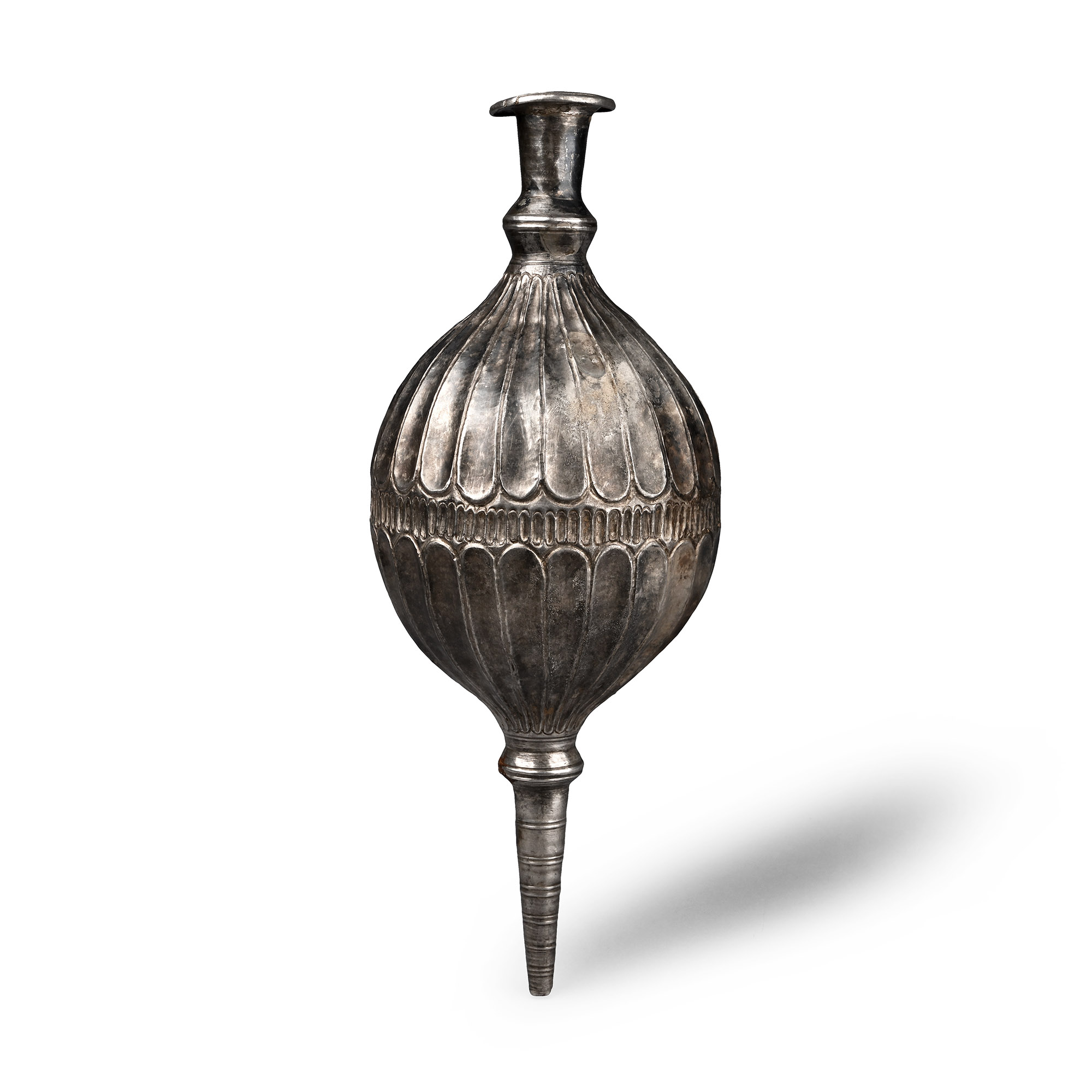
Large Graeco-Roman Silver Wine Infundibulum
5TH CENTURY B.C.-1ST CENTURY A.D.
11 5/8 in. (356 grams, 29.5 cm).
With a hollow spherical body decorated with slightly concave petals radiating from each end, separated by a central grooved band; one end with a tapering funnel marked by horizontal grooves, the other with a short tapering neck and a wide rim.
ProvenanceOld Austrian private collection, 1980s.
Accompanied by a copy of a nine-page examination report number 154/2026 by Dr habil Mikhail Treister.
Accompanied by an academic report by Dr Raffaele D’Amato.
This lot has been checked against the Interpol Database of stolen works of art and is accompanied by search certificate number no.12905-242699.
Cf. for the general discussion on wine and metallic kitchen vessels Treister, M.Y., ‘Rare fifth-century BC bronze vessels and instruments, associated with wine drinking, from the Volna 1 necropolis on the Taman Peninsula’ in Vestnik Drevnei Istorii, vol.84, no.3, 2024, pp.640-663; for a metal example of Roman infundibulum see Daremberg-Saglio, Dictionnaire des Antiquités Grecques et Romaines, Paris, 1873-1917, p.516, fig.4064.
FootnotesComparable instruments, usually called clepsydra in Greek and infundibulum in Latin, were in use in the 5th – first half of the 4th centuries B.C. A total of 13 such objects, or clepsydra, are known, including two of the unknown origin), represented by the finds both from Central (Lazio) and South (Campania, Calabria and Basilicata) Italy, Illyria (Apollonia) and Central Greece (Boeotia, Phocis) (all made of bronze), from the Taman peninsula in the North Pontic area, a fragmented one – from the Ulyap kurgan necropolis in the Trans-Kuban region and a silver piece from an aristocratic Thracian burial in the Plovdiv region. A distinctive feature of all these metal objects is the combination of a narrow vertical tube, at the lower end turning into a container with holes in the bottom.
CONDITIONTimeLine Auctions follows a vetting process to ensure the authenticity and legality of all items, reinforcing our commitment to integrity and responsible trading. Each antiquity, antique, and coin lot undergoes thorough examination by a vetting committee of at least ten external specialists, professional trade association members, scientists, and archaeologists: Our Vetting Process
AUCTIONS:
TimeLine is a leading auction house specialising in antiquities, ancient art, collectables, natural history, coins, medals, and books. Our auctions offer museums, collectors, historians, and enthusiasts the opportunity to acquire unique and historically significant pieces.
LOT 0150
Large Graeco-Roman Silver Wine Infundibulum
Estimate £30,000 - 40,000€34,800 - 46,400 (for guidance only)$40,500 - 54,000 (for guidance only)
-
.jpg)
Life-Size Roman Bronze Head of an Empress
Mid-3rd century A.D.Estimate: £30,000 - 40,000 (+bp*)
Opening Bid: £15,000
A member of the Imperial family, possibly an empress, depicted with an elaborate coiffure, the hair at the back of the head parted in the middle and the two strands folded over each other, then pulled to the front to form a looped horizontal layer parted in the middle of the smooth forehead and drawn back, individual curls represented as vertical lines along the forehead hairline up to the exposed ears, two locks hanging down the sides behind the ears, extending to the upper part of the neck; beautiful facial rendering with stoic expression, exquisite detailing to the eyebrows, eyelids and pupils; snub-nose, closed lips, thin and graceful neck; mounted on a custom-made display stand. 4.07 kg, 40.5 cm high including stand
Acquired on the German art market, early 1970s. German private family collection; by gift to the owner's son in 2015. Private collection, London. Accompanied by an academic report by Dr Raffele D'Amato, and Dr Marina Mattei, former curator of the Capitoline Museums for over 40 years. This lot has been checked against the Interpol Database of stolen works of art and is accompanied by a search certificate number no.12607-234556.
The oval, gaunt, deep-set eyes and the folds at the sides of the nose and mouth reveal the mature age of the woman depicted in the portrait. The woman’s head shows the typical traits of the full and mature 3rd century A.D., executed in a Hellenistic style tradition. Our sculpture fits well in the imperial portrait type, bearing technical and aesthetic parallels to portraits in bronze. The hairstyle could be Scheitelzopf (or reverse plait), tightened by a hairnet, pinned to the top of the head. The same type of hairstyle, albeit with variations in the details (decorative curls and position of the hair loop), is found on a few other portraits of women that were dated to the period of Gallienus by Marianne Bergmann. Some of the portraits in this typologically related group are likely to be private portraits. Hereby, physiognomic features and especially imperial coin portraits need to be taken into account. In this context, it is important to compare the portrait with that of Trebonianus Gallus in the MET. Like the sculpture of Trebonianus Gallus, the head fits stylistically with Roman provincial bronzes from the Eastern Mediterranean or North Africa, possibly from workshops of Asia Minor or from the great metropolis of Alexandria, where bronze statuary was more common and Hellenistic influences remained strong. -
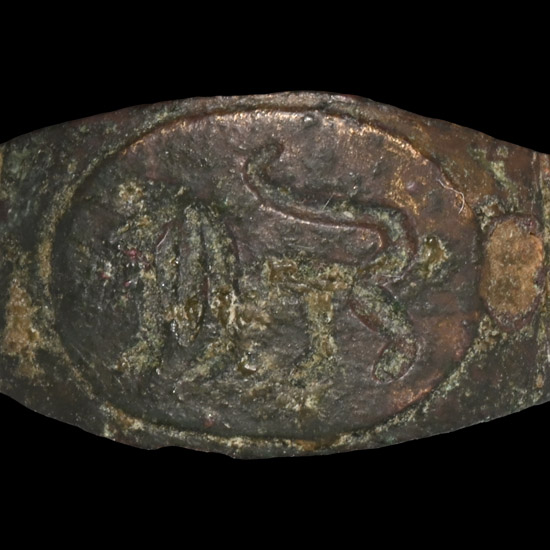
Roman Bronze Ring with Walking Lion
3rd-4th century A.D.Estimate: £30 - 40 (+bp*)
Bids: 3 | Current Bid: £17
Featuring a slender hoop and fluted shoulders, an oval bezel with an advancing lion with its tail raised. 1.37 grams, 19.70 mm overall, 18.12 mm internal diameter (approximate size British M 1/2, USA 6 1/4, Europe 13.09, Japan 12)
From the private collection of a European gentleman (1942-2024), formed since the 1970s. -
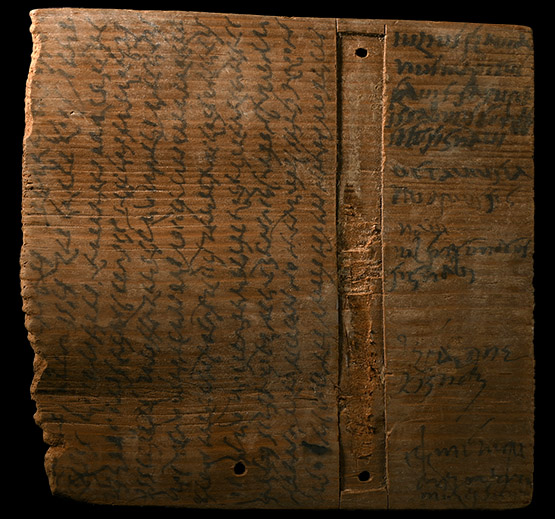
Roman Wooden Tablet with Marriage Pact Between Iulius Flavianus and the Mother of the Bride, Aurelia Salvia
322 A.D.Estimate: £1,500 - 2,000 (+bp*)
Bids: 17 | Current Bid: £650
Rectangular wooden tablet, probably cedarwood, the outer side divided by a sulcus into a smaller part with names of witnesses and a greater part with 11 lines of inked text in Roman cursive script; three small holes near the rim, two in the sulcus, one on the right rim; the inner side with a recessed panel filled with wax with traces of writing; in an excellent state of preservation with signs of age. 24.97 grams, 13.5 x 14 cm
Acquired by Albert Sfez in the early 1950s. Formerly the property of Monsieur Alain Sfez, a Belgium collector; acquired by gift from his father Albert Sfez, in 1965. Acquired by a London dealer in 1973. From an important London collection since 1975; thence by descent. Accompanied by a copy of an illustrated academic report by Professor Dr phil. Peter Rothenhöfer.
Professor Dr Peter Rothenhöfer, Department of History (Zhuhai Campus) states: 'This important tablet shows that its use was apparently not restricted to the administrative sphere but widely spread in civic life and used for private purposes. As handwritten documents from the late 3rd and 4th century AD are quite rare, this tablet is generally of great importance for the history of Latin palaeography. The text is fluently written and shows a uniform typeface. Typical features of ancient writing can be observed: The text is continuously written without any separation between words (scriptio continua), sentences have no dots at the end.' Wax tablets written in Greek or Latin, were used by Romans as account registers (codices accepti et expensi); for transactions (for example, the tablets of the banker Lucius Caecilius Iucundus found in Pompeii); for lists of goods, inventories, and notes to be kept and archived; for Roman magistrates to annotate the salient events of their bureaucratical activities; for writing letters; for drawing up legal texts of various kinds: legacies, declarations of births and citizenship, reports of trials and diplomata militaria; and especially testaments in private civil law.
