
Loading, please wait...
LOT 2206
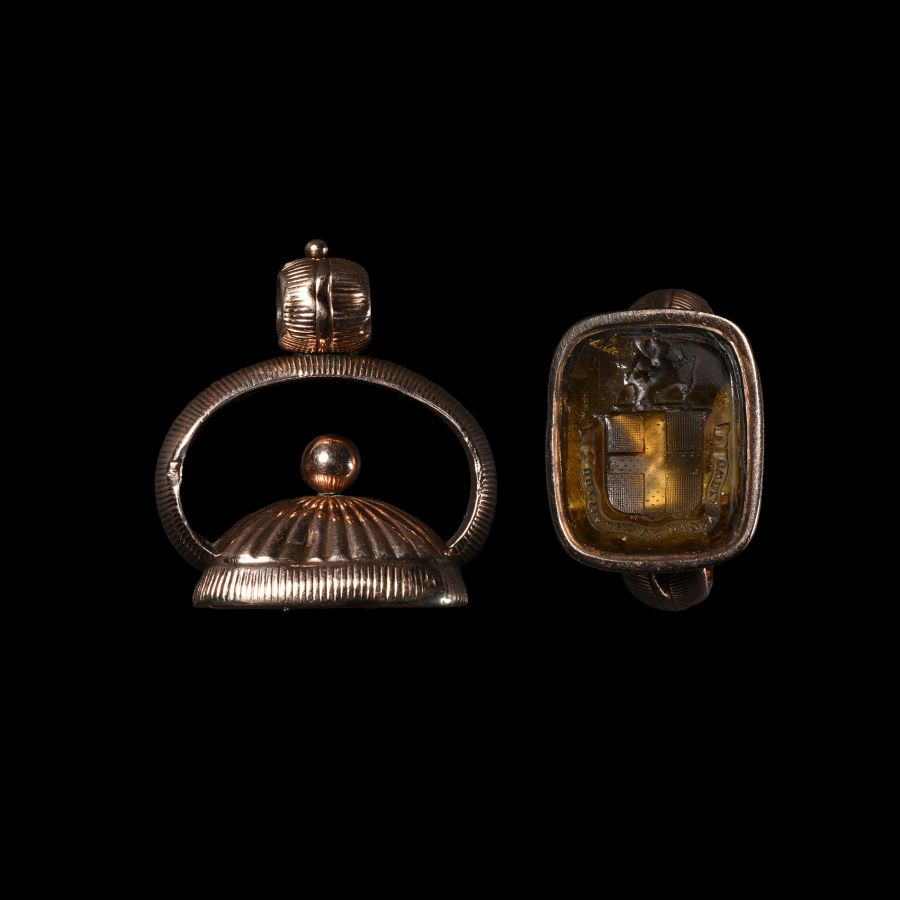
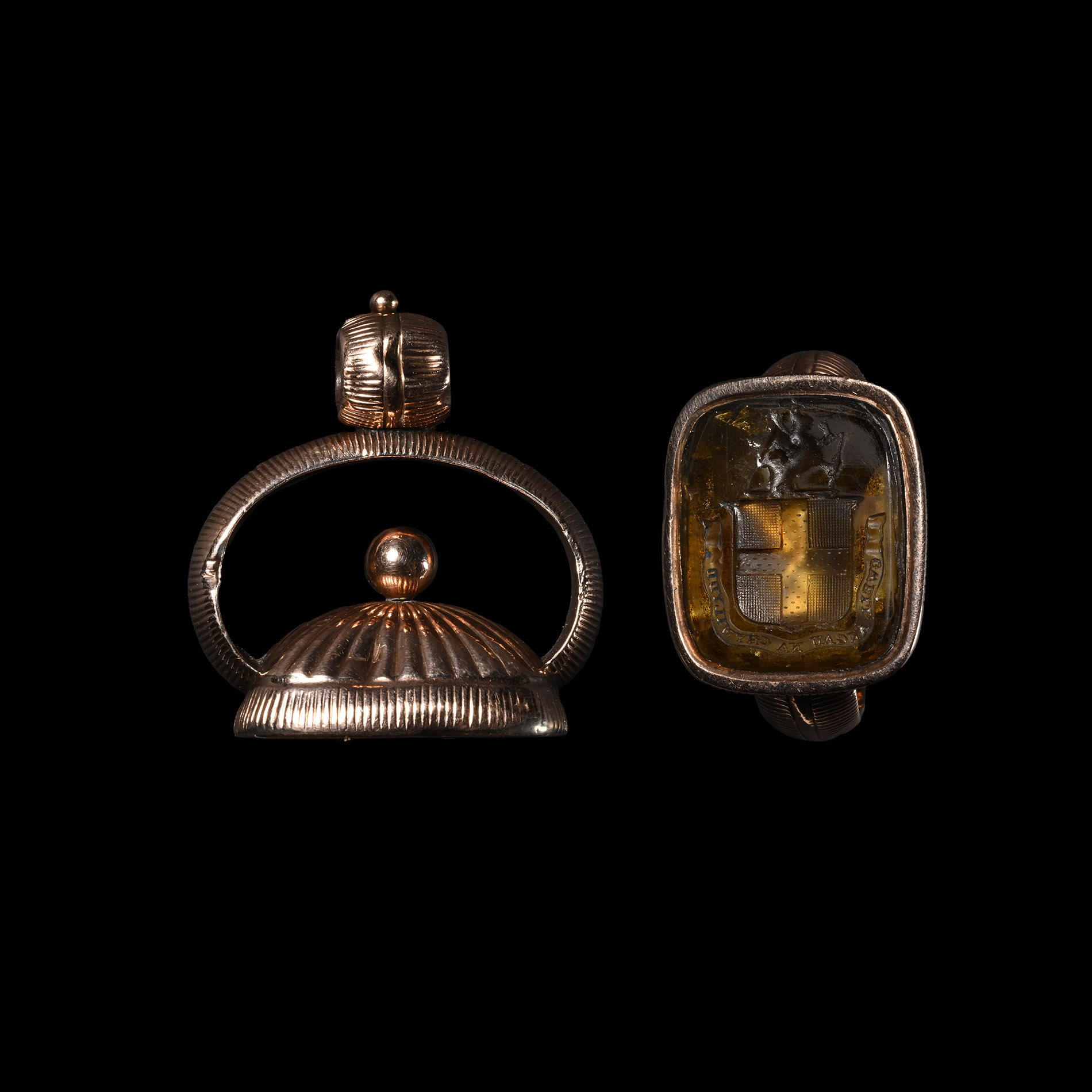
Large Gilt Heraldic 'Royal Regiment of Wales' Seal Matrix
20TH CENTURY A.D.
1 5/8 in. (20.7 grams, 42 mm).
Comprising a domed and fluted body with knop above, D-section swept hoop with barrel-shaped suspension ring; inset quartz seal with heater shield and scroll with Welsh motto: 'Gwell Angau na Chywilydd' (Death rather than Dishonour). [No Reserve]
ProvenanceProperty of a Cheshire, UK, gentleman.
This lot is accompanied by an illustrated lot declaration signed by the Head of the Antiquities Department, Dr Raffaele D’Amato.
The motto is used by the Royal Regiment of Wales.
CONDITIONTimeLine Auctions follows a vetting process to ensure the authenticity and legality of all items, reinforcing our commitment to integrity and responsible trading. Each antiquity, antique, and coin lot undergoes thorough examination by a vetting committee of at least ten external specialists, professional trade association members, scientists, and archaeologists: Our Vetting Process
AUCTIONS:
TimeLine is a leading auction house specialising in antiquities, ancient art, collectables, natural history, coins, medals, and books. Our auctions offer museums, collectors, historians, and enthusiasts the opportunity to acquire unique and historically significant pieces.
LOT 2206
Large Gilt Heraldic 'Royal Regiment of Wales' Seal Matrix
Sold for (Inc. bp): £143
-
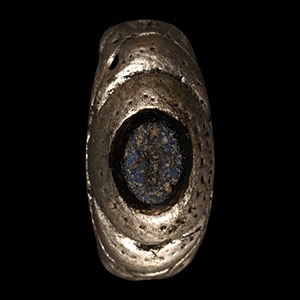
Georgian Silver Ring with Roman Intaglio
18th century A.D. and earlierSold for (Inc. bp): £169
Comprising a decorative band formed as a wreath with a lentoid-shaped recess to each shoulder, raised oval bezel with punched decoration, set with a 2nd century A.D. dark blue intaglio with a standing goddess Fortuna holding a cornucopia. 14.55 grams, 30.65 mm overall, 18.25 mm internal diameter (approximate size British Q, USA 8, Europe 17.49, Japan 16)
Ex private collection, 1970s. Property of a Nottinghamshire gentleman. This lot is accompanied by an illustrated lot declaration signed by the Head of the Antiquities Department, Dr Raffaele D’Amato. -
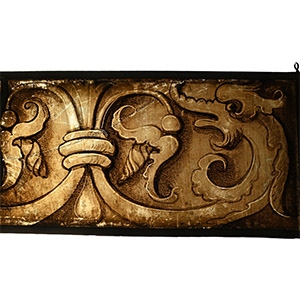
Border Section from a Renaissance Window
Northern France, Champagne, Troyes, circa 1520 A.D.Sold for (Inc. bp): £598
Rectangular window panel set in modern lead cames with loop to each upper corner; design of sea-beasts in profile with their curved tails bound with thick collars, conch shells between. 500 grams, 39.3 x 12.5 cm
with De Baecque Vente Aux Encheres, 5 March 2022, no.40. This lot is accompanied by an illustrated lot declaration signed by the Head of the Antiquities Department, Dr Raffaele D’Amato. -
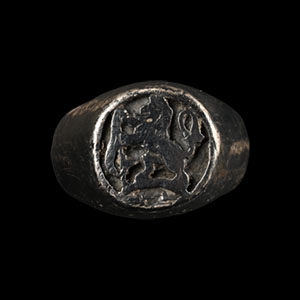
Silver Signet Ring with Rampant Lion
17th-18th century A.D.Sold for (Inc. bp): £208
With a D-section hoop expanding at the shoulders, raised image a rampant lion on a recessed field to accept enamel filling. 13.70 grams, 26.19 mm overall, 20.46 mm internal diameter (approximate size British V, USA 10 1/2, Europe 23.77, Japan 22)
Ex private collection, 1970s. Property of a Nottinghamshire gentleman. This lot is accompanied by an illustrated lot declaration signed by the Head of the Antiquities Department, Dr Raffaele D’Amato.
