
Loading, please wait...
LOT 1186
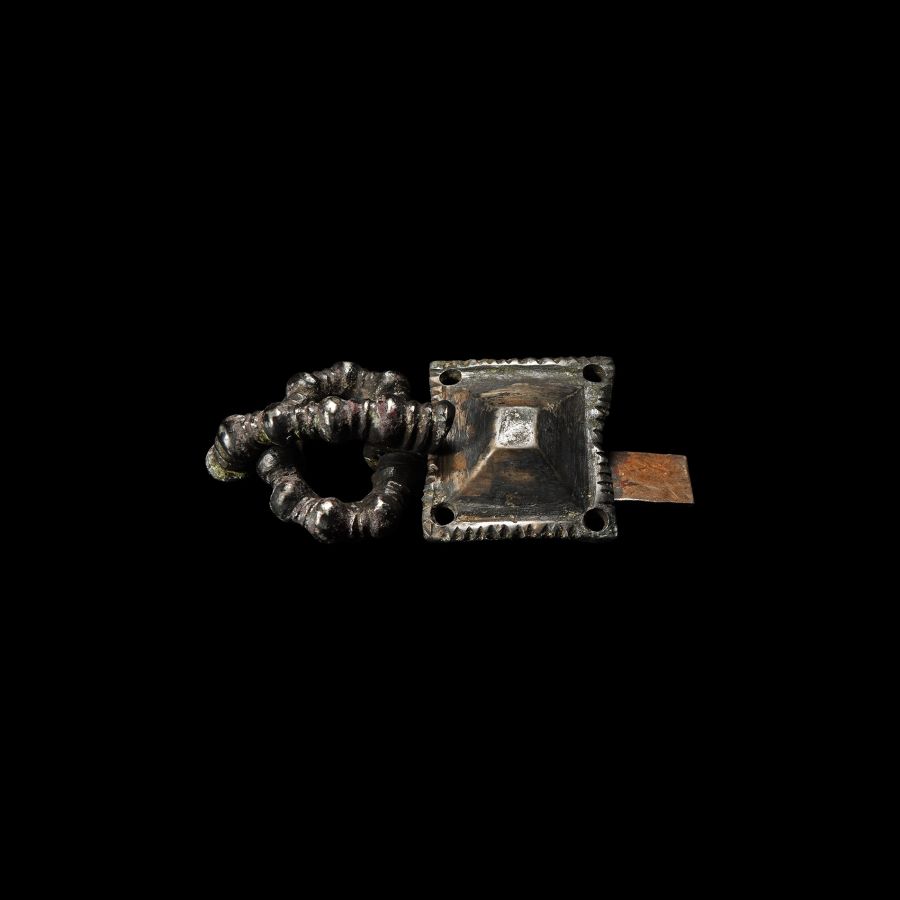
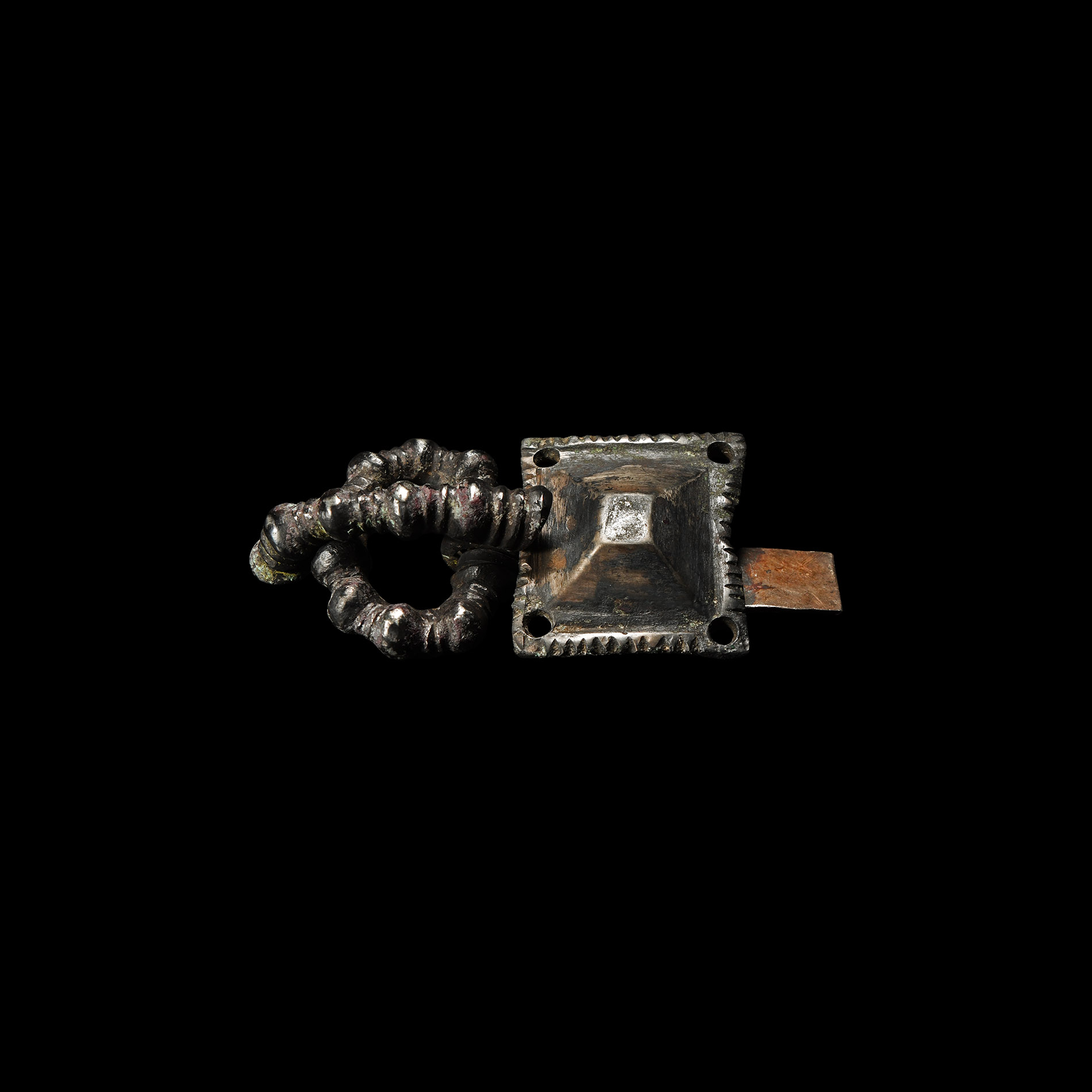
Large Germanic Silver Buckle
6TH CENTURY A.D.
3 1/2 in. (101 grams, 87 mm).
A heavy silver belt buckle, the bow and tongue decorated with raised nodules, rectangular plate with beaded edges, pierced through the corners, modern plate for attachment.
ProvenanceAcquired mid 1980s to early 1990s.
Private family collection formed in London.
See Kokowski, A., Leiber, C., Die Vandalen: Die Könige, die Eliten, die Krieger, die Handwerker, Nordstemmen 2003, p.391; see also Archäologischen Landesmuseum, Die Alamannen, Stuttgart, 1997, p.263.
FootnotesThe construction of the buckle loop and tongue could suggest that this object originates from the Heruli culture, when compared to finds like those from the Ulów graves. Another possibility is that the buckle belongs to Alemannic or Frankish culture. The rectangular buckle plate seems to be an addition from a different buckle of Gothic type, but the assemblage could have been done already in antiquity.
CONDITIONTimeLine Auctions follows a vetting process to ensure the authenticity and legality of all items, reinforcing our commitment to integrity and responsible trading. Each antiquity, antique, and coin lot undergoes thorough examination by a vetting committee of at least ten external specialists, professional trade association members, scientists, and archaeologists: Our Vetting Process
AUCTIONS:
TimeLine is a leading auction house specialising in antiquities, ancient art, collectables, natural history, coins, medals, and books. Our auctions offer museums, collectors, historians, and enthusiasts the opportunity to acquire unique and historically significant pieces.
-
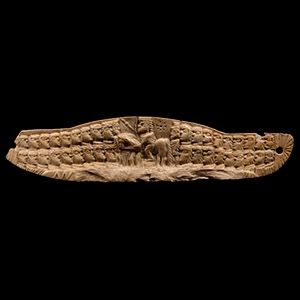
Post Roman Gallic Figural Amuletic Bone Carving
5th-7th century A.D. or laterSold for (Inc. bp): £1,170
A carved bone panel or amulet, possibly a pectoral fragment, carved with a scene composed of a central mounted horseman advancing left with spear raised and solar symbol behind his head, flanked by his forces depicted on the left as two rows of heads facing right, and on the right as two rows of heads facing left; pierced for attachment or suspension; repaired. 53 grams, 16.5 cm
Fine condition, small losses to lower edge and one finial; repaired.
Previously in the Alison Barker collection, a retired London barrister. From a Cambridge collection. Property of a North London gentleman.
The scene represents a triumphant military commander or an emperor on horseback surrounded by his troops. It may have formed part of the parade attire of a junior officer. -
Post Roman Gallic Figural Amuletic Bone Carving
5th-7th century A.D. or laterSold for (Inc. bp): £910
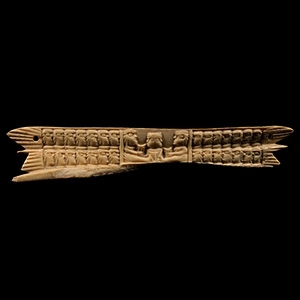
A carved bone amulet or mount displaying a stylised figural scene: central panel featuring two figures seated back to back at the centre, possibly bound captives, flanked by larger figures seated facing them, holding cups; two orderly rows of centre-facing heads either side; decorative striations to both terminals, pierced twice for attachment. 19.4 grams, 14 cm
Fine condition, small loss to the lower edge at one end.
Previously in the Alison Barker collection, a retired London barrister. From a Cambridge collection. Property of a North London gentleman.
The piece is curved and slightly twisted in the horizontal plane suggesting that it would be unsuitable for mounting on a piece of furniture or casket unless it formed an inset panel within a larger scene. -
Frankish Gilt Chip-Carved Scabbard Mount with Garnets
Circa 6th century A.D.Sold for (Inc. bp): £85
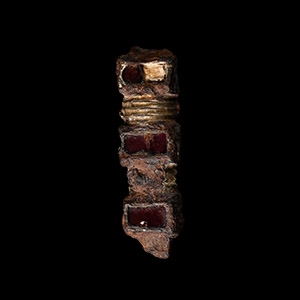
A gilt copper-alloy mount or scabbard-slider (Menghin's Typ IIIa Basel-Gotterbarmweg-Entringen) comprising three horizontal rectangular cells to the upper, middle and lower third of the body, each with gilt frame and set with a polished garnet cloison; the interstitial bridges with gilt ribbing; iron remains to verso. 11.8 grams, 44 mm
Found UK. Acquired in the 1990s. From a North Yorkshire private collection, UK.
