
Loading, please wait...
LOT 0259
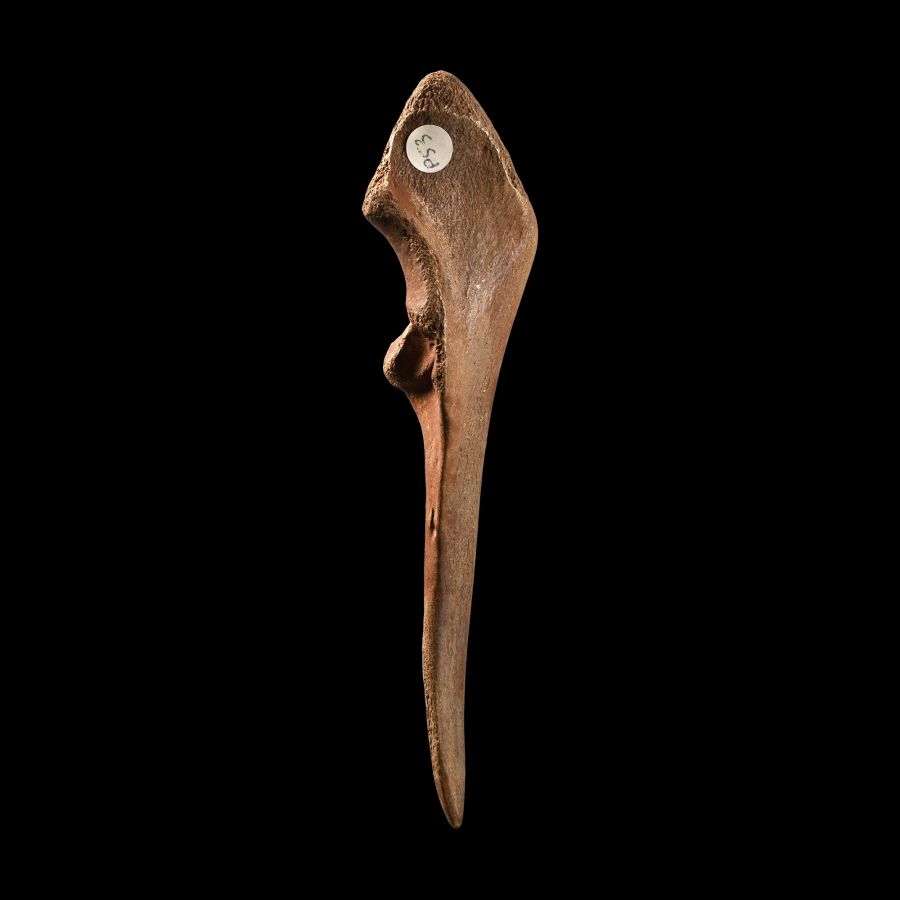
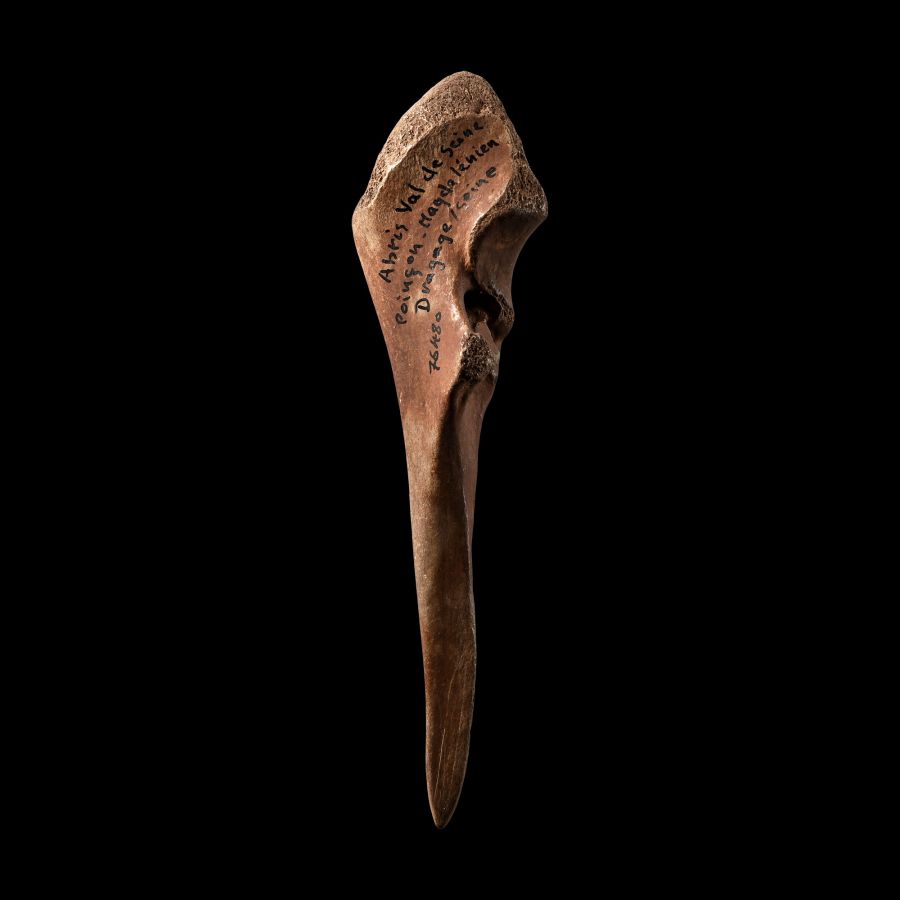
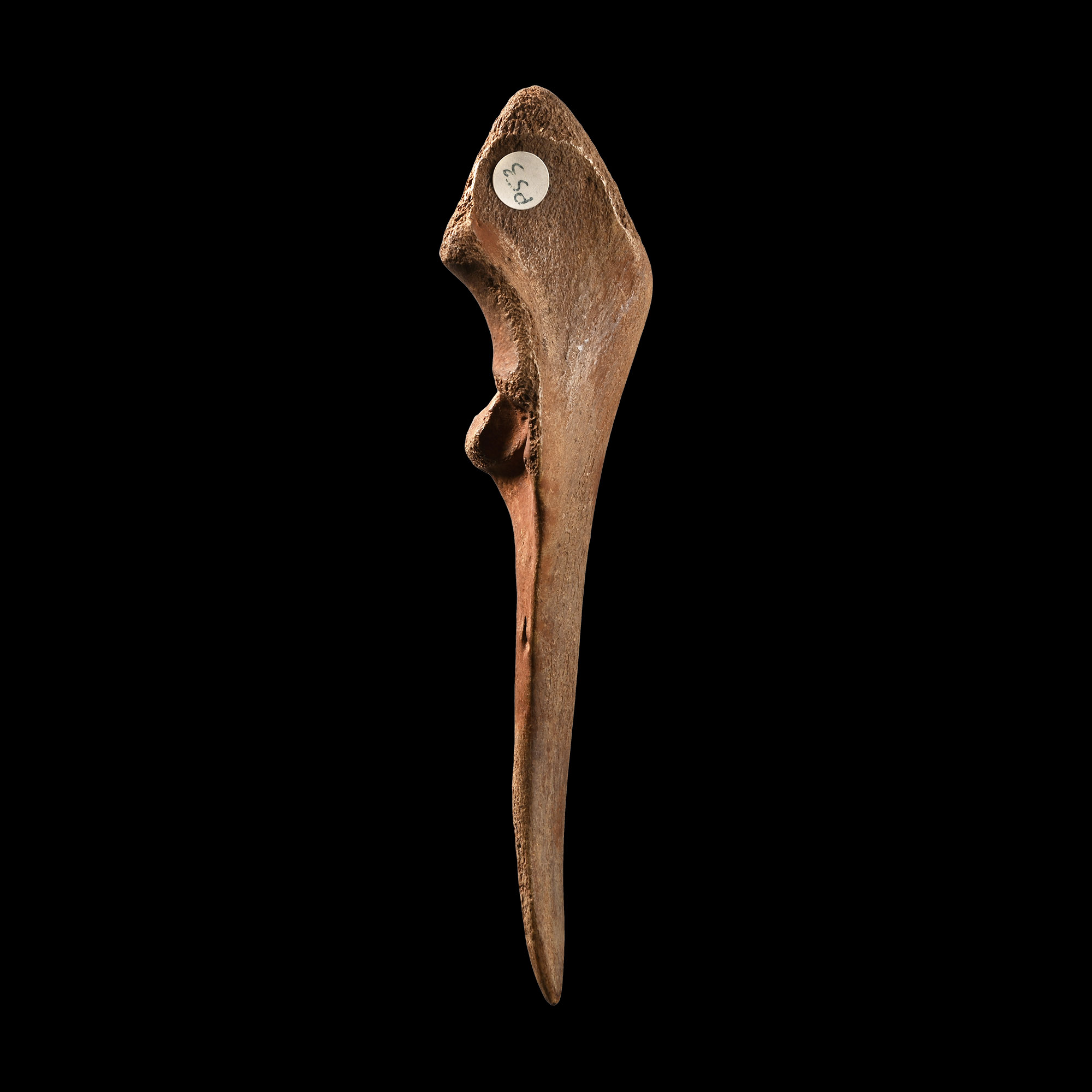
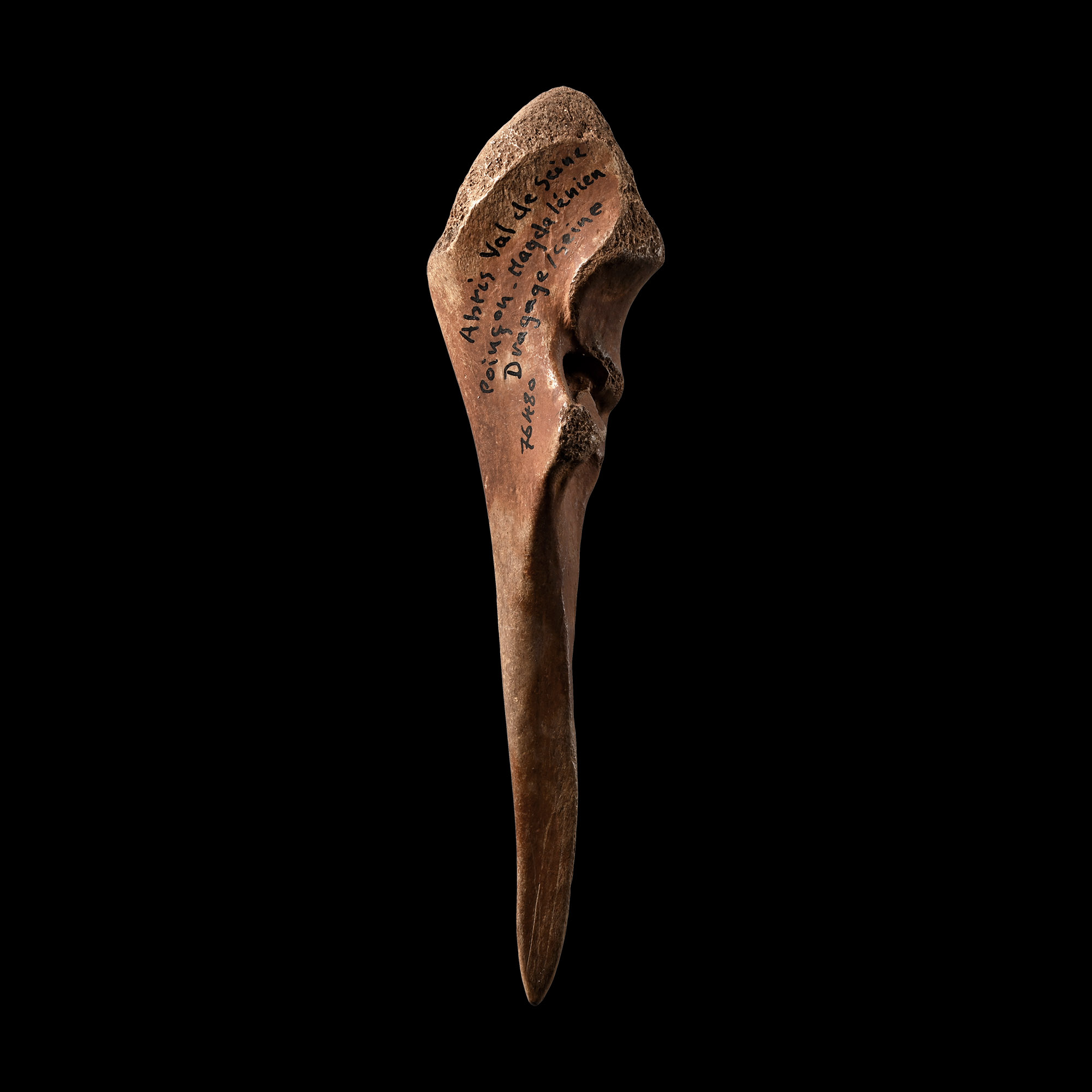
Large French Stone Age Magdalenian Bone Awl
LATE UPPER PALAEOLITHIC, CIRCA 21,000-13,000 B.P.
5 5/8 in. (25.9 grams, 14.4 cm).
Well-preserved bone awl with a long tapering point, inked collector's note 'Abris Val de Seine Poinçon, Magdalenien Dragage / Seine 75480'.
ProvenanceFrom Abris Val De Seine, France.
From an auction with Art Remy Le Fur.
Acquired on the European art market in the 2020s.
Accompanied by a copy of a French export licence no.257541.
The Magdalenian is a technocomplex of the Late Upper Palaeolithic, named after the type site of Abri de la Madeleine, a rock shelter located in the Vézère valley of Tursac in Dordogne, France.
CONDITIONTimeLine Auctions follows a vetting process to ensure the authenticity and legality of all items, reinforcing our commitment to integrity and responsible trading. Each antiquity, antique, and coin lot undergoes thorough examination by a vetting committee of at least ten external specialists, professional trade association members, scientists, and archaeologists: Our Vetting Process
AUCTIONS:
TimeLine is a leading auction house specialising in antiquities, ancient art, collectables, natural history, coins, medals, and books. Our auctions offer museums, collectors, historians, and enthusiasts the opportunity to acquire unique and historically significant pieces.
LOT 0259
Large French Stone Age Magdalenian Bone Awl
Estimate £500 - 700€580 - 810 (for guidance only)$680 - 950 (for guidance only)
-
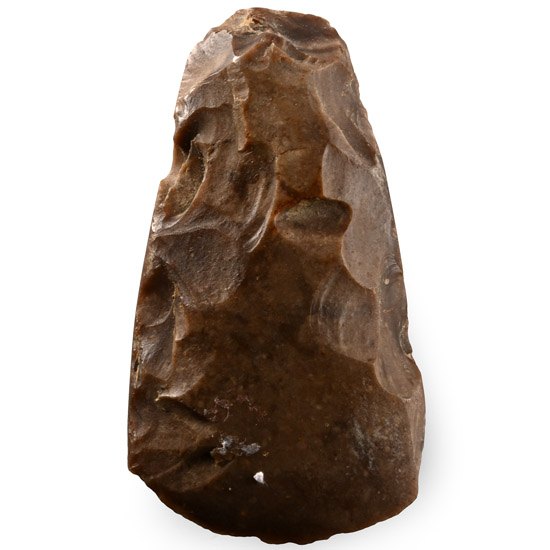
French Stone Age Part Polished Knapped Axehead
Neolithic Period, circa 6000 B.P.Sold for (Inc. bp): £91
Trapezoidal in plan, and lentoid in section with curved edge polished, butt left natural; applied label 'Montigny L'Allier'. 85 grams, 81 mm
Found Montigny, France. Acquired on the UK art market in the 2020s. From a private collection. -
.jpg)
African Stone Age Homo Erectus Knapped Handaxe
Lower Palaeolithic Period, circa 1,000,000-500,000 B.P.Sold for (Inc. bp): £312
Piriform axe with narrow point, the surfaces weathered smooth, inked collector's note 'Seguedine 71'. 515 grams, 20 cm
From Seguedine, Africa. Ex old German collection formed in the 1970s by Dr J Fehkhaber. Acquired on the European art market. -
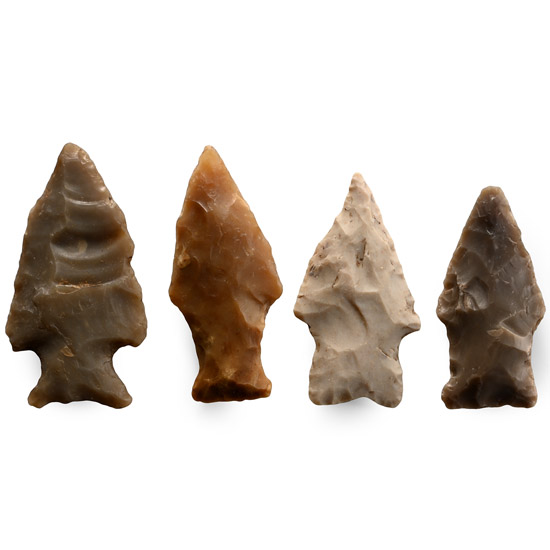
North American Stone Age Knapped Arrowhead Group
Archaic Woodland Period, circa 2500-1900 B.P. or laterSold for (Inc. bp): £26
Comprising four tanged arrowheads in grey and brown stone. 27.2 grams total, 43-51 mm
From a previous old English collection. From the private collection of a West Midlands lady collector; acquired from a UK auction house.
