
Loading, please wait...
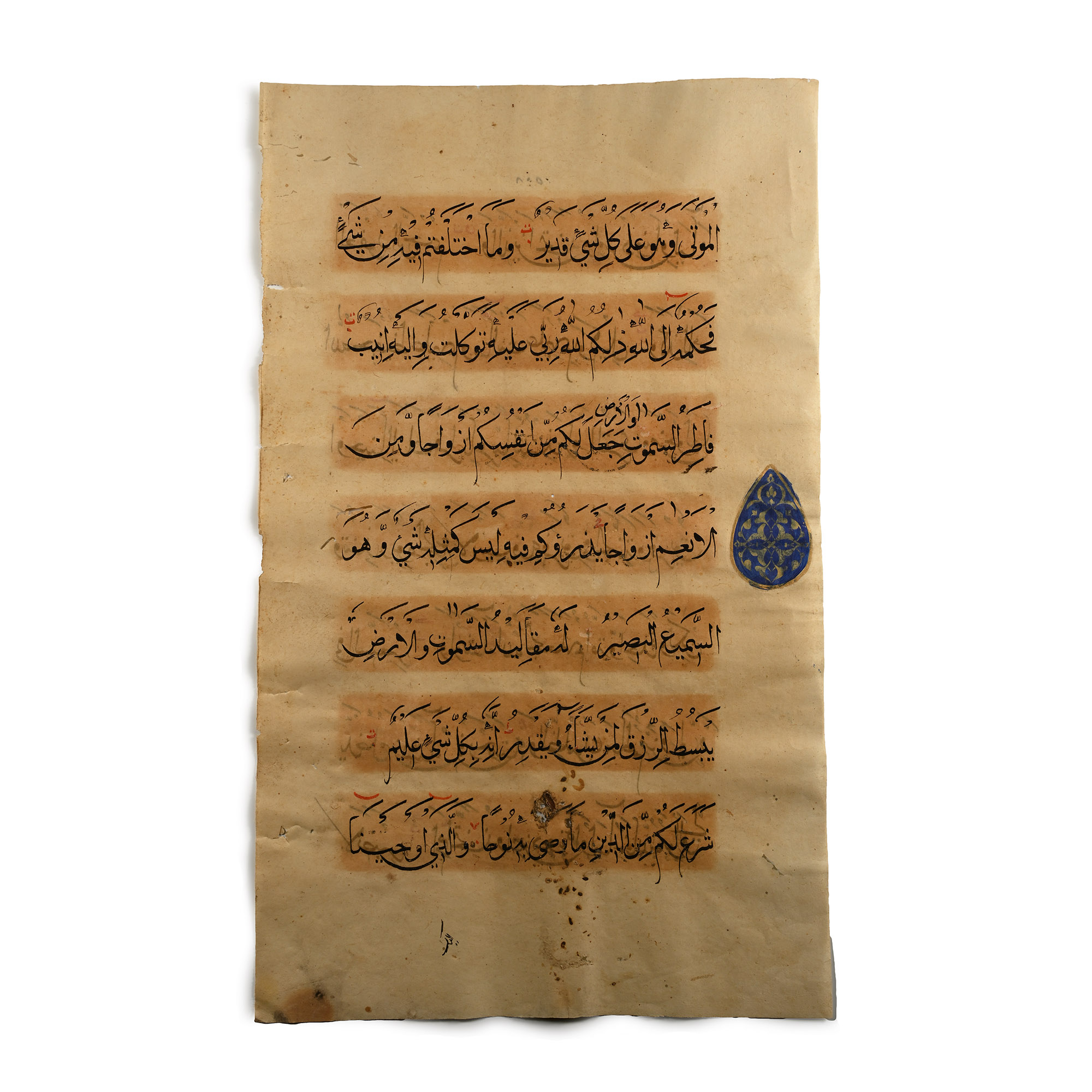
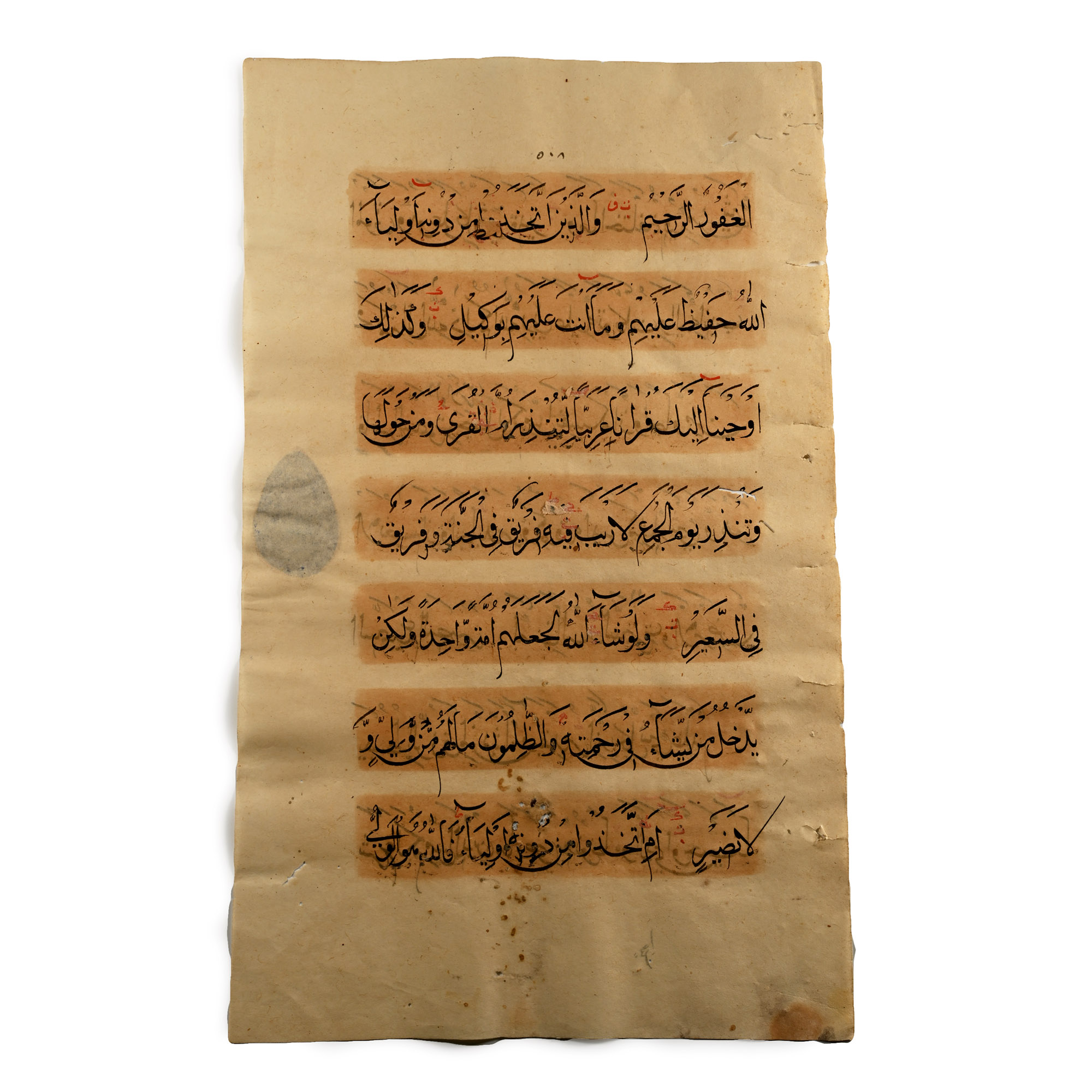
LOT 1238
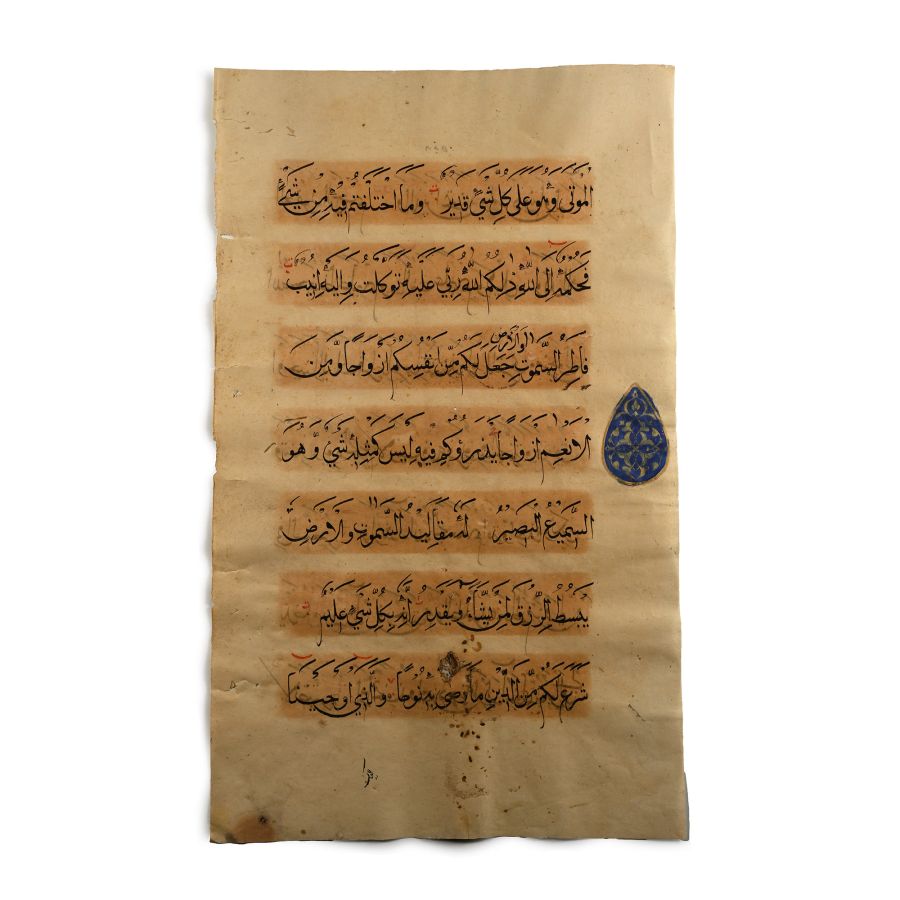
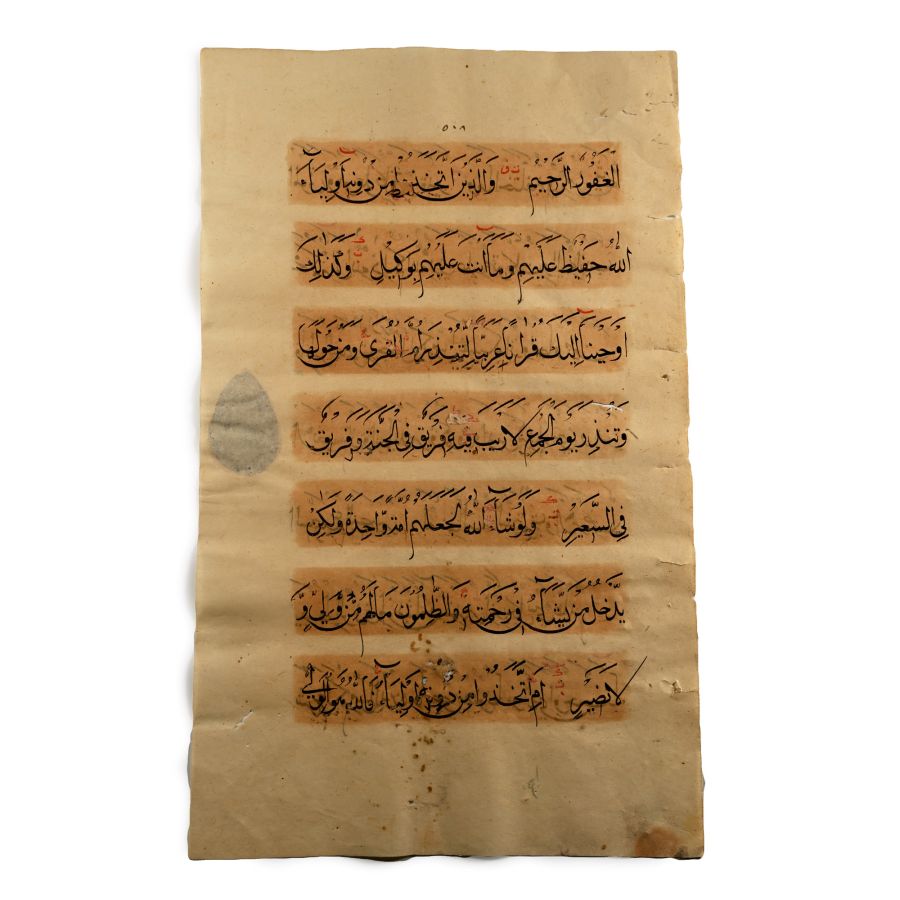
Large Format 'The Enlightenment' Quran Manuscript Page
OTTOMAN, EARLY 19TH CENTURY A.D.
17 1/8 x 10 1/2 in. (23 grams, 43.5 x 26.5 cm).
Manuscript leaf with text from Surah 42, 'Ash Shurah' ('The Enlightenment'); ovate painted blue panel with tendril ornament.
ProvenanceAcquired on the UK art market.
Scottish private collection.
This lot has been cleared against the Art Loss Register database, and is accompanied by an illustrated lot declaration signed by the Head of the Antiquities Department, Dr Raffaele D'Amato.
TimeLine Auctions follows a vetting process to ensure the authenticity and legality of all items, reinforcing our commitment to integrity and responsible trading. Each antiquity, antique, and coin lot undergoes thorough examination by a vetting committee of at least ten external specialists, professional trade association members, scientists, and archaeologists: Our Vetting Process
AUCTIONS:
TimeLine is a leading auction house specialising in antiquities, ancient art, collectables, natural history, coins, medals, and books. Our auctions offer museums, collectors, historians, and enthusiasts the opportunity to acquire unique and historically significant pieces.
-
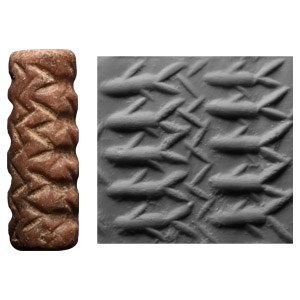
Sumerian Cylinder Seal with Fishes
3rd millennium B.C.Estimate: £300 - 400 (+bp*)
Opening Bid: £150
With frieze of fishes in profile within a field of zigzag lines. 11.5 grams, 37 mm
From the 'S' collection, acquired 1970-1990s. The collection was seen and studied by W.G.Lambert, late Professor of Assyriology at the University of Birmingham, 1970-1993. This lot has been cleared against the Art Loss Register database, and is accompanied by an illustrated lot declaration signed by the Head of the Antiquities Department, Dr Raffaele D'Amato. -
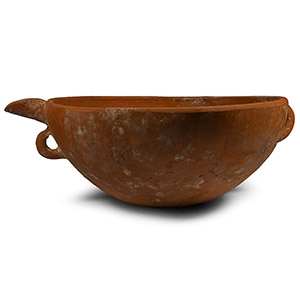
Very Large Amlash Terracotta Spouted Bowl
1st millennium B.C.Sold for (Inc. bp): £208
With broad hemispherical bowl, short U-section spout, integral round-section handle and inturned rim. 2.5 kg, 46.5 cm
From a gentleman's London, UK, collection of ancient pottery and artefacts, 1990s. Accompanied by a thermoluminescence analysis report no.N125a52 from Oxford Authentication. This lot has been cleared against the Art Loss Register database, and is accompanied by an illustrated lot declaration signed by the Head of the Antiquities Department, Dr Raffaele D'Amato. -
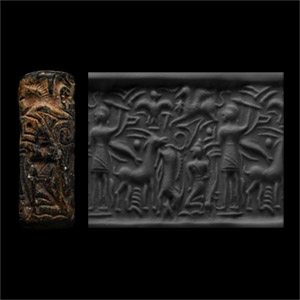
Cylinder Seal with Standing Figure
Cypriot Type, circa 1300 B.C.Sold for (Inc. bp): £1,105
Cylinder with cord and bead handles; accompanied by a copy of an old scholarly note, typed and signed by W.G. Lambert, late Professor of Assyriology, University of Birmingham, 1970-1993, which states: 'Cylinder Seal of Black Stone, 27 x 10 mm. The design is very full: the central figure is standing, wearing a short garment reaching just above the knees and holding a spear in one raised hand, before him is a kneeling figure, then there are three quadrupeds, two more or less naturalistic, one with wings and a bird's head. There is also a heraldically placed bird and numerous lines and shapes to fill every vacant space. This seal is a rare Cypriot type, c.1300 B.C., from either Cyprus itself or the adjacent coastal lands of Asia Minor or Syria.'; accompanied by a museum-quality impression. 6.27 grams total, 8.2-27.3 mm
UK private collection, acquired 1980-1983. Accompanied by a copy of a scholarly note, typed and signed by Professor Wilfrid George Lambert in July 1991. This lot has been cleared against the Art Loss Register database, and is accompanied by an illustrated lot declaration signed by the Head of the Antiquities Department, Dr Raffaele D'Amato.
