
Loading, please wait...
LOT 0042
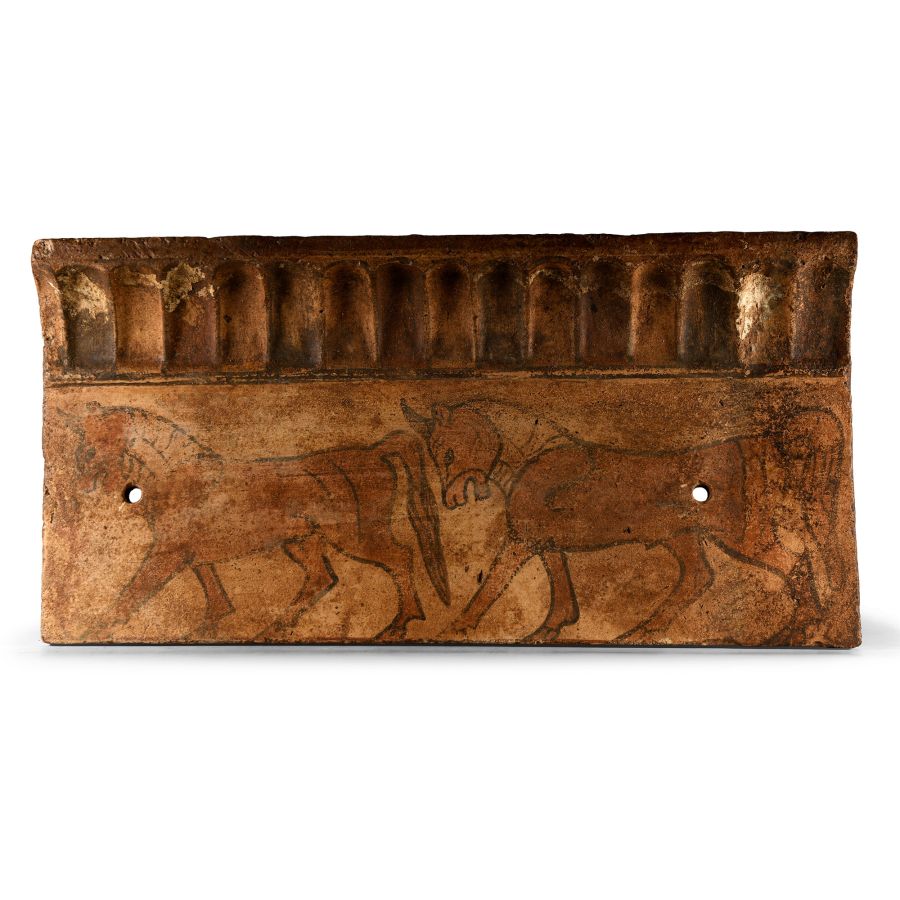
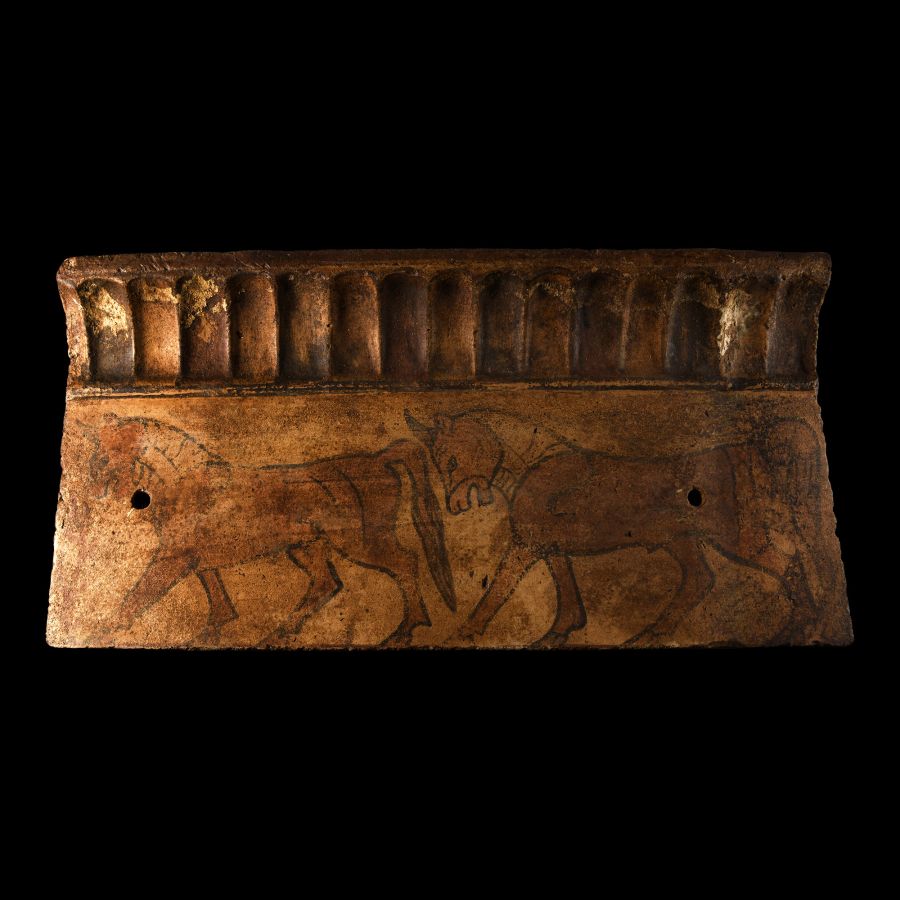
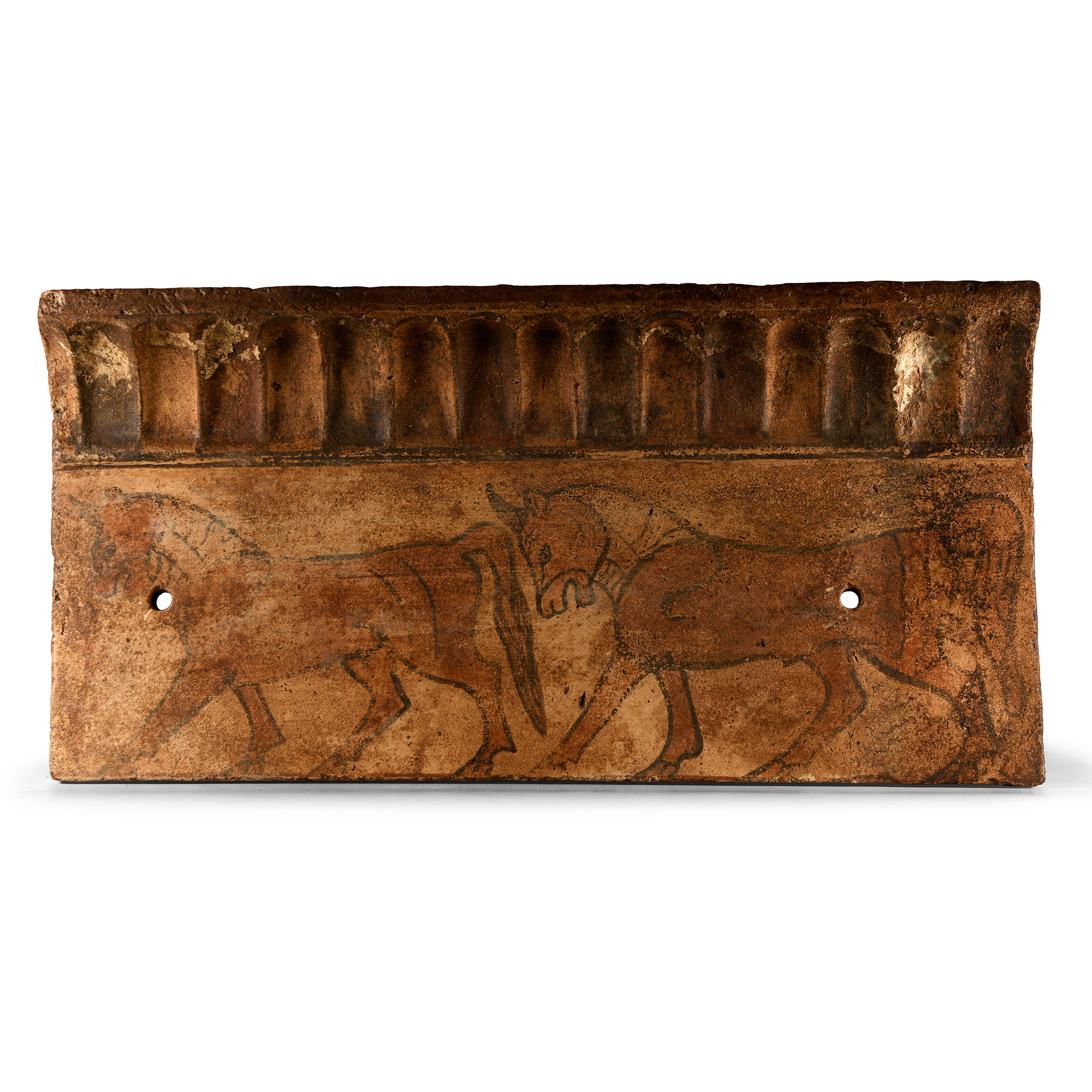
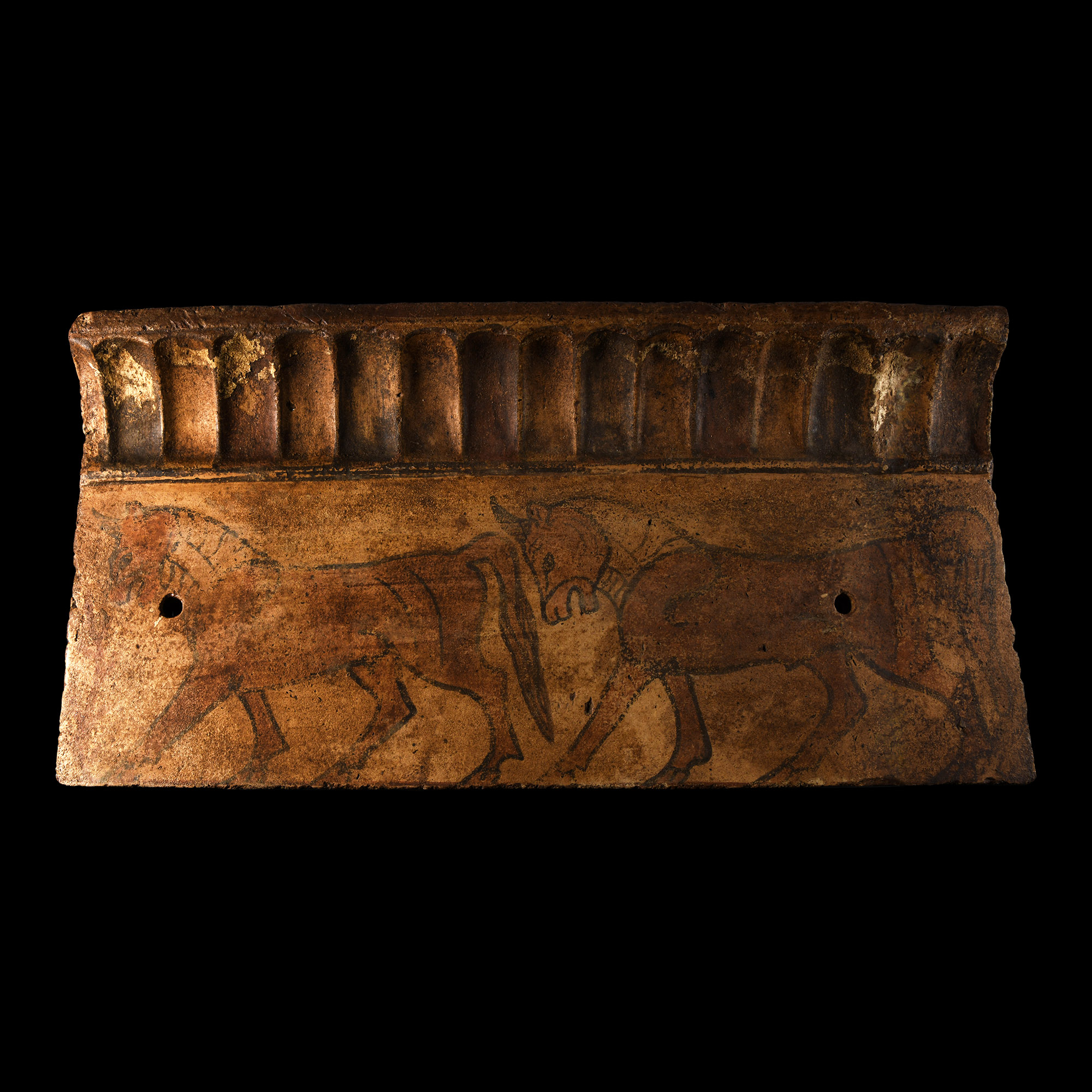
Large Etruscan Cornice Section
6TH CENTURY B.C.
19 1/2 in. (4.66 kg, 50 cm).
For a temple pediment (sima), comprising a curved upper band with polychrome tongue-shaped grooves, a relief depicting a procession of bulls below, the bulls depicted in a dynamic pose with curving necks and raised tails, the horns painted in black; two attachment holes.
ProvenanceAcquired on the European art market between 1960s-1980s.
Property of a gentleman.
with Bertolami Fine Arts Ltd, Auction 66, no.1.
Accompanied by an academic report by Dr Raffaele D’Amato.
This lot has been checked against the Interpol Database of stolen works of art and is accompanied by search certificate number no.12162-218594.
This lot has been cleared against the Art Loss Register database, and is accompanied by an illustrated lot declaration signed by the Head of the Antiquities Department, Dr Raffaele D’Amato.
Cf. Torelli, M., Gli Etruschi, Cinisello Balsamo, 2000, p.597 (Campana Plaques), for similar architectural examples; Wikander, O., 'The Archaic and Etruscan Sima' in De Puma, D., Penny Small, J., Murlo and the Etruscans, Art and Society in Ancient Etruria, London, 1994, pp.47-63, figs.48-49-50; see also Etruscan painted terracotta revetment plaques with chariot processions and running dogs from the Vigna Marini-Vitalini urban sanctuary, Caere, inv.no. HIN 29-30.
FootnotesTerracotta plaques like this sima were used in the pediments of temples (Minerva at Veii, Portonaccio Sanctuary, 540-530 BC), or decorated the architecture of tombs. The procession of the bulls recalls the style of painting on a similar slab with a procession of hunting dogs, probably from Caere.
CONDITIONTimeLine Auctions follows a vetting process to ensure the authenticity and legality of all items, reinforcing our commitment to integrity and responsible trading. Each antiquity, antique, and coin lot undergoes thorough examination by a vetting committee of at least ten external specialists, professional trade association members, scientists, and archaeologists: Our Vetting Process
AUCTIONS:
TimeLine is a leading auction house specialising in antiquities, ancient art, collectables, natural history, coins, medals, and books. Our auctions offer museums, collectors, historians, and enthusiasts the opportunity to acquire unique and historically significant pieces.
-
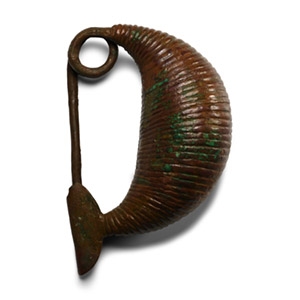
Greek Sanguisuga Bronze Fibula
Italic, 7th century B.C.Sold for (Inc. bp): £260
A 'sanguisuga' (leech) fibula with hollow, vertically ribbed bow; integral coiled spring and ellipsoid catchplate; loose contents suggests an additional function as a rattle, perhaps in a cultic context; pin restored. 166 grams, 89 mm
W. Rosenbaum, Ascona, before 1984. Accompanied by a copy of an Art Loss Register certificate no.S00091285. This lot is accompanied by an illustrated lot declaration signed by the Head of the Antiquities Department, Dr Raffaele D’Amato. -
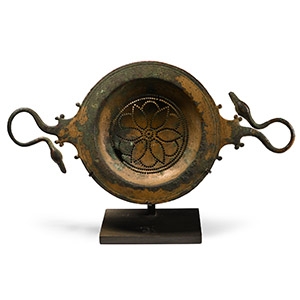
Greek Gilt Bronze Wine Strainer with Swan-Head Handles
4th-3rd century B.C.Estimate: £8,000 - 10,000 (‡+bp*)
Opening Bid: £4,000
Comprising a shallow bowl and broad flange rim, two integral scalloped handles with lateral scrolled flourishes, each tapering to a S-curved handle with swan-head terminals with incised eye and beak detailing; perforated whirl within roundel to interior base; accompanied by a custom-made display stand with mirror. 402 grams total, 19.7 cm including stand
with Hôtel des ventes de Belfort Sarl, October 2011, no.16. Acquired by the present owner at the above sale. Accompanied by an academic report by Dr Raffaele D'Amato. This lot has been checked against the Interpol Database of stolen works of art and is accompanied by search certificate number no.12209-222140. This lot has been cleared against the Art Loss Register database, and is accompanied by an illustrated lot declaration signed by the Head of the Antiquities Department, Dr Raffaele D’Amato.
Elaborate gilded strainers, such as this present example, were used at symposia and festive occasions for the purpose of preventing the dregs of wine from entering the wine cup. This and other related silver utensils became popular in the later 4th and 3rd century B.C. These highly decorated wine strainers were fitted with dual handles forming loops in the shape of twisting animals, here a swan. Usually they took the form of a shallow dish complete with four rings of perforations in the centre in order to drain the wine. Strainers of this type were used to separate out sediments which could be found in the thick Greek wine. Examples similar to this one have been found in royal tombs in northern Greece, as well as the tomb of a monarch in Sudan. -
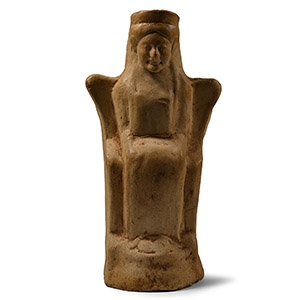
Archaic Greek Terracotta Seated Goddess
5th century B.C.Sold for (Inc. bp): £572
Depicting the goddess seated on a high-backed throne and wearing a long dress, her hands resting on the lap. 412 grams, 18.2 cm
Acquired in Europe before 1996. This lot is accompanied by an illustrated lot declaration signed by the Head of the Antiquities Department, Dr Raffaele D’Amato.
The typical 5th century B.C. terracotta female figurine was a standing or seated woman wearing a chiton and a himation. It usually represented the goddess Demeter, and it was a votive figure offered to the shrines or temples. Attica was one of the principal centres of figurine production, but Corinth continued to produce solid standing or seated females with moulded fronts and flat backs.
