
Loading, please wait...
LOT 0045
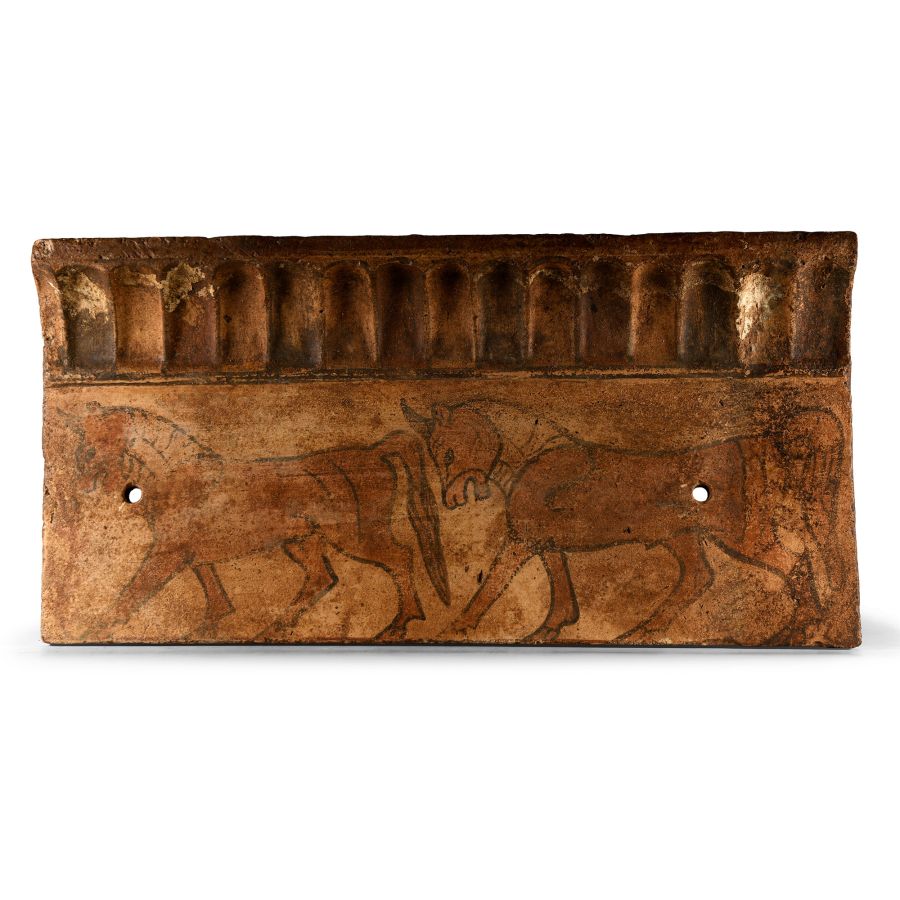
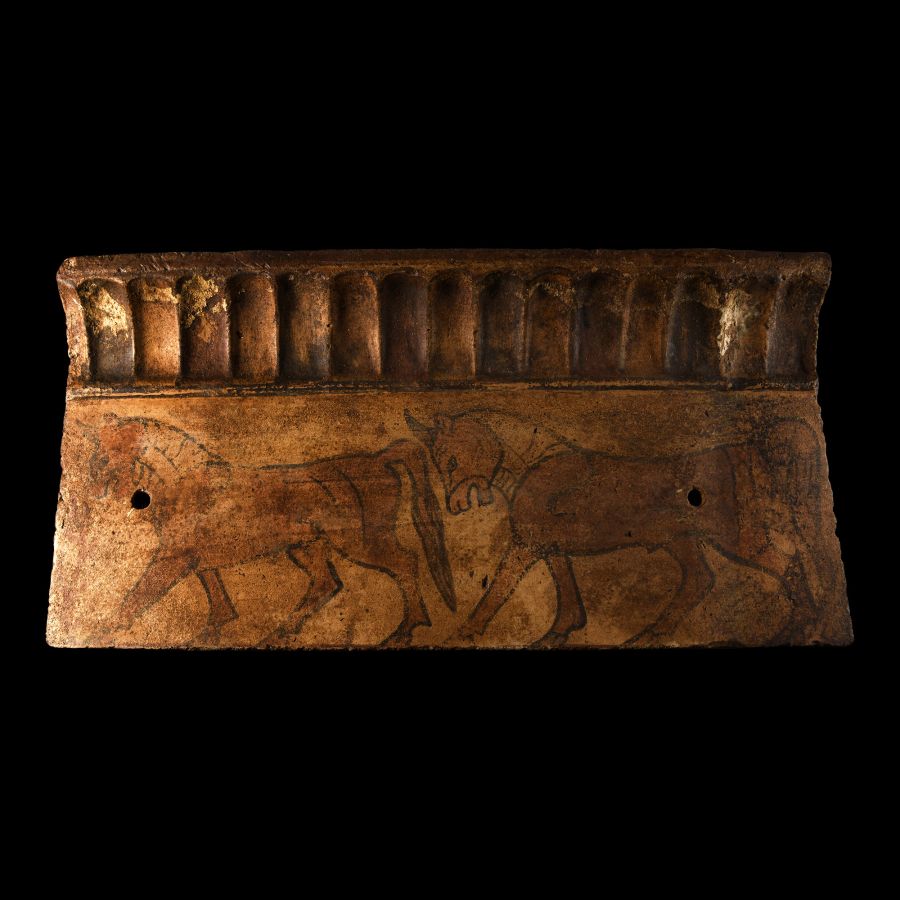
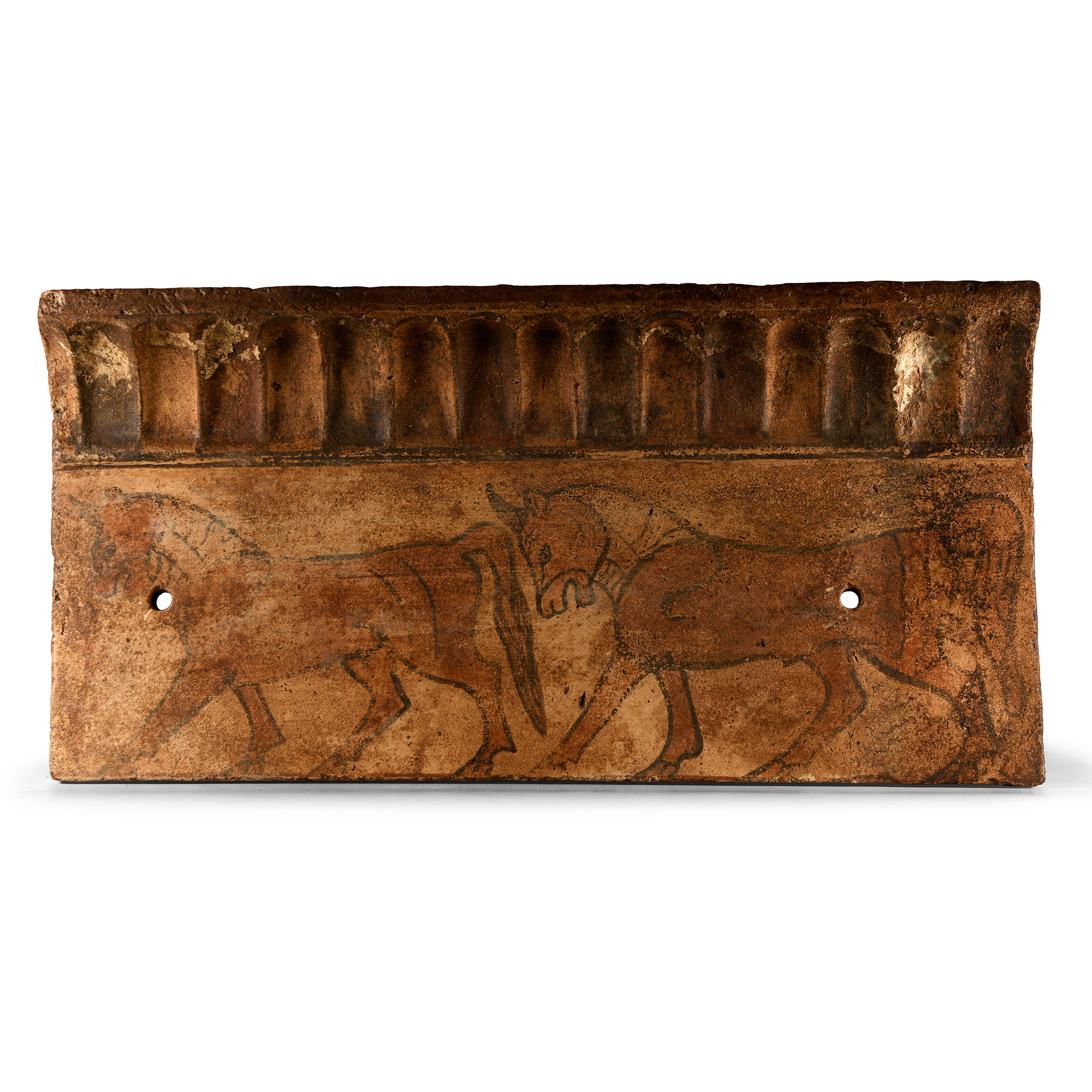
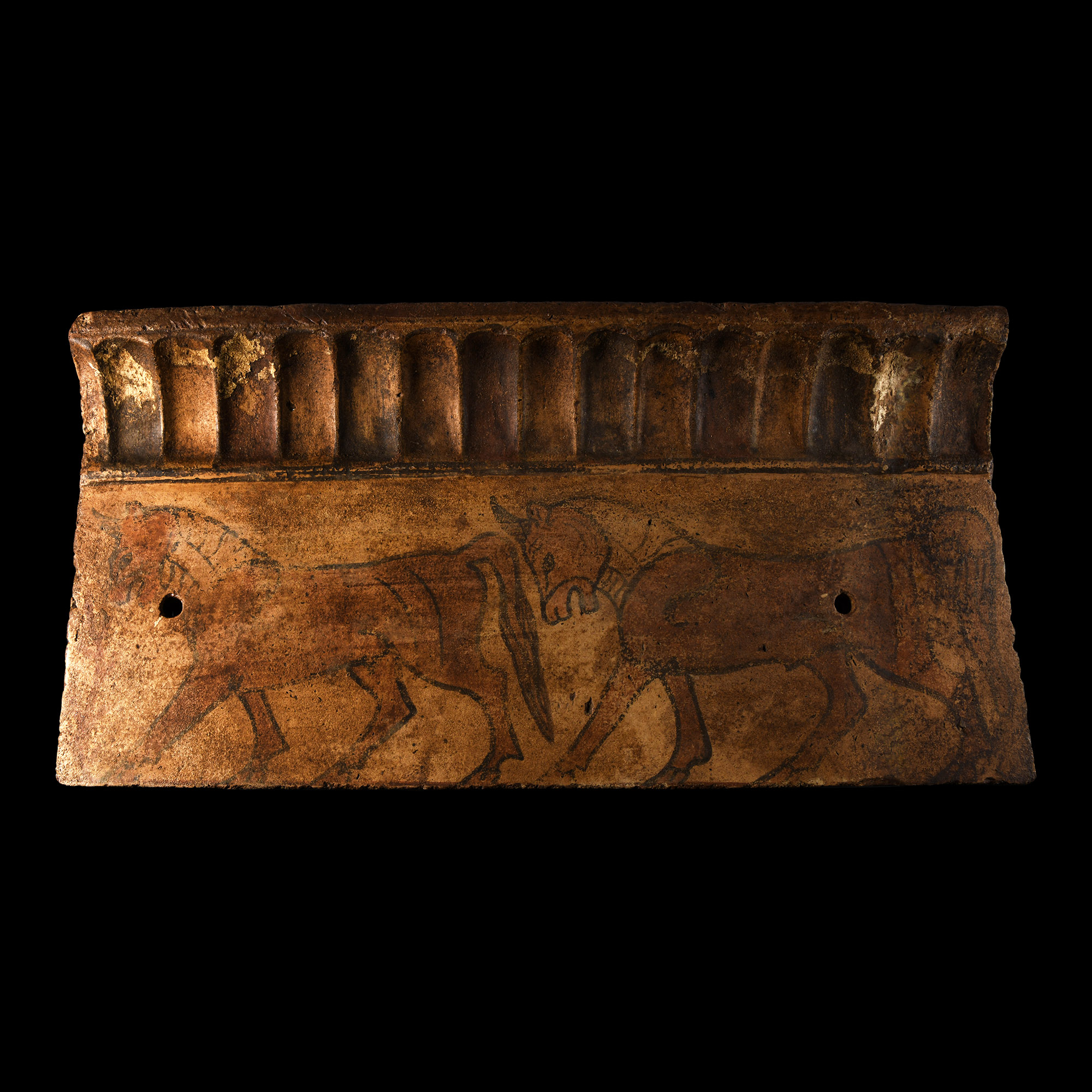
Large Etruscan Architectural Plaque with Bulls
6TH CENTURY B.C.
19 1/2 in. (4.66 kg, 50 cm).
For a temple pediment (sima), comprising a curved upper band with polychrome tongue-shaped grooves, a relief depicting a procession of bulls below, the bulls depicted in a dynamic pose with curving necks and raised tails, the horns painted in black; two attachment holes.
ProvenanceAcquired on the European art market between 1960s-1980s.
Property of a gentleman.
with Bertolami Fine Arts Ltd, Auction 66, no.1.
Accompanied by an academic report by Dr Raffaele D’Amato.
This lot has been checked against the Interpol Database of stolen works of art and is accompanied by search certificate number no.12162-218594.
Cf. Torelli, M., Gli Etruschi, Cinisello Balsamo, 2000, p.597 (Campana Plaques), for similar architectural examples; Wikander, O., 'The Archaic and Etruscan Sima' in De Puma, D., Penny Small, J., Murlo and the Etruscans, Art and Society in Ancient Etruria, London, 1994, pp.47-63, figs.48-49-50; see also Etruscan painted terracotta revetment plaques with chariot processions and running dogs from the Vigna Marini-Vitalini urban sanctuary, Caere, inv.no. HIN 29-30.
FootnotesTerracotta plaques like this sima were used in the pediments of temples (Minerva at Veii, Portonaccio Sanctuary, 540-530 BC), or decorated the architecture of tombs. The procession of the bulls recalls the style of painting on a similar slab with a procession of hunting dogs, probably from Caere.
CONDITIONTimeLine Auctions follows a vetting process to ensure the authenticity and legality of all items, reinforcing our commitment to integrity and responsible trading. Each antiquity, antique, and coin lot undergoes thorough examination by a vetting committee of at least ten external specialists, professional trade association members, scientists, and archaeologists: Our Vetting Process
AUCTIONS:
TimeLine is a leading auction house specialising in antiquities, ancient art, collectables, natural history, coins, medals, and books. Our auctions offer museums, collectors, historians, and enthusiasts the opportunity to acquire unique and historically significant pieces.
LOT 0045
Large Etruscan Architectural Plaque with Bulls
Estimate £5,000 - 7,000€5,800 - 8,120 (for guidance only)$6,750 - 9,450 (for guidance only)
-
Greek Gold Figure of Nike from a Monumental Funerary Wreath
South Italian, 4th century B.C.Sold for (Inc. bp): £14,040
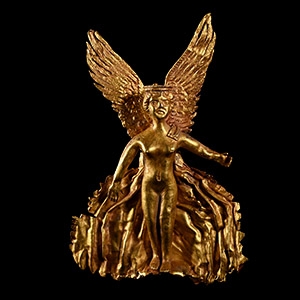
Formed as a composite figurine comprising: hollow-formed nude female figure with left arm extended to her side and fingers curled inwards, right hand at her side, hair drawn up in a chignon surmounted by an applied beaded-wire diadem; two sub-triangular wings each attached to the shoulder blades, with repoussé feather detailing to the obverse; broad D-shaped panel attached to the waist and rear of the legs, with radiating arch detailing; supplied with a custom-made display stand. 56 grams total, 92 mm including stand
Focquaert collection, Belgium, 1970s. European private collection. Accompanied by an academic report by Dr Raffaele D'Amato. This lot has been checked against the Interpol Database of stolen works of art and is accompanied by search certificate number no.12220-222337.
Similar statuettes were surmounting huge funerary wreaths, like the one from Armento (325-300 B.C. made in Southern Italy). The wreaths, composed of golden flowers, leaves, fruits, bees and Erotes, have a winged goddess, with all probability Nike, the Greek goddess of victory, as the central motif. It is possible that the wreath was given to the deceased as a prize after a successful competition, but the dimensions of the Nike show that it was an extremely rare artefact. These costly objects were financed by rich and powerful Mecenates, like Kreithonios, named in the inscription on the base of Nike from Armento. -
Greek Geometric Terracotta Vessel
Iron Age, 8th-7th century B.C.Sold for (Inc. bp): £59
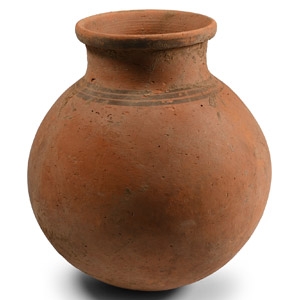
With bulbous body and rounded base; short neck with everted rim, three painted circumferential bands below the neck. 562 grams, 17 cm
Ex London, UK, art market, 1990s. -
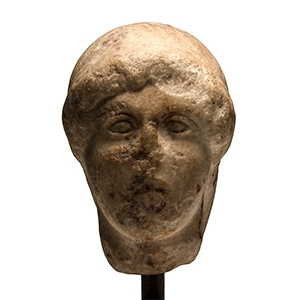
Greek Marble Head of a Youth
Early 5th century B.C.Estimate: £2,500 - 3,500 (‡+bp*)
Opening Bid: £1,200
Carved in the round; semi-naturalistic anatomic and facial detailing, hair gathered loosely at the neck and tied with a taenia knotted at the nape of the neck; mounted on a custom-made display base. 879 grams total, 18 cm high including stand
Ex old European private property, by inheritance to the previous owner. Ex Schuler Auktionen, Zürich, 10 December 2020, no.1211. Accompanied by an academic report by Dr Raffaele D’Amato. This lot has been checked against the Interpol Database of stolen works of art and is accompanied by search certificate number no.11817-206512.
The small statuette to which the head belonged was probably that of a naked youth, the so-called kouros, typical of archaic Greek sculpture from the 7th century B.C. onwards.
