
Loading, please wait...



LOT 0049
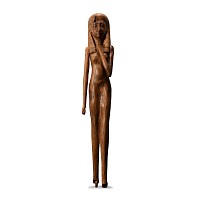
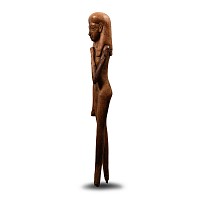
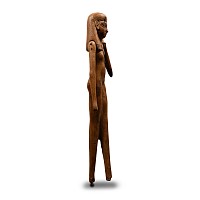
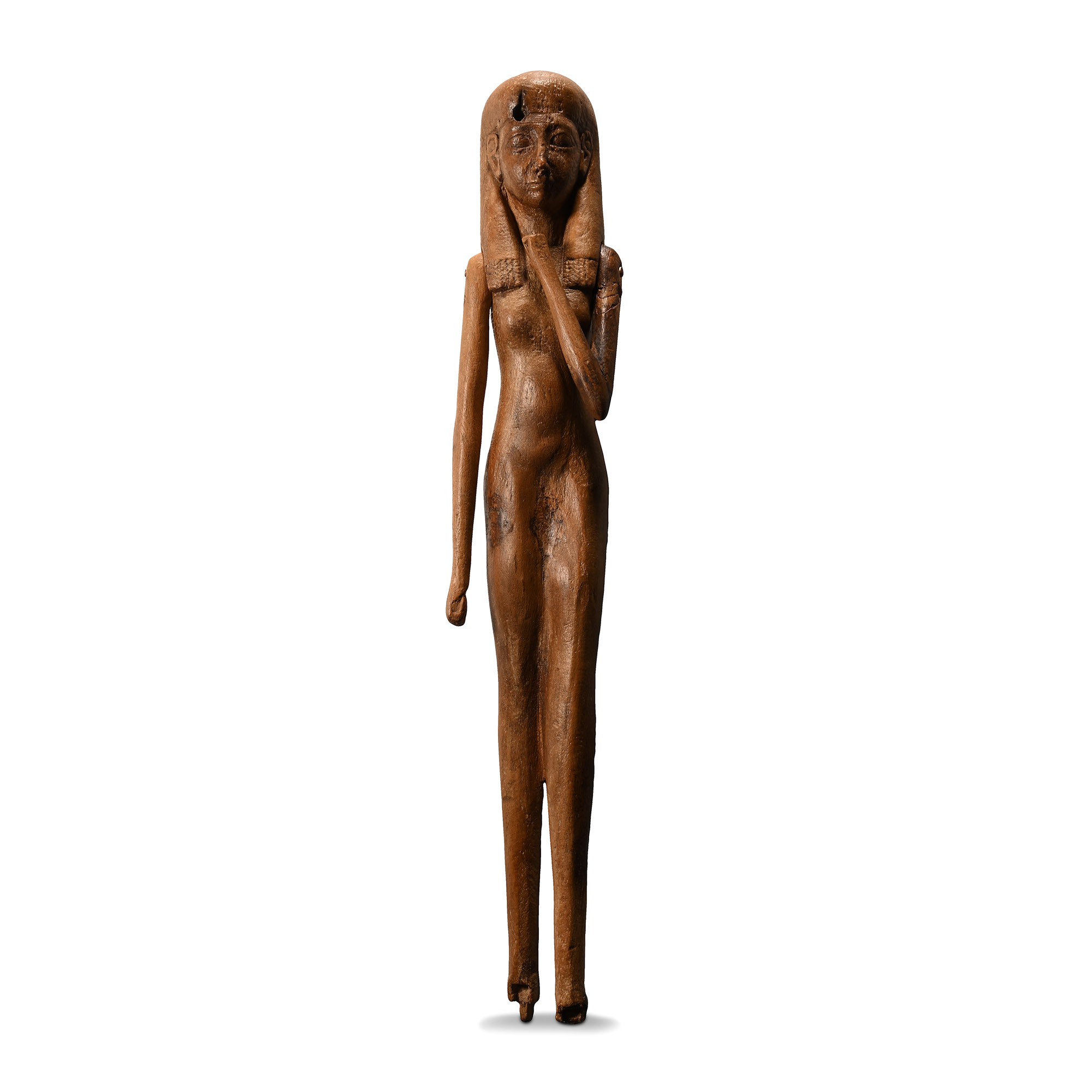
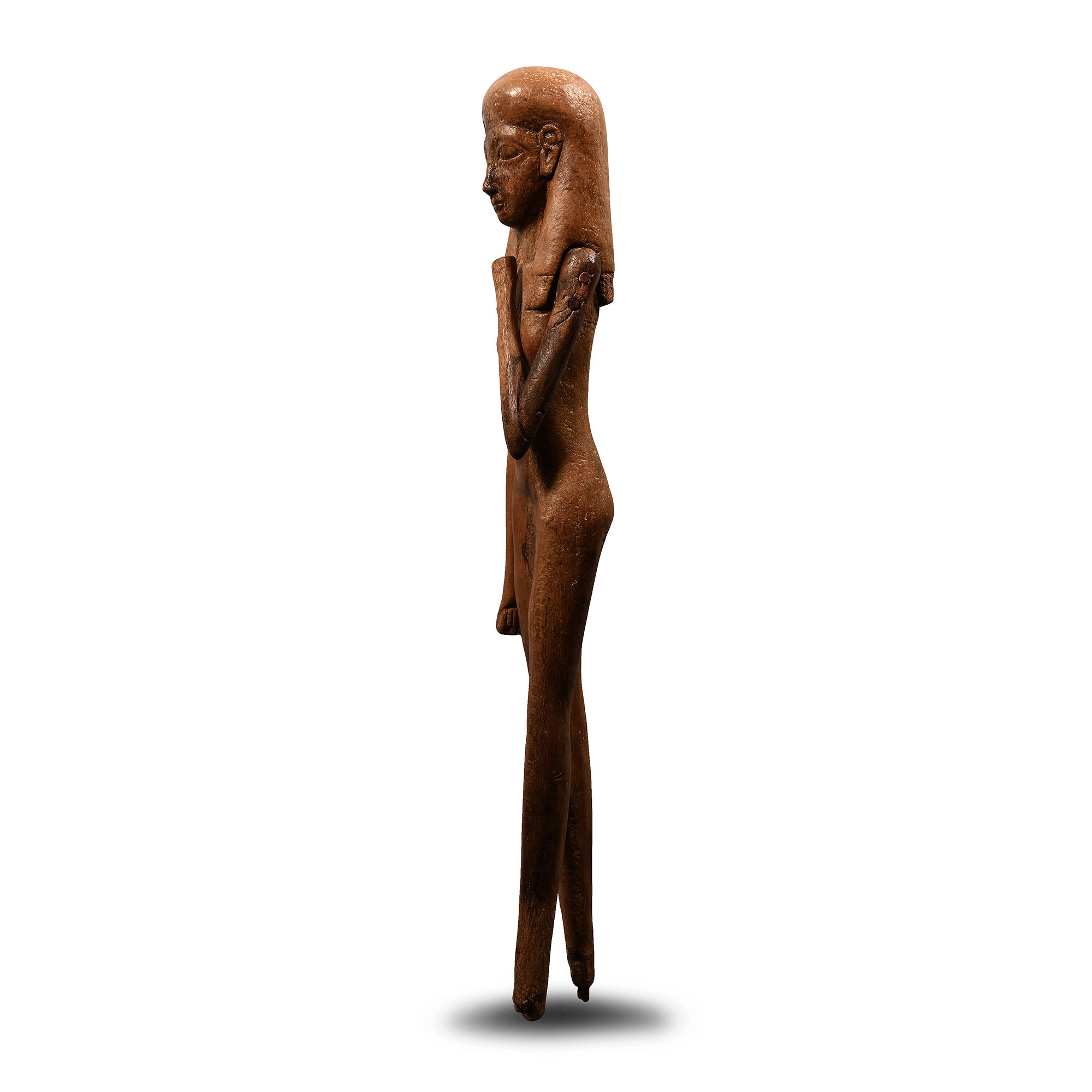
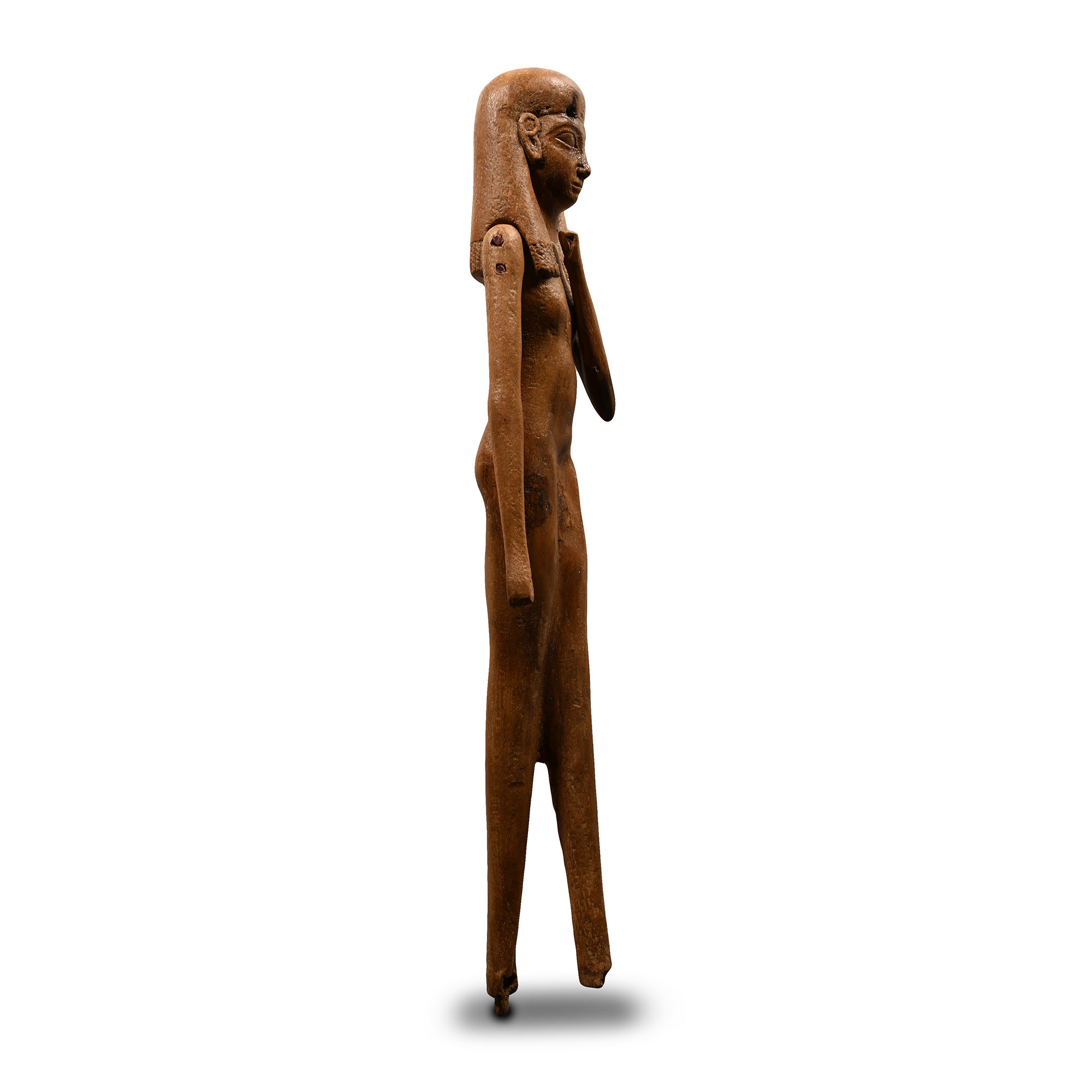
Large Egyptian Wooden Striding Female Figure
CIRCA 700 B.C. OR EARLIER
15 3/4 in. (210 grams, 40 cm).
Modelled in the round, standing nude with left leg extended, wearing a tripartite wig with beads to the lower edges, the arms modelled separately and attached, left arm bent round to the chest, right arm straight to the side; mounting peg to the right leg, feet absent.
ProvenanceAcquired on the German art market, 1989-1995.
with The Museum Gallery, 19 Bury Place, London, WC1, UK, 1998-2003.
Property of a London based academic, 2003-present.
This lot has been checked against the Interpol Database of stolen works of art and is accompanied by a search certificate number no.12377-226045.
Cf. Leibovitch, J., 'The Statuette of an Egyptian Harper and String-instruments in Egyptian Statuary', Journal of Egyptian Archaeology 46 (1960), pp.53-59, pl. XIV, 2, for an almost identical figure in the British Museum (EA 48658).
CONDITIONTimeLine Auctions follows a vetting process to ensure the authenticity and legality of all items, reinforcing our commitment to integrity and responsible trading. Each antiquity, antique, and coin lot undergoes thorough examination by a vetting committee of at least ten external specialists, professional trade association members, scientists, and archaeologists: Our Vetting Process
AUCTIONS:
TimeLine is a leading auction house specialising in antiquities, ancient art, collectables, natural history, coins, medals, and books. Our auctions offer museums, collectors, historians, and enthusiasts the opportunity to acquire unique and historically significant pieces.
-
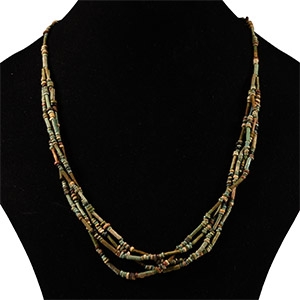
Egyptian Multi-Stranded Faience Mummy Bead Necklace
Late Period, 664-332 B.C.Sold for (Inc. bp): £234
Multi-stranded designer necklace composed of beads of mainly annular and tubular types. 21 grams, 72 cm long
Acquired before 1979. From the private collection of Mr F.A., South Kensington, London, UK; thence by descent 2014.
For thousands of years, artisans in Egypt created vibrant ceramics to echo the beauty of rare jewels. These ornaments were created with almost every material, colour, and texture imaginable and they come from across Egypt and beyond: vibrant blue lapis lazuli from Afghanistan, glossy black obsidian from Turkey, and aqua-green turquoise from the Sinai. They were worn in life and, after death, they served as precious ornamentation for mummies. -
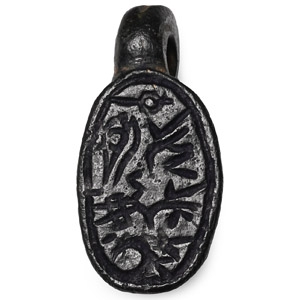
Phoenician Bronze Black Scaraboid Pendant
1st millennium B.C.Sold for (Inc. bp): £208
Smooth-fronted with a sturdy suspension loop at the top, the back incised with various signs, comprising a nefer hieroglyph, an eye, a quadruped, a standing figure with a headdress, and a sun disc. 7.7 grams, 25 mm
From the collection of a gentleman, acquired on the London art market in the 1990s. -
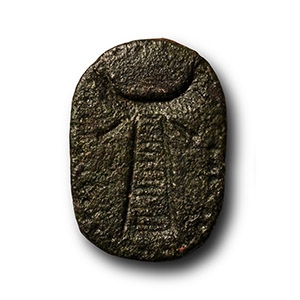
Phoenicio-Egyptian Dark Green Stone Scarab
Circa 6th-4th century B.C.Estimate: £250 - 350 (+bp*)
Opening Bid: £139
With textured carapace, bull-horned column to the reverse. 3.94 grams, 15 mm
From the property of the late Mr SM, London, UK, 1969-1999.
The widespread adoption of the scarab, both as a symbol linked to the concept of rebirth, and in its function as a seal, exemplifies the extent of Egyptian influence on Phoenician culture, from its origins in the Levant to its spread across the Mediterranean.
