
Loading, please wait...


LOT 0640
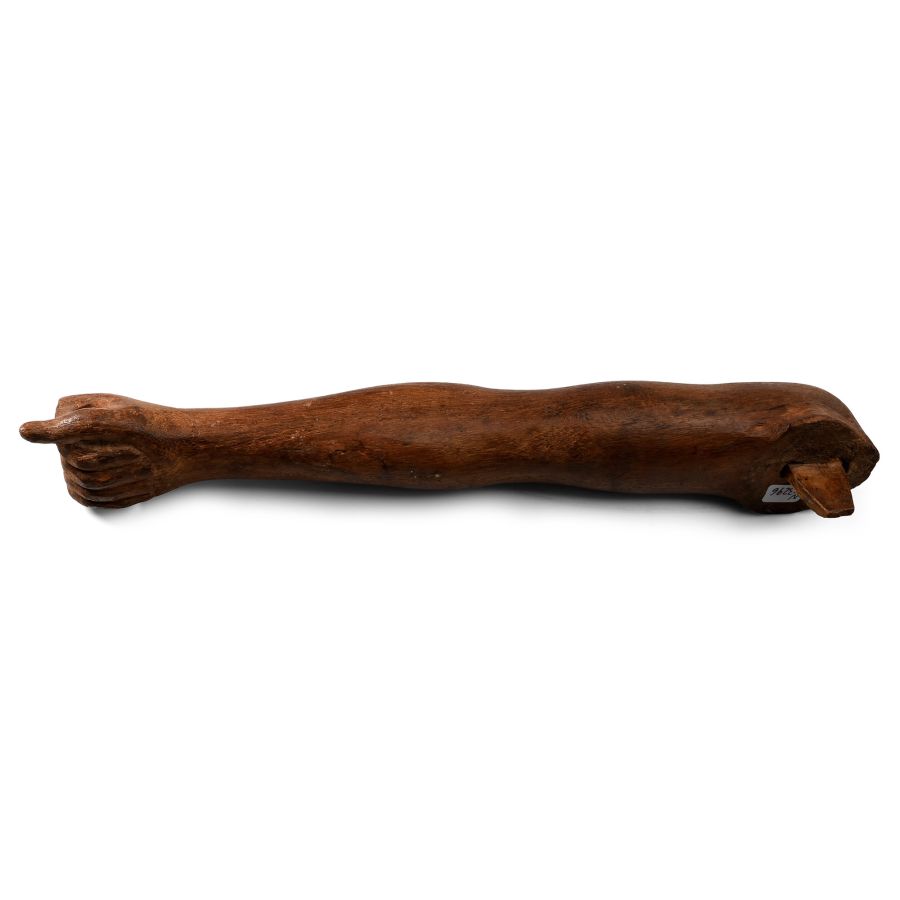
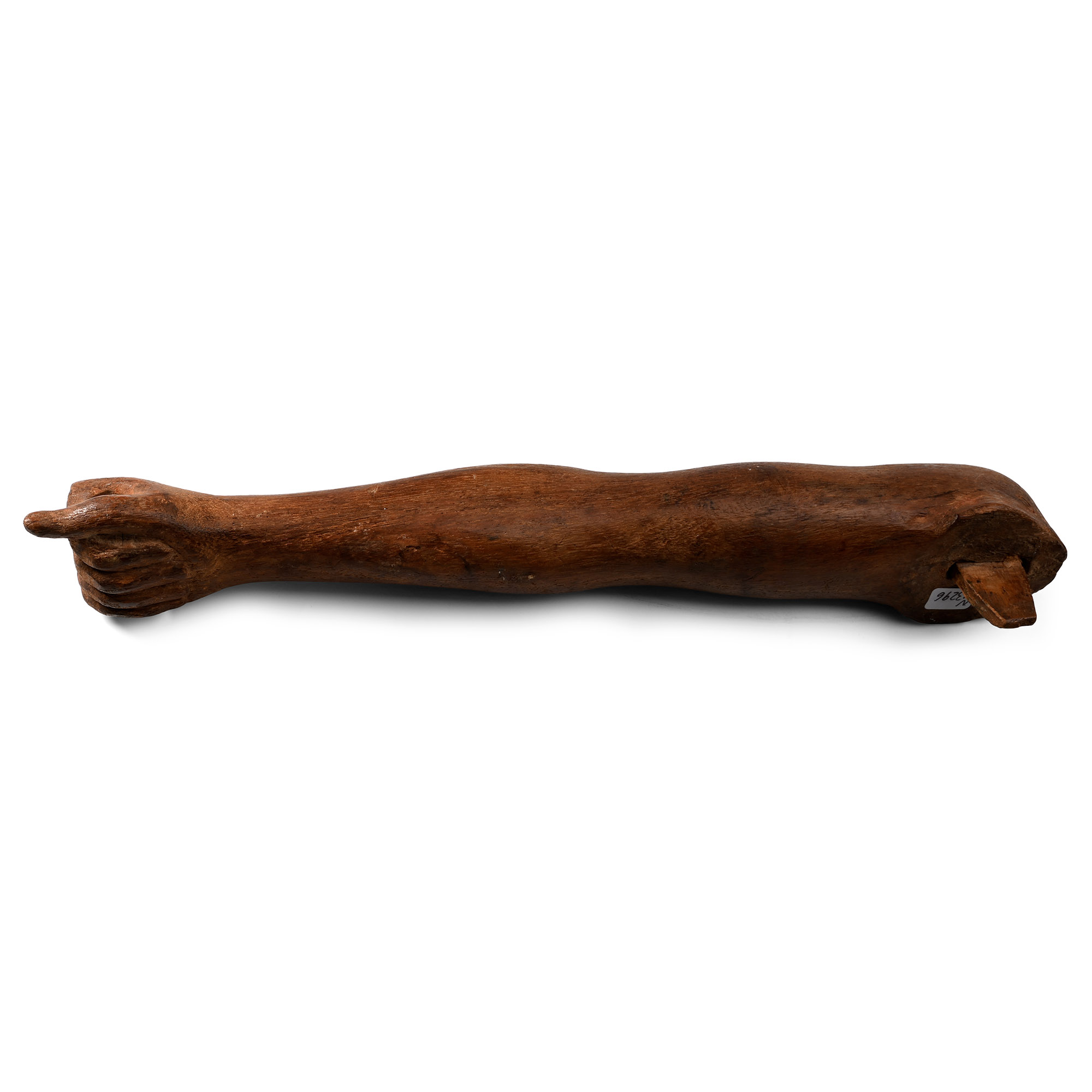
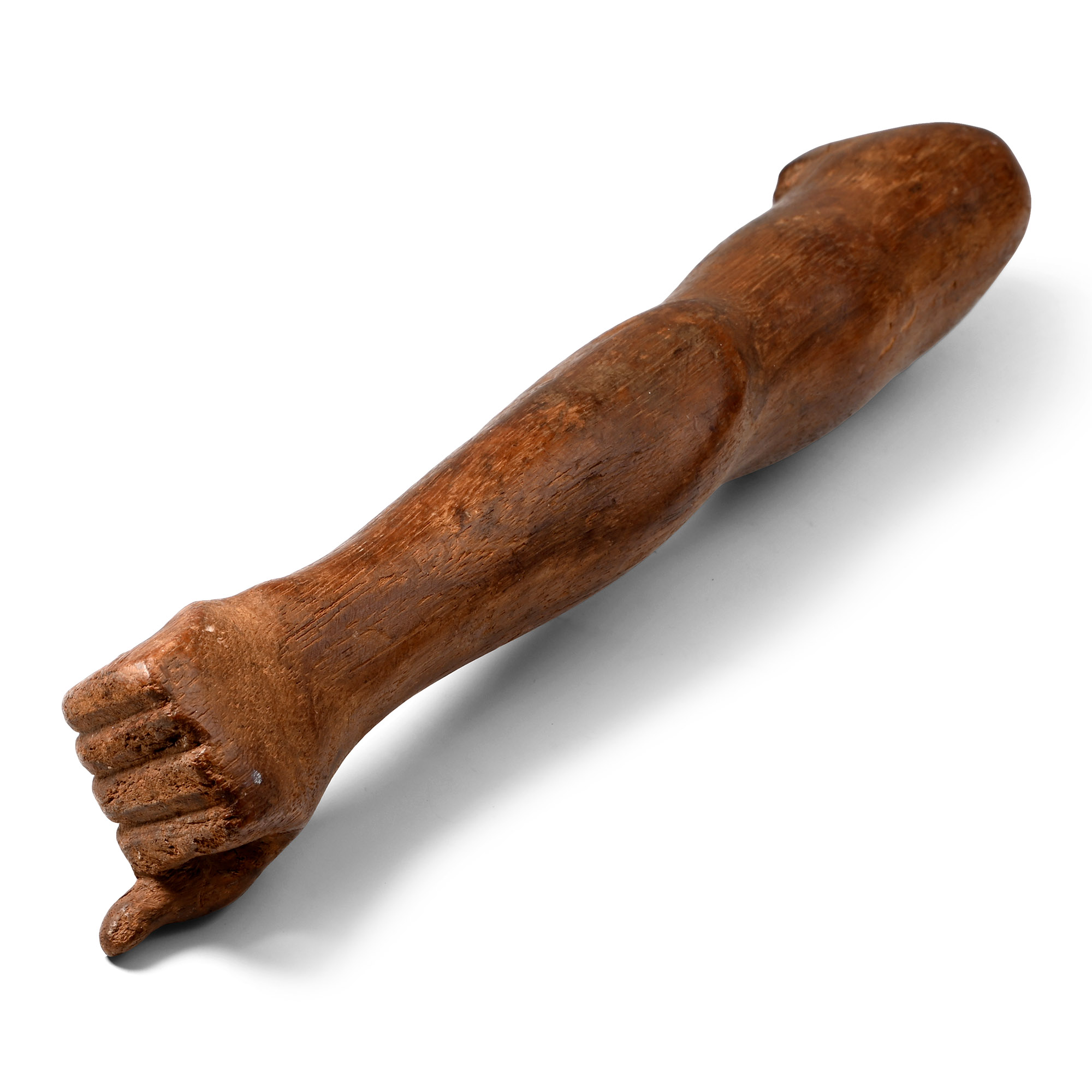
Large Egyptian Wooden Right Arm from Male Statuette
OLD KINGDOM, 2700-2200 B.C.
10 5/8 in. (160 grams, 27 cm).
Carved in acacia wood and preserved in its entirety, from an under-life-size male statuette; slender fingers forming a fist and originally holding a tool; attachment tenon at the inner shoulder.
ProvenanceEx Galerie Cybele, Paris, acquired in 1999.
with Binoche et Giquello auction, Paris, 20 March 2017, no.88.
This lot has been checked against the Interpol Database of stolen works of art and is accompanied by search certificate no.13474-263055.
Separately manufactured arms did not need to touch the body's sides or be stabilised by bars. Thus, the figure, which presumably stood upright with one leg advanced, was given a freer and more lifelike appearance.
CONDITIONTimeLine Auctions follows a vetting process to ensure the authenticity and legality of all items, reinforcing our commitment to integrity and responsible trading. Each antiquity, antique, and coin lot undergoes thorough examination by a vetting committee of at least ten external specialists, professional trade association members, scientists, and archaeologists: Our Vetting Process
AUCTIONS:
TimeLine is a leading auction house specialising in antiquities, ancient art, collectables, natural history, coins, medals, and books. Our auctions offer museums, collectors, historians, and enthusiasts the opportunity to acquire unique and historically significant pieces.
LOT 0640
Large Egyptian Wooden Right Arm from Male Statuette
Estimate £2,000 - 3,000€2,320 - 3,480 (for guidance only)$2,700 - 4,050 (for guidance only)
Opening Bid
£1,150 (EUR 1,334; USD 1,553) ‡+BP*
-
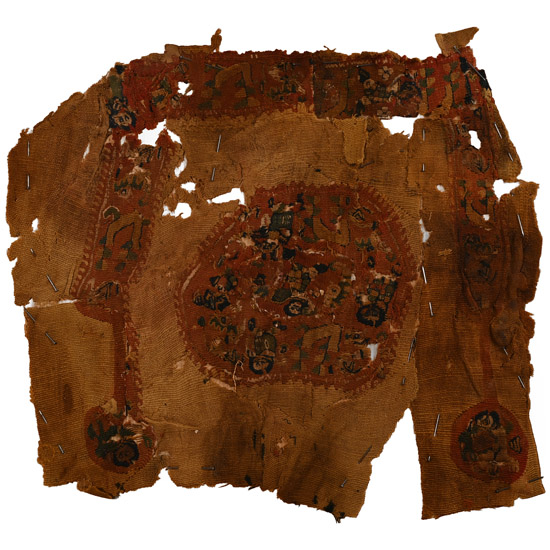
Large Egyptian Coptic Tunic Textile Fragment with Lateral Clavi and Central Orbiculus Representing Figures and Animals
Circa 6th century A.D.Estimate: £300 - 400 (+bp*)
Bids: 5 | Current Bid: £30
Larger portion of a tunic with decorative strips (clavi) ending with circular decorations (orbiculi), and central orbiculus in red, green and yellow wool, S-twist tapestry, decorated with Nilotic scenes including plants, animals, possibly human figures. 59 grams total including paper folder, 32.5 cm
Acquired 1970s-1996. Property of a North American collector. London collection, 2016.
Among the many fragments of wool tunics, there are several long strips that match to form nearly full-length central pectoral clavi and orbiculi. They are patterned with a profusion of small figures or interlaced abstract designs, birds, plants and animals, with a contrasting border filled with geometric motifs. -
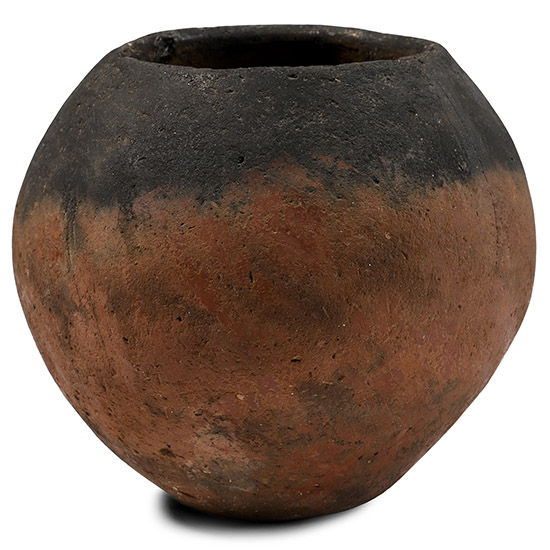
Egyptian Black-Topped Vase
Predynastic Period, Naqada II, circa 4000 B.C.Estimate: £300 - 400 (+bp*)
Bids: 3 | Current Bid: £95
Squat, spherical black-topped storage vase with a flattened base; old collector's ticket: 'Small predynastic Egyptian pot. Round form, flat bottom, usual black top and red body. From Naqada, c. 4000 B.C. Richardson St. Christopher's Mail(?), 27/10/61'. 391 grams, 10.5 cm
From the private collection of Peter Clayton, FCILIP, Dip, Arch, FSA, FRNS, Hemel Hempstead, Hertfordshire, UK; formed since the late 1950s. Accompanied by an old handwritten identification card written by Peter Clayton.
This decorative style's distinctive appearance came from an open-fire or pit-firing method in which the vessel was inverted into ash, organic matter, or smoke-heavy fuel. The buried or inverted top was starved of oxygen and turned black, while the exposed lower portion oxidised to red. -
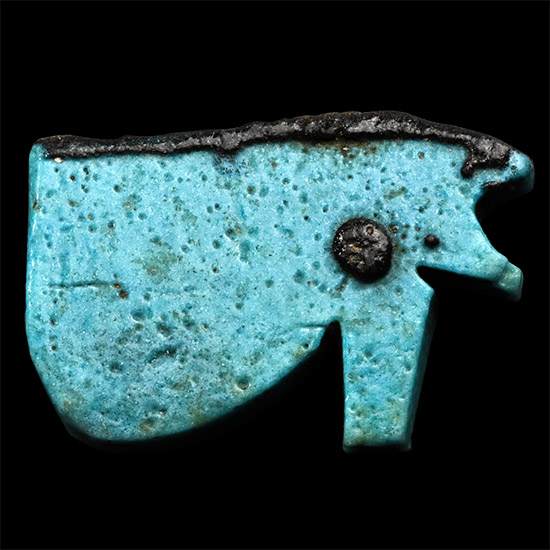
Large Egyptian Blue Glazed Faience Eye of Horus Amulet
New Kingdom-Late Period, circa 1550-332 B.C.Estimate: £500 - 700 (+bp*)
Opening Bid: £250
The body displaying the characteristic shape combining human and falcon ocular imagery, the brow and pupil detailed in black faience, pierced longitudinally for suspension. 8.34 grams, 41 mm
Early 20th century UK collection. Accompanied by a previous catalogue information page.
The wedjat-eye amulet depicts Horus’s healed eye, blending human and falconine features. Its ancient Egyptian name means ‘the one that is sound’. According to myth, Seth wounded or took the eye, and Thoth later restored it. Believed to offer protection, healing, and regeneration, the popular amulet was worn by the living and the dead.
