
Loading, please wait...


LOT 0718
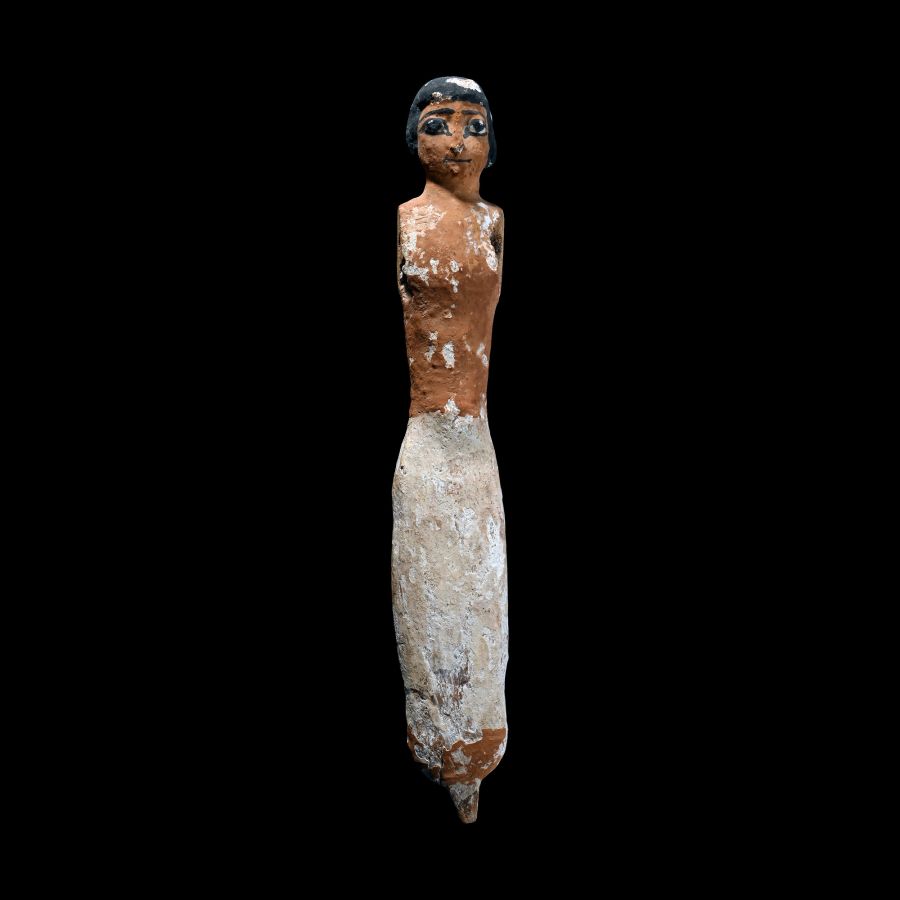
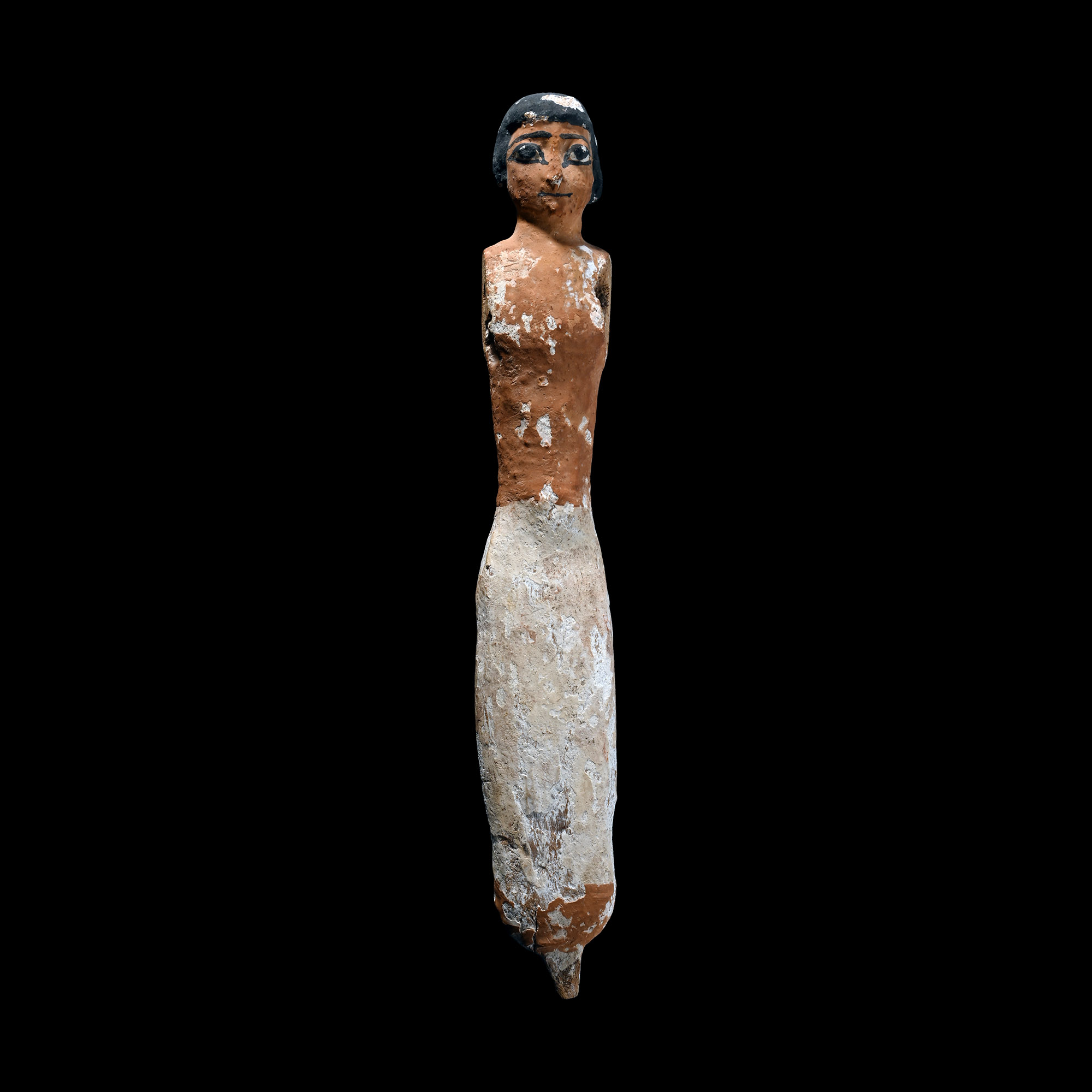
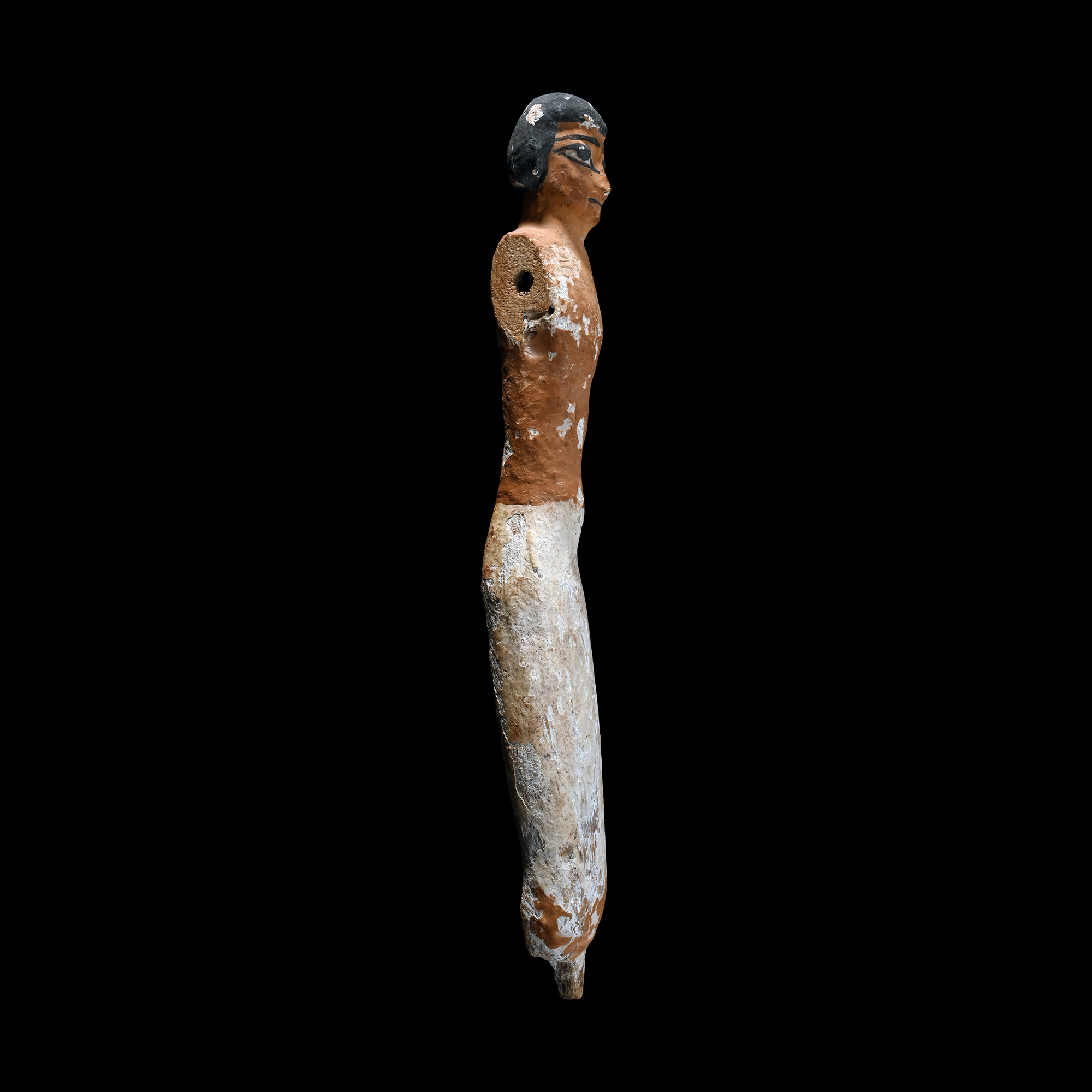
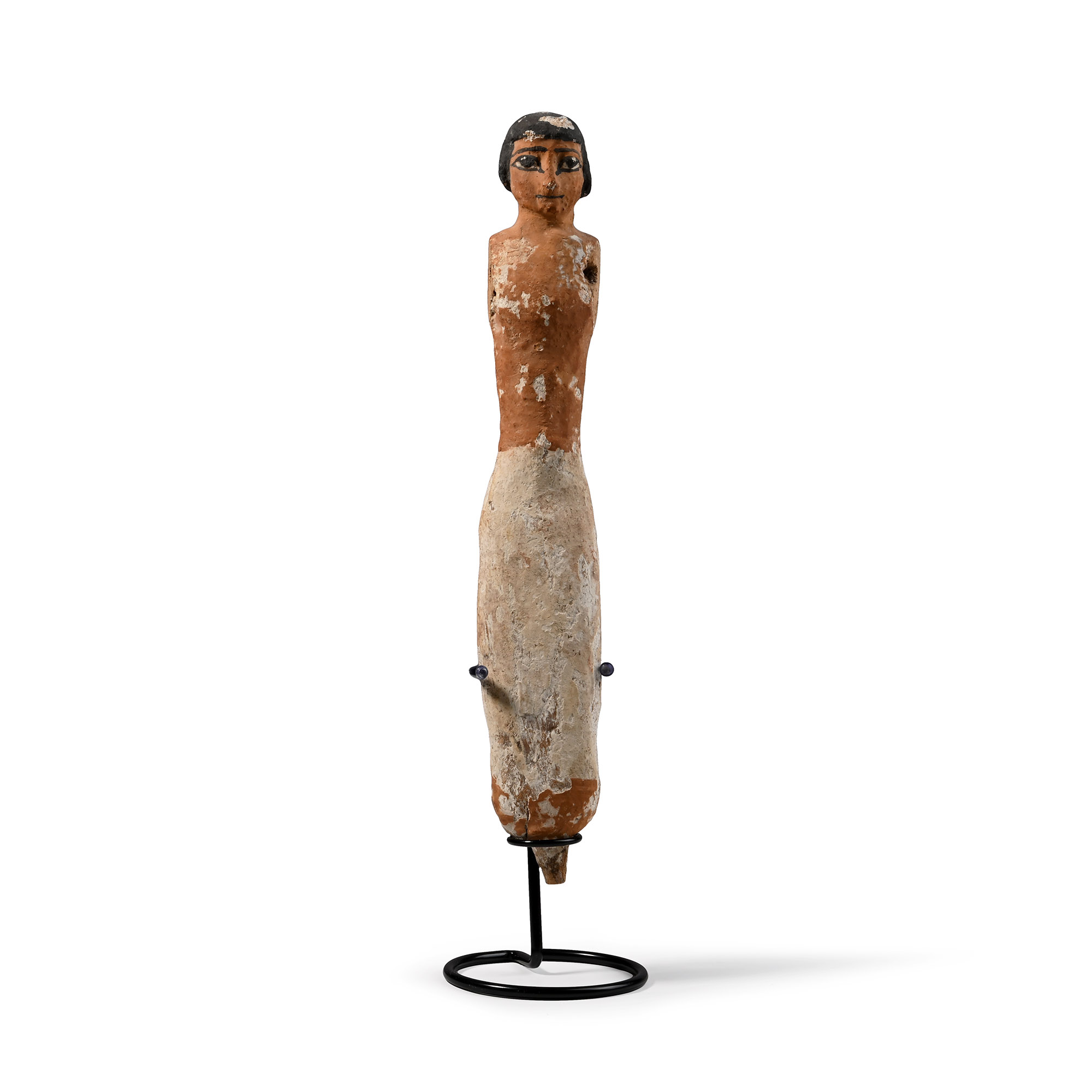
Large Egyptian Wooden Figure
MIDDLE KINGDOM, CIRCA 2050-1786 B.C.
12 5/8 in. (14 1/8 in.) (107 grams, 32.2 cm (179 grams total, 36 cm including stand)).
Funerary figure with sockets for separate pivoting arms, ankle-length kilt with peg base; painted facial details and hair; mounted on a custom-made stand.
ProvenancePreviously with Bonhams in the early 2000s.
with Lyon & Turnbull, 17 November 2022, no.545.
Property of a West Sussex, UK, gentleman.
Accompanied by a copy of the Lyon & Turnbull catalogue listing.
TimeLine Auctions follows a vetting process to ensure the authenticity and legality of all items, reinforcing our commitment to integrity and responsible trading. Each antiquity, antique, and coin lot undergoes thorough examination by a vetting committee of at least ten external specialists, professional trade association members, scientists, and archaeologists: Our Vetting Process
AUCTIONS:
TimeLine is a leading auction house specialising in antiquities, ancient art, collectables, natural history, coins, medals, and books. Our auctions offer museums, collectors, historians, and enthusiasts the opportunity to acquire unique and historically significant pieces.
LOT 0718
Large Egyptian Wooden Figure
Estimate £500 - 700€580 - 810 (for guidance only)$680 - 950 (for guidance only)
Opening Bid
£250 (EUR 290; USD 338) +BP*
-
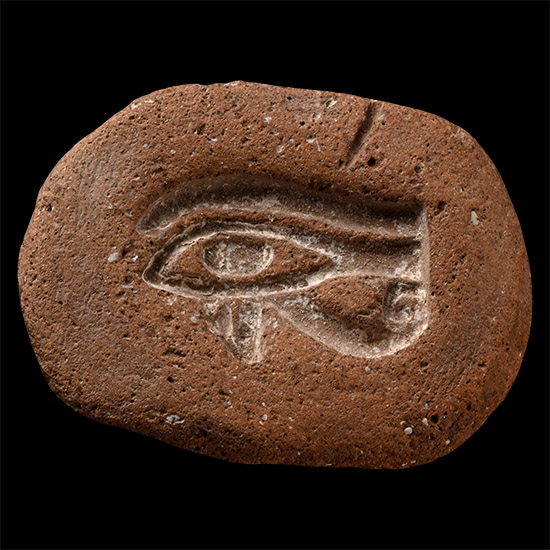
Egyptian Terracotta Mould for a Wedjat Eye
New Kingdom, 18th Dynasty, Amarna Period, 1379-1362 B.C.Estimate: £50 - 70 (+bp*)
Opening Bid: £5
Oblate terracotta mould with an impression of the 'eye of Horus' (wedjat) on one side, accompanied by an old collector's record card detailing findspot, place of purchase and other details. 8.8 grams, 36 mm
Acquired in March 1977. From the private collection of Peter Clayton, FCILIP, Dip, Arch, FSA, FRNS, Hemel Hempstead, Hertfordshire, UK; formed since the late 1950s. Accompanied by an old handwritten information card by Peter Clayton, collection no.127.
Moulds like this example were used to cast metal or faience items. When used for faience, traces of white paste often appear in the mould, suggesting that this example was used to produce faience wedjat eyes. -
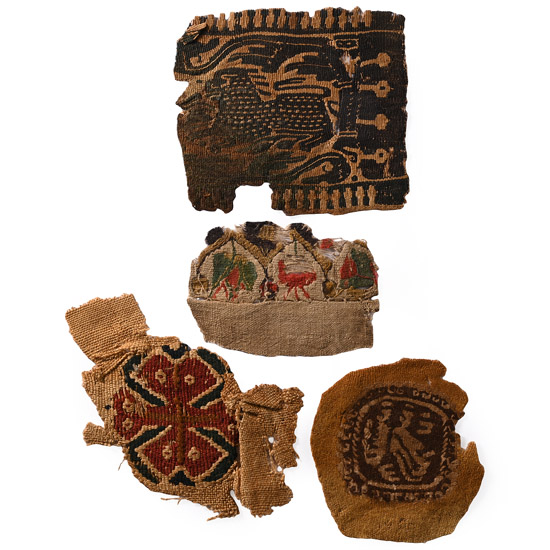
Egyptian Coptic Tunic Textile Fragments of Orbiculi and Segmenta with Vegetation, Animals and Geometric Ornament
Circa 6th-8th century A.D.Estimate: £80 - 100 (+bp*)
Opening Bid: £5
Comprising a squared tablion or fragment of clavus representing a lion with a spotted body, of Sassanid style, the frame featuring geometric patterns; an orbiculus in brown-purple over white linen, S-twist, featuring a bird, frame decorated with meanders; a fragment of textile in red, green, black and yellow wool, representing flowers; and a red and black geometric ornament featuring a type of a flower. 11.69 grams total, 8.3-11.3 cm
Acquired 1970s-1996. Property of a North American collector. London collection, 2016.
A significant feature of this group of textiles is the fragment featuring a lion; it reveals strong Sassanid influences and may date to the brief period of the Sassanid conquest of Roman Egypt, between 618 and 628 AD. -
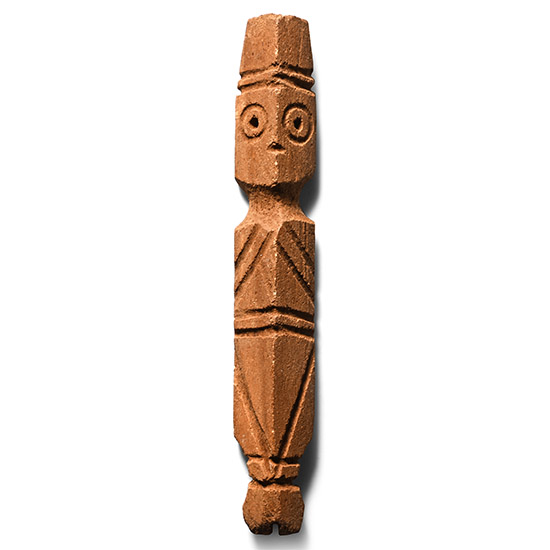
Coptic Carved Bone Doll
Circa 4th-7th century A.D.Estimate: £50 - 70 (+bp*)
Opening Bid: £5
Plano-convex in section with carinated upper face, incised linear and drilled detailing. 6.9 grams, 83 mm
From the private collection of Peter Clayton, FCILIP, Dip, Arch, FSA, FRNS, Hemel Hempstead, Hertfordshire, UK; formed since the late 1950s.
