
Loading, please wait...
LOT 0069
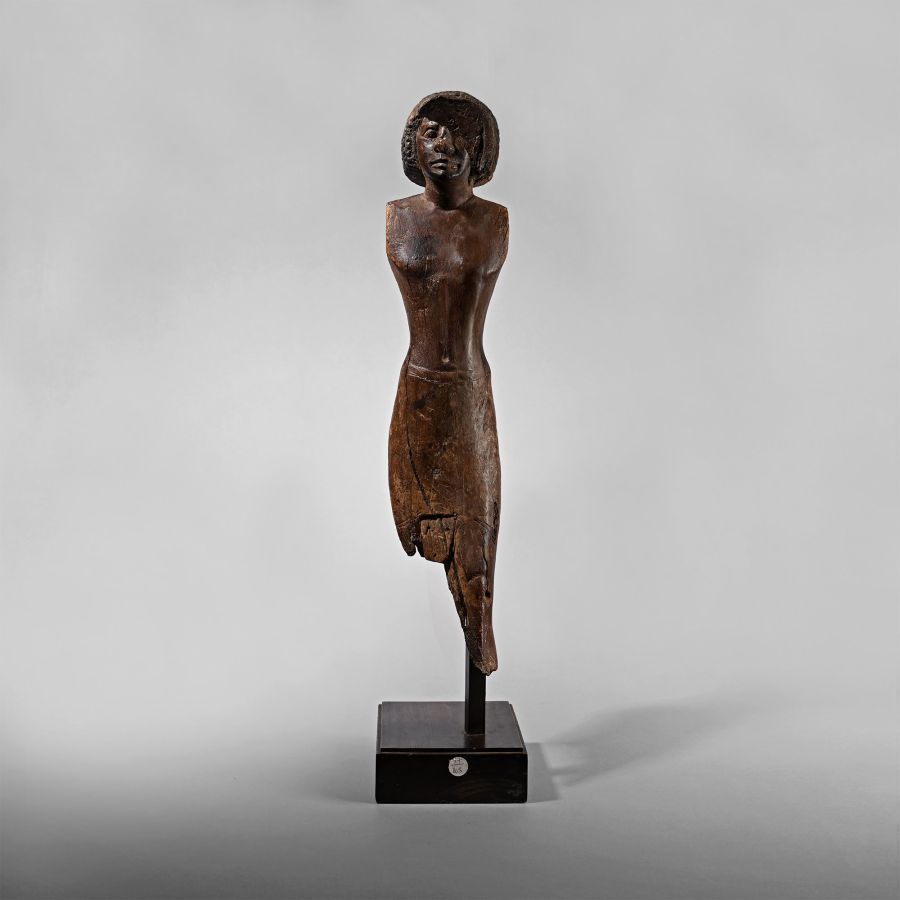
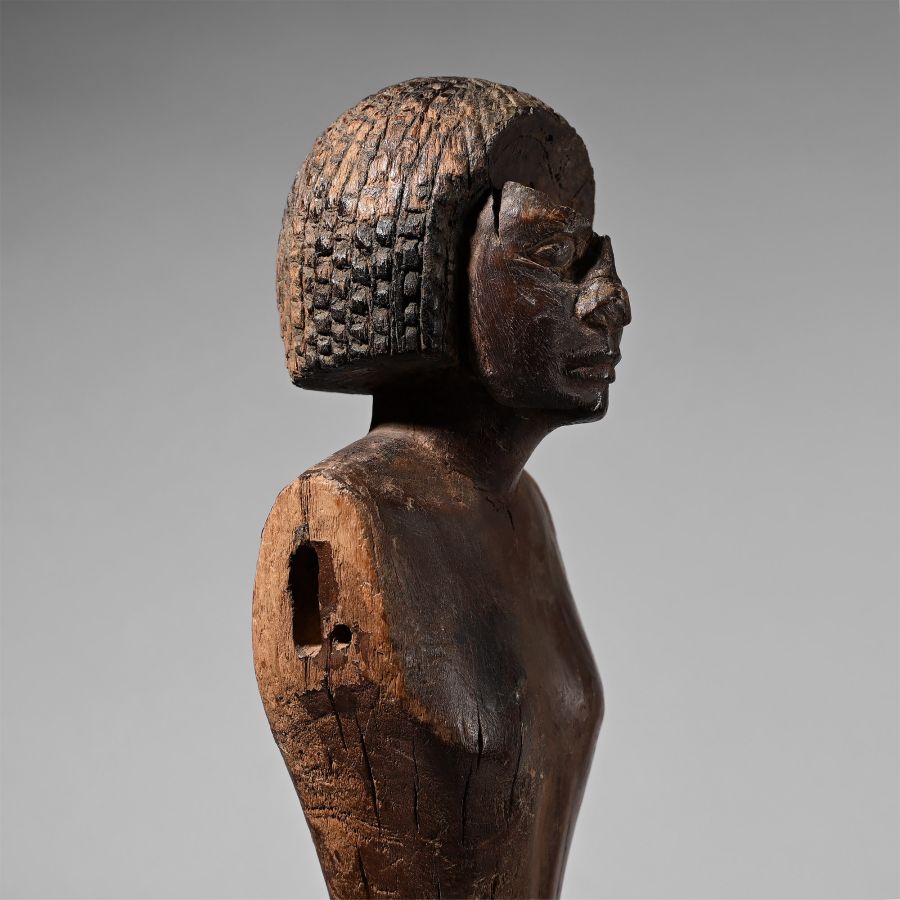
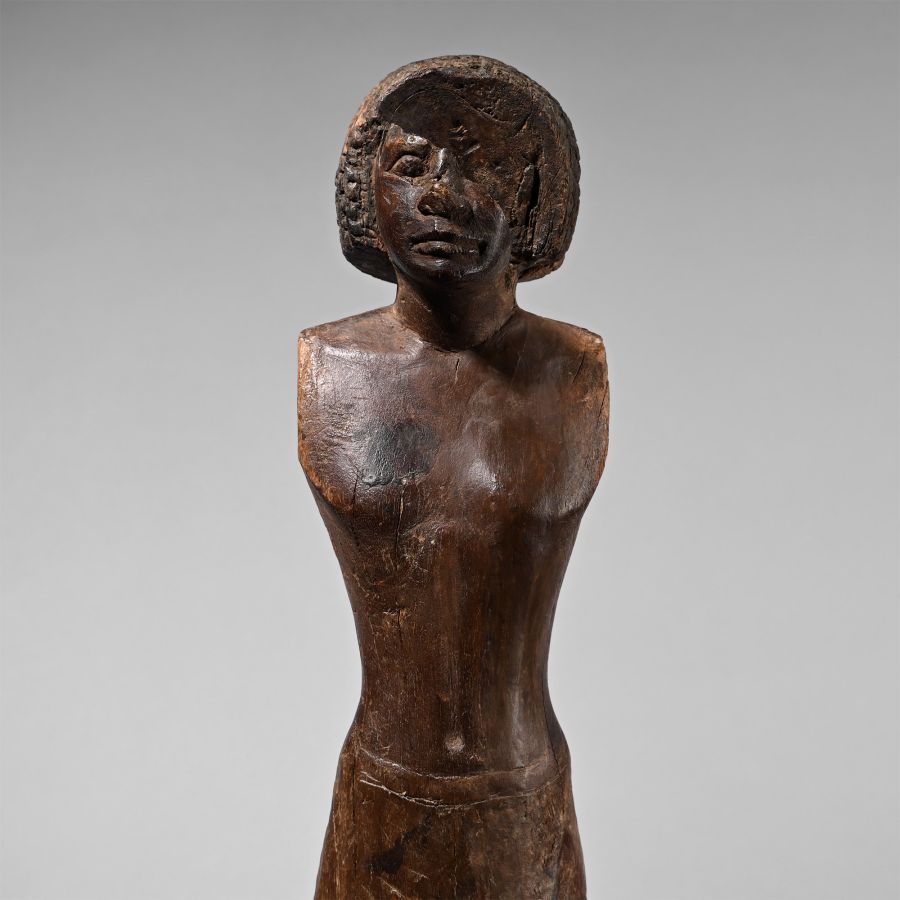
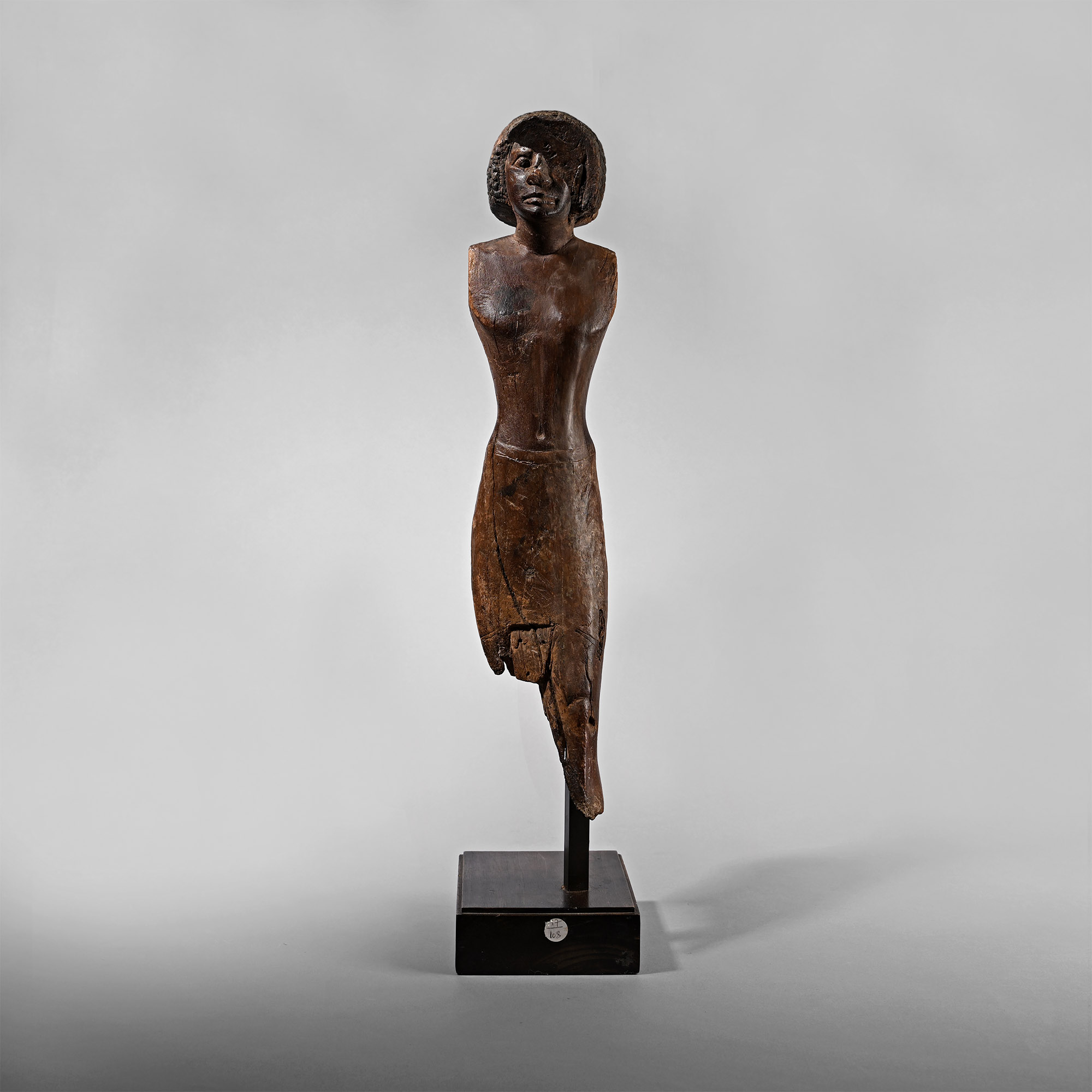
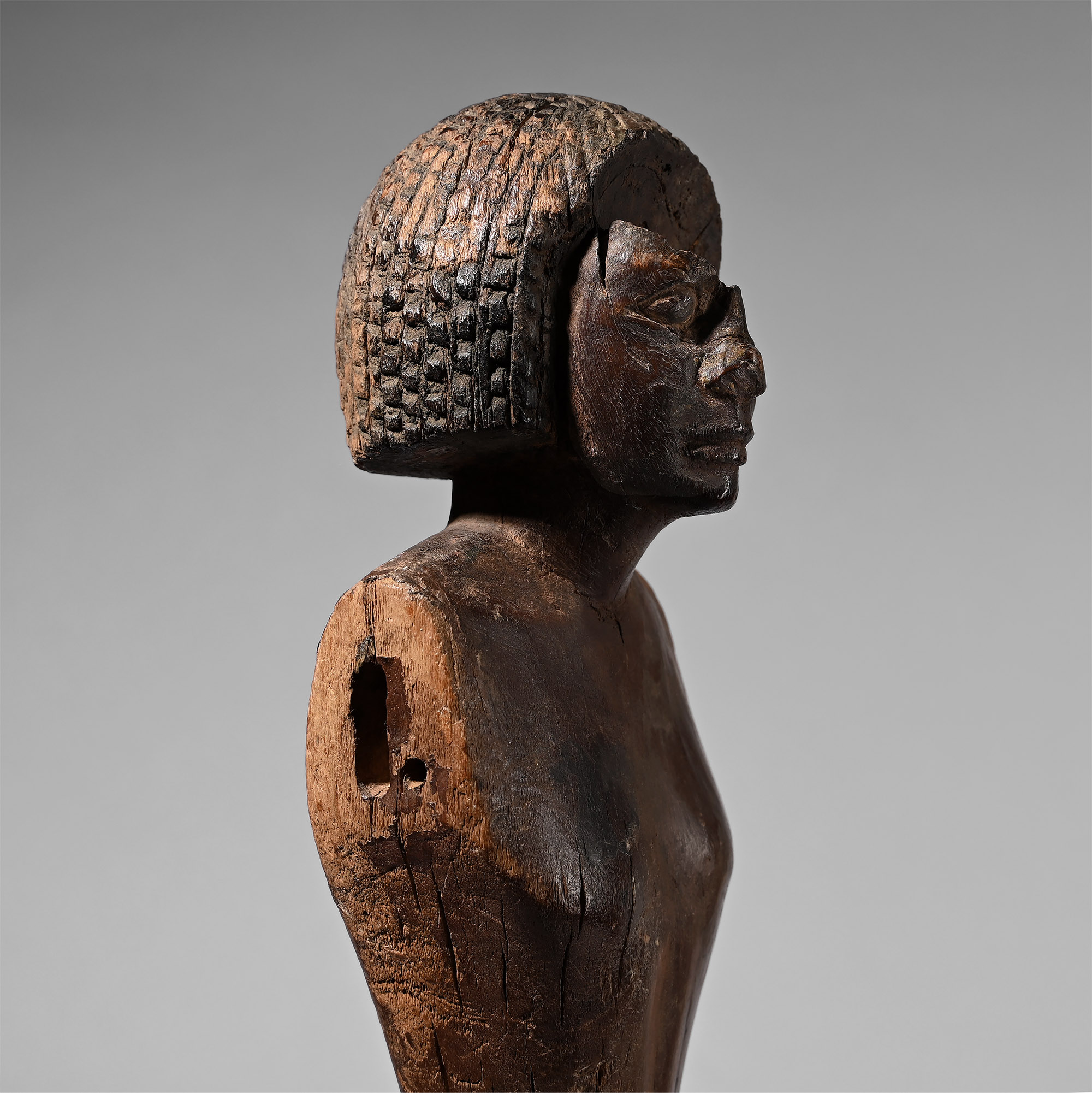
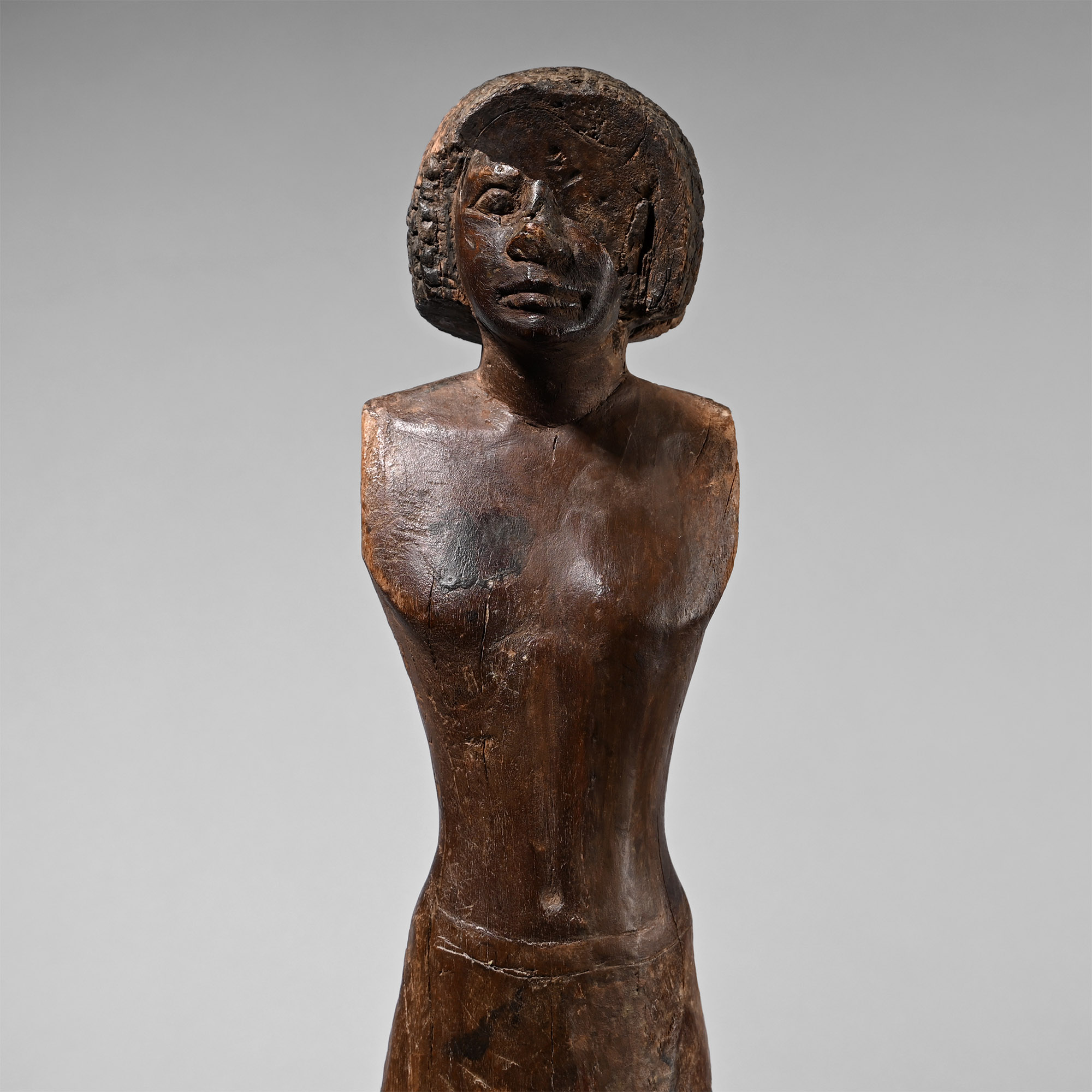
Large Egyptian Wooden Figure of a Man
OLD KINGDOM, 5TH-6TH DYNASTY, 2450-2182 B.C.
22 in. (1.46 kg total, 55.7 cm high including stand).
Of slender form, shown striding and wearing a kilt with a central tab, and a rounded wig covering the ears, composed of echeloned rectangular curls; the face with a broad mouth with finely outlined lips, rounded at the corners; the front of the kilt and portion of the advancing left leg preserved; the arms and the lower right leg missing, having been carved separately; with traces of polychrome.
ProvenanceJoseph Altounian (1889-1954) and Henriette Lorbet, Altounian-Lorbet Gallery, Mâcon, France.
Believed acquired at Sotheby’s, London: The MacGregor Collection of Egyptian Antiquities, 26 June–3 July 1922.
Acquired by the previous owner from Henriette Lorbet, January 4th, 1967.
This lot has been checked against the Interpol Database of stolen works of art and is accompanied by a search certificate number no.13232-250113.
Cf. Saleh, M, Sourouzian, H., The Egyptian Museum, Cairo: official catalogue, Mainz, 1987, no. 42, for the upper half of a similarly slim-waisted figure with a rounded wig and expressive features; Ziegler, C., Les statues égyptiennes de l'Ancien Empire, Paris, 1997, pp. 183-184, no. 51, for a near-complete example of a similar figure.
FootnotesThe statue stands as another admirable example of wooden sculpture from the early dynasties. Its highly realistic face depicts a young man, mirrored by the slender body, with a sober and elegant design. The statue was undoubtedly originally coated in stucco and colour. The striking figure, slightly asymmetrical, along with the serious mouth and haughty expression, gives this portrait a remarkably lively appearance.
CONDITIONTimeLine Auctions follows a vetting process to ensure the authenticity and legality of all items, reinforcing our commitment to integrity and responsible trading. Each antiquity, antique, and coin lot undergoes thorough examination by a vetting committee of at least ten external specialists, professional trade association members, scientists, and archaeologists: Our Vetting Process
AUCTIONS:
TimeLine is a leading auction house specialising in antiquities, ancient art, collectables, natural history, coins, medals, and books. Our auctions offer museums, collectors, historians, and enthusiasts the opportunity to acquire unique and historically significant pieces.
LOT 0069
Large Egyptian Wooden Figure of a Man
Estimate £40,000 - 60,000€46,400 - 69,600 (for guidance only)$54,000 - 81,000 (for guidance only)
-
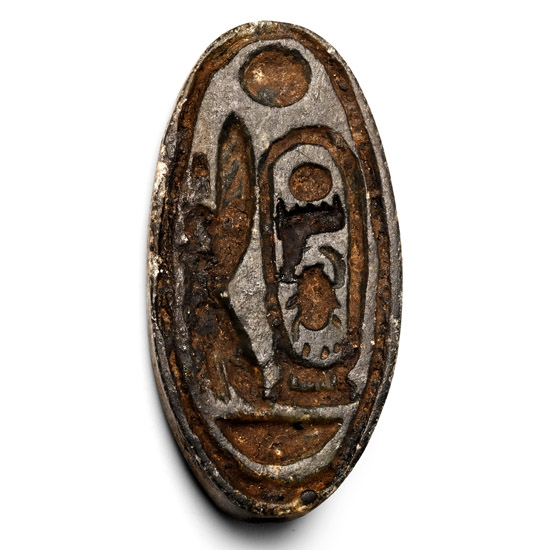
Egyptian Stone Scaraboid with Cartouche of Thutmose IV
New Kingdom, 18th Dynasty, circa 1415 B.C.Sold for (Inc. bp): £260
Keeled body pierced longitudinally, underside with cartouche for Thutmose IV (Men-kheperru-re) and other hieroglyphs. 5.79 grams, 34 mm
From the collection of a gentleman, acquired on the London art market in the 1990s. -
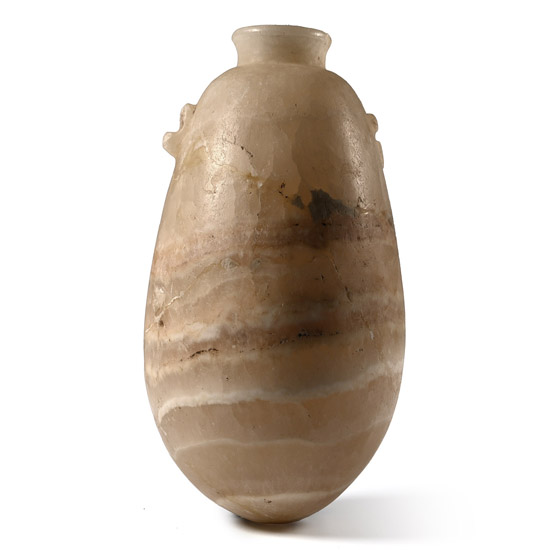
Egyptian Alabaster Alabastron
Late Period, 664-332 B.C.Estimate: £600 - 800 (‡+bp*)
Opening Bid: £300
Ovoid jar with a rounded base, concave shoulders and flared neck; remains of lug handles, restored. 332 grams, 14 cm
Acquired in the mid 1980s-1990s. Private collection, Switzerland, thence by descent. Private collection, since the late 1990s. -
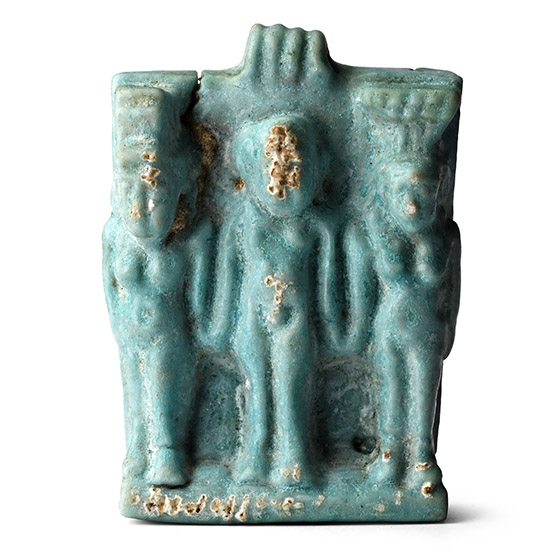
Egyptian Faience Triad Amulet
Late Period, 664-332 B.C.Estimate: £400 - 600 (+bp*)
Opening Bid: £200
Depicting in high-relief the Osirian triad (Isis, Horus, Nephthys) standing side by side on an integral plinth against a dorsal pillar; Nephthys (right) and Isis (left) are shown frontally, wearing headdresses with their specific attributes, each holding the hands of the central Horus figure, shown naked and with the side-lock of youth; a ribbed loop at the top for suspension. 8.56 grams, 33 mm
From the collection of a Swedish noble family, 1920s.
Isis and Nephthys operate as complementary sister deities who guard both Osiris and the deceased through mourning, magical protection, and ritual lamentation, while Horus, the child of Isis, signifies renewal and legitimate kingship. On amulets, the triad translates into a compact visual statement of protection: the deceased is imagined as being held within the sisters’ magical and ritual care, while Horus embodies the successful outcome of that protection in the form of rebirth and continuity.
