
Loading, please wait...
LOT 0003
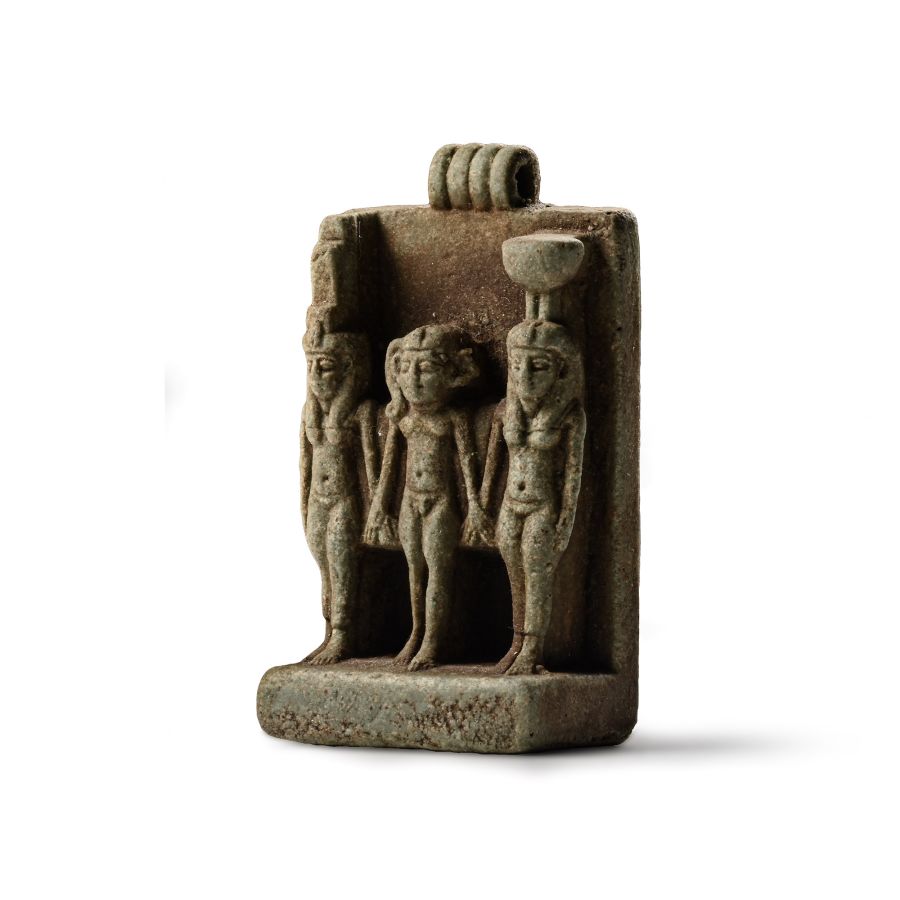
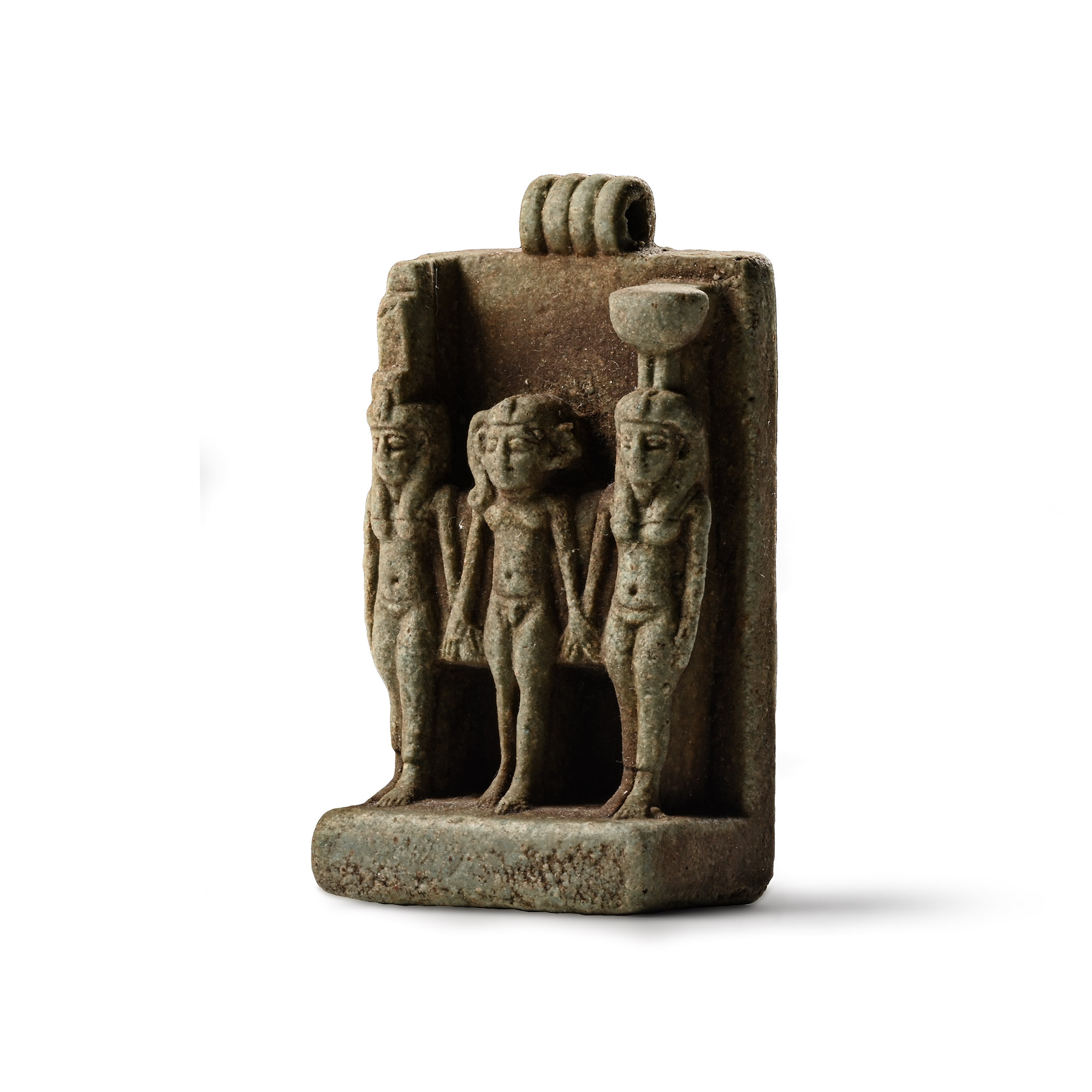
Large Egyptian Triad Faience Amulet
LATE PERIOD, 664-332 B.C.
2 3/8 in. (45 grams, 62 mm).
Olive-green glazed composition amulet with triad of deities: Isis and Nephthys wearing their usual headdresses, flanking Harpocrates with his side-lock; all three with hands joined; ribbed suspension loop above.
ProvenancePart of an old collection dating back to the 19th century.
Ex property of a gentleman, acquired before the 1980s.
Private collection of Mr T.H., Norfolk, UK.
Cf. Petrie, W.M.F., Amulets. Illustrated by the Egyptian Collection in University College, London, 1914, pl.XXVII, no.152b, for a similar example.
CONDITIONTimeLine Auctions follows a vetting process to ensure the authenticity and legality of all items, reinforcing our commitment to integrity and responsible trading. Each antiquity, antique, and coin lot undergoes thorough examination by a vetting committee of at least ten external specialists, professional trade association members, scientists, and archaeologists: Our Vetting Process
AUCTIONS:
TimeLine is a leading auction house specialising in antiquities, ancient art, collectables, natural history, coins, medals, and books. Our auctions offer museums, collectors, historians, and enthusiasts the opportunity to acquire unique and historically significant pieces.
-
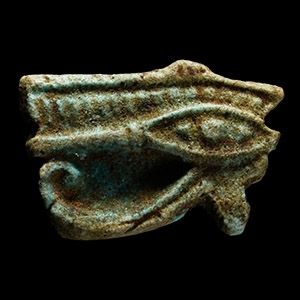
Egyptian Faience Wedjat Eye Amulet
Late Period, 664-332 B.C.Sold for (Inc. bp): £338
With low-relief detailing, suspension loop originally above the eyebrow. 5.2 grams, 35 mm
Acquired mid 20th century. From the private collection of the late Bill Verney. Property of a Nottinghamshire gentleman. -
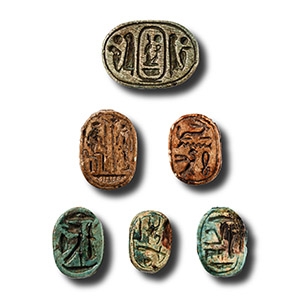
Egyptian Steatite and Other Scarab Collection
Late Period, 664-332 B.C.Sold for (Inc. bp): £715
Group of steatite and glazed composition scarabs each with hieroglyphs to the underside, the largest with a cartouche of Amenophis III. 10.1 grams total, 13-18 mm
Ex North London, UK, gentleman, 1990s. -
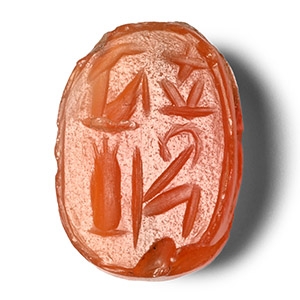
Egyptian Carnelian Scarab
New Kingdom, 1550-1070 B.C.Sold for (Inc. bp): £520
With incised carapace and leg detailing, hieroglyphs to the underside. 2.23 grams, 16 mm
Ex North London, UK, gentleman, 1990s.
