
Loading, please wait...
LOT 0002
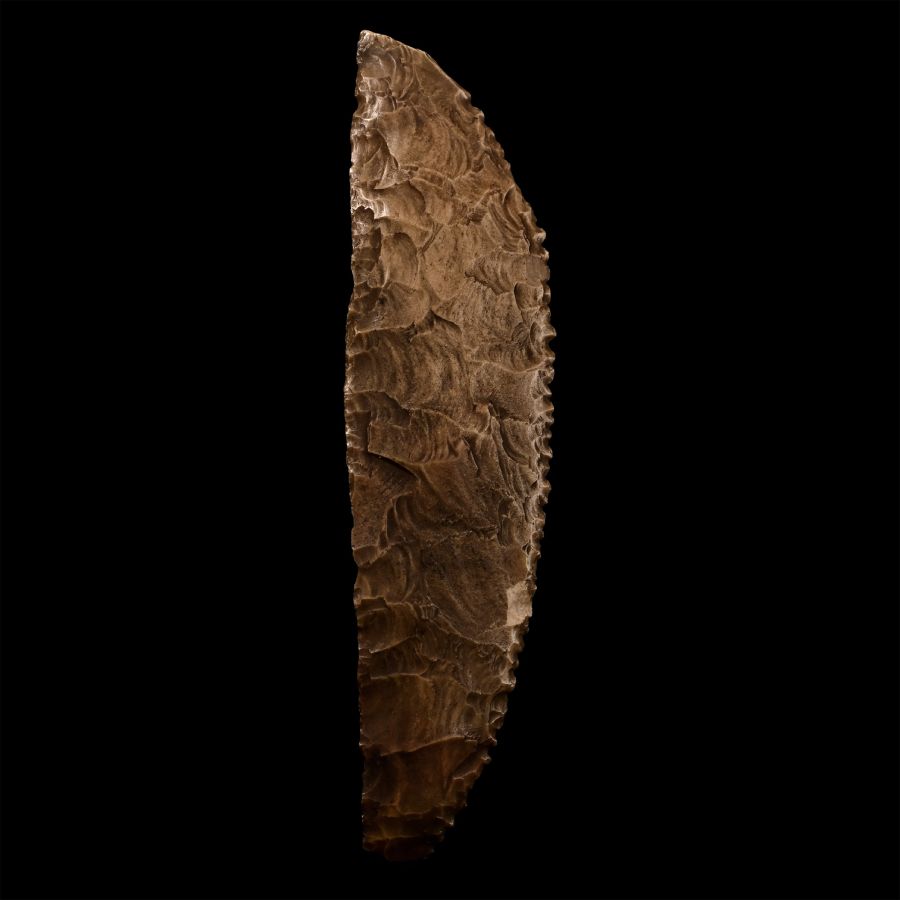
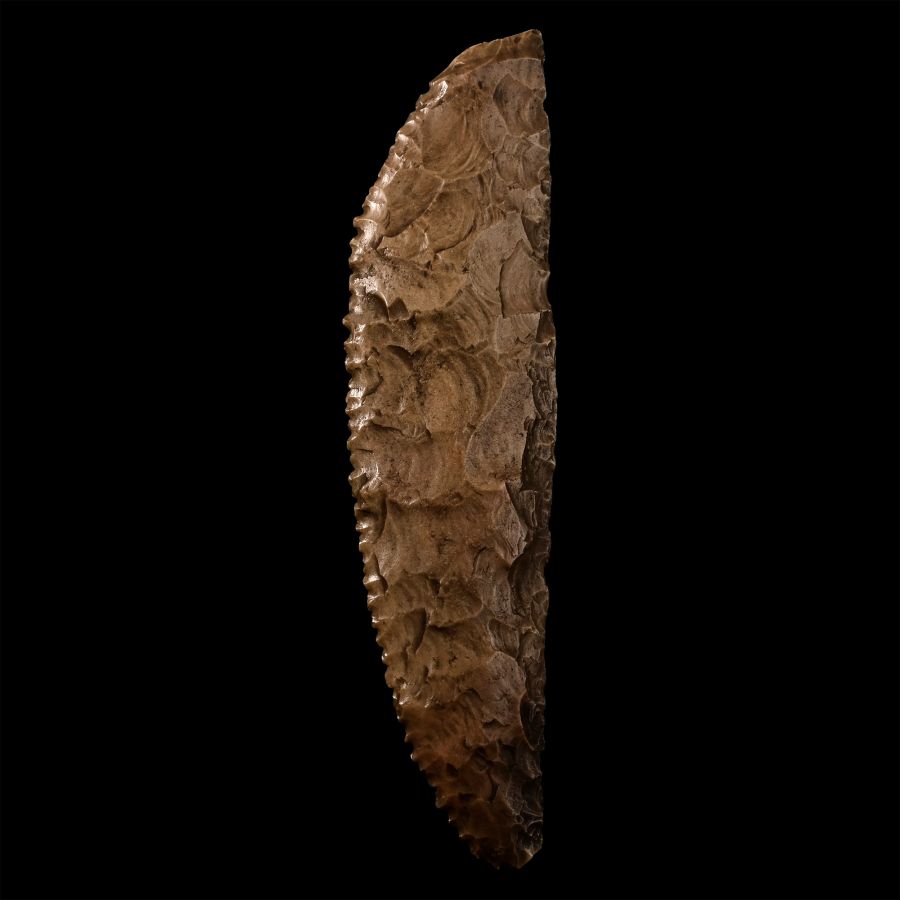
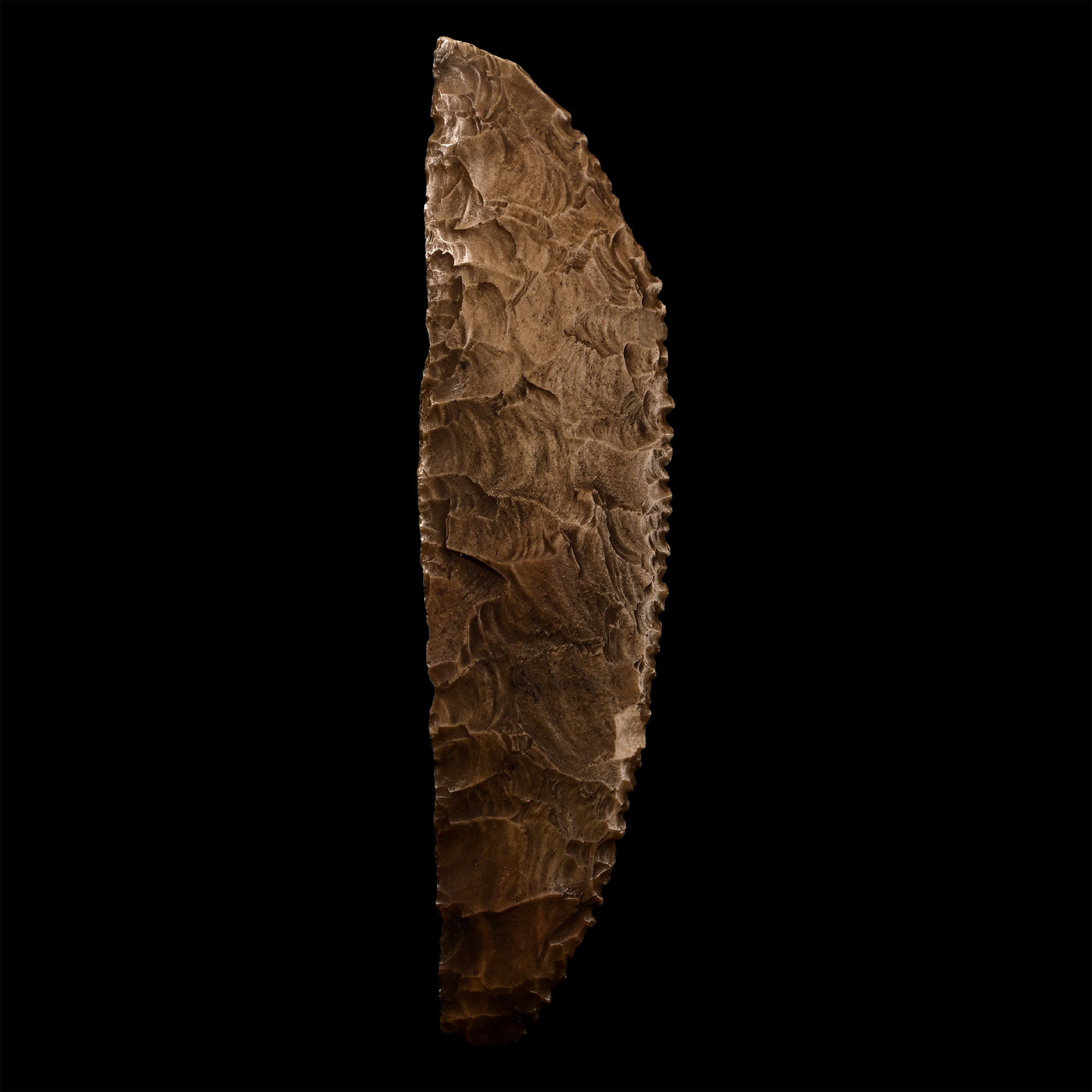
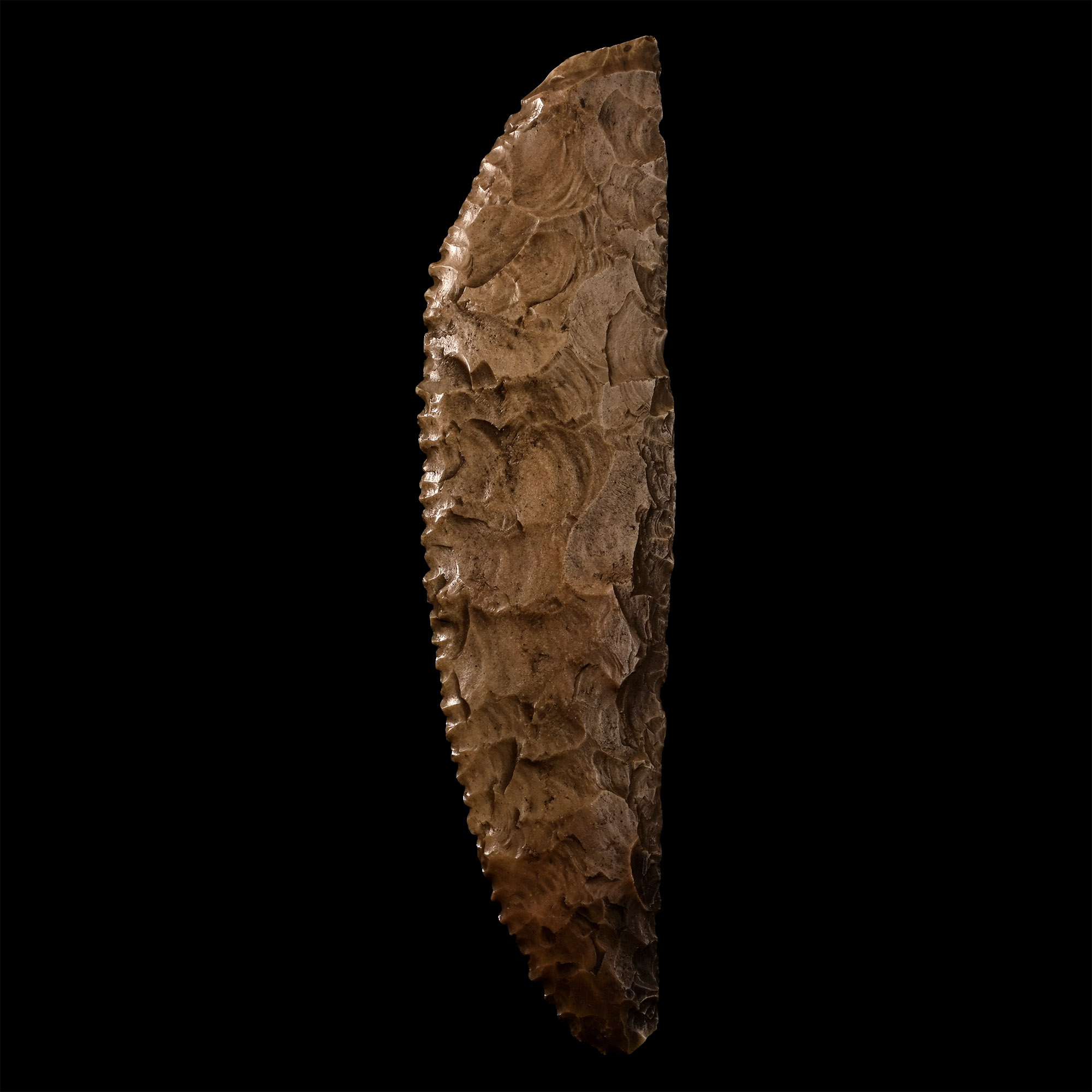
Large Egyptian Stone Age Knapped Curved Saw Blade from Thebes
NEOLITHIC PERIOD, 11,000-5,200 B.P.
6 3/4 in. (80.5 grams, 17 cm).
Large ripple-flaked blade with a curving, serrated cutting edge. [No Reserve]
ProvenanceFound Thebes.
From the collection of A.D. Passmore (1879-1958); his collection of flints for the area of Stonehenge was donated to the Ashmolean Museum in the 1950s.
From the private collection of Peter Clayton, FCILIP, Dip, Arch, FSA, FRNS, Hemel Hempstead, Hertfordshire, UK; formed since the late 1950s.
Accompanied by a copy of an old handwritten information card by Peter Clayton.
TimeLine Auctions follows a vetting process to ensure the authenticity and legality of all items, reinforcing our commitment to integrity and responsible trading. Each antiquity, antique, and coin lot undergoes thorough examination by a vetting committee of at least ten external specialists, professional trade association members, scientists, and archaeologists: Our Vetting Process
AUCTIONS:
TimeLine is a leading auction house specialising in antiquities, ancient art, collectables, natural history, coins, medals, and books. Our auctions offer museums, collectors, historians, and enthusiasts the opportunity to acquire unique and historically significant pieces.
LOT 0002
Large Egyptian Stone Age Knapped Curved Saw Blade from Thebes
Estimate £400 - 600€460 - 700 (for guidance only)$540 - 810 (for guidance only)
-
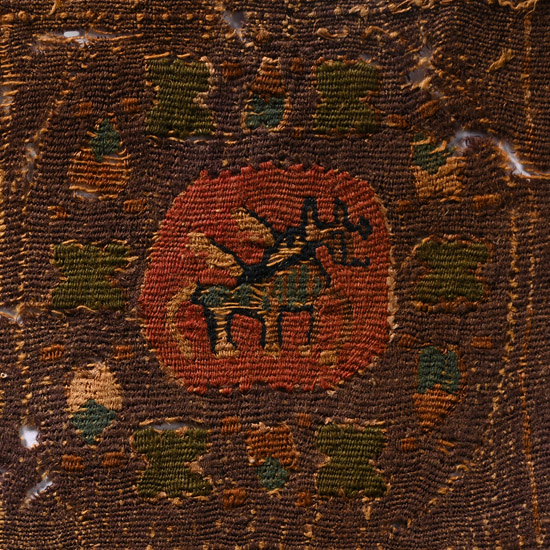
Egyptian Coptic Textile Fragment of a Tunic Tablion with Pegasus
Circa 7th century A.D.Estimate: £40 - 60 (+bp*)
Bids: 1 | Current Bid: £5
In natural wool in shades of light brown, yellow, green, blue, and red with S-twist yarn, depicting the figure of Pegasus within a central medallion, surrounded by geometric and vegetal motifs; borders ornamented with meanders. 1.3 grams, 10.5 cm
Acquired 1970s-1996. Property of a North American collector. London collection, 2016.
The tabula, or tablion, was a square embroidery used to decorate tunics or mantles. The central figure is a rare representation of the winged horse Pegasus, a motif derived from Greek mythology, showing that classical iconography was still alive among the Christian Graeco-Roman people. -
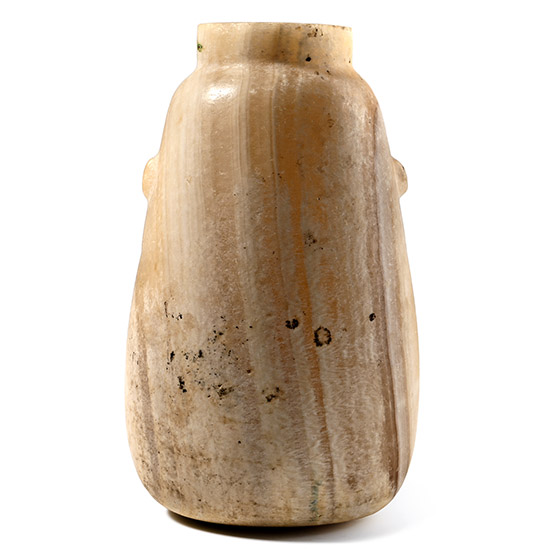
Large Egyptian Alabaster Alabastron
Late Period, 664-332 B.C.Estimate: £1,200 - 1,700 (‡+bp*)
Opening Bid: £650
Elongated vessel widening slightly towards the flat base with broad, cylindrical neck; vertical rim to the mouth, probably slightly reground; two lateral knob handles. 867 grams, 15.5 cm
Body intact. Some dark discolourations.
Acquired from Galerie Arete, Zurich, 15 April 1988. Ex private collection, Therwil, Switzerland.
The veining of the finely polished alabaster underscores the vessel’s form; the interior is smoothed, but the base lacks the same polish as the wall and was either reground or not polished in the first place. -
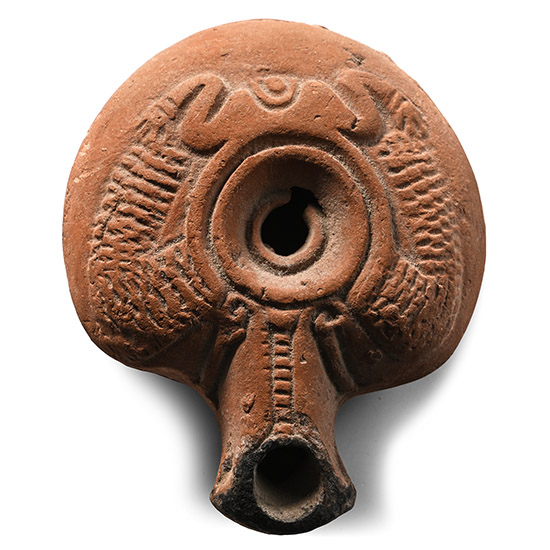
Romano-Egyptian Terracotta Frog Oil Lamp
Roman Period, 3rd-4th century A.D.Estimate: £80 - 100 (+bp*)
Bids: 1 | Current Bid: £5
Cordate in plan and biconvex in section, with a short volute nozzle and low-relief stylised frog detailing on the discus; basal ring enclosing 'B' mark; old collector's ticket: 'Buff terracotta lamp in form of a frog with nozzle standing out from front of lamp. Frog is very stereotyped, beneath B. 3-4th century A.D. Found in Alexandria. From Puys-Aubert collection in Alexandria. March 1963.' 102 grams, 92 mm
From the private collection of Peter Clayton, FCILIP, Dip, Arch, FSA, FRNS, Hemel Hempstead, Hertfordshire, UK; formed since the late 1950s. Accompanied by an old handwritten identification card written by Peter Clayton.
