
Loading, please wait...
LOT 0508
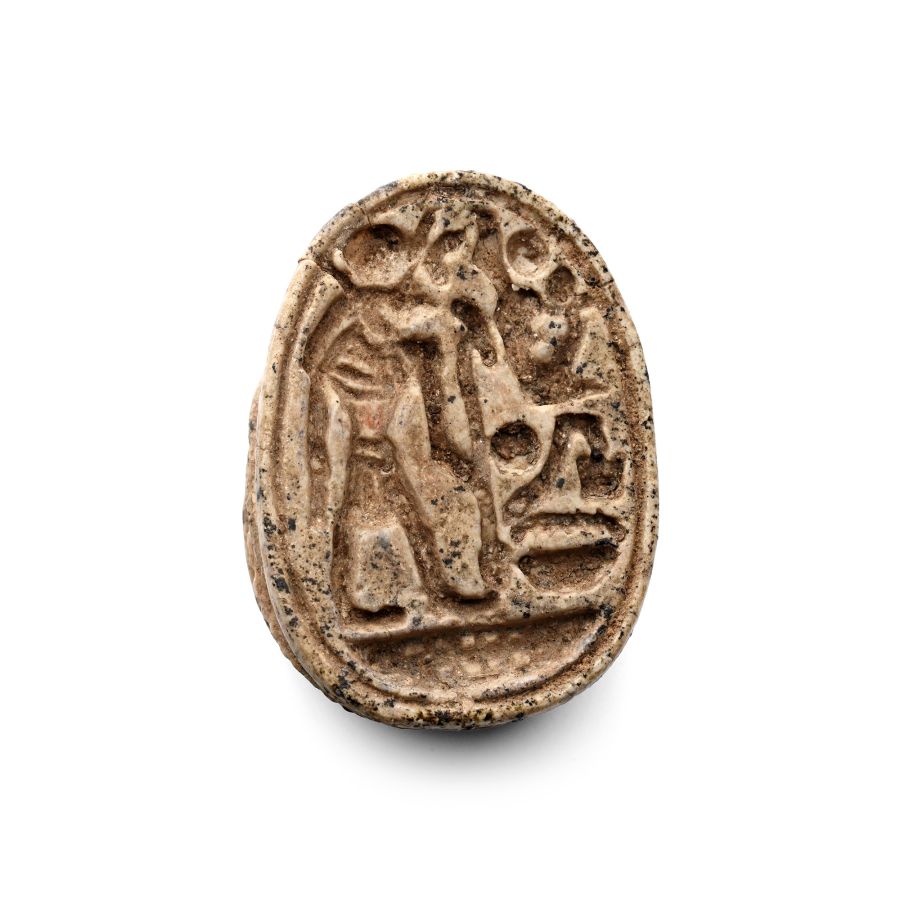
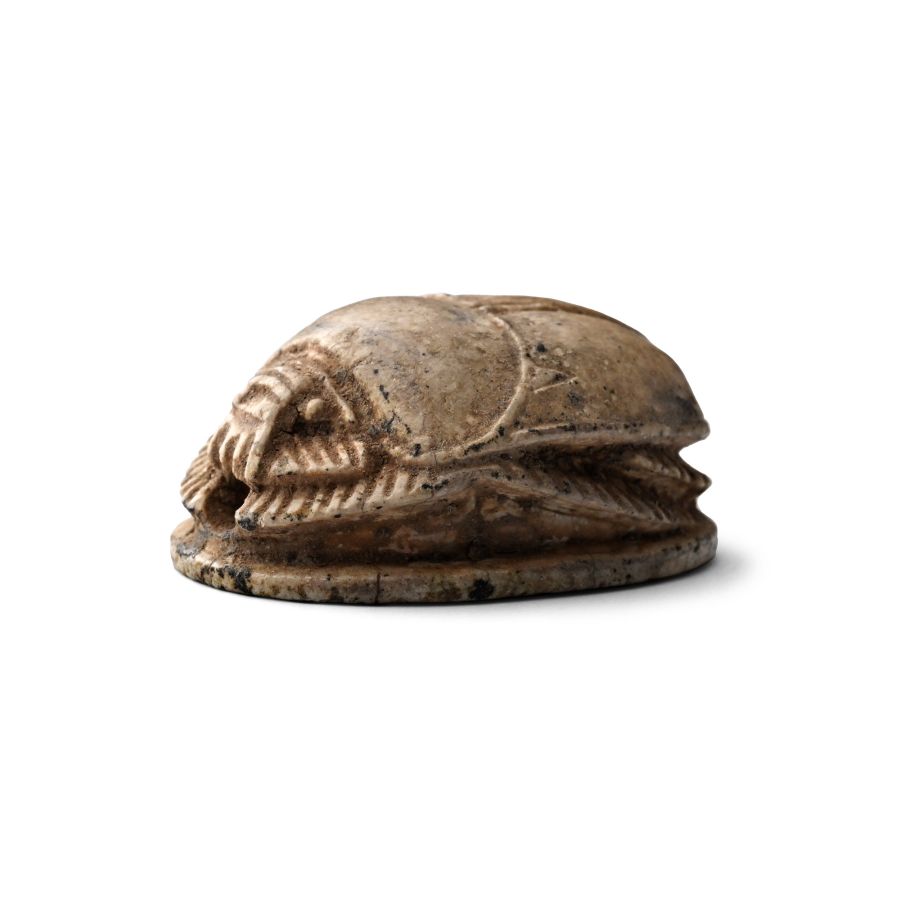
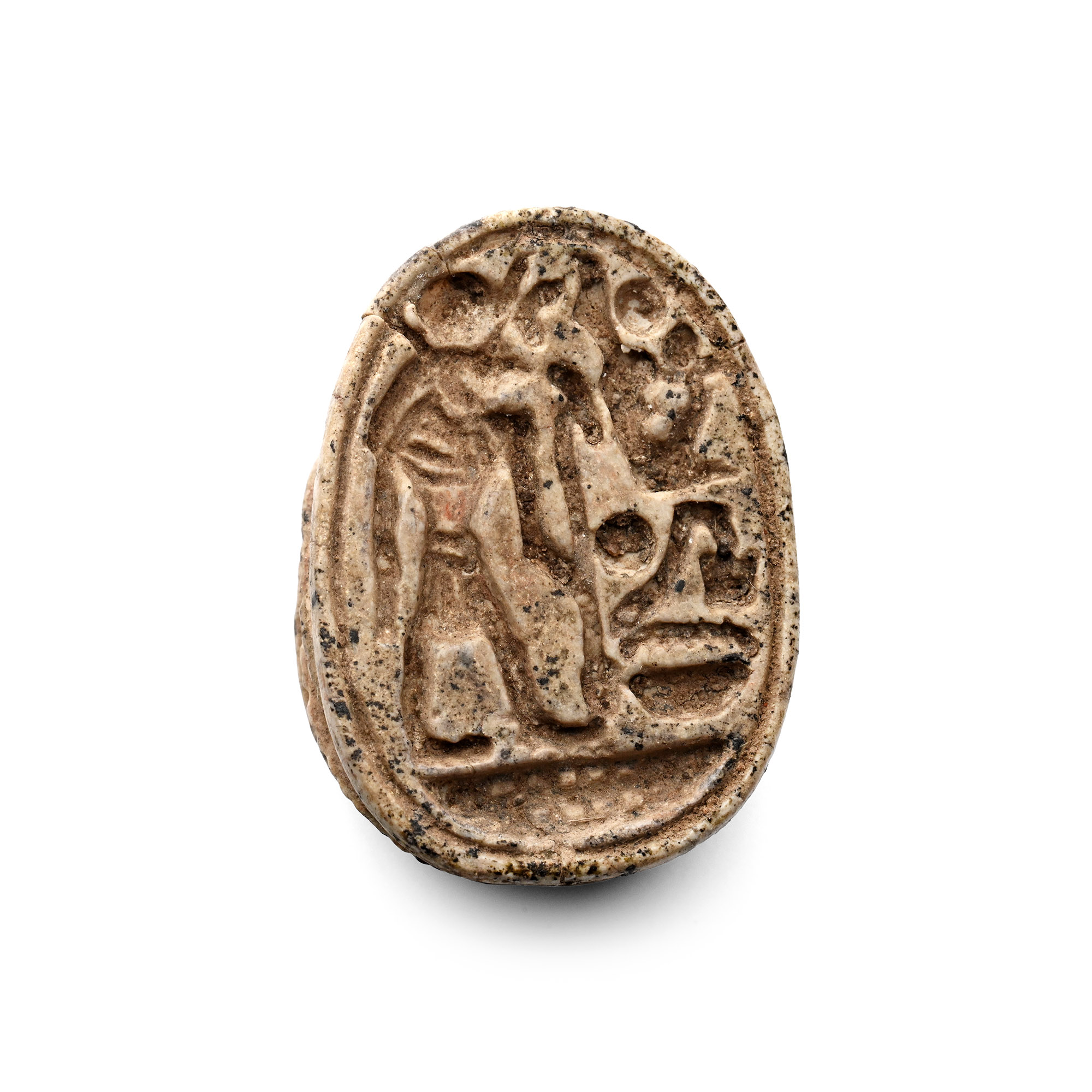
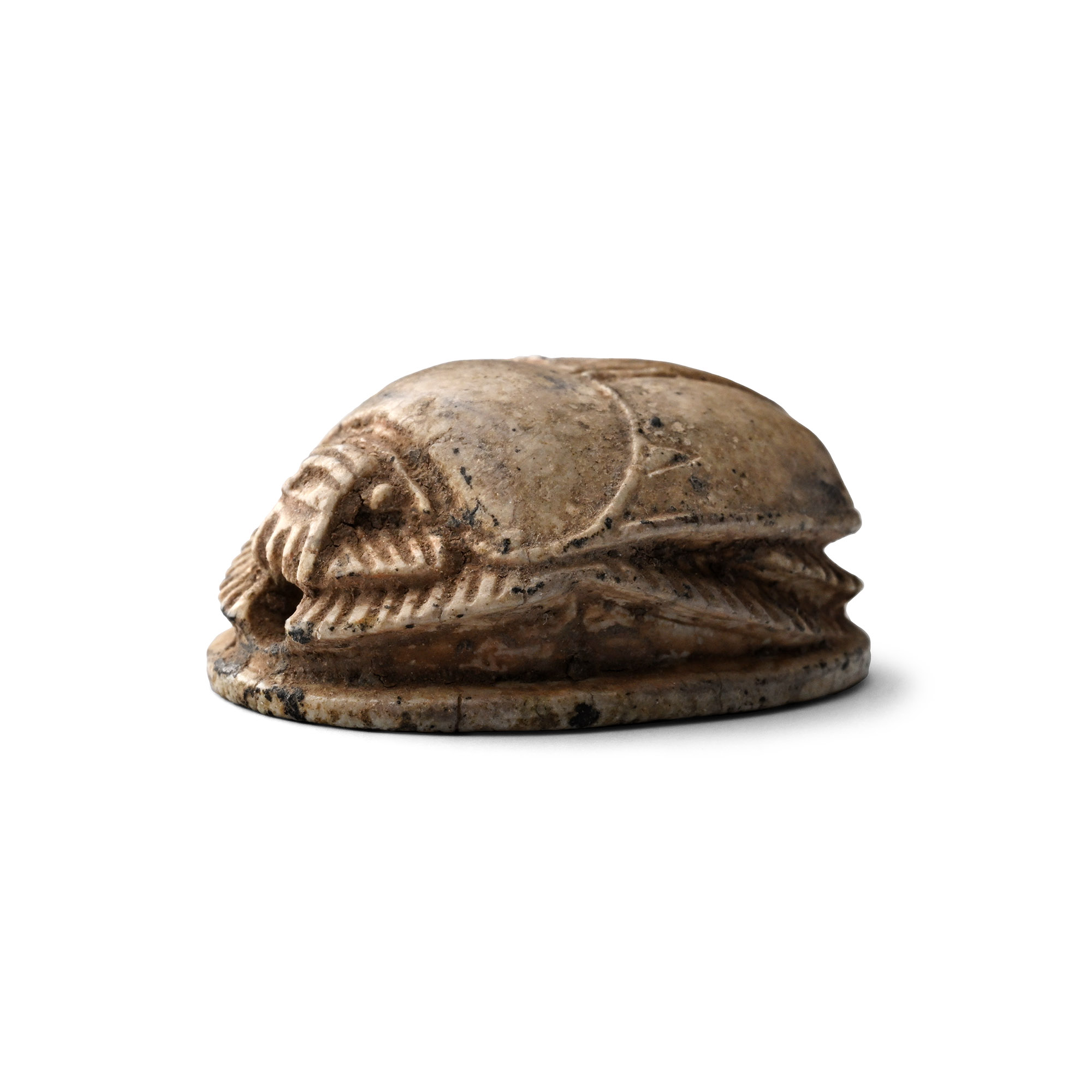
Large Egyptian Steatite Scarab
LATE PERIOD, 664-332 B.C.
1 1/8 in. (9.92 grams, 28 mm).
A line border encloses the standing figure of a falcon-headed deity wearing a sun disc and uraeus, and holding a was-sceptre, standing before the hieroglyphs user, Maat, Re, setep, n, Re, neb), all surmounting a larger neb sign.
ProvenanceFrom the collection of a gentleman, acquired on the London art market in the 1990s.
This lot is accompanied by an illustrated lot declaration signed by the Head of the Antiquities Department, Dr Raffaele D'Amato.
The design incorporates much of Ramesses II’s throne name, ‘the justice of Re is powerful, chosen of Re (user-Maat-Re setep-n-Re).
CONDITIONTimeLine Auctions follows a vetting process to ensure the authenticity and legality of all items, reinforcing our commitment to integrity and responsible trading. Each antiquity, antique, and coin lot undergoes thorough examination by a vetting committee of at least ten external specialists, professional trade association members, scientists, and archaeologists: Our Vetting Process
AUCTIONS:
TimeLine is a leading auction house specialising in antiquities, ancient art, collectables, natural history, coins, medals, and books. Our auctions offer museums, collectors, historians, and enthusiasts the opportunity to acquire unique and historically significant pieces.
-
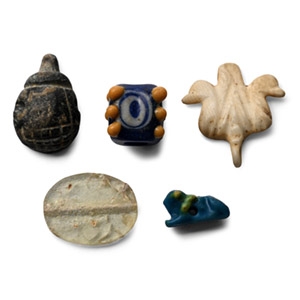
Egyptian Stone and Glass Artefact Group
Late 1st millennium B.C. and laterSold for (Inc. bp): £338
Including cuboid hot-worked eye bead with applied granules to the edges, a recumbent lion, double bird, and stylised hedgehog amulets, and iridescent plaque. 83.7 grams total, 13-22 mm
Acquired on the European art market in the early 2000s. with Galerie Rhéa, Zurich, Switzerland. This lot is accompanied by an illustrated lot declaration signed by the Head of the Antiquities Department, Dr Raffaele D'Amato. -
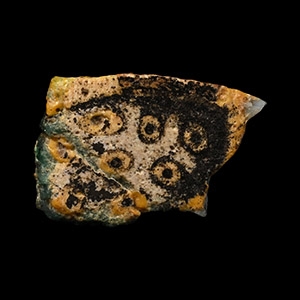
Egyptian Glass Panel with Eyes
Late Period, 664-332 B.C.Estimate: £250 - 350 (+bp*)
Opening Bid: £125
Irregular glass panel fragment with mosaic eye motifs inlaid; repaired. 1.57 grams, 18 mm
From the collection of a gentleman, acquired on the London art market in the 1990s. This lot is accompanied by an illustrated lot declaration signed by the Head of the Antiquities Department, Dr Raffaele D'Amato. -
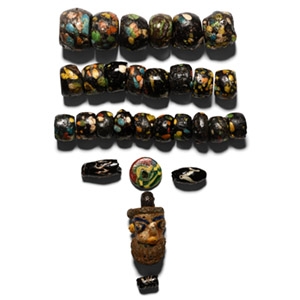
Phoenician Glass Bead Collection
6th-3rd century B.C. or laterEstimate: £1,000 - 1,400 (+bp*)
Opening Bid: £500
Comprising a group of crumb-decorated polychrome oblate beads and a centrepiece pendant formed as a stylised bearded head. 179 grams total, 12-42 mm
From the collection of a gentleman, acquired on the London art market in the 1990s. This lot is accompanied by an illustrated lot declaration signed by the Head of the Antiquities Department, Dr Raffaele D'Amato.
The Phoenicians, renowned seafarers and traders, were also skilled glassworkers. They produced a wide variety of glass beads using core-forming and winding techniques, with vivid colours and elaborate designs that reflect both technical mastery and cross-cultural influence. Among the most iconic Phoenician beads are glass 'head' beads, crafted in the form of stylised human or mythological faces. Typically, they feature exaggerated facial details like bulging eyes, large noses, beards, and headdresses, often with expressive or comic features. They were possibly worn as amulets to ward off evil or attract protection, though they may also represent deities, ancestors, or foreigners. These beads often incorporate Egyptian, Greek, and Near Eastern stylistic elements, reflecting the Phoenicians’ extensive trade networks.
