
Loading, please wait...
LOT 0532
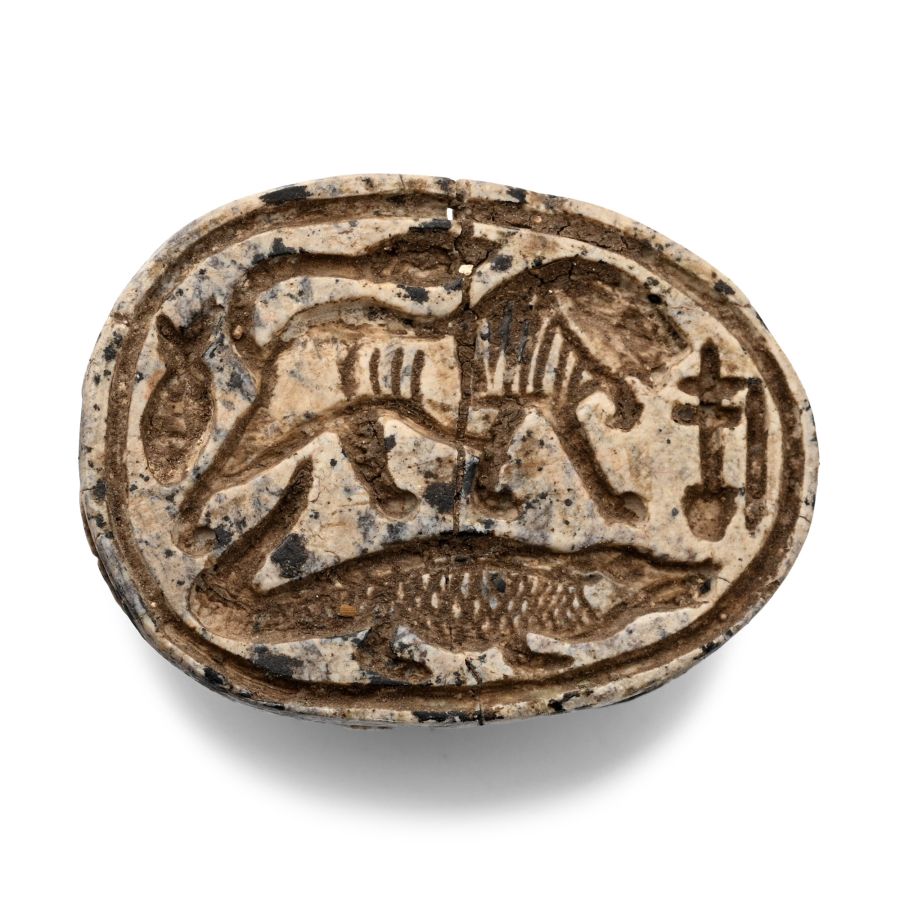
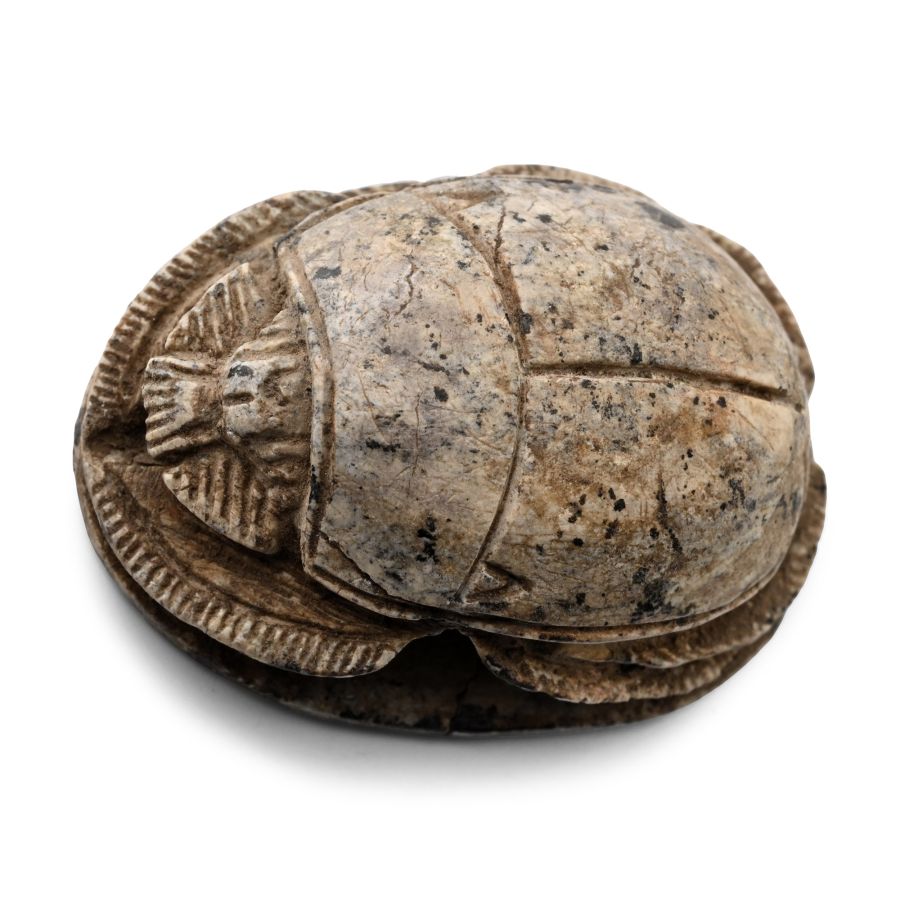
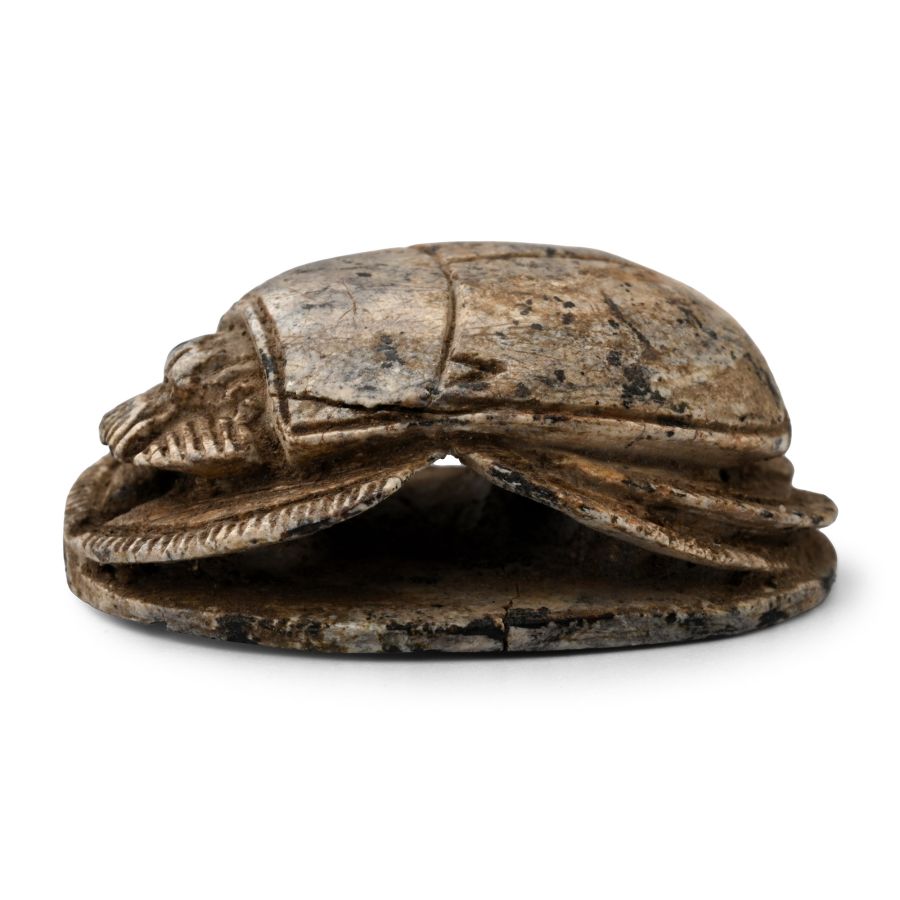
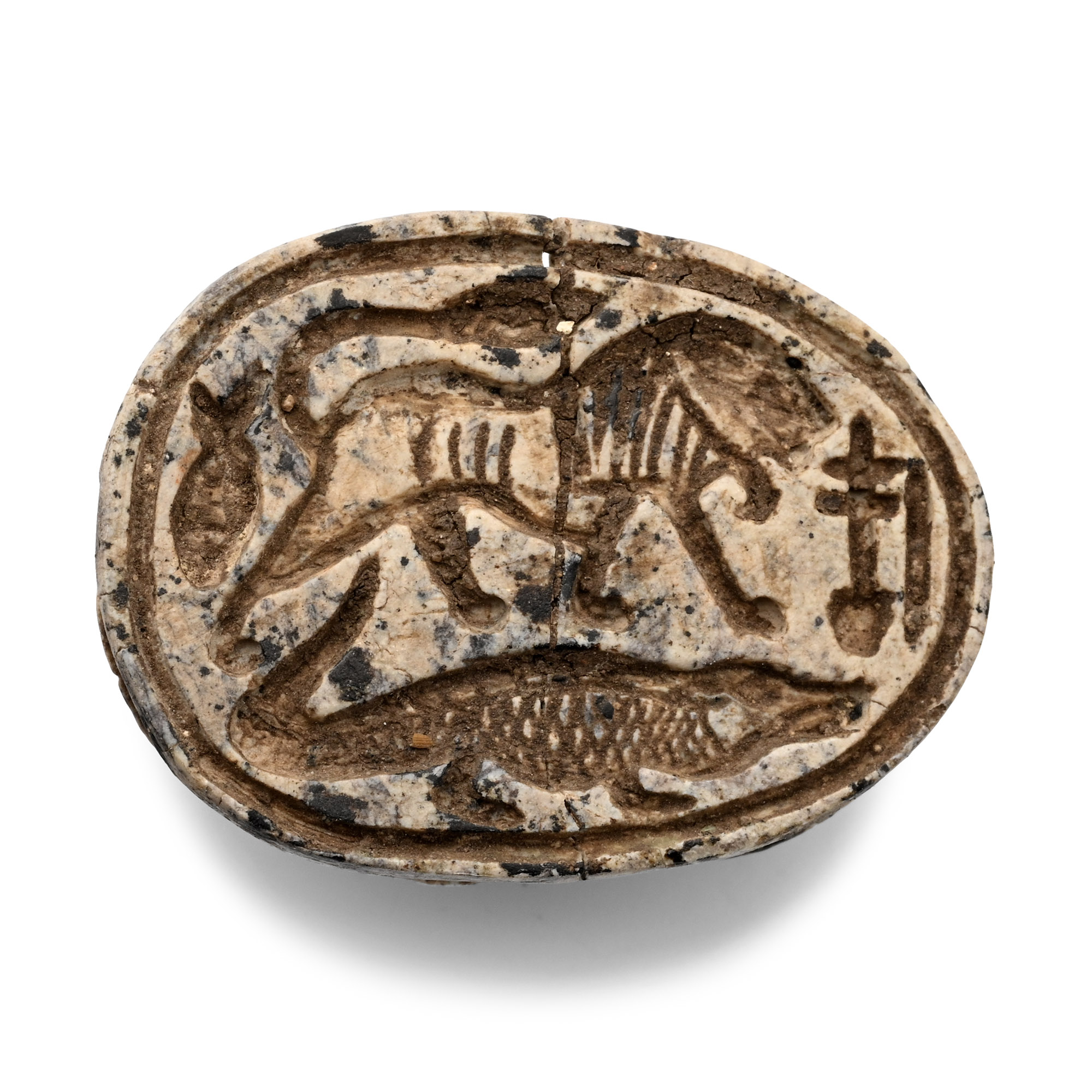
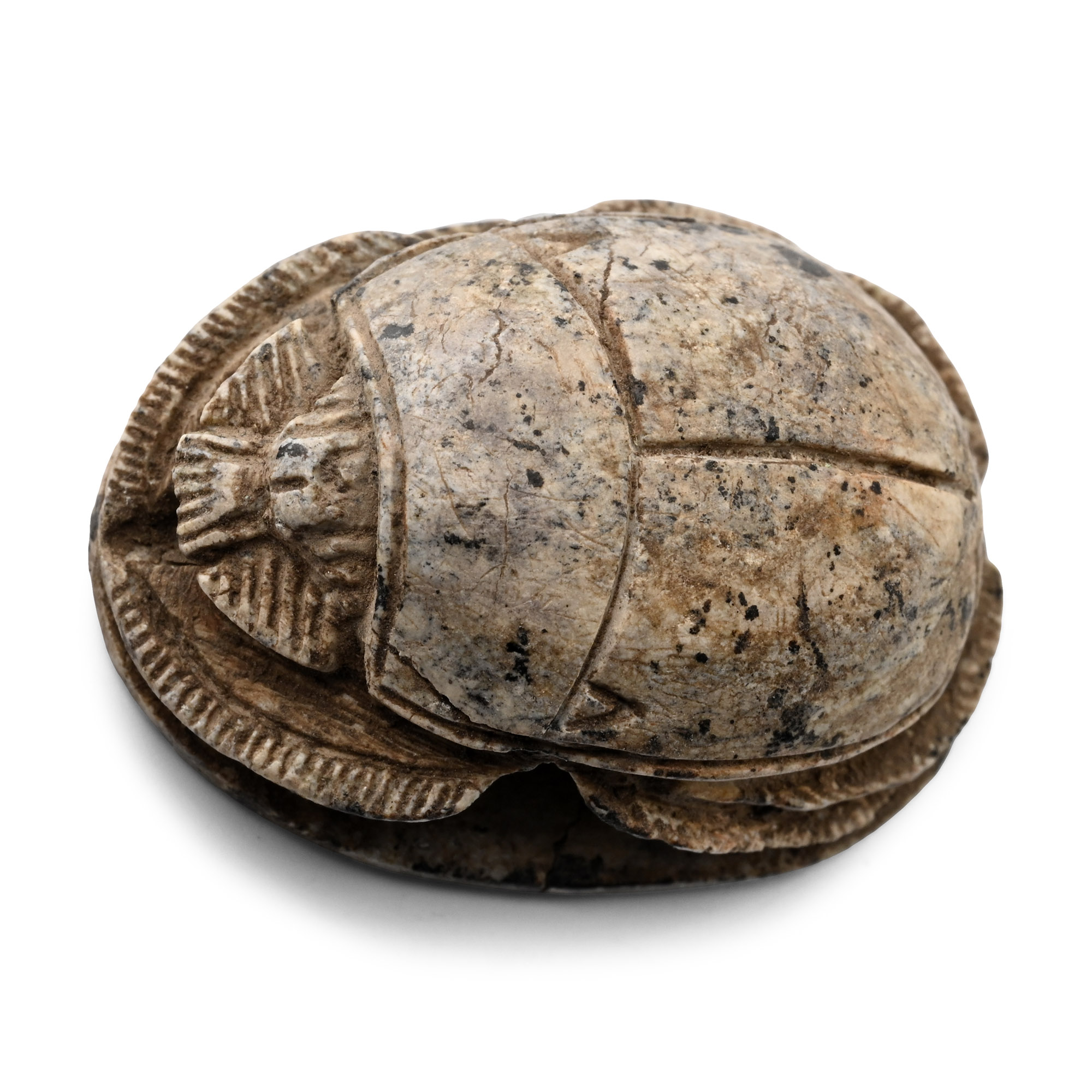
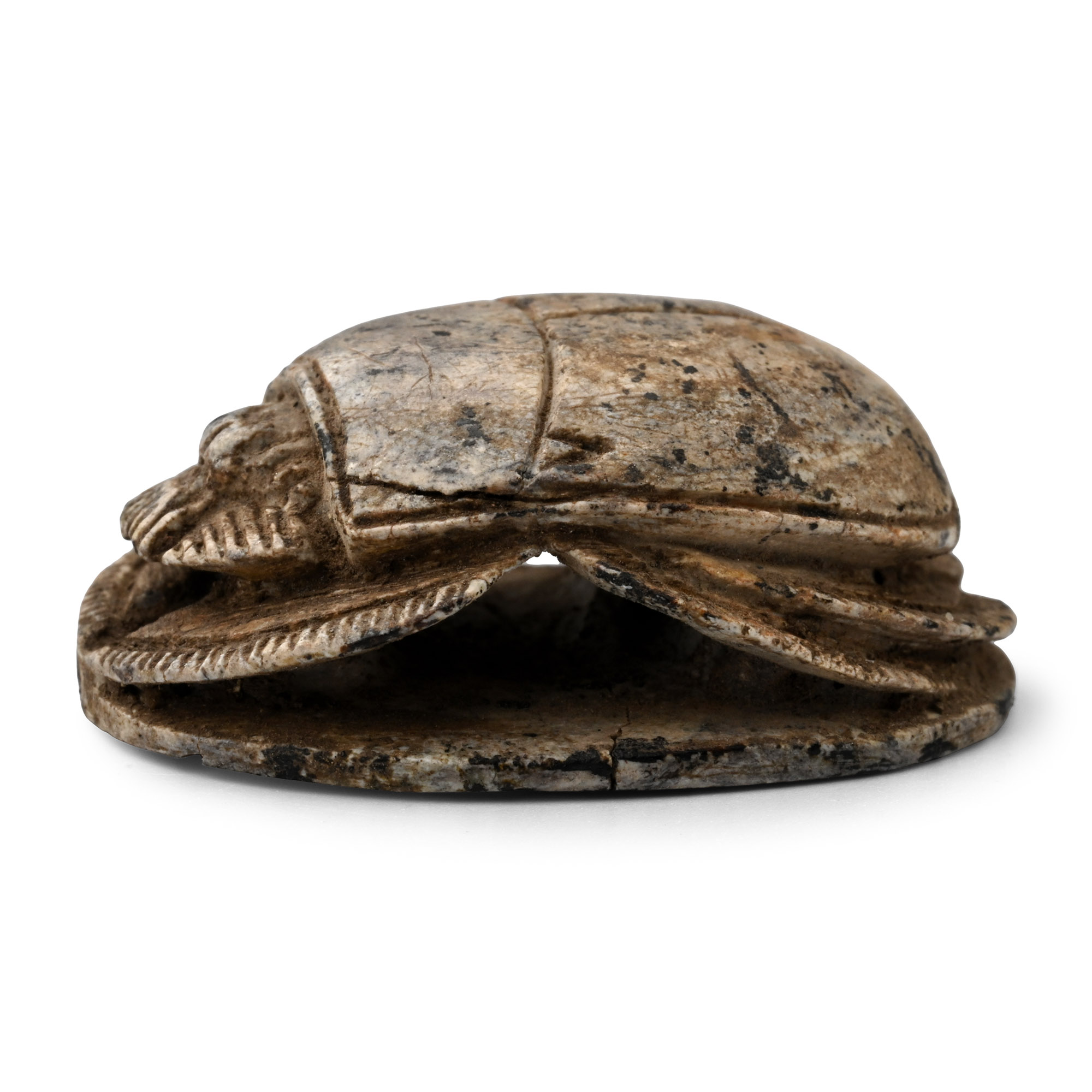
Large Egyptian Steatite Scarab
SECOND INTERMEDIATE PERIOD–NEW KINGDOM, CIRCA 1600-1069 B.C.
1 3/8 in. (13.3 grams, 34 mm).
Modelled body of a beetle with detailed carapace and legs; the underside carved with a border enclosing the depictions of an advancing lion, a crocodile below, with a fish behind, and a nefer sign in front.
ProvenanceFrom the collection of a gentleman, acquired on the London art market in the 1990s.
This lot is accompanied by an illustrated lot declaration signed by the Head of the Antiquities Department, Dr Raffaele D'Amato.
Cf. Petrie, W.M.F., Button and Design Scarabs, London, 1925, pl. XIV, nos. 880, for a scarab depicting a lion above a crocodile; Ben-Tor, D., The Scarab: A Reflection of Ancient Egypt, Tel Aviv, 1993, p. 32, for a discussion of this scarab design type.
FootnotesIt is believed that the lion symbolised the king and his strength in overcoming dangerous forces.
CONDITIONTimeLine Auctions follows a vetting process to ensure the authenticity and legality of all items, reinforcing our commitment to integrity and responsible trading. Each antiquity, antique, and coin lot undergoes thorough examination by a vetting committee of at least ten external specialists, professional trade association members, scientists, and archaeologists: Our Vetting Process
AUCTIONS:
TimeLine is a leading auction house specialising in antiquities, ancient art, collectables, natural history, coins, medals, and books. Our auctions offer museums, collectors, historians, and enthusiasts the opportunity to acquire unique and historically significant pieces.
-
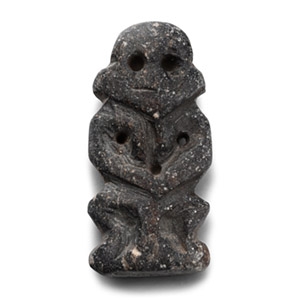
Egyptian Black Serpentine Pataikos Amulet
Late Period, 664-332 B.C. or laterSold for (Inc. bp): £72
Standing nude with hands clasped to the midriff, pierced at the shoulders and with drilled eyes, pierced across the head for suspension. 7.76 grams, 35 mm
Fine condition.
Property of a London gentleman; acquired in the 1970s. From the private collection of John Meredith, acquired since the 1990s; thence by descent. This lot is accompanied by an illustrated lot declaration signed by the Head of the Antiquities Department, Dr Raffaele D'Amato.
From the New Kingdom onward, Bes became one of ancient Egypt's most popular apotropaic deities. Despite his somewhat fearsome appearance, Bes served as the patron and protector of pregnant women and children, and was also believed to shield them from snakes. -
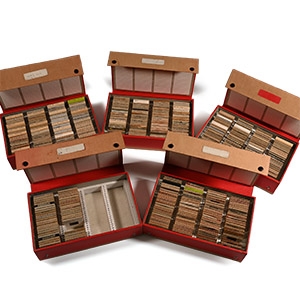
Historic Collection of 867 Slides of Archaeological Sites and Artefacts Including Other Sites in Egypt
1960s-1980s A.D.Sold for (Inc. bp): £1,430
Housed in five linen-covered boxes, covering Unas Teti, Memphis, Tombs of the Nobles, Meruruka, Saqqara, general Egyptian sites, jewellery, and architecture etc. 4.4 kg total, 26.5 x 16.5 x 6.5 cm each box
Property of archaeologist Stephanie Gee, N.W. London, UK, 1960s-1980s. This lot is accompanied by an illustrated lot declaration signed by the Head of the Antiquities Department, Dr Raffaele D'Amato.
Stephanie Gee was a prominent archaeologist who took part in several expeditions in Egypt. She was a trusted assistant to the British-Australian archaeologist Veronica Seton-Williams, who excavated in Egypt, Britain, and the Near East. Stephanie also took part in the Tell El-Farâ'în expeditions of 1965-1968, and assisted Seton-Williams with preparing the 1966 expedition report. Their collaboration continued and Stephanie helped with the manuscript of Seton-Williams’ book ‘The Road to El-Aguzein’, a narrative account of her life that was first published in 1988. -
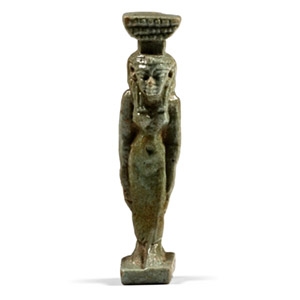
Egyptian Green Glazed Faience Amulet of Nephthys
Late Period, 26th Dynasty, circa 664-525 B.C.Estimate: £400 - 600 (+bp*)
Opening Bid: £200
Depicting the goddess Nephthys wearing the two hieroglyphic parts of her name (Neb(et)-Hut), with dorsal pillar and base. 2.68 grams, 37 mm
with B.M.S., Switzerland. Private collection, London, UK, acquired from the above on 14 September 1981. This lot is accompanied by an illustrated lot declaration signed by the Head of the Antiquities Department, Dr Raffaele D'Amato.
Nephthys was a protective goddess linked to mourning, magic, and the afterlife. As the sister of Isis, she played a vital role in the funerary rites of Osiris. Amulets like this were placed on the deceased to invoke her protection and aid in rebirth. Typically made of faience or semi-precious stone, they were especially common in the Late Period.
