
Loading, please wait...

LOT 0734
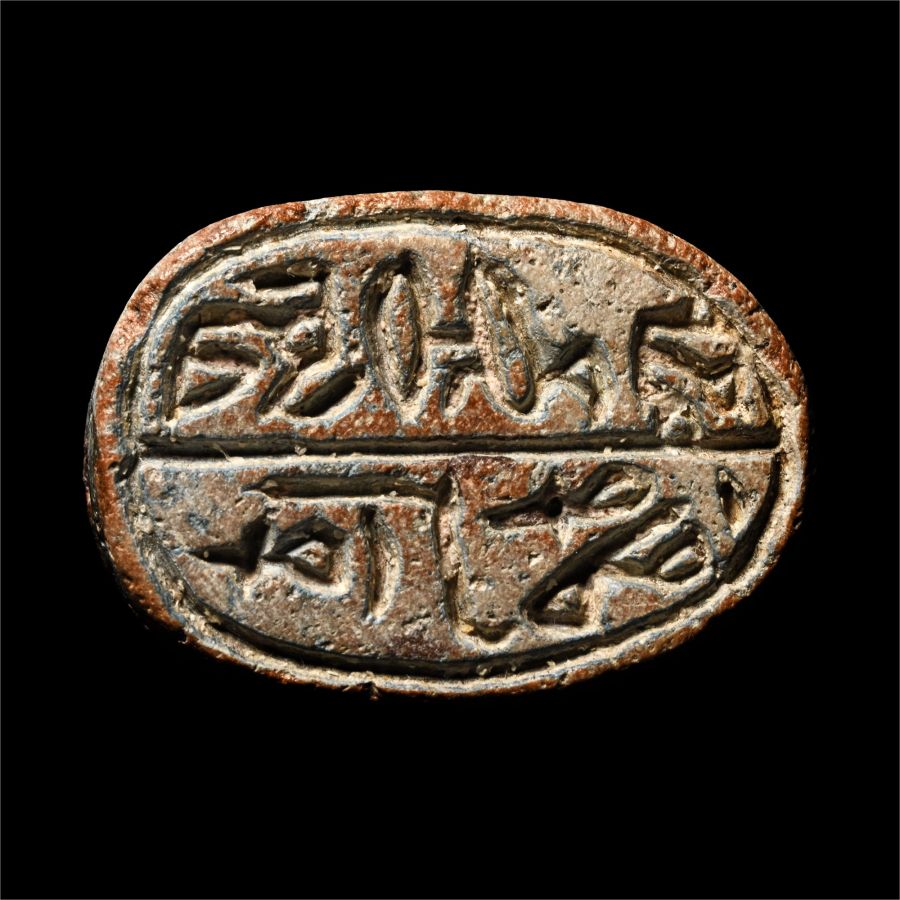
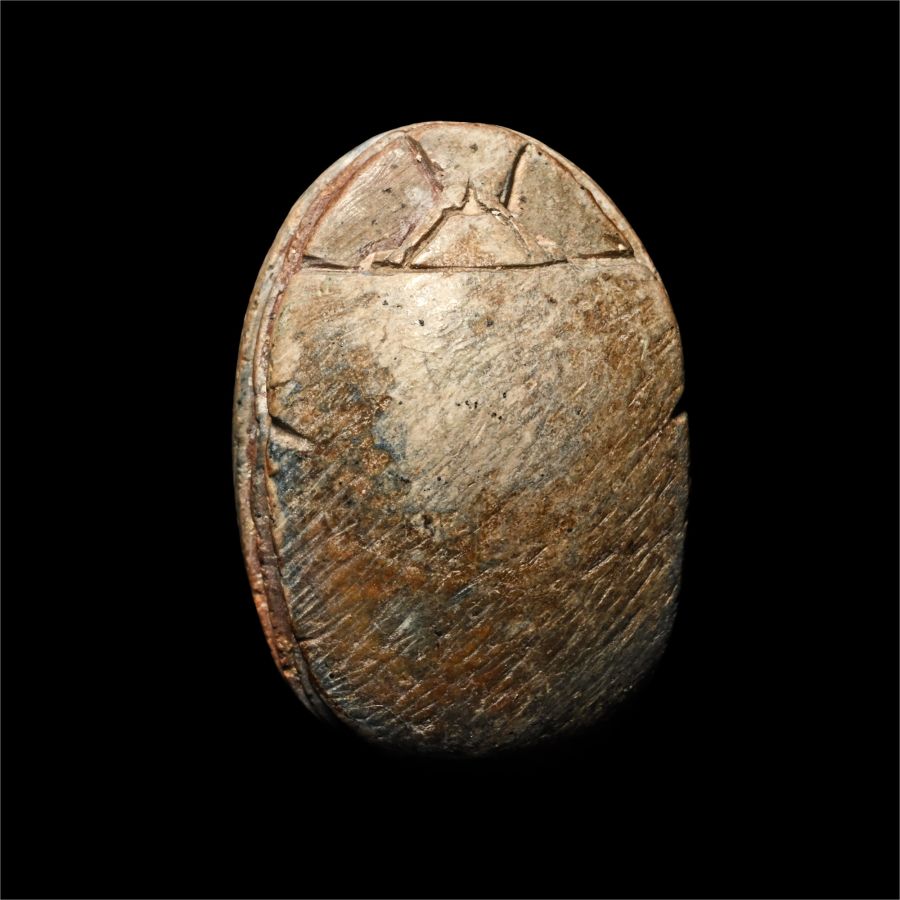
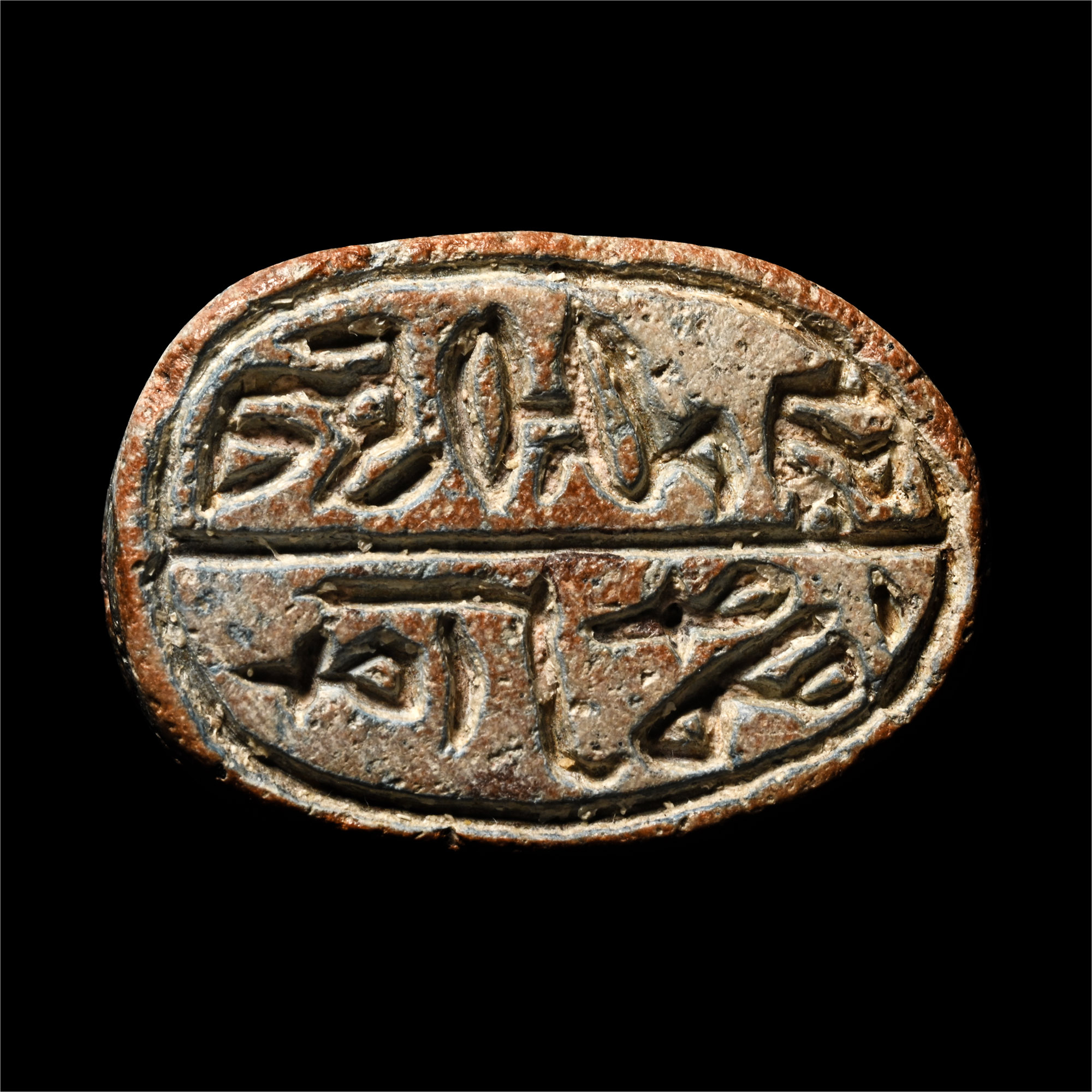
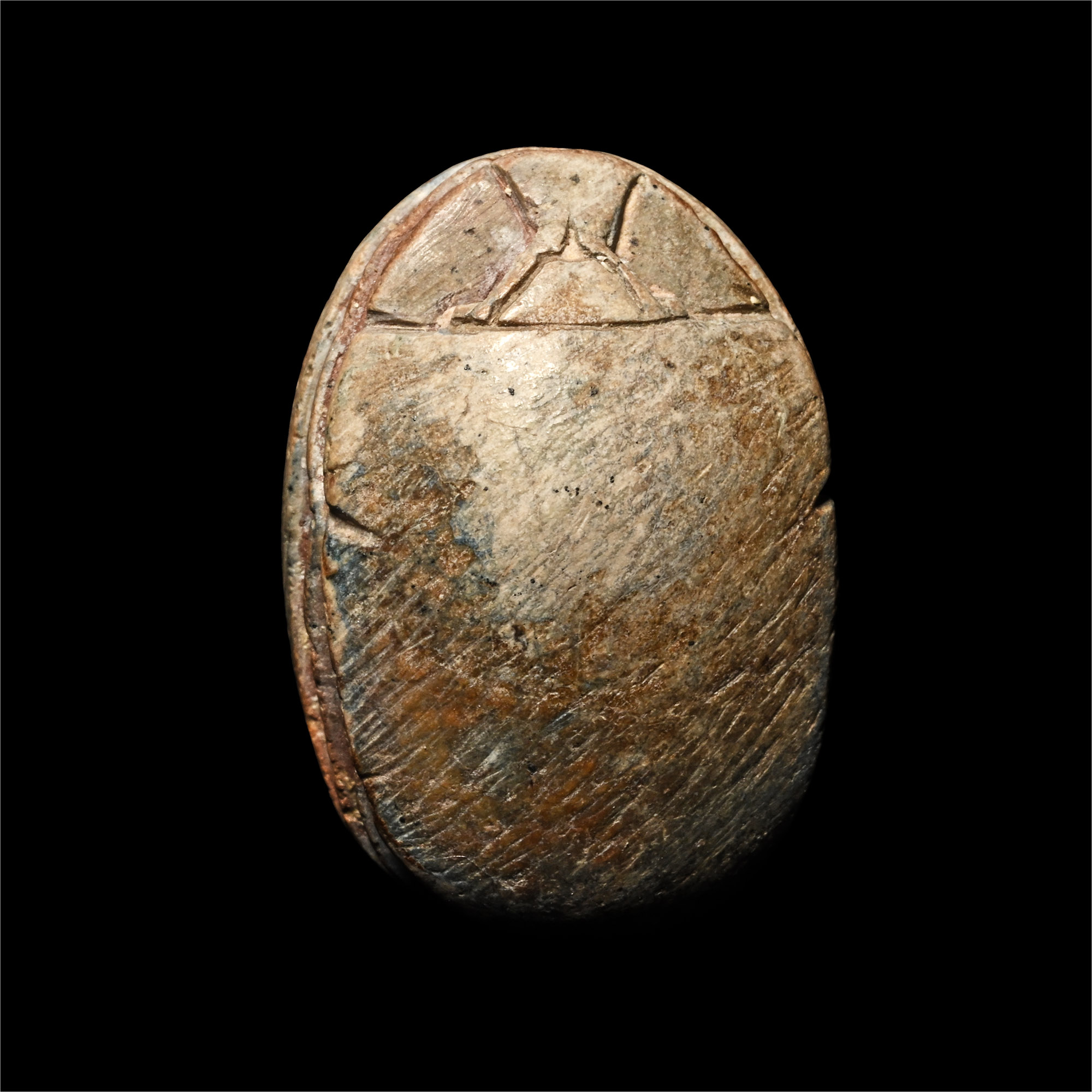
Large Egyptian Scarab for the Overseer of the Treasury Har
SECOND INTERMEDIATE PERIOD, CIRCA 1650–1530 B.C.
7/8 in. (4.54 grams, 22 mm).
Stylised scarab body with low-relief clypeus and head, two notches marking the division between prothorax and elytra, and legs modelled along the sides; underside divided vertically into two panels with incised hieroglyphs reading: 'Seal-bearer of the King of Lower Egypt, Overseer of the Treasury, Har'.
ProvenancePrivate collection of Kal Noselson, New York, acquired between 1976 and the late 1990s; thence by descent.
Accompanied by the collector's original inked images.
Cf. Ben-Tor, D., The Scarab: A Reflection of Ancient Egypt, Tel Aviv, 1993, p. 64, no. 17, for another example of a scarab dedicated to Har.
CONDITIONTimeLine Auctions follows a vetting process to ensure the authenticity and legality of all items, reinforcing our commitment to integrity and responsible trading. Each antiquity, antique, and coin lot undergoes thorough examination by a vetting committee of at least ten external specialists, professional trade association members, scientists, and archaeologists: Our Vetting Process
AUCTIONS:
TimeLine is a leading auction house specialising in antiquities, ancient art, collectables, natural history, coins, medals, and books. Our auctions offer museums, collectors, historians, and enthusiasts the opportunity to acquire unique and historically significant pieces.
LOT 0734
Large Egyptian Scarab for the Overseer of the Treasury Har
Estimate £100 - 140€120 - 160 (for guidance only)$140 - 190 (for guidance only)
Opening Bid
£50 (EUR 58; USD 68) ‡+BP*
-
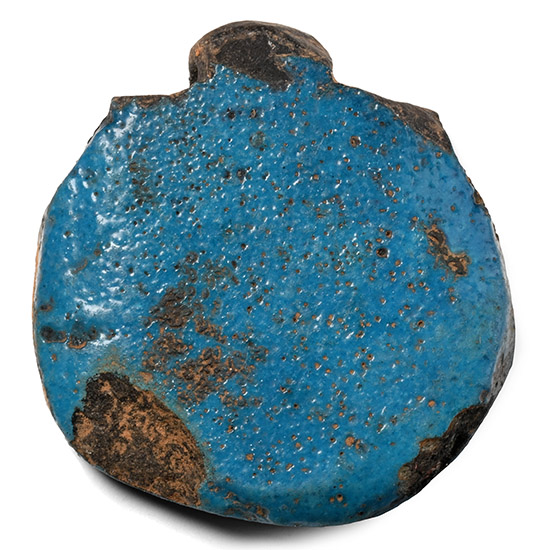
Large Egyptian Bright Blue Faience Sun Disc Amulet
Late Period, 664-332 B.C.Estimate: £40 - 60 (+bp*)
Opening Bid: £5
Large discoid with deep blue glaze, representing the sun disc on the horizon, pierced at the top. 7.5 grams, 32 mm
Excavated from Egypt in 1914. From the private collection of Mr David Sams and his wife, Elizabeth Kate Sams, gentry and amateur archaeologists who travelled to Egypt in 1914 with their daughter, Ethel. Mr Sams and his wife led digging expeditions from which these items come, from the family estate of Mr and Mrs Sams, by direct descent to their granddaughter.
The sun disc and sun-disc-on-the-horizon (akhty) amulets are linked to the deceased's rebirth. -
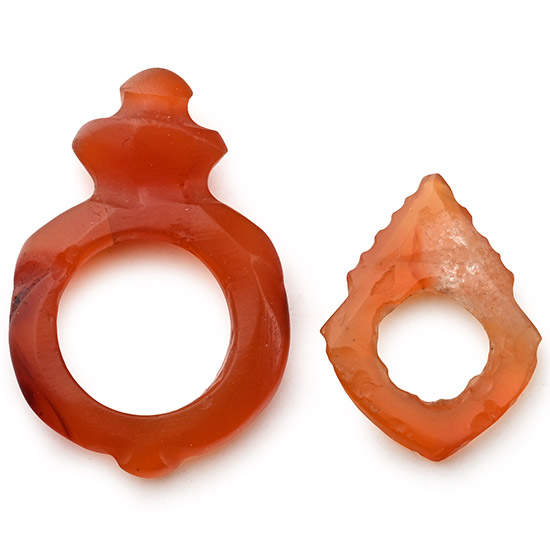
Egyptian Carnelian Ring Collection
1st millennium B.C.Estimate: £100 - 140 (‡+bp*)
Opening Bid: £45
Comprising: a lozenge-shaped ring with a triangular raised extension with serrated edges; a D-section hoop with a raised facetted bezel and a central boss. 4.33 grams total, 21-30 mm
Ex Carl Leonhard Burckhardt-Reinhard (1902-1965), formed since 1922, Egypt. Inherited by his son, Christopher Burckhardt, in 1966, Switzerland. Since then in the possession of his wife, Switzerland. -
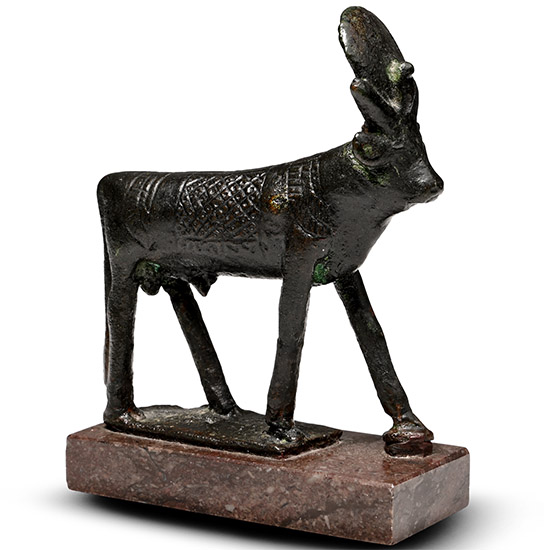
Egyptian Bronze Votive Apis Bull Statue
Ptolemaic Period, 2nd-1st century B.C.Estimate: £1,200 - 1,700 (‡+bp*)
Opening Bid: £650
Small votive statuette of a bull advancing with a sun disc and uraeus between the horns, on a rectangular plinth; incised caparison and two falcons with outstretched wings on its back; phallus and testicles present; mounted on a custom-made stand. 90 grams total, 72 mm high including stand
Ex Zurich art market, 1980s. Private collection Brigitte Leu, Zurich, between 1980 and 2003.
In Ancient Egypt, bull deities embodied aspects of fertility or the creative power of certain gods, such as Ra. Originally, the Apis bull was a fertility god in his own right, but he could also merge syncretically with other deities. For example, the creator god Ptah of Memphis found his "living repetition" in the Apis bull. When an Apis bull died, it was given a lavish funeral and interred in a magnificent hard-stone sarcophagus within the dedicated catacombs at Saqqara known as the Serapeum.
