
Loading, please wait...
LOT 1576
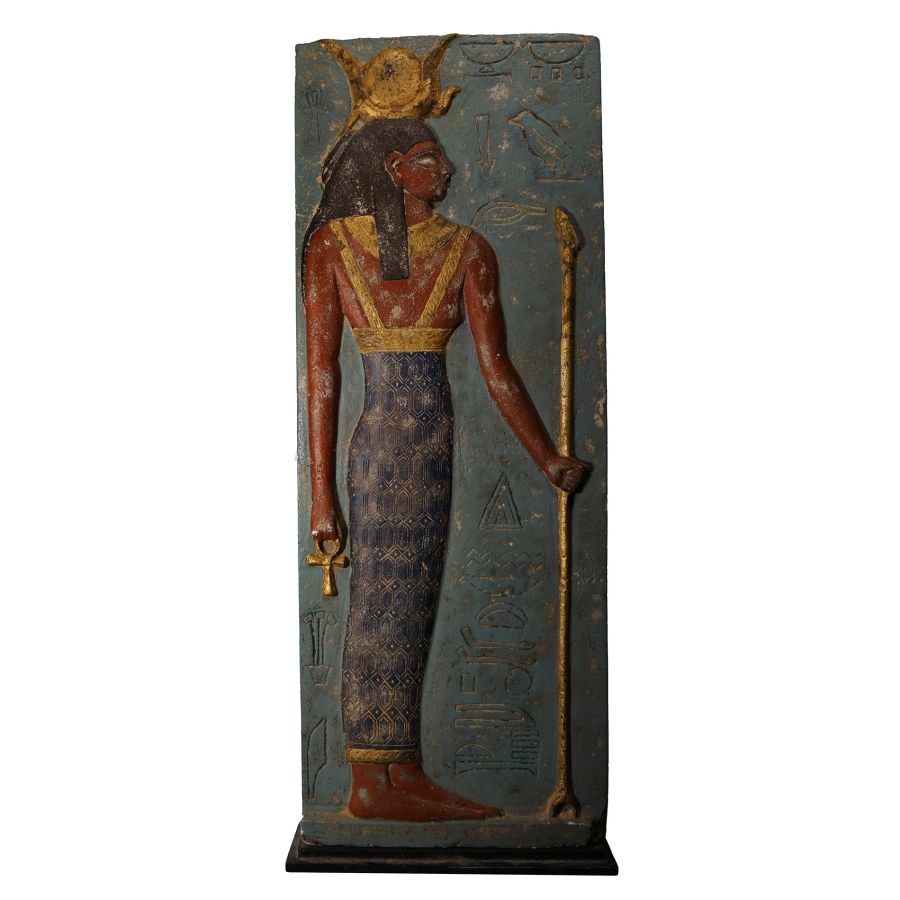
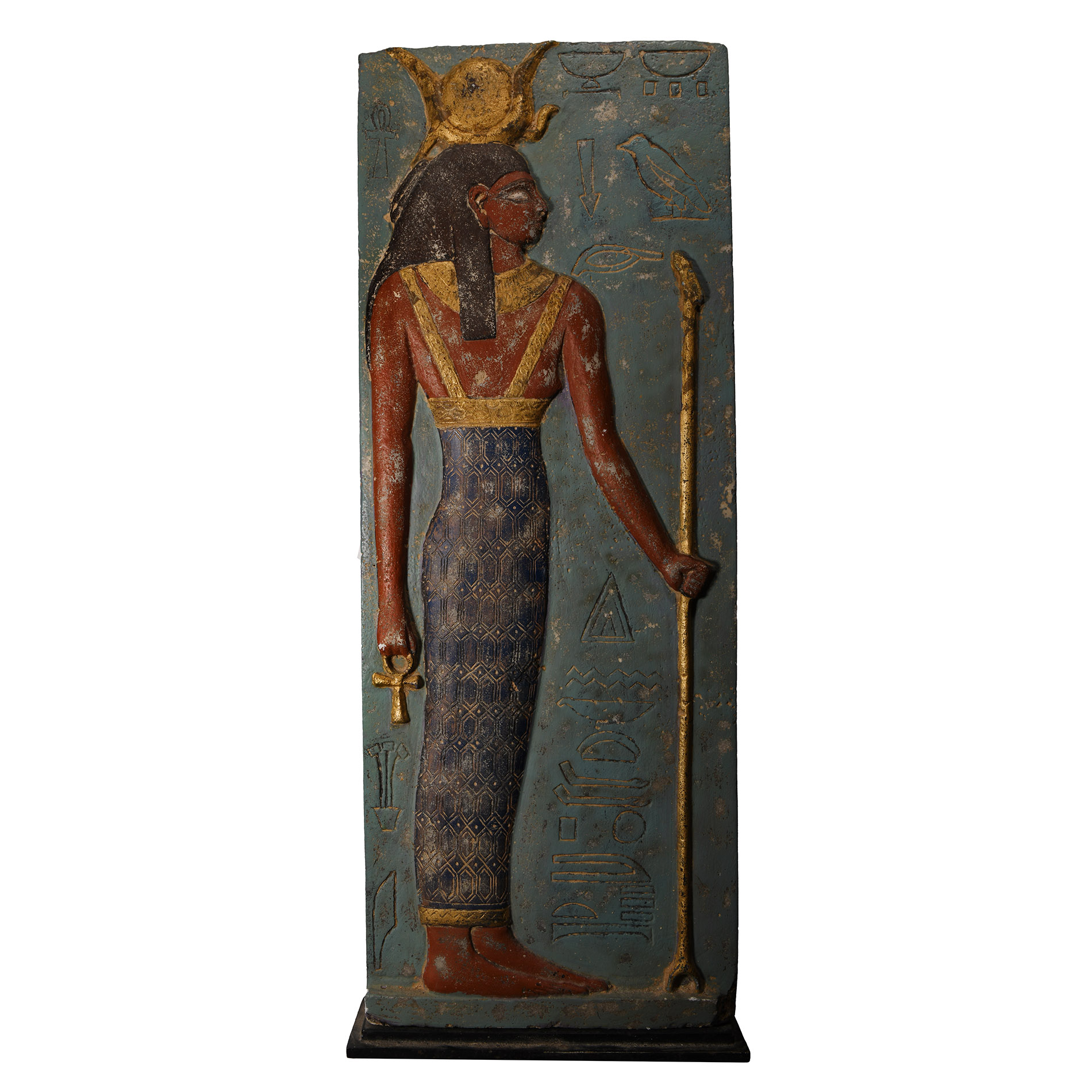
Large Egyptian Revival Painted Stone Plaque
20TH CENTURY A.D.
32 in. (38.6 kg, 81 cm).
A substantial decorative designer plaque depicting the goddess Hathor in high-relief, standing wearing a headdress with solar-disc flanked by cow's horns, segmented wesekh collar and tight-fitting ankle-length skirt with hexagonal pattern; holding a was sceptre with animal-head terminal; hieroglyphs and symbols in the field; mounted on a custom-made stand; after the antique. [No Reserve]
ProvenanceFrom a French collection, Paris.
Ex Parisian gallery, France; latterly with a London, UK, gallery.
TimeLine Auctions follows a vetting process to ensure the authenticity and legality of all items, reinforcing our commitment to integrity and responsible trading. Each antiquity, antique, and coin lot undergoes thorough examination by a vetting committee of at least ten external specialists, professional trade association members, scientists, and archaeologists: Our Vetting Process
AUCTIONS:
TimeLine is a leading auction house specialising in antiquities, ancient art, collectables, natural history, coins, medals, and books. Our auctions offer museums, collectors, historians, and enthusiasts the opportunity to acquire unique and historically significant pieces.
-
.jpg)
Post Medieval Ornate Ceramic Statue Base
17th-18th century A.D.Sold for (Inc. bp): £117
Hollow formed with rectangular body, the front modelled with volute scrolls enclosing a rounded face, possibly depicting a putto. 1.6 kg, 13 cm high
Acquired 1950s-1960s. Private UK collection of Joseph Duncan Steel, Southampton, UK. Property of an East Sussex, UK, gentleman. -
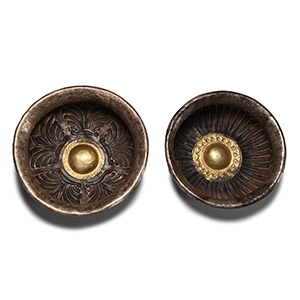
Greek Style Silver Bowl Group
20th century A.D.Sold for (Inc. bp): £156
Group of two silver 'Phiale Mesomphalos' bowls comprising: squat-bodied with short neck and everted rim, repoussé rosette fluting to the base and lower body, central gilt mesomphalos surrounded by punched triangles; similar with repoussé palmettes to the sidewall, mesomphalos surrounded by a braided wreath. 249 grams total, 11.2 - 12.2 cm
From a UK private collection, before 1980. -
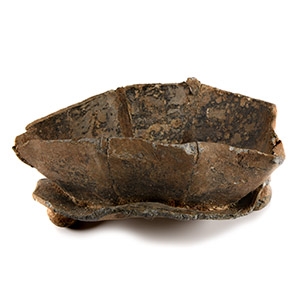
Post Medieval Octagonal Lead Tobacco Jar
Mid 17th-18th century A.D.Sold for (Inc. bp): £13
With deep body resting on a wide base with spherical feet (two absent). 465 grams, 11.8 cm wide
Found Somerset, UK. Accompanied by a letter from Bristol Museum dated 26th July 1990 identifying the object.
