
Loading, please wait...

LOT 0466
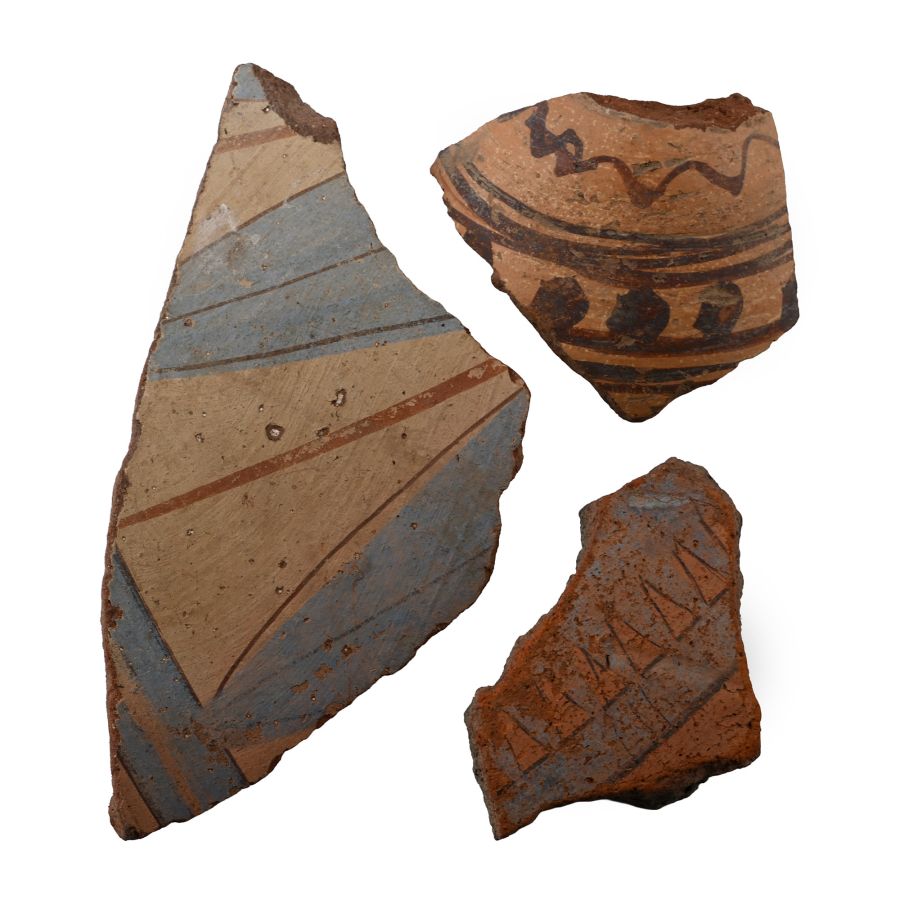
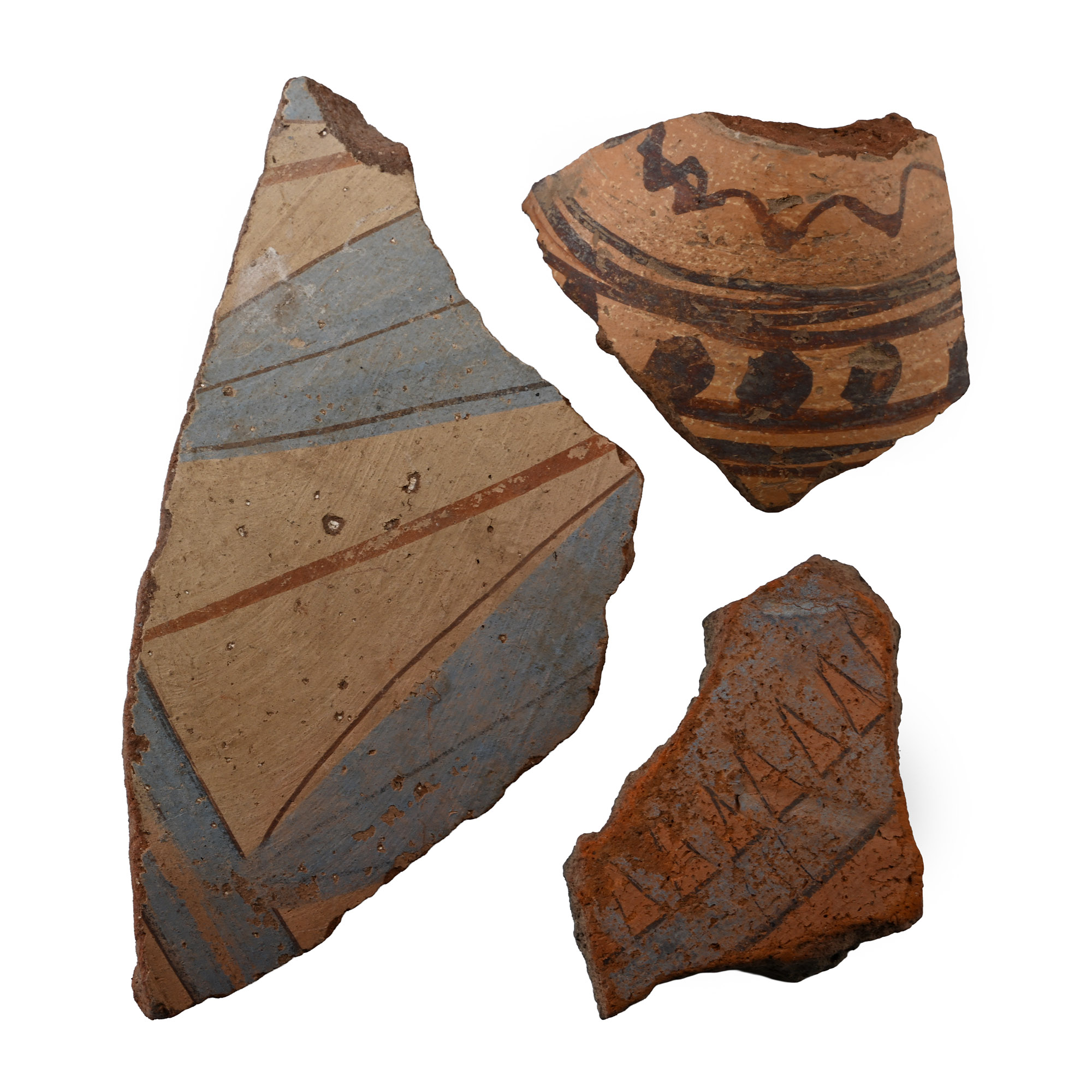
Large Egyptian Painted Bowl Fragments
NEW KINGDOM, 18TH DYNASTY, AMARNA PERIOD, 1379-1362 B.C.
2 7/8 - 6 1/2 in. (221 grams total, 7.2-16.5 cm).
Two fragments of distinctive blue-painted pottery and one from a Mycenaean vessel. [3, No Reserve]
ProvenanceAcquired in March 1979.
From the private collection of Peter Clayton, FCILIP, Dip, Arch, FSA, FRNS, Hemel Hempstead, Hertfordshire, UK; formed since the late 1950s.
Accompanied by an old handwritten information card by Peter Clayton, collection no.143.
The largest blue-painted fragment likely comes from the neck, and the smaller from the body, of a large storage vessel; intact examples of these vessels have been found at Amarna (cf. Seyfried, F. (ed.), In the Light of Amarna: 100 Years of the Nefertiti Discovery, Berlin, 2012, pp. 288-289, Cat. no. 68, for a near-complete example).
Amarna has yielded the largest quantity of Late Helladic (LH IIIA2) Mycenaean pottery in Egypt. Analysis has revealed that several Mycenaean sherds excavated at Amarna in Egypt come from a production site in the northern Argolid, probably in the Mycenae-Berbati region.
TimeLine Auctions follows a vetting process to ensure the authenticity and legality of all items, reinforcing our commitment to integrity and responsible trading. Each antiquity, antique, and coin lot undergoes thorough examination by a vetting committee of at least ten external specialists, professional trade association members, scientists, and archaeologists: Our Vetting Process
AUCTIONS:
TimeLine is a leading auction house specialising in antiquities, ancient art, collectables, natural history, coins, medals, and books. Our auctions offer museums, collectors, historians, and enthusiasts the opportunity to acquire unique and historically significant pieces.
LOT 0466
Large Egyptian Painted Bowl Fragments
Estimate £80 - 100€93 - 116 (for guidance only)$108 - 135 (for guidance only)
Opening Bid
£5 (EUR 6; USD 7) +BP*
-
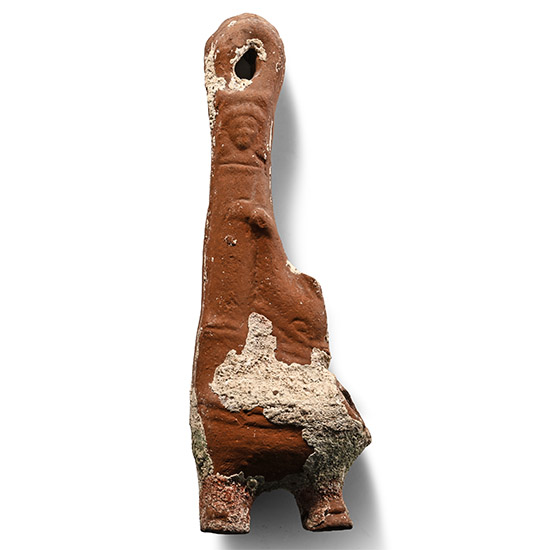
Egyptian Terracotta Alexandrian Figure
Roman Period, 30 B.C.-323 A.D.Estimate: £120 - 170 (+bp*)
Bids: 1 | Current Bid: £5
Hollow-formed vessel with bulbous body and two flared feet below, vertical handle with loop finial and moulded mummy and dolphin motif; marine accretion; inked to underside 'Ex M. Suzanne / Alexandria / 1903-1920'. 178 grams, 19.5 cm
From the collection of David Donlan (1947-2025), a dedicated and lifelong collector with a passion for the ancient world and the natural sciences, forming his collection from 1960s onwards, using many reputable dealers across the United Kingdom, including the well-regarded Coincraft and The Parthenon Gallery. -
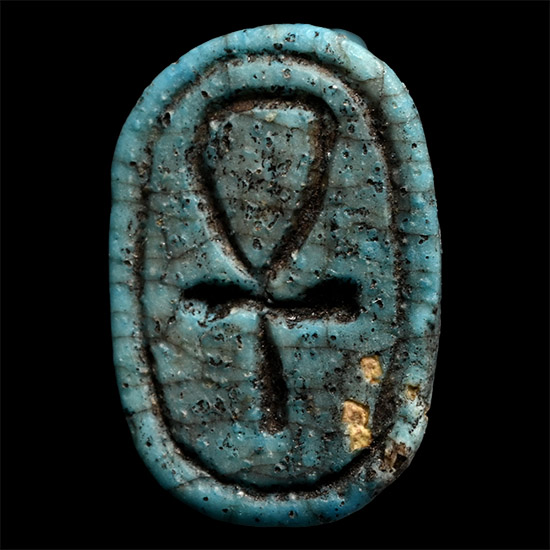
Egyptian Faience Scaraboid Frog Amulet with Ankh
Late Period, 664-332 B.C.Estimate: £120 - 170 (+bp*)
Opening Bid: £60
Modelled in the round, crouching on a rectangular base, incised ankh to the underside. 0.48 grams, 11 mm
From an important UK collection, 1940s.
Frog amulets in ancient Egypt symbolised fertility, rebirth, and renewal. Associated with the goddess Heqet, linked to childbirth and life-giving forces, they were especially popular for fertility and for protection during pregnancy and labour. Their association with the annual Nile flood, which brought new life to the land, further emphasised their symbolism of revival and abundance. The ancient Egyptian ankh hieroglyph on the amulet's base, meaning "life," reinforces the creature's symbolism. -
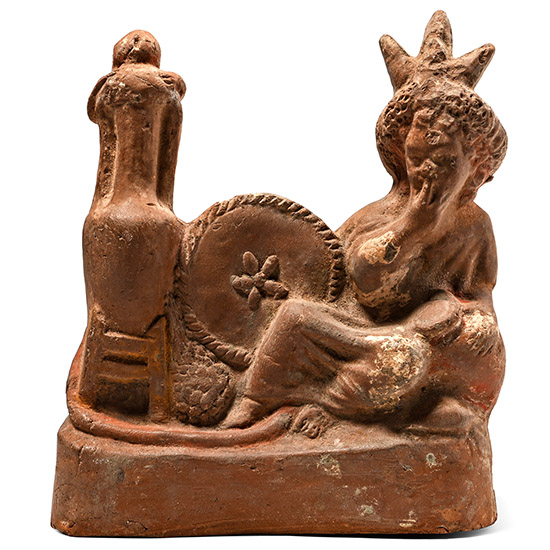
Romano-Egyptian Terracotta Figure of Seated Harpocrates
Alexandria, 1st century A.D.Estimate: £500 - 700 (‡+bp*)
Opening Bid: £275
Hollow-formed and moulded in the half-round, reclining figure with wreath and diadem, amphora and other items; hollow to the underside. 236 grams, 12.4 cm
The Erotica Collection of Christian von Faber-Castell, Küsnacht ZH, Switzerland; acquired in November 1997 or 1998 from Galerie Puhze, TEFAF Basel, no.137. with Jean-David Cahn Auktionen AG, Basel, 9 November 2013, no.66.
