
Loading, please wait...

LOT 0435
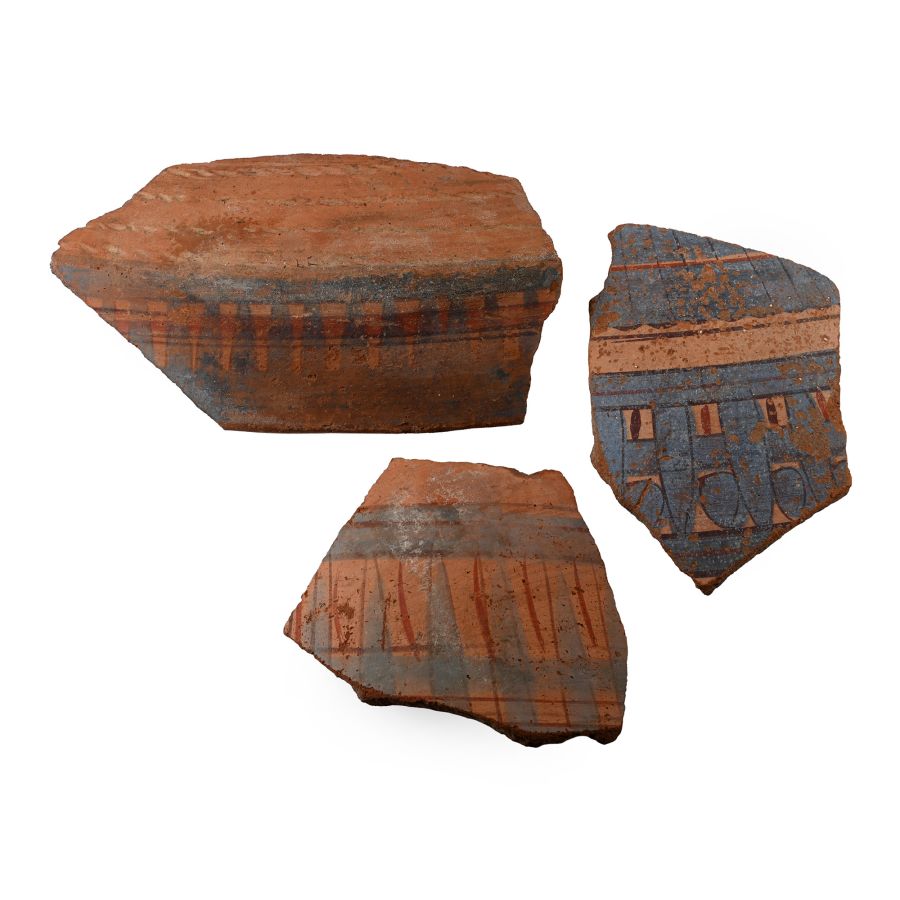
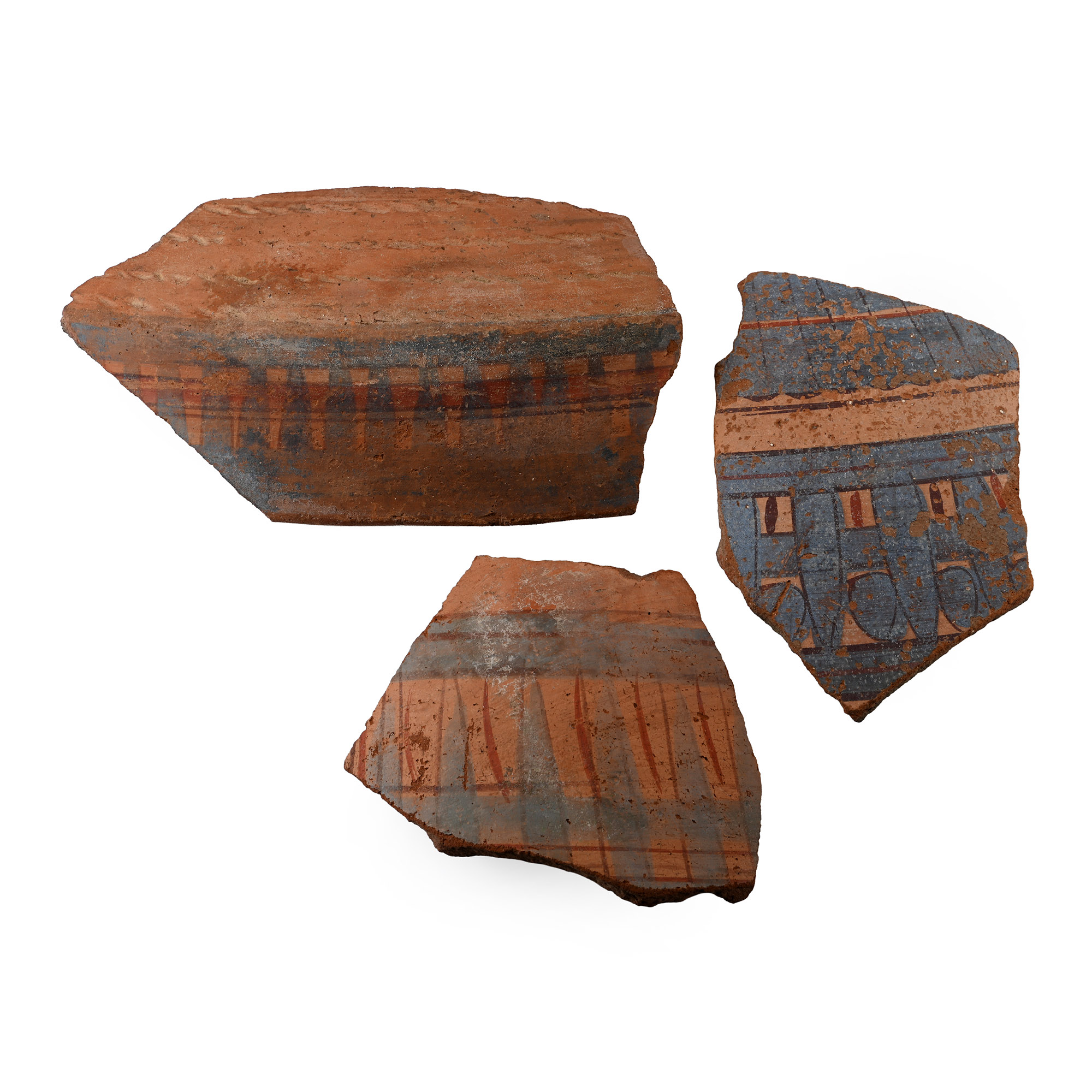
Large Egyptian Painted Bowl Fragments
NEW KINGDOM, 18TH DYNASTY, AMARNA PERIOD, 1379-1362 B.C.
4 1/2 - 7 1/8 in. (545 grams total, 11.5-18 cm).
Three fragments from three highly decorated blue-painted vessels. [3, No Reserve]
ProvenanceAcquired in February 1978.
From the private collection of Peter Clayton, FCILIP, Dip, Arch, FSA, FRNS, Hemel Hempstead, Hertfordshire, UK; formed since the late 1950s.
Accompanied by an old handwritten information card by Peter Clayton, collection no.140.
Seyfried, F. (ed.), In the Light of Amarna: 100 Years of the Nefertiti Discovery, Berlin, 2012, pp. 132-135, for an illustrated discussion of the technical production of blue-painted pottery.
FootnotesThe distinctive blue colour on these pottery fragments came from a cobalt-and-aluminium slip that reacted during firing.
CONDITIONTimeLine Auctions follows a vetting process to ensure the authenticity and legality of all items, reinforcing our commitment to integrity and responsible trading. Each antiquity, antique, and coin lot undergoes thorough examination by a vetting committee of at least ten external specialists, professional trade association members, scientists, and archaeologists: Our Vetting Process
AUCTIONS:
TimeLine is a leading auction house specialising in antiquities, ancient art, collectables, natural history, coins, medals, and books. Our auctions offer museums, collectors, historians, and enthusiasts the opportunity to acquire unique and historically significant pieces.
LOT 0435
Large Egyptian Painted Bowl Fragments
Estimate £80 - 100€93 - 116 (for guidance only)$108 - 135 (for guidance only)
Opening Bid
£5 (EUR 6; USD 7) +BP*
-
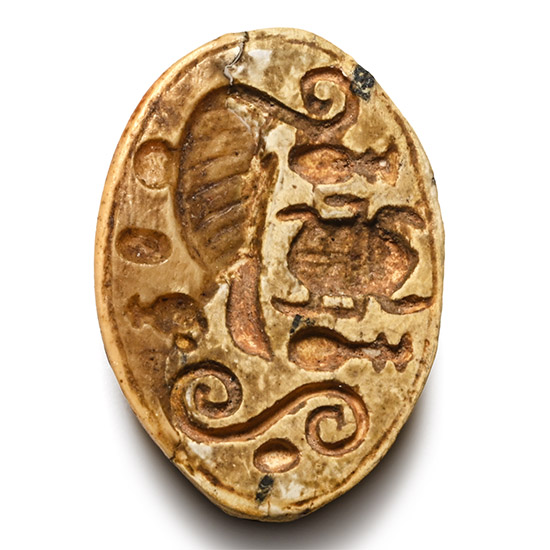
Egyptian Stone Scarab
Late Period, 664-332 B.C.Estimate: £40 - 60 (+bp*)
Opening Bid: £5
Scaphoid plaque with a ribbed dome on the obverse and a flared mouth at the socket; underside with incuse hieroglyphs and symbols, including a scarab flanked by two nefer signs, an S-scroll, a standing vulture, and others; supplied with an impression. 1.22 grams, 18 mm
From the private collection of a European gentleman (1942-2024), formed since the 1970s. -
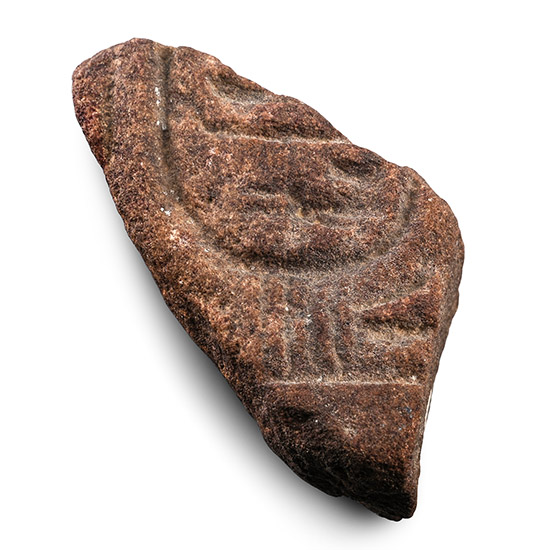
Egyptian Red Quartzite Granite Hieroglyphic Fragment with Remains of a Cartouche
New Kingdom, 18th Dynasty, Amarna Period, 1379-1362 B.C.Estimate: £60 - 80 (+bp*)
Opening Bid: £5
Dressed stone fragment preserving the lower part of an incised cartouche. 102 grams, 67 mm
Acquired in February 1978. From the private collection of Peter Clayton, FCILIP, Dip, Arch, FSA, FRNS, Hemel Hempstead, Hertfordshire, UK; formed since the late 1950s. Accompanied by an old handwritten information card by Peter Clayton, collection no.139.
The cartouche appears to contain two narrow horizontal hieroglyphs and the lower part of a circle, suggesting it is the throne name of Akhenaten, Neferkheperure. -
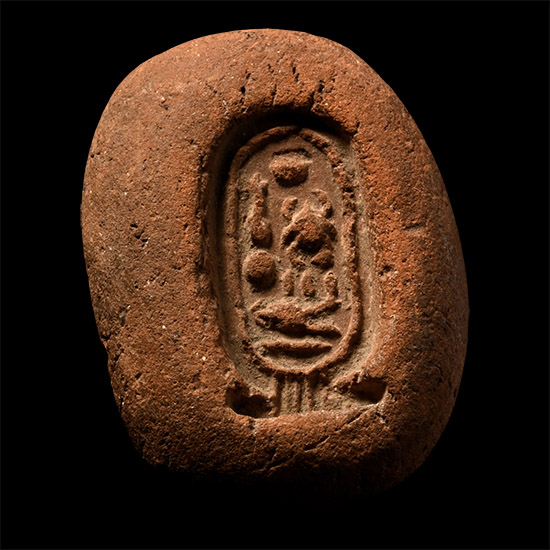
Egyptian Terracotta Mould with Impression of the Cartouche of Pharaoh Akhenaten
New Kingdom, 18th Dynasty, Amarna Period, 1353-1332 B.C.Estimate: £400 - 600 (+bp*)
Opening Bid: £5
Rounded tongue-shaped mould with an impressed cartouche containing the throne name of Akhenaten, Nefer-kheperu-Re (meaning 'Beautiful are the Manifestations of Re'). 4.26 grams, 25 mm
Acquired 7th February 1962, for 5 shillings. From the private collection of Peter Clayton, FCILIP, Dip, Arch, FSA, FRNS, Hemel Hempstead, Hertfordshire, UK; formed since the late 1950s. Accompanied by an old handwritten information card by Peter Clayton, collection no.86.
Moulds like this were used to produce faience amulets or inlays bearing the pharaoh's cartouche. Akhenaten's throne name, Nefer-kheperu-Re, remained unchanged throughout his reign, while his birth name changed from Amenhotep IV ('Amun is satisfied') to Akhenaten ('Servant of the Aten').
