
Loading, please wait...
LOT 0038
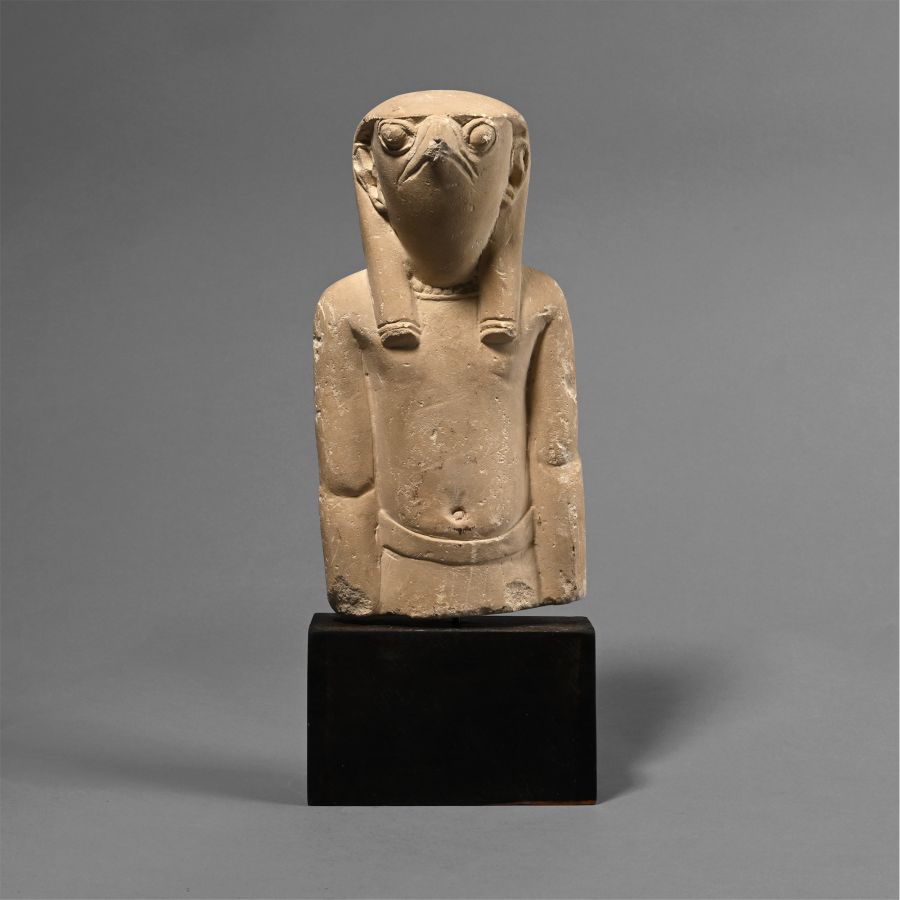
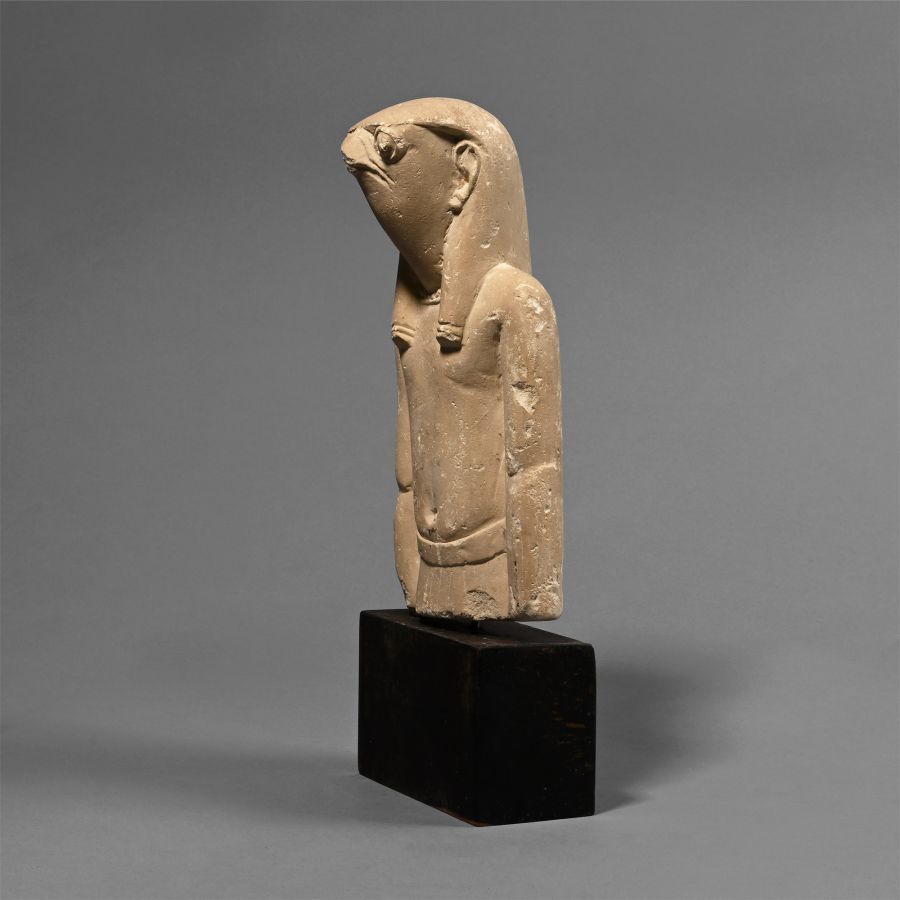
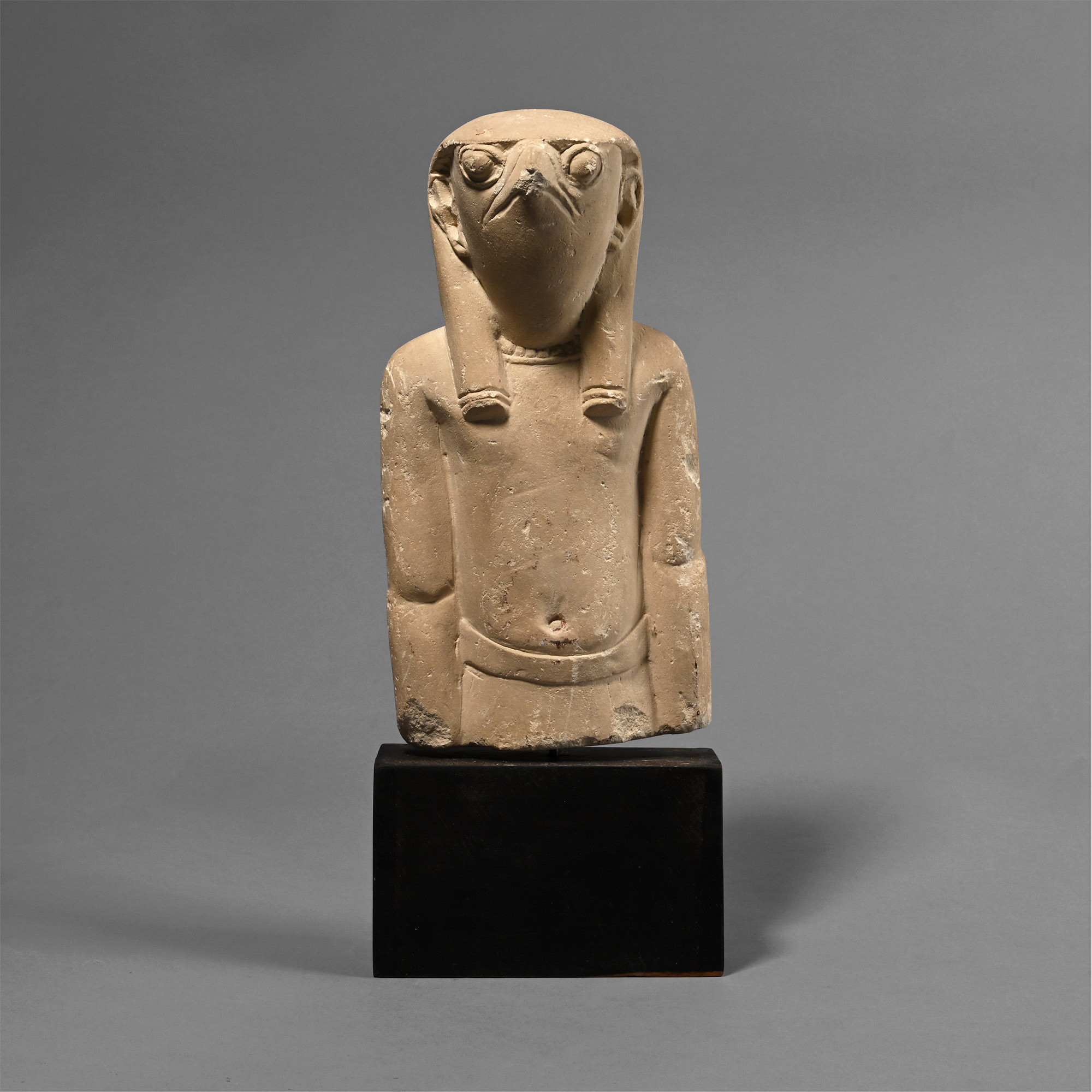
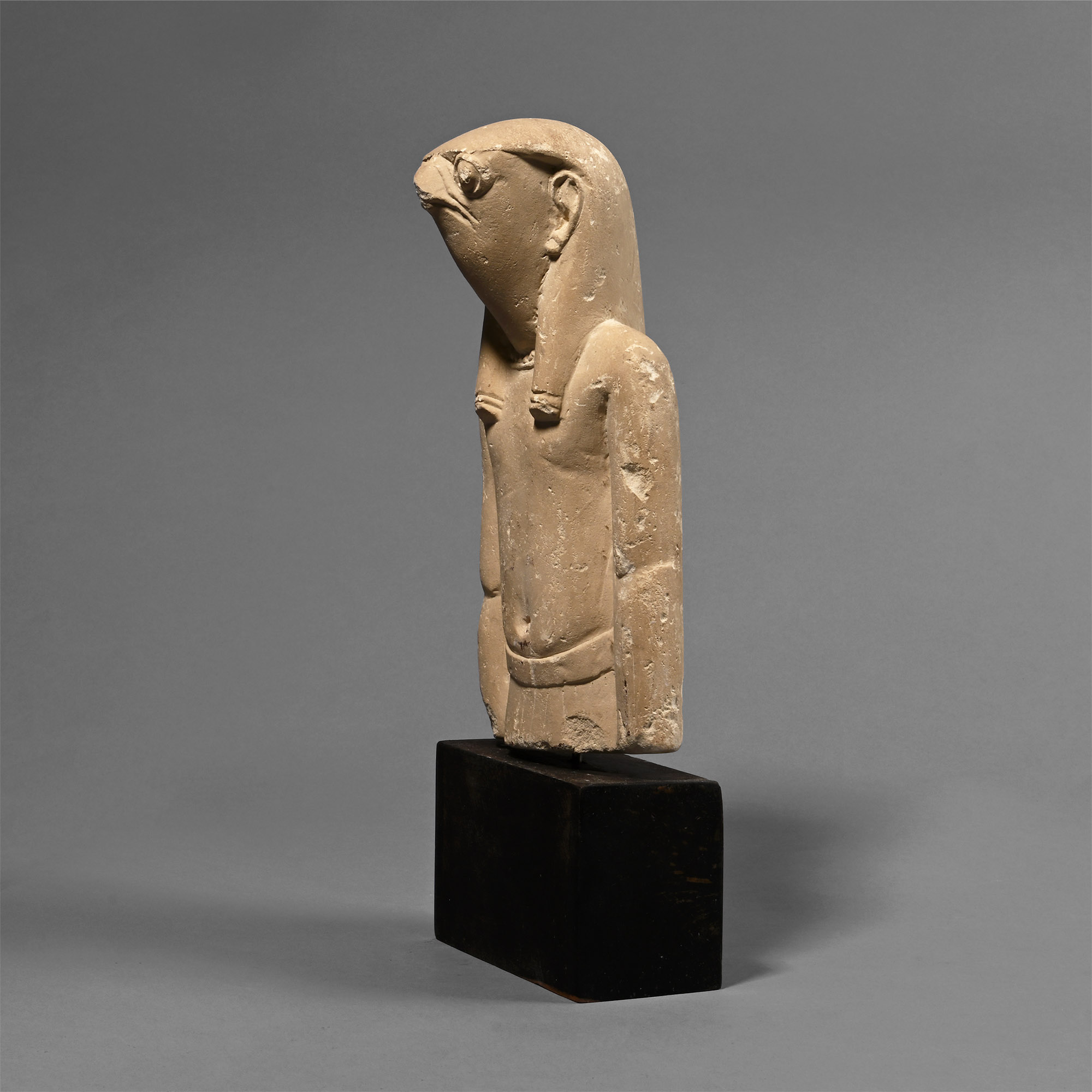
Large Egyptian Limestone Statue of the Falcon God Horus
GRAECO-ROMAN PERIOD, 332 B.C.-323 A.D.
13 1/4 in. (2.42 kg total, 33.5 cm high including stand).
Carved in the round figure of Horus wearing a tripartite wig and beaded collar, a belted kilt to the waist; mounted on a custom-made stand.
ProvenanceFrom a UK private collection.
with Mallams, Oxford, Library Sale, 2025.
Acquired by the current owner from the above.
Accompanied by a copy of an illustrated academic report by Simone Musso.
Cf. Daressy, G., Statues de Divinites Vols I-II, Cairo, 1905, for similar votive statues.
CONDITIONTimeLine Auctions follows a vetting process to ensure the authenticity and legality of all items, reinforcing our commitment to integrity and responsible trading. Each antiquity, antique, and coin lot undergoes thorough examination by a vetting committee of at least ten external specialists, professional trade association members, scientists, and archaeologists: Our Vetting Process
AUCTIONS:
TimeLine is a leading auction house specialising in antiquities, ancient art, collectables, natural history, coins, medals, and books. Our auctions offer museums, collectors, historians, and enthusiasts the opportunity to acquire unique and historically significant pieces.
LOT 0038
Large Egyptian Limestone Statue of the Falcon God Horus
Estimate £1,500 - 2,000€1,740 - 2,320 (for guidance only)$2,030 - 2,700 (for guidance only)
Opening Bid
£350 (EUR 406; USD 473) +BP*
-
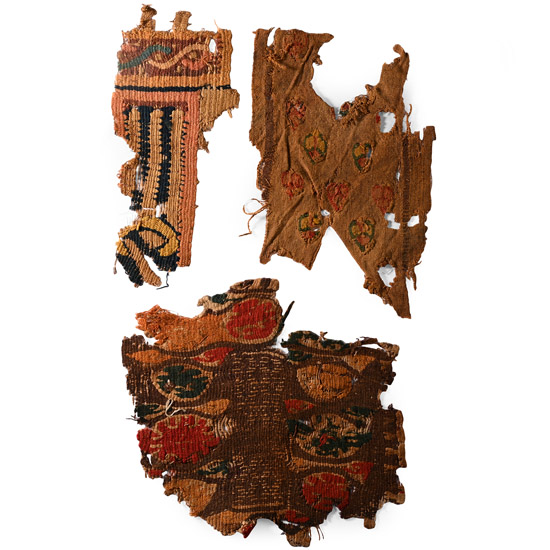
Egyptian Coptic Tunic and Tapestry Textile Fragments with Flowers and Geometric Ornaments
Circa 6th-8th century A.D.Estimate: £80 - 100 (+bp*)
Opening Bid: £5
Comprising a fragment of a clavus decorated with rows of heart-shaped buds in green, red, and yellow wool on linen, with edges marked by brown bands; a large fragment of coarse wool, consisting of a central rectangle with lozenge ornamentation in yellow and brown wool, surrounded by rectangular sections enclosing images of rabbits within yellow, green, and red medallions, facing left; and a textile fragment with geometric decoration in purple, yellow, light red, green, and black wool. 33 grams total, 21-26 cm
Acquired 1970s-1996. Property of a North American collector. London collection, 2016.
The large fragment featuring lozenge decoration, despite displaying figures associated with the Dionysian retinue (rabbits or hares), may date to the early period of the Islamic conquest, when tunic ornamentation began to take on an increasingly abstract and geometric character. -
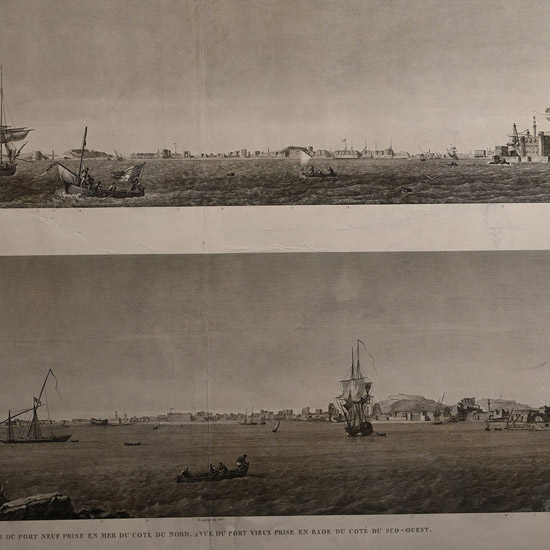
Very Large Egyptian Expedition Lithograph of Views of Alexandria
Early 19th century A.D.Estimate: £80 - 100 (+bp*)
Opening Bid: £40
Proof etching on laid paper of plate 88 from Description de l'Égypte : ou, Recueil des observations et des recherches qui ont été faites en Égypte pendant l'expédition de l'armée française. entitled 1. Vue du port neuf en mer du cote du nord. 2. Vue du port vieux prise en rade du cote du sud-ouest. 259 grams, 104.5 x 69 cm
From the collection of a North American priest. Acquired between 1981-1996. Property of a North American collector.
Produced between February 1802 and 1830 on the orders of Napoleon Bonaparte; published between 1809 and 1828. Just 1,000 copies were distributed to various institutions, printed on laid paper with an 'Égypte ancienne et moderne' watermark. The book is subtitled Recueil des observations et des recherches qui ont été faites en Égypte pendant l’expédition de l’Armée française, publié par les ordres de Sa Majesté l’Empereur Napoléon le Grand (Gathering of observations and discoveries which were made in Egypt during the expedition of the French army, published on the orders of His Majesty the Emperor Napoleon the Great). It was the world's first encyclopedia devoted exclusively to the remains of ancient Egypt. The plates of this book are the first to present the archaeological sites of Thebes (Luxor). -
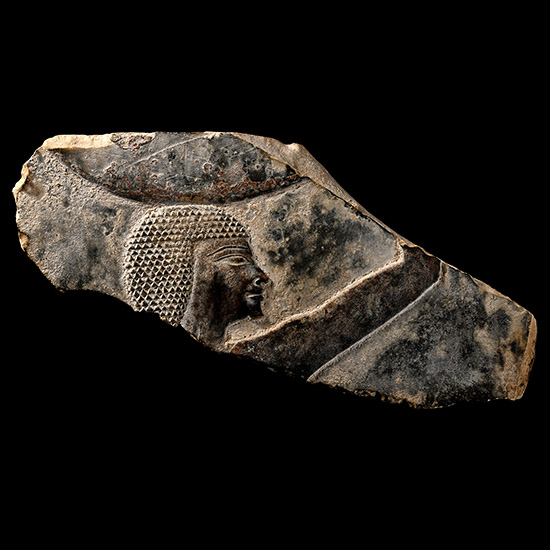
Egyptian Limestone Relief Fragment of a Man
26th Dynasty, 664-525 B.C.Estimate: £1,000 - 1,400 (+bp*)
Bids: 1 | Current Bid: £5
An irregular, elongated limestone fragment intricately carved in low, raised relief, depicting the head and neck of a male figure facing right, wearing a tightly curled wig and a short beard, his arm extended upwards, likely to support the large basket resting on his head. 180 grams total including stand, fragment: 14.5 cm wide
From the private collection of Peter Clayton, FCILIP, Dip, Arch, FSA, FRNS, Hemel Hempstead, Hertfordshire, UK; formed since the late 1950s.
The downturned eyebrow above an almond-shaped eye with a sharply defined eyelid and a long, thin cosmetic line, the small, fairly rounded nose with a lightly drilled nostril above rather thick lips, and the chin below obscured by the short beard are characteristic of the archaising style of the early 26th Dynasty. Artisans of that period adapted and refined earlier Old Kingdom artistic traditions, most apparent in the tomb scenes of high officials at Thebes, particularly those of Montuemhat (see the discussion: der Manuelian, P., 'Two Fragments of Relief and a New Model for the Tomb of Montuemhet at Thebes', Journal of Egyptian Archaeology 71 (1985), pp. 98–121).
