
Loading, please wait...
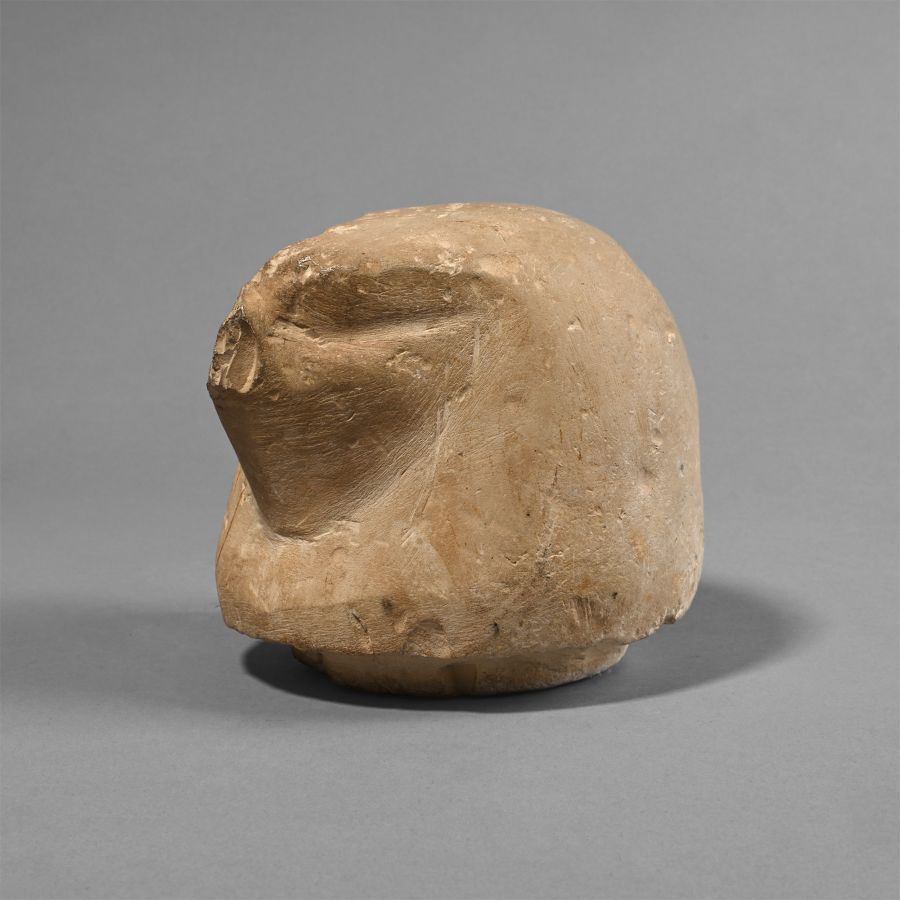

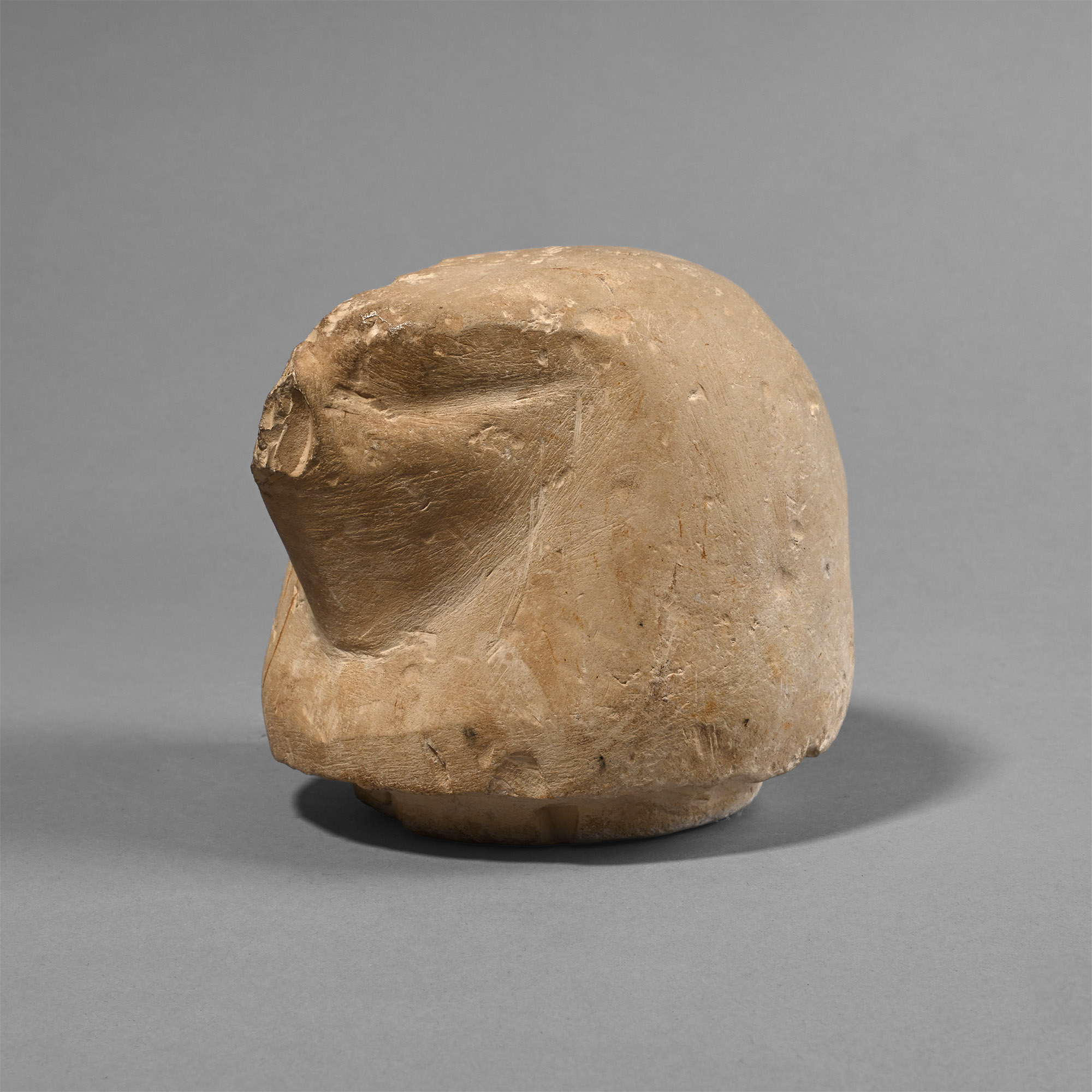
LOT 0413
Large Egyptian Limestone Qebehsenuef Canopic Jar Lid
NEW KINGDOM, 18TH DYNASTY, 1550-1292 B.C.
5 3/4 in. (2.74 kg, 14.6 cm wide).
Carved as an avian head with a discoid base to accept the rim of the canopic jar; old handwritten collector's note attached to the back of the head 'Found in rubble, literally tripped over, in tombs on West Bank, March 1963, group with Dr Veronica Seton-Williams'; old collector's card: 'Lid of hawk headed canopic jar. Duamutef (sic), guardian of the lungs and deity of the east in their general arrangement to the cardinal [?]. Made of white limestone, the right hand side much damaged...'; chipped. [No Reserve]
ProvenanceFrom the private collection of Peter Clayton, FCILIP, Dip, Arch, FSA, FRNS, Hemel Hempstead, Hertfordshire, UK; formed since the late 1950s.
Accompanied by an old handwritten identification card written by Peter Clayton.
The Four Sons of Horus safeguarded the deceased's internal organs. The human-headed Imsety protected the liver; the baboon-headed Hapy, the lungs; the jackal-headed Duamutef, the stomach; and the falcon-headed Qebehsenuef, the intestines. They often placed the viscera in canopic jars with the head of the respective Son of Horus.
CONDITIONTimeLine Auctions follows a vetting process to ensure the authenticity and legality of all items, reinforcing our commitment to integrity and responsible trading. Each antiquity, antique, and coin lot undergoes thorough examination by a vetting committee of at least ten external specialists, professional trade association members, scientists, and archaeologists: Our Vetting Process
AUCTIONS:
TimeLine is a leading auction house specialising in antiquities, ancient art, collectables, natural history, coins, medals, and books. Our auctions offer museums, collectors, historians, and enthusiasts the opportunity to acquire unique and historically significant pieces.
LOT 0413
Large Egyptian Limestone Qebehsenuef Canopic Jar Lid
Estimate £200 - 300€230 - 350 (for guidance only)$270 - 410 (for guidance only)
-
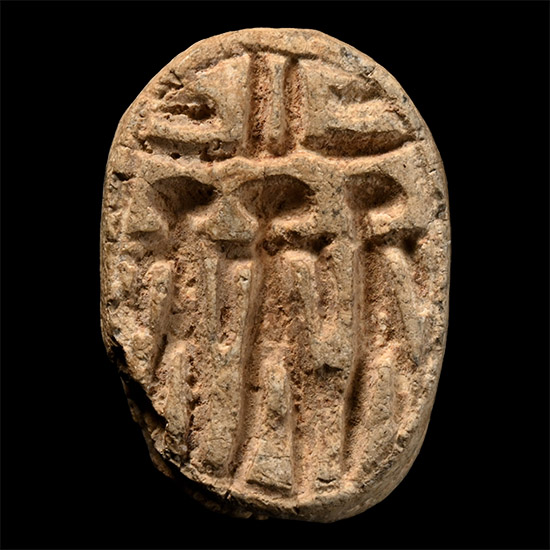
Egyptian Steatite Scarab with Three Figures
Second Intermediate Period, circa 1782-1550 B.C.Estimate: £50 - 70 (+bp*)
Bids: 1 | Current Bid: £5
With incised anatomical detailing on the body and legs, underside with three standing figures. 4.26 grams, 20 mm
Acquired from various London-based UK, antiquity dealers. From a Derbyshire gentleman's private museum, formed from the late 1970s-early 1980s. -
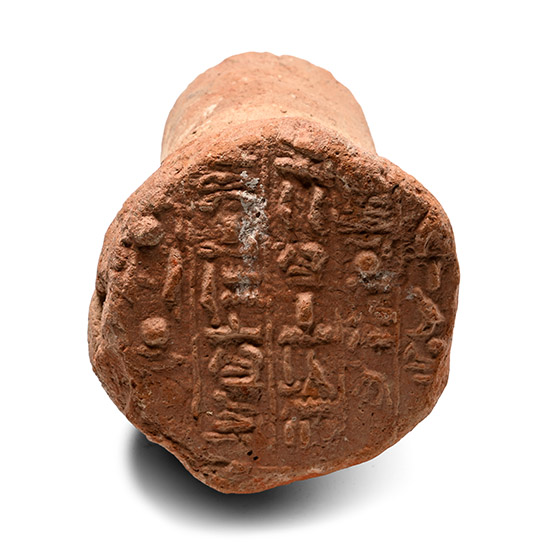
Egyptian Terracotta Funerary Cone of Amunhotep, called Huy
New Kingdom, 18th Dynasty, circa 1350 B.C.Estimate: £300 - 400 (+bp*)
Bids: 4 | Current Bid: £85
Front portion of a tapering funerary cone, with the circular flat end impressed with five columns of hieroglyphic text, reading: 'Honoured before Osiris, hereditary prince, Amunhotep, called Huy, this famous person in the entire land, born of the dignitary Hepu'. 220 grams, 71 mm
Acquired from Abdoul Rassoul on the West Bank at Luxor, 1974-1980 when a guest lecturer. From the private collection of Peter Clayton, FCILIP, Dip, Arch, FSA, FRNS, Hemel Hempstead, Hertfordshire, UK; formed since the late 1950s.
Although funerary cones of Amenhotep have been in circulation for a long time, his Theban tomb was not documented until 1996, when the German Egyptologist Friederike Kampp-Seyfried recorded it and assigned it the number 396. -
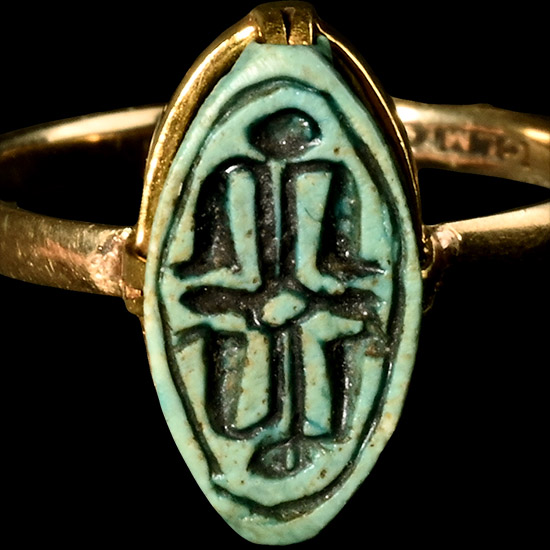
Egyptian Blue Faience Cowroid with Uraei in Gold Ring
Third Intermediate Period, 1069-860 B.C.Estimate: £500 - 700 (+bp*)
Opening Bid: £250
Slender, lentoid form with a finely striated edge design; the main motif comprises four outward-facing uraei, one in each quadrant, with a sun disc at each end, mounted in a modern gold ring. 2.33 grams, 22.62 mm overall, 16.76 mm internal diameter (approximate size British M, USA 6, Europe 12.46, Japan 12)
Private collection, London.
