
Loading, please wait...
LOT 0046
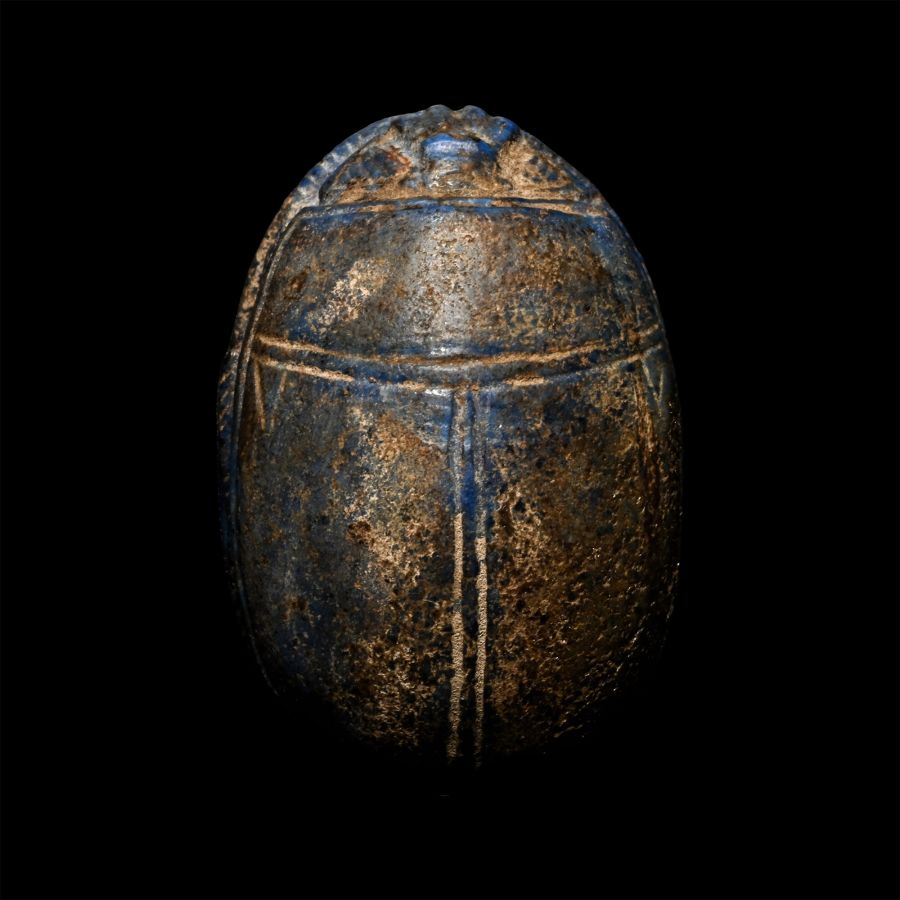
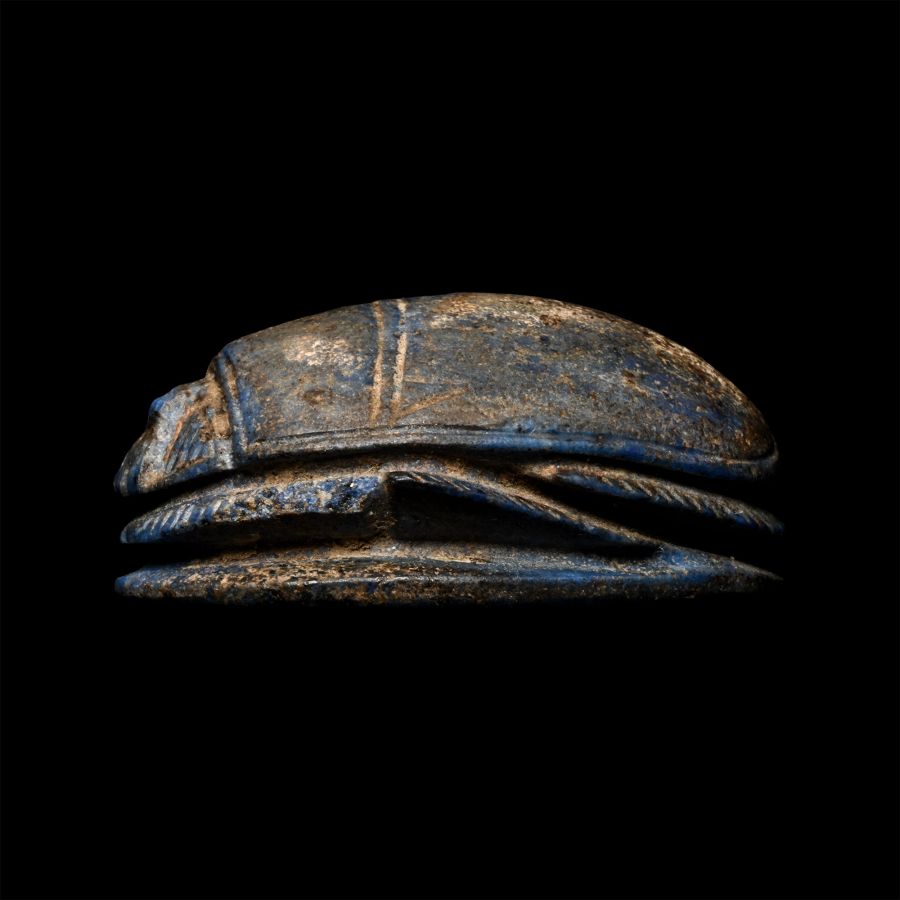
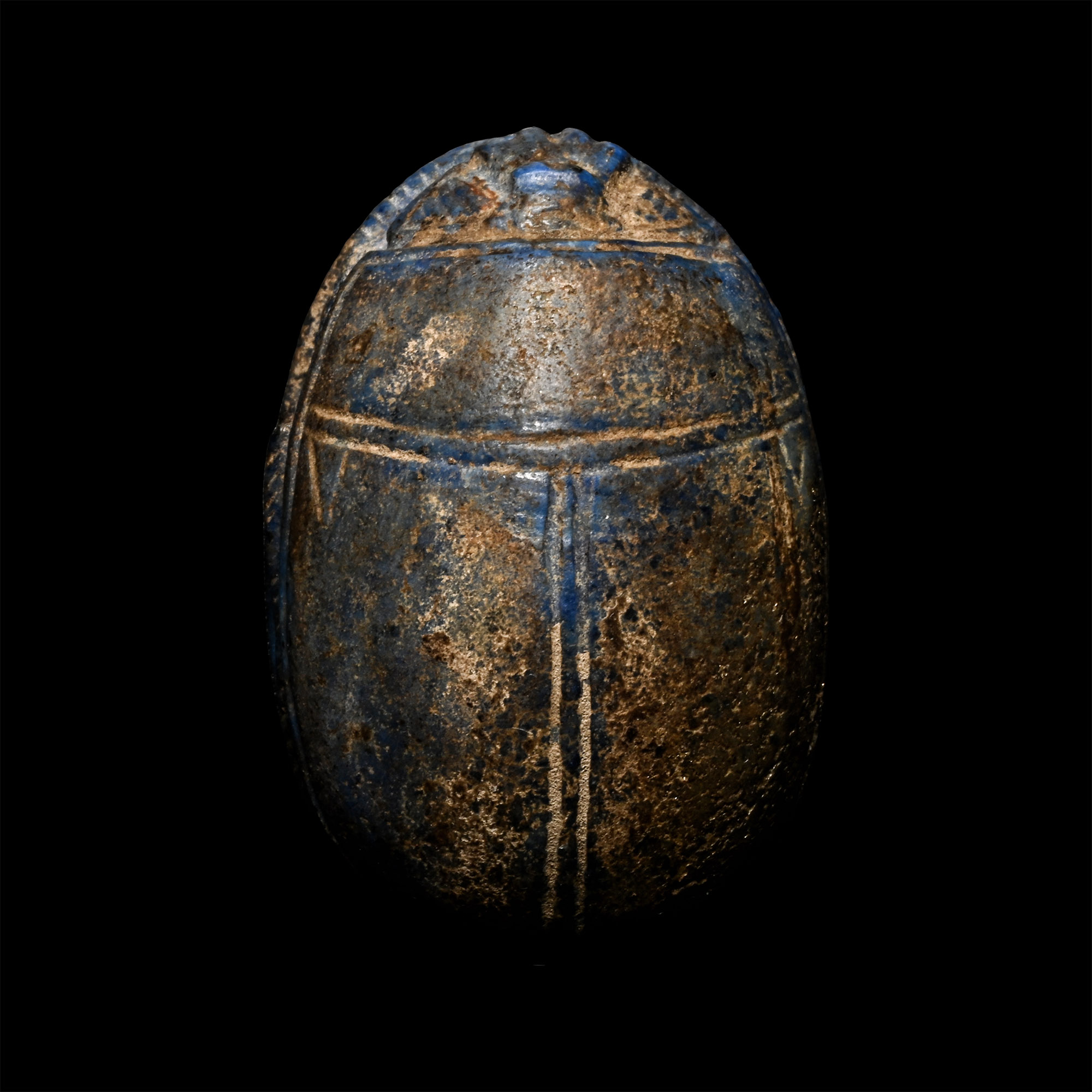
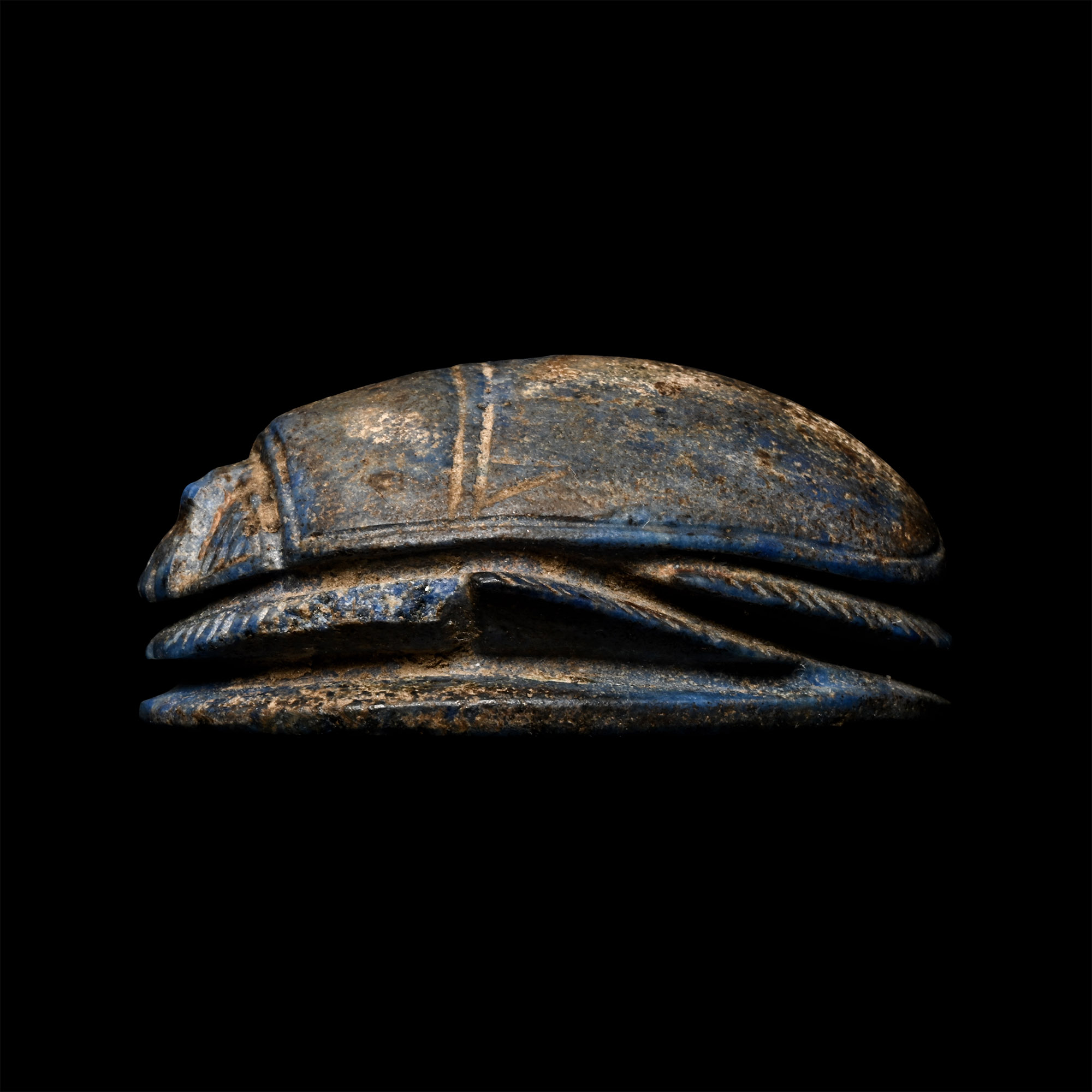
Large Egyptian Lapis Lazuli Heart Scarab
NEW KINGDOM, 1550-1070 B.C.
1/2 in. (31 grams, 39 mm).
Naturalistically modelled head, thorax, and abdomen, with elytra outlined by incised lines; front, middle, and hind legs visible at the sides and merging into an oval base plinth.
ProvenanceEx early 20th century collection, London, UK.
This lot has been checked against the Interpol Database of stolen works of art and is accompanied by search certificate number no.13102-249410.
See The British Museum, registration number 1963,1112.30; 1946,1204.416; Petrie, W.M.F., Amulets. Illustrated by the Egyptian Collection in University College, London, 1914, pl. VIII, items g-n.
FootnotesThe scarab amulet was one of ancient Egypt’s most widespread symbols, signifying rebirth, transformation, and protection. Modelled on the dung beetle associated with the sun god Khepri—believed to roll the sun across the sky—it symbolised the cycle of life and renewal. Widely used from the early Middle Kingdom onwards, scarabs served as funerary amulets, personal charms, and seals, often inscribed with prayers or names. They reflect both spiritual beliefs and daily life in ancient Egypt.
CONDITIONTimeLine Auctions follows a vetting process to ensure the authenticity and legality of all items, reinforcing our commitment to integrity and responsible trading. Each antiquity, antique, and coin lot undergoes thorough examination by a vetting committee of at least ten external specialists, professional trade association members, scientists, and archaeologists: Our Vetting Process
AUCTIONS:
TimeLine is a leading auction house specialising in antiquities, ancient art, collectables, natural history, coins, medals, and books. Our auctions offer museums, collectors, historians, and enthusiasts the opportunity to acquire unique and historically significant pieces.
LOT 0046
Large Egyptian Lapis Lazuli Heart Scarab
Estimate £2,500 - 3,500€2,900 - 4,060 (for guidance only)$3,380 - 4,730 (for guidance only)
-
.jpg)
Egyptian Steatite Scarab Collection
Hyksos Period and New Kingdom, 18th-13th century B.C.Sold for (Inc. bp): £780
Each with a domed carapace, two with a figure on the underside surrounded by hieroglyphs, two inscribed with hieroglyphic signs. 15 grams total, 18-24 mm
Acquired in Europe before 1992. Private collection, UK. -
.jpg)
Egyptian Wooden Mummy Mask
Late Period, 664-332 B.C.Sold for (Inc. bp): £1,950
Columnar in form with carved facial detailing, thick block of hair, full lips; pierced to reverse for attachment. 4.85 kg total, 38.8 cm high including stand
English private collection, formed in the early 20th century. Acquired on the English art market. -
Egyptian Bronze Figure of Isis and Horus
Late Period, 664-332 B.C.Estimate: £800 - 1,000 (‡+bp*)
Opening Bid: £400
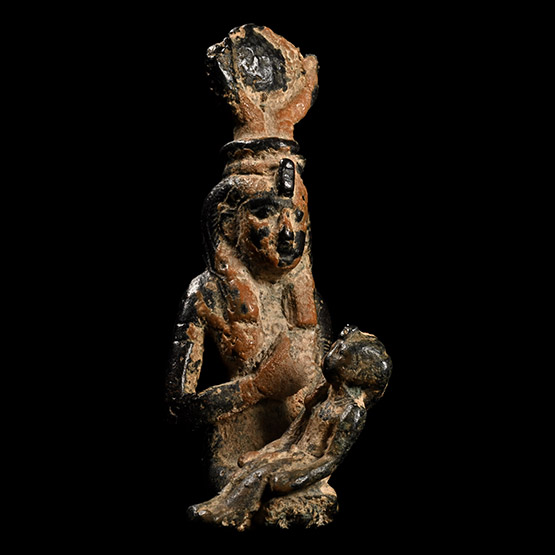
Isis enthroned wearing a cow's horn headdress with a solar disc fronted by uraeus, suckling the infant Horus on her lap; Horus with a side-lock of youth. 73.4 grams, 68 mm
Acquired in the mid 1980s-1990s. Private collection, Switzerland, thence by descent. Private collection, since the late 1990s.
In ancient Egyptian mythology, Isis was the sister-wife of Osiris and the mother of the sky god Horus. She is associated with aspects of fertility and motherhood and is often depicted in various artworks seated in a nursing pose with her son Horus on her lap, as here.
